TL;DR:
- Choosing the right hair length depends on face shape, hair texture, and lifestyle considerations to ensure a flattering and manageable style. Face shape influences optimal lengths and layering, with movement placement being more important than total length, while hair texture determines behavior and maintenance needs at various lengths. Regular trims, realistic growth timelines, and consulting with a skilled stylist help achieve your desired length safely and effectively.
Choosing hair length is defined as the process of selecting a cut that balances your face shape, hair texture, and lifestyle to achieve a look that is both flattering and manageable. This is not simply a matter of personal taste. The right length works with your natural proportions, suits your daily routine, and reflects how much time you are genuinely willing to spend on maintenance. Whether you are considering a dramatic chop or a gradual grow-out, understanding the core considerations for hair length will save you from costly mistakes and months of regret.
How face shape influences the most flattering hair length choices
Face shape is the single most reliable starting point in any hair length guide. Your face shape determines where movement and volume should be placed to create balanced proportions, and this directly affects which lengths will flatter you most.
The six most common face shapes are oval, round, square, heart, diamond, and oblong. Each responds differently to length and layering.
- Oval faces are considered the most versatile. Almost every length works well, from a cropped pixie to waist-length waves, because the proportions are already balanced.
- Round faces benefit from lengths that fall below the chin, as this creates the illusion of a longer, slimmer face. Avoid heavy fringe or layers that frame the widest part of the cheeks, as heavy framing layers add width rather than length.
- Square faces have a strong jawline and broad forehead. Soft, flowing lengths at or below the collarbone work well here, as longer hair with movement softens angular features without shortening the face.
- Heart-shaped faces are wider at the forehead and narrower at the chin. Medium to long lengths with volume at the ends balance the narrower jaw beautifully.
- Diamond faces are widest at the cheekbones. Layer placement below the widest point of the face elongates the overall shape and adds balance without sacrificing perceived length.
- Oblong faces are longer than they are wide. Shorter to medium lengths with width-adding layers at the sides create the appearance of a broader, more balanced face.
The key insight stylists consistently share is that movement placement matters more than total length alone. A shoulder-length cut with the right layering can be more flattering than waist-length hair worn bluntly. You can explore how face-framing layers interact with different face shapes to refine your understanding further.
Pro Tip: Photograph your face straight-on with your hair pulled back before your next salon visit. This gives you and your stylist a clear view of your natural face shape without the distraction of your current style.
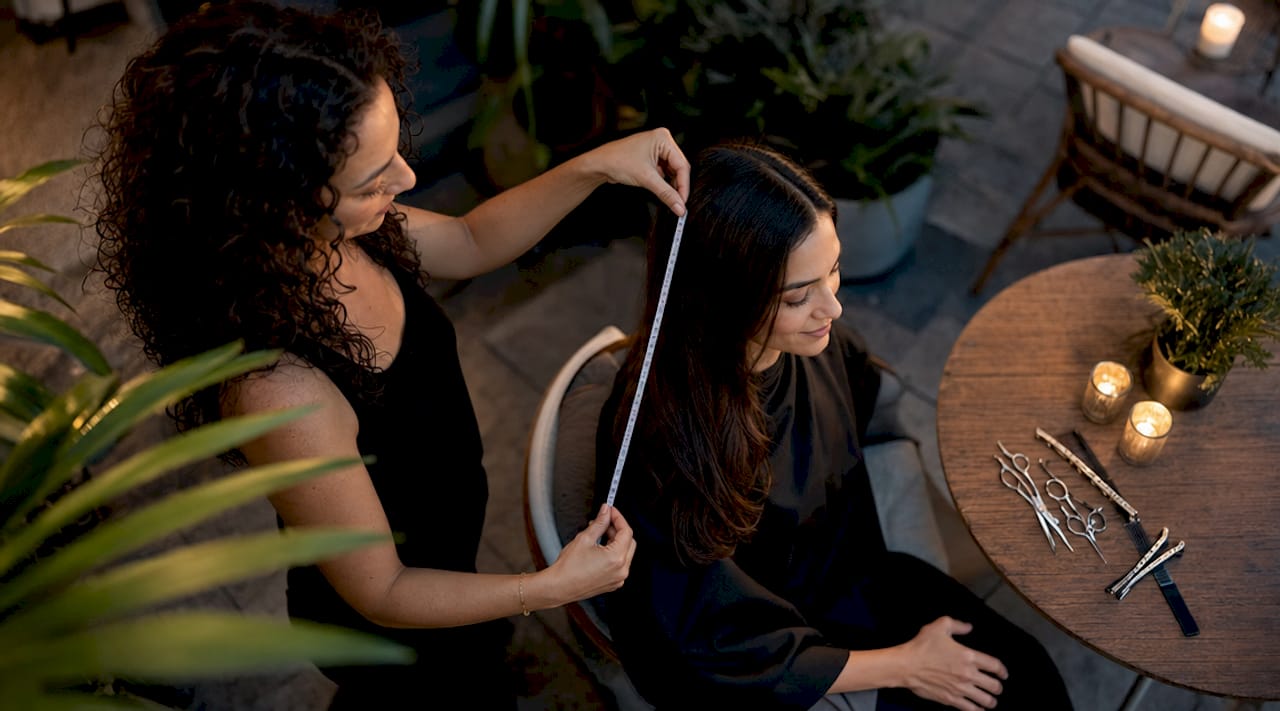
Does hair texture affect which length suits you?
Hair texture is the second major factor in how to choose hair length, and it is one that many women underestimate. The way your hair behaves at a given length depends entirely on whether it is fine, medium, or thick, and whether it is straight, wavy, or curly.
Here is how texture maps to length choices in practice:
-
Fine, straight hair looks best at shorter to medium lengths. Longer hair weighs fine strands down, reducing volume and creating a flat, limp appearance. Fine hair often looks best at shorter-to-medium lengths for exactly this reason. A textured bob or a layered lob (long bob) adds the illusion of fullness that longer blunt cuts cannot provide.
-
Fine, wavy hair has a slight advantage over straight fine hair because the wave pattern adds natural volume. Medium lengths around the collarbone tend to work well, preserving the wave without the weight pulling it out.
-
Thick, straight hair handles longer lengths with ease, but without layering it can feel heavy and difficult to style. Strategic layers reduce bulk and improve manageability at any length.
-
Thick, curly or coily hair shrinks significantly when dry, so the length you see wet is not the length you will wear. Many women with tight curl patterns choose longer cuts to account for shrinkage, while others prefer shorter lengths that allow curls to spring freely without tangling.
-
Fine hair with a textured cut gains the most from shorter, layered styles. Shorter, textured cuts create fullness for fine hair, whereas blunt cuts tend to flatten and thin the look. This is a distinction worth discussing explicitly with your stylist.
Understanding your texture also affects maintenance. Thick hair at longer lengths requires more product, more drying time, and more effort to detangle. You can read more about how hair texture affects styling when planning your next length change.
Lifestyle considerations when deciding on hair length
Your daily routine is a non-negotiable factor in choosing the right length. A style that looks stunning in a salon photograph but demands 45 minutes of daily styling is not a practical choice if you have 15 minutes each morning.
Consider the following lifestyle factors honestly before committing to a length:
- Styling time available. Shorter to medium lengths generally require less daily styling time than longer hair. If your mornings are rushed, a style that air-dries well at shoulder length will serve you far better than a long blowout-dependent look.
- Physical activity levels. If you exercise frequently or work outdoors, longer hair that needs to be tied up constantly can become a source of frustration. A medium length that sits neatly without constant pinning is often the practical choice for active women.
- Professional environment. Some workplaces have expectations around grooming. Shorter, polished styles can project authority in formal settings, while longer styles offer versatility between professional and social occasions.
- Safety considerations. Women working in healthcare, food service, or manufacturing often need hair that can be fully secured. Very long hair that escapes ties or clips is a genuine concern in these environments.
- Budget for maintenance. Shorter cuts require more frequent salon visits. A pixie cut needs a trim every three to seven weeks to maintain its shape, which adds up across a year. Longer styles are trimmed less often but may require more investment in products and tools.
Pro Tip: Track your actual morning routine for one week before deciding on a length. Most people overestimate the time they are willing to spend on hair by at least ten minutes.
What are the maintenance demands for different hair lengths?
Maintenance is where many women discover that their chosen length does not match their real lifestyle. Understanding trim schedules and consultation processes before you commit saves both money and disappointment.
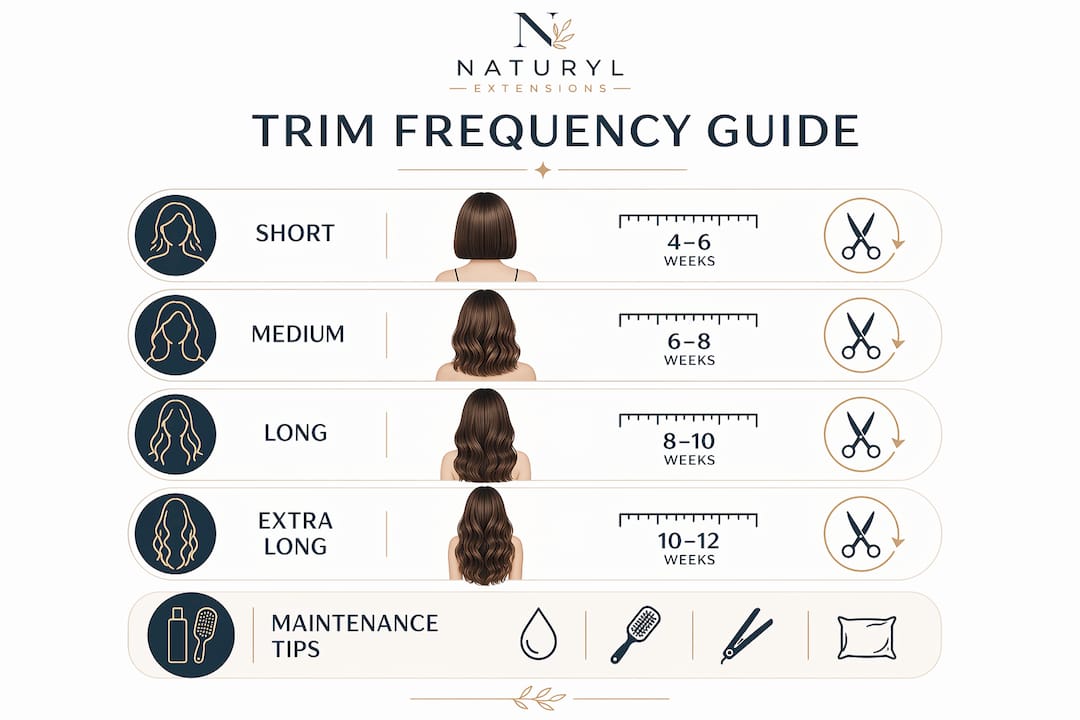
Trim schedules vary significantly by length category. The table below sets out typical intervals and what to expect at each stage.
| Length category | Trim frequency | Key maintenance consideration |
|---|---|---|
| Short (above shoulders) | Every 3 to 7 weeks | Shape is lost quickly; precision cuts need regular upkeep |
| Medium (shoulders to mid-back) | Every 6 to 12 weeks | Balance between manageability and styling flexibility |
| Long (mid-back and beyond) | Every 8 to 12 weeks | Focus on end health to prevent breakage and retain length |
Skipping trims allows split ends to worsen, which ultimately shortens visible hair length through breakage rather than preserving it. This is a counterintuitive point that catches many women off guard when growing their hair out.
Professional consultations are the most underused tool in the hair length decision process. A good consultation lasts between 10 and 30 minutes and requires you to arrive with clean, dry hair so your stylist can accurately assess your natural texture, density, and movement. Arriving with wet or product-laden hair makes it genuinely difficult for a stylist to judge how your hair will behave at a new length.
Providing stylists with a proportional brief that includes your face shape, maintenance constraints, and photo references leads to far better outcomes than simply pointing to a celebrity photograph. The photograph is useful as a reference point, but your stylist needs to adapt it to your specific proportions and texture. You can learn more about preparing for this process through guidance on choosing the right extensions, which applies equally to length consultations.
How long does it take to grow or change hair length?
Setting realistic expectations about growth timelines prevents frustration and helps you plan your length change strategically. Hair grows at an average rate of approximately 1.25 centimetres per month, but the length you actually retain depends far more on end health than on scalp growth alone.
Growing hair from shoulder blades to mid-back takes approximately 12 to 18 months, assuming ends are protected and breakage is managed. Growing from collarbone to waist can take two to three years. These timelines assume regular trims to remove damage, which is where many women lose progress.
| Starting length | Target length | Approximate timeline |
|---|---|---|
| Pixie to bob | Bob (chin length) | 6 to 12 months |
| Bob to collarbone | Collarbone length | 12 to 18 months |
| Collarbone to mid-back | Mid-back | 18 to 24 months |
| Mid-back to waist | Waist length | 2 to 3 years |
Trimming preserves length by removing damage at the ends before it travels up the shaft and causes breakage. Women who skip trims in the hope of retaining length often find their hair looks the same length six months later because the ends are breaking at the same rate as the roots are growing. A trim of half a centimetre every eight to ten weeks is far more effective than avoiding the scissors entirely.
Hair condition also affects visible growth. Colour-treated, heat-damaged, or chemically processed hair breaks more easily, which slows perceived progress. Prioritising moisture, protein treatments, and protective styling during a grow-out phase makes a measurable difference to the length you retain.
Key takeaways
Choosing the right hair length requires an honest assessment of your face shape, hair texture, and daily lifestyle, not just a preference for how a particular length looks on someone else.
| Point | Details |
|---|---|
| Face shape guides movement | Place layers and volume to balance your proportions, not just to reach a target length. |
| Texture determines behaviour | Fine hair looks fuller at shorter lengths; thick hair needs layers at longer lengths to stay manageable. |
| Lifestyle sets the limit | If you have 15 minutes each morning, shorter to medium lengths are the realistic choice. |
| Trim schedules vary by length | Short cuts need attention every 3 to 7 weeks; long hair can stretch to 8 to 12 weeks. |
| Growth takes longer than expected | Retaining length depends on end health, not just scalp growth. Plan timelines in years, not months. |
Why I think most women overcomplicate this decision
I have spoken with enough women about their hair to know that the most common mistake is treating a length change as a single, irreversible decision. It is not. Hair grows back. Styles can be adjusted. The anxiety around choosing a length often comes from treating it as permanent when it is, by nature, temporary.
What I have found genuinely useful is separating the aesthetic question from the practical one. Ask yourself first: how much time do I actually want to spend on my hair each day? Not how much time I could spend, or how much time I spend now, but how much I want to spend going forward. That answer alone eliminates most of the options and makes the decision far simpler.
The second thing I would encourage is to trust a skilled stylist over a photograph. A photograph shows you a result on a different person with different texture, density, and face shape. A good stylist translates that reference into something that works specifically for you. Arriving with clean, dry hair and a clear brief about your maintenance preferences gives them everything they need to make that translation accurately.
Experimentation is also far less risky than most women assume. A lob is not a commitment to short hair forever. It is a starting point. If you love it, you maintain it. If you miss the length, you grow it out with a plan. The women I have seen make the most satisfying changes are those who make one manageable adjustment at a time rather than waiting years for the perfect moment to do something dramatic.
— Sam
Achieve your ideal length with Naturylextensions
If you are working towards a longer look or want to experiment with a new length before committing to a cut, Naturylextensions offers a practical solution without the wait.
Naturylextensions specialises in Remy human hair extensions that blend naturally with your own hair, giving you the length and fullness you want immediately. The invisible wire extensions are particularly popular for women who want to try a longer style without any salon appointment or long-term commitment. With fast UK delivery, a free exchange policy, and ethically sourced Remy hair, Naturylextensions makes it straightforward to explore different lengths on your own terms. Browse the full range at naturylextensions.com to find the right match for your texture and desired length.
FAQ
What is the best hair length for a round face?
Lengths that fall below the chin, particularly collarbone to mid-back, are most flattering for round faces. Avoid heavy layers that frame the widest part of the cheeks, as these add width rather than length.
How often should I trim my hair to keep it healthy?
Trim frequency depends on length: short cuts need attention every 3 to 7 weeks, medium lengths every 6 to 12 weeks, and long hair every 8 to 12 weeks. Regular small trims prevent split ends from travelling up the shaft and causing breakage.
Does fine hair look better short or long?
Fine hair generally looks better at shorter to medium lengths because longer hair weighs fine strands down and reduces volume. Shorter, textured cuts create the illusion of fullness that longer blunt cuts cannot achieve.
How do I prepare for a hair length consultation?
Arrive with clean, dry hair so your stylist can assess your natural texture and density accurately. Bring photo references and be ready to describe your face shape, maintenance preferences, and how much daily styling time you are willing to commit to.
How long does it take to grow from a bob to mid-back length?
Growing from a bob to mid-back length typically takes 18 to 24 months, depending on how well you manage end health and breakage. Regular trims and protective styling during the grow-out phase help you retain more of the length your scalp produces.