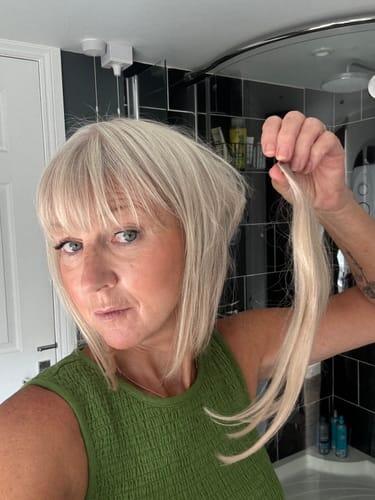
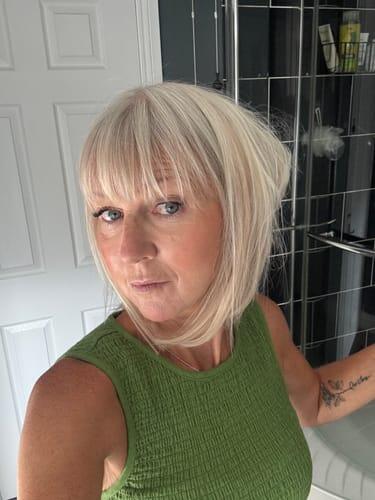
TL;DR:
- Choosing hair extensions requires assessing your natural hair to ensure compatibility and prevent damage.
- Opt for Remy human hair, select appropriate weight based on your hair density, and match color and texture carefully.
- Proper care routines and lifestyle considerations are essential for maintaining natural hair health and extension durability.
Choosing hair extensions should feel exciting, not overwhelming. Yet with so many types, brands, and application methods now available, a lot of women find themselves stuck between scrolling endlessly and making a purchase they later regret. This hair extension checklist 2025 exists to cut through the noise. Whether you’re new to extensions or switching up your method, this guide walks you through every decision worth making, from assessing your natural hair to choosing the right weight, material, and care routine. Think of it as your practical reference for getting extensions that actually work for your hair and your life.
Table of Contents
- Key takeaways
- 1. Start with your natural hair assessment
- 2. Know your extension types before you commit
- 3. Understand Remy hair versus synthetic
- 4. Get the gram weight right
- 5. Colour and texture matching
- 6. Factor in your lifestyle before buying
- 7. Your hair extension care checklist
- My honest take on getting extensions right
- Discover extensions built around your hair health
- FAQ
Key takeaways
| Point | Details |
|---|---|
| Match extensions to your hair type | Your texture, density, and porosity should guide every extension decision you make. |
| Weight matters more than length | Overloading your hair increases traction alopecia risk; stick to recommended gram weights. |
| Remy hair outperforms synthetic | Aligned cuticles mean better longevity, no tangling, and full heat styling compatibility. |
| Subtle fullness is the 2025 trend | Focused volume and shape, not dramatic length, defines the most natural results this year. |
| Maintenance is non-negotiable | Consistent care routines protect both your extensions and your natural hair beneath them. |
1. Start with your natural hair assessment
Before you look at a single extension type, spend time honestly evaluating your own hair. This is the step most people skip, and it’s the reason so many extensions end up looking unnatural or causing damage.
Consider four key factors:
- Texture: Is your hair straight, wavy, curly, or coily? Extensions need to match your natural texture to blend properly.
- Density: Do you have fine, medium, or thick hair? This determines how much extension weight your strands can support safely.
- Porosity: High-porosity hair absorbs moisture quickly but loses it just as fast. Low-porosity hair resists moisture. Both affect how extensions bond and how they behave day to day.
- Condition: Damaged, over-processed, or thinning hair needs lighter, lower-tension extension methods to avoid further stress.
Personalised consultation based on your hair’s unique condition and lifestyle is the single most reliable predictor of long-term extension success. Getting this step right makes every subsequent decision easier.
Pro Tip: Take a few strands of your natural hair and hold them up to natural light before shopping. Note the colour variation, wave pattern, and thickness. You’ll use this information when matching extension shade and texture.
2. Know your extension types before you commit
The industry offers more extension methods than ever in 2025. Each has a different application process, wear time, and suitability depending on your hair type and lifestyle. Here’s a clear breakdown:
- Clip-in extensions: Temporary, beginner-friendly, and entirely self-applied. You clip them in for the day and remove them at night. They’re ideal for occasional wear or testing out a longer look before committing.
- Tape-in extensions: Semi-permanent panels that sandwich your natural hair between adhesive strips. They lie flat against the scalp and suit fine to medium hair well. Tape-ins last 6 to 8 weeks with proper care before needing repositioning.
- Sew-in weaves: Your natural hair is braided and wefts are stitched in. Durable and long-lasting at 2 to 3 months, they suit thick or coarse hair that can handle the tension.
- Keratin fusion bonds: Individual strands are bonded to your natural hair using a keratin-based adhesive. They look incredibly natural but require professional application, significant time, and a higher budget.
- Halo extensions and wire systems: A single, pressure-free wire sits just beneath a crown section of your natural hair. No bonds, no clips, and no tension on the scalp. These are protective choices for fragile or thinning hair.
| Extension type | Wear time | Best for | Application |
|---|---|---|---|
| Clip-in | Temporary (daily) | All hair types | Self-applied |
| Tape-in | 6 to 8 weeks | Fine to medium hair | Professional |
| Sew-in weave | 2 to 3 months | Thick, coarse hair | Professional |
| Keratin fusion | 3 to 5 months | Most types | Professional only |
| Halo/wire | Daily removal | Fine or fragile hair | Self-applied |
Pro Tip: If you’re unsure which method suits your lifestyle, start with a halo or clip-in system. They require zero commitment and let you trial length and volume without any risk to your natural hair.
3. Understand Remy hair versus synthetic
The material your extensions are made from shapes how they look, feel, and perform over time. This is where quality separates the good from the genuinely great.
Remy human hair is the gold standard in the industry. The cuticles of each strand are kept intact and aligned in a single direction, which prevents tangling, maintains a natural sheen, and makes heat styling safe and effective. Remy hair resists tangling and offers a lifespan that synthetic hair simply cannot match.
Synthetic hair, by contrast, uses man-made fibres that often tangle, cannot be heat-styled without melting or frizzing, and typically last only a fraction of the time. It costs less upfront, but you’ll likely replace it far sooner.
For women in the 18 to 45 age group seeking results that blend seamlessly with their own hair, Remy human hair is the clear choice. Look for ethically sourced extensions to add another layer of confidence to your purchase.
4. Get the gram weight right
One of the most overlooked decisions in any best hair extensions guide is choosing the correct weight. Too little and the result looks sparse. Too much and you risk real damage to your scalp and follicles.
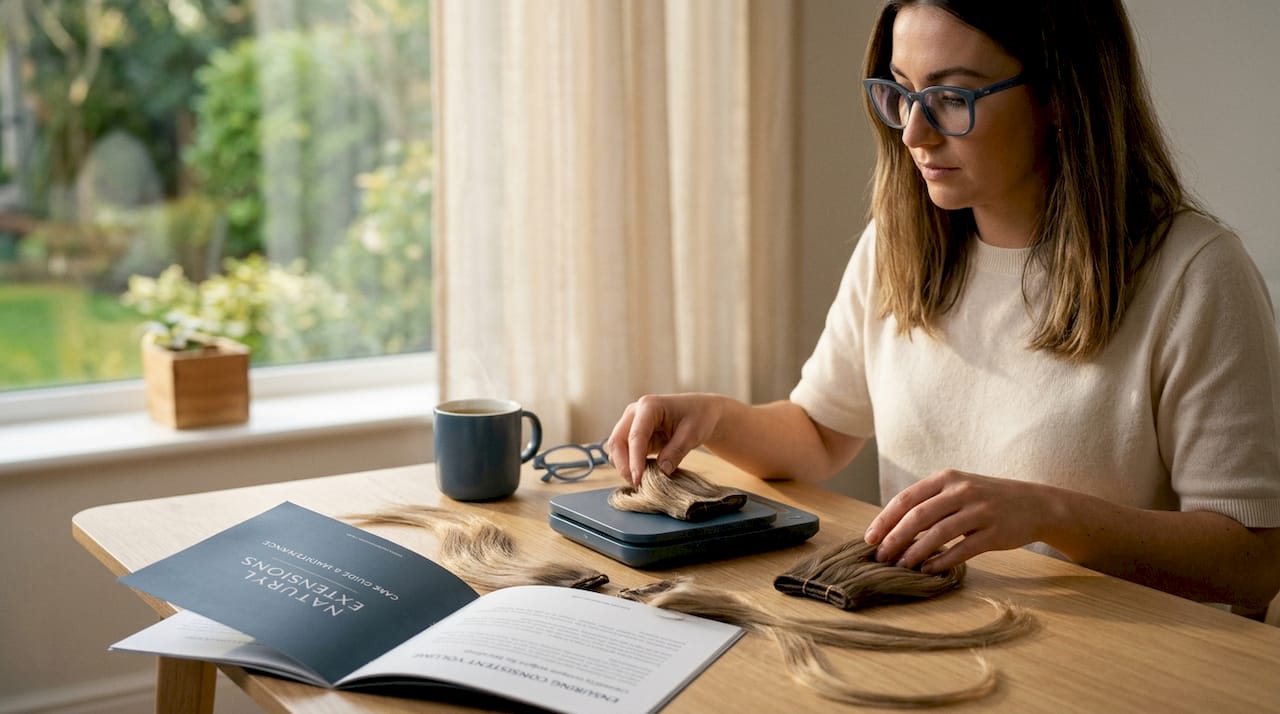
Recommended gram weights vary depending on your hair density:
| Hair density | Recommended weight |
|---|---|
| Fine | 100 to 120g |
| Medium | 150 to 180g |
| Thick or coarse | 200 to 250g |
These weight ranges by density exist to prevent follicle overloading while still delivering a full, natural result. The common belief that more extension hair equals a better look is actually a misconception worth correcting. Subtle fullness achieved with a few well-placed pieces looks far more convincing than a heavy full-head set, particularly for the 18 to 45 age group where a polished, believable result matters most.
“Adding just a few well-placed extension pieces for fullness is more effective and natural-looking than heavy full-head sets.”
Pro Tip: When in doubt about weight, go lighter. You can always add more pieces. Removing damage caused by excessive weight is a much harder problem to fix.
5. Colour and texture matching
Getting the shade and texture right is what separates extensions that look purchased from those that look like they grew from your scalp. This step is worth slowing down for.
When matching colour, hold extension samples against the mid-length of your hair rather than the roots or ends. Roots are often darker, and ends can be sun-lightened. The mid-section gives you the truest read. If your hair has natural highlights or dimension, look for extensions with at least two tones running through them rather than a flat single shade.
Texture matching follows similar logic. Wavy hair needs extensions with at least a slight wave. Pairing sleek extensions with natural waves creates a visible line where the two meet, which is the opposite of what you want. The goal is for the natural-looking finish to make extensions indistinguishable from your own hair.
6. Factor in your lifestyle before buying
Extensions are not one-size-fits-all, and your day-to-day life should influence your method choice just as much as your hair type does.
If you work out regularly, swim, or spend time in humid conditions, you need extensions that handle moisture and sweat without degrading quickly. Tape-ins, for example, can loosen with repeated exposure to water and oils near the bonds. Clip-ins or halo systems might serve you better in active lifestyles because you can remove them during high-intensity activity.
If you prefer low maintenance, avoid methods that require frequent salon visits for repositioning. Keratin fusion bonds typically need professional attention every 3 to 4 months, which adds up in both time and cost. Understanding the ongoing commitment before you buy prevents the frustration of feeling locked into a routine that doesn’t fit your life.
7. Your hair extension care checklist
Once your extensions are in, how you care for them determines how long they last and how healthy your natural hair remains underneath. This is your practical hair extension care checklist for 2025.
- Brush daily with the right tool. Use a soft-bristle brush or a loop brush designed for extensions. Always start from the ends and work your way up. Support your roots when brushing to avoid placing tension on the bonds or attachment points.
- Wash at the right frequency. Clip-in extensions only need washing when you notice visible product build-up. For tape-ins, wash 2 to 3 times per week using a sulphate-free shampoo.
- Keep conditioner away from attachment points. Apply conditioner mid-length to ends only. Conditioner or heavy oils on bonds weakens adhesion and shortens wear time significantly.
- Protect extensions while sleeping. Plait your hair loosely into a braid before bed to prevent tangling. A silk pillowcase reduces friction further.
- Use heat protection every time. Extensions do not benefit from natural scalp oils the way your own hair does. Because extensions lack scalp oils, they dry out faster under heat, so lightweight hydration and a heat protectant are non-negotiable before any styling.
- Book maintenance appointments on schedule. Wearing extensions beyond 6 to 8 weeks without adjustment increases your risk of traction alopecia, a form of hair loss caused by prolonged tension on the follicles. Stick to your stylist’s recommended timeline.
- Know when to take a break. If your scalp feels sore, you notice thinning at the hairline, or your natural hair feels brittle, remove your extensions and allow your hair time to recover. Extensions should always support your hair, not compromise it.
Pro Tip: Keep a home care routine simple. Lightweight leave-in conditioner on the lengths and a gentle detangling spray is enough for most days. Overloading extensions with products causes more harm than good.
My honest take on getting extensions right
I’ve worked with countless women navigating the hair extension world, and the pattern I see most often is this: people spend the most energy on choosing between brands and lengths, and far too little time thinking about whether the method even suits their hair in the first place.
What I’ve found is that the women happiest with their extensions are usually not the ones who spent the most. They’re the ones who made a realistic assessment of their hair, chose a weight their natural strands could genuinely support, and committed to a care routine. That’s it.
The industry pushes drama. Bigger lengths, thicker sets, and more volume. But the most effective and natural-looking 2025 extension trends are all about subtle enhancement: a little more body, a touch more shape, a face-framing lift. Not a transformation so dramatic that your own sister doesn’t recognise you.
My advice is to resist the urge to go heavy on the first attempt. Start with the minimum recommended weight for your hair density, wear them consistently, and see how your scalp and natural hair respond. You can always build from there. What you can’t easily undo is the follicle damage that comes from pushing your hair beyond what it can carry.
— Sam
Discover extensions built around your hair health
If this checklist has helped you get clearer on what you actually need from extensions, the next step is finding products that deliver on those priorities. Naturylextensions specialises in Remy human hair extensions designed for women who want fuller, longer hair without the salon chair or the risk to their natural hair.
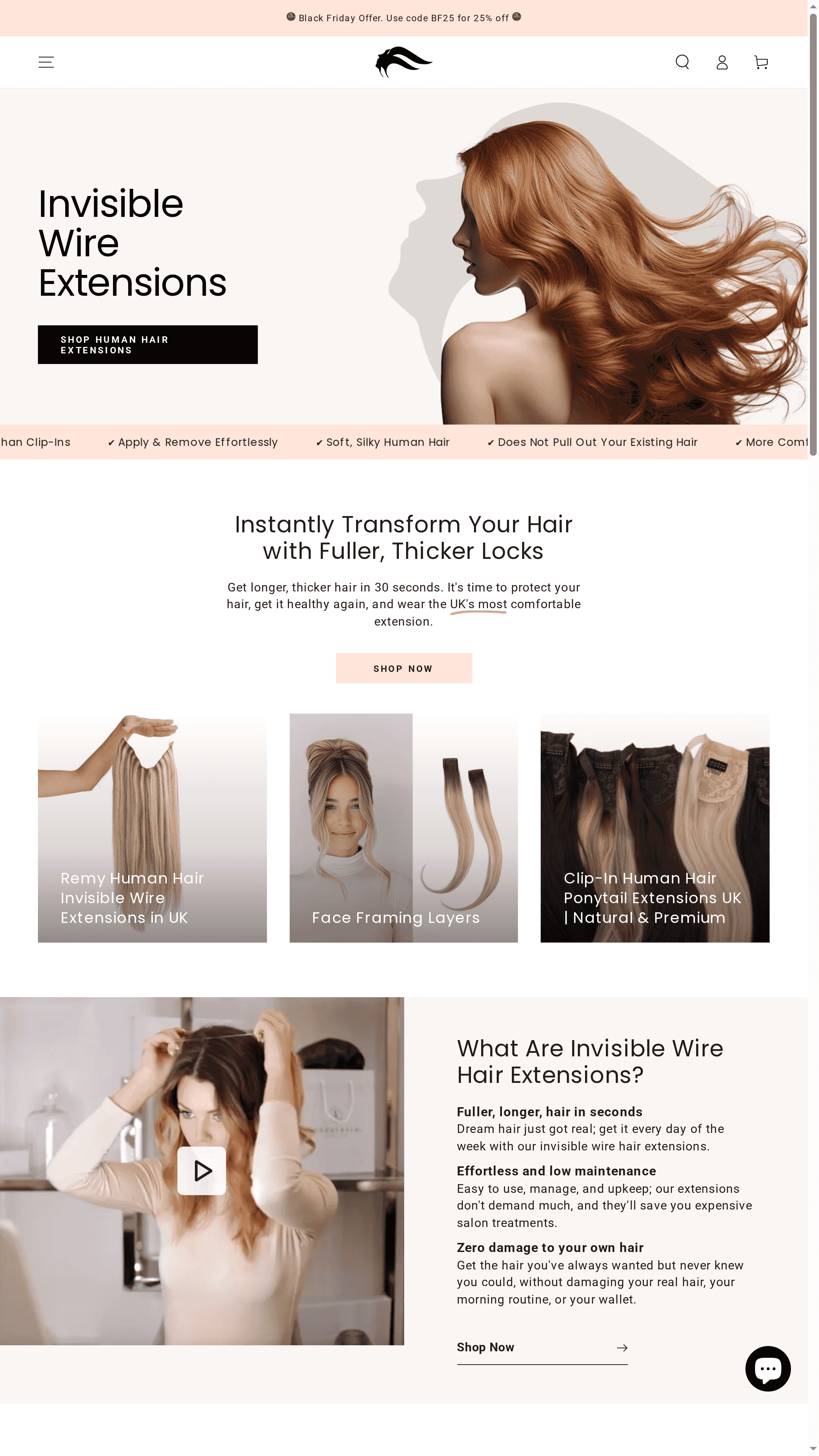
Their Remy human hair invisible wire extensions are a standout choice for anyone prioritising ease of use and a no-tension application. The invisible wire sits comfortably beneath your crown section with zero bonding, zero clips, and zero damage. For those wanting to build volume gradually, Naturylextensions also offer invisible extension wires as an add-on, and a popular 16-inch extension collection for a versatile, wearable length. Fast UK delivery, a free exchange policy, and ethically sourced hair make them a trustworthy place to start or upgrade your extension journey.
FAQ
What should I check before buying hair extensions?
Assess your natural hair density, texture, and condition before choosing a method. These factors determine the safest extension type and gram weight for your hair.
How often should I wash tape-in extensions?
Tape-in extensions suit a washing frequency of 2 to 3 times per week using a sulphate-free shampoo. Overwashing weakens the adhesive bonds and shortens wear time.
Can I use heat styling tools on Remy hair extensions?
Yes. Remy hair has intact, aligned cuticles that make it fully compatible with heat tools. Always apply a heat protectant first, as extensions do not retain the natural scalp oils that protect your own hair.
How do I know if my extensions are too heavy?
Scalp soreness, tension headaches, or visible thinning at the hairline are signs that your extensions are too heavy for your natural hair to support safely. Reduce the weight or consult a professional.
What is traction alopecia and how do I avoid it?
Traction alopecia is hair loss caused by repeated or prolonged tension on the hair follicles. Avoid it by sticking to recommended gram weights, following maintenance schedules, and taking breaks from extensions when your scalp needs rest.