


Finding truly ethical hair extensions in the British market can feel overwhelming, especially when over 80 percent of human hair is sourced from international suppliers with questionable practices. For British women who want quick, damage-free hair transformations, knowing how to assess quality and safety is essential. This guide breaks down each key step from choosing the right style to confirming comfort, ensuring your new look is both stunning and ethically sourced.
Table of Contents
- Step 1: Assess Your Hair Needs And Desired Style
- Step 2: Research Ethical Sourcing And Product Materials
- Step 3: Compare Extension Types For Comfort And Damage-Free Wear
- Step 4: Verify Supplier Credentials And Ethical Policies
- Step 5: Test Extensions For Quality And Natural Appearance
- Step 6: Confirm Suitability With A Damage-Free Trial
Quick Summary
| Key Message | Explanation |
|---|---|
| 1. Assess your hair needs accurately | Understanding your hair’s texture and goals is essential for choosing the right extensions without causing damage. |
| 2. Research ethical sourcing practices | Look for transparency in the sourcing of hair extensions to ensure fair treatment of donors and manufacturers. |
| 3. Choose comfort and damage-free methods | Select extension types that minimise stress on your natural hair to prevent breakage and discomfort. |
| 4. Verify supplier credentials | Investigate suppliers’ ethical policies and certifications for assurance of their responsible sourcing practices. |
| 5. Conduct a damage-free trial | Testing extensions in real-life situations helps ensure compatibility and comfort before long-term use. |
Step 1: Assess your hair needs and desired style
Understanding your personal hair goals and current hair condition is crucial when selecting the right hair extensions. The process begins with an honest self assessment that considers your natural hair texture, length, and overall hair health. Hair extension methods vary significantly depending on individual requirements.
Start by examining your existing hair’s thickness, curl pattern, and condition. Are you seeking volume, length, or both? Thin hair might benefit from gentler attachment methods, while thick hair can support more robust extension techniques. Consider your lifestyle and styling preferences too - some extensions work better for active individuals or those who frequently style their hair. Professional stylists recommend evaluating your hair’s current state carefully to prevent potential damage and ensure a seamless, natural looking transformation.
Professional consultations can provide personalised insights into preventing hair damage during extension installation. Understanding your unique hair characteristics will guide you towards the most suitable extension method and help you achieve your desired aesthetic.
Professional Advice: Always start with a patch test and professional consultation to understand your hair’s specific needs and compatibility with different extension techniques.
Step 2: Research ethical sourcing and product materials
Diving into the world of ethical hair extensions requires understanding the complex global supply chains and potential environmental and human rights implications. Most human hair extensions originate from Asian countries like India, Vietnam, and China, making it crucial to investigate the sourcing practices of your potential purchase.
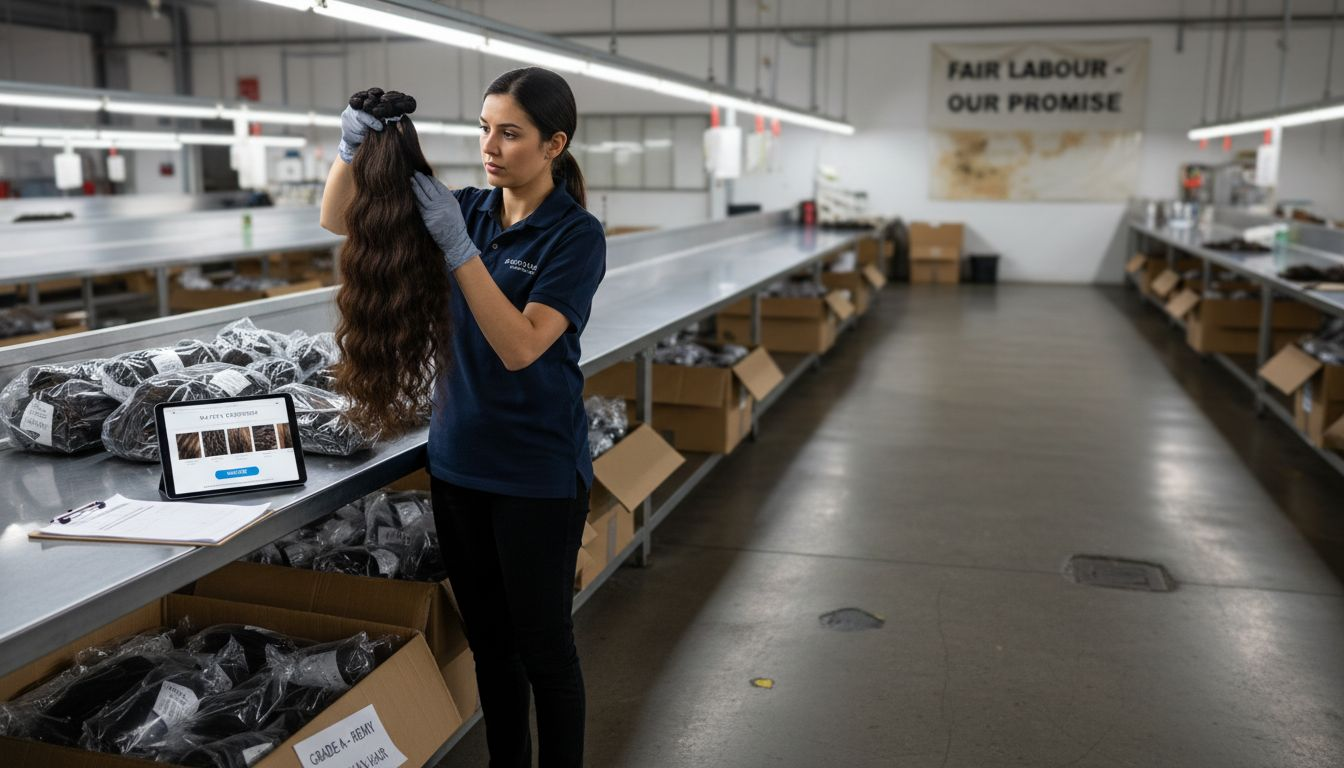
When researching ethical hair extensions, focus on transparency and comprehensive ingredient information. Look for brands that provide detailed documentation about their hair collection processes, ensuring voluntary donation and fair compensation for hair donors. Pay special attention to the manufacturing processes and whether the extensions undergo chemical treatments. Some manufacturers remove hair cuticles excessively, which can compromise both the ethical standards and the natural appearance of the extensions.
Moreover, be vigilant about potential health risks. Consumer safety reports highlight concerns about chemical composition in hair extension products, particularly synthetic variants that might contain harmful substances. Prioritise brands committed to toxin free formulations and complete ingredient transparency.
Professional Advice: Request detailed sourcing documentation from manufacturers and do not hesitate to ask direct questions about their ethical procurement practices.
Step 3: Compare extension types for comfort and damage-free wear
Selecting the right hair extension method is crucial for maintaining the health of your natural hair while achieving your desired aesthetic. Extension methods vary significantly in terms of comfort and potential hair damage, with some techniques proving gentler on your locks than others.
Consider the range of extension types carefully. Clip-in and tape-in extensions typically offer more flexibility and less permanent attachment, reducing the risk of long-term damage compared to sewn or glued weaves. Textile performance plays a critical role in extension comfort, with premium human hair extensions providing superior softness, strength, and wear resistance. Pay close attention to how different extensions interact with your natural hair texture, weight distribution, and styling requirements.
Look for extensions that match your lifestyle and hair care routine. Lightweight options that distribute weight evenly will minimise stress on your natural hair roots, preventing potential traction and breakage. Types of Hair Extension Methods for Effortless UK Style can provide additional insights into selecting the most suitable approach for your unique hair needs.
Professional Advice: Always request a professional consultation to assess which extension method best suits your specific hair type and lifestyle requirements.
Here is a comparison of common hair extension methods and their key characteristics:
| Extension Type | Application Duration | Comfort Level | Recommended For |
|---|---|---|---|
| Clip-in | Daily, temporary | High, easy removal | Occasional wear, flexibility |
| Tape-in | 6-8 weeks | Moderate, lightweight | Fine to medium hair |
| Sewn/weave | 6-10 weeks | Variable, can feel heavy | Thick, strong hair |
| Glue-in/bonded | 4-8 weeks | Lower, potential for tension | Dramatic transformations |
Step 4: Verify supplier credentials and ethical policies
Ensuring the ethical integrity of your hair extension supplier requires careful investigation and thorough due diligence. Ethical Trading Initiative standards provide a crucial framework for evaluating potential suppliers and their commitment to responsible sourcing practices.
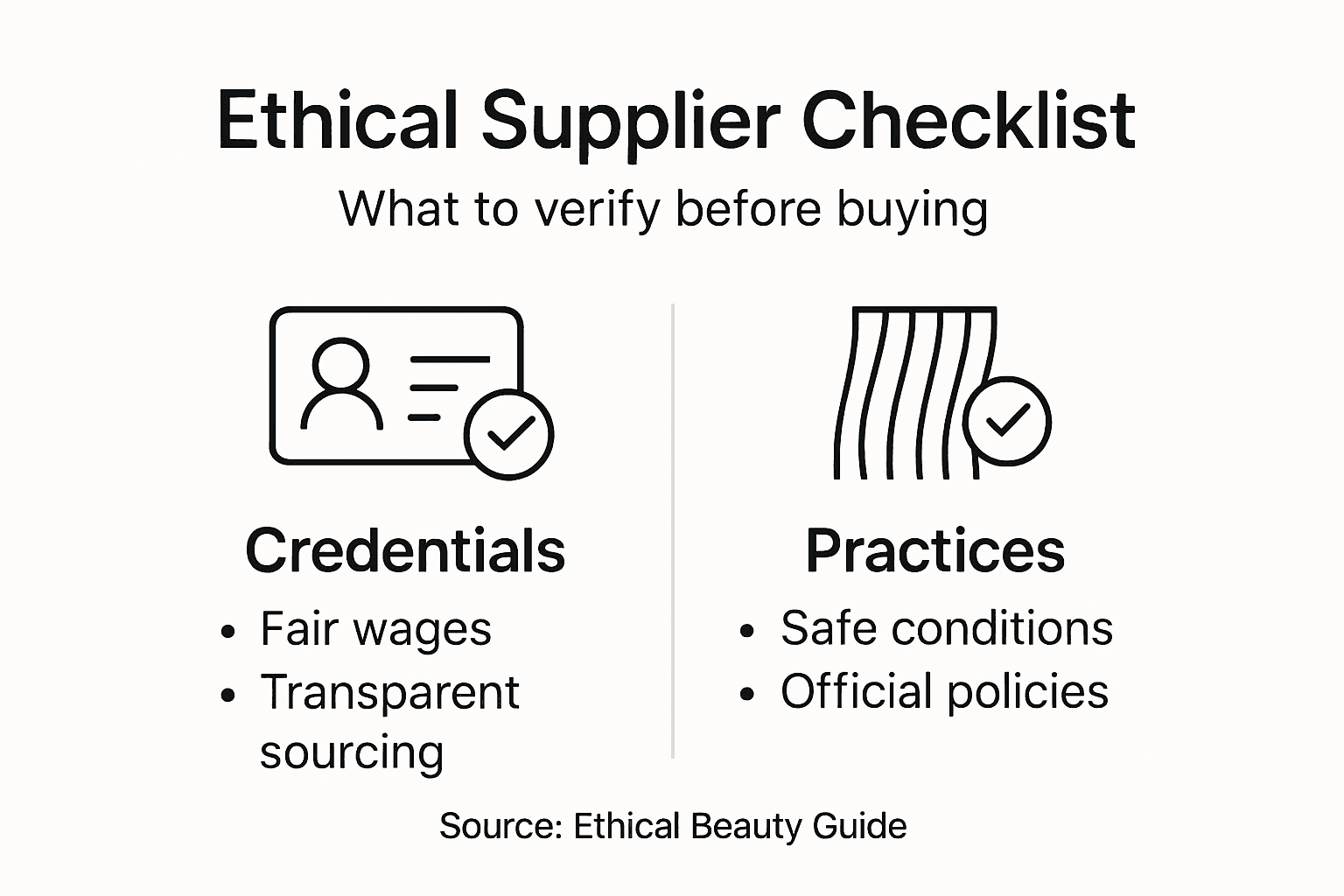
Begin by requesting comprehensive documentation about the supplier’s labour practices, working conditions, and sourcing methods. Look for evidence of fair wages, safe working environments, and transparent employment practices. Supplier credential verification involves rigorous examination of their compliance with labour laws, environmental standards, and worker welfare policies. Pay attention to certifications from recognized ethical trading organisations, which demonstrate a commitment to maintaining high standards throughout their supply chain.
Research the supplier’s reputation by examining third party assessments, reviewing their published ethical policies, and checking for independent audits or certifications. Request detailed information about their hair sourcing processes, worker compensation, and environmental practices. Genuine ethical suppliers will be transparent and willing to provide comprehensive information about their operational standards.
Professional Advice: Request official documentation and do not hesitate to ask direct questions about the supplier’s ethical sourcing practices and worker welfare standards.
Use this summary to quickly evaluate key ethical sourcing considerations when selecting a supplier:
| Ethical Factor | Why It Matters | How to Verify |
|---|---|---|
| Fair wages | Supports workers’ rights | Request wage records |
| Voluntary donation | Prevents exploitation | Seek donor consent evidence |
| No harmful chemicals | Protects user health | Review safety certifications |
| Third-party audits | Confirms ethical claims | Ask for audit reports |
Step 5: Test extensions for quality and natural appearance
Identifying truly high quality hair extensions requires a systematic and detailed approach to evaluating their aesthetic and functional characteristics. Standardised textile assessment methods offer crucial guidelines for determining the authenticity and durability of hair extensions.
Begin by conducting a comprehensive visual and tactile examination. Gently run your fingers through the extensions to assess their smoothness, checking for consistent texture and natural movement. Premium extensions should mimic the softness and flexibility of your own hair. Quality testing involves careful ingredient evaluation to ensure the absence of harmful chemicals and confirm a genuinely natural appearance. Expert Guide to Natural-Looking Hair Extensions UK can provide additional insights into identifying top tier extensions.
Pay close attention to colour consistency, shine, and how the extensions blend with your natural hair. Test the extensions under different lighting conditions and consider how they respond to styling. Authentic human hair extensions should maintain their integrity when exposed to heat styling tools and maintain a natural looking lustre without appearing artificial or overly processed.
Professional Advice: Always request a sample or small section of the extensions to test thoroughly before committing to a full purchase.
Step 6: Confirm suitability with a damage-free trial
Choosing the perfect hair extensions involves more than just aesthetic evaluation. Damage-free trials are crucial for assessing hair extension compatibility and preventing potential scalp or hair health complications.
Begin by consulting a professional stylist who can recommend the most suitable trial method for your specific hair type. Ethical extension trials prioritise hair and scalp health while allowing you to experience the extensions in real world conditions. Start with a small section or temporary application that minimises tension and stress on your natural hair. Monitor how the extensions feel during daily activities paying close attention to comfort levels, potential pulling sensations, and how seamlessly they integrate with your existing hair.
During the trial period, assess the extensions from multiple perspectives. Check their performance during different activities like exercise, sleeping, and styling. Look for signs of discomfort, excessive shedding, or unusual tension at the attachment points. A successful trial should demonstrate that the extensions not only look natural but also feel comfortable and cause no additional strain on your hair or scalp.
Professional Advice: Document your trial experience with photographs and notes to help make an informed decision about long term extension use.
Ethical Hair Extension Choices Start Here
Selecting hair extensions that are both stunning and ethically sourced can seem overwhelming. You want beautiful, natural results without risking damage or compromising your values. At Naturyl Extensions, we understand the importance of comfort, damage-free wear, and responsible sourcing highlighted in this article. That is why we offer premium Remy human hair extensions designed for effortless, natural transformations that respect your hair’s health and the planet.
Discover our range of easy-to-use, damage-free Hair Extension Accessories and explore our full collection of ethically sourced products. Experience the confidence that comes from wearing extensions made to blend seamlessly while supporting fair labour and sustainability.
Take the next step toward your dream hair with Naturyl Extensions. Visit naturylextensions.com today for fast UK delivery and free exchanges. Shop with trust knowing you are choosing comfort, quality, and ethics all in one beautiful package.
Frequently Asked Questions
How do I assess my hair needs before selecting extensions?
Start by evaluating your natural hair texture, length, and overall health. Consider factors such as whether you want volume, length, or both and consult a professional stylist for tailored advice.
What should I look for in ethical sourcing for hair extensions?
Focus on suppliers that provide transparency about their hair collection practices and ensure fair compensation for hair donors. Request detailed documentation regarding the ethical sourcing methods used.
What are the different types of hair extensions, and how do I choose the right one?
Explore options like clip-in, tape-in, sewn, and glue-in extensions. Consider the comfort level, application duration, and how well each type aligns with your hair’s condition and your lifestyle before making a decision.
How can I verify the ethical policies of a hair extension supplier?
Investigate supplier credentials by requesting documentation on their labour practices and sourcing methods. Look for evidence of fair wages, safe working environments, and independent audits confirming their ethical claims.
What steps should I take to test the quality of hair extensions?
Conduct a tactile and visual examination of the extensions, checking for smoothness and consistency. Request a sample to evaluate how the extensions blend with your hair in various conditions before making a full purchase.
How can I ensure that hair extensions are compatible and don’t damage my hair?
Perform a damage-free trial by consulting a professional stylist for the best method for your hair type. Start with a small section of extensions to assess comfort and integration, monitoring how they feel during daily activities.
Recommended
- Easy Hair Extension Tutorial for Effortless Transformation
- Hair Extensions for Beginners: Effortless Fullness and Length
- Types of Hair Extension Methods for Effortless UK Style
- Expert Guide to Natural-Looking Hair Extensions UK
- Luméra Voluminous Mascara | Lengthening, Curling & Volume – Luméra Cosmetica


