TL;DR:
- Properly executed face-framing layers are a precise haircut technique that enhances facial features and creates balance. They require careful placement, adaptation to hair texture, and regular trims to maintain their flattering effect. Extensions can complement layers by adding volume without disrupting the face-framing shape.
Face-framing layers are often dismissed as a passing trend, but their role of face-framing layers in genuinely changing how your face looks is far more technical than most people realise. When cut correctly, these shorter sections around your face do something no amount of clever styling product can replicate: they direct attention to your best features and create proportion where there was none. This article covers what face-framing layers actually are, how they work for different face shapes and hair textures, and how to keep them looking their best.
Table of Contents
- Key takeaways
- What face-framing layers actually are
- Face-framing layers for different face shapes
- How hair texture affects cutting technique
- Maintaining and styling your layers
- Combining layers with hair extensions
- My honest take on face-framing layers
- Add volume that works with your layers
- FAQ
Key takeaways
| Point | Details |
|---|---|
| Precision placement matters | Layers placed at cheekbones and jawline create a cascade effect that flatters your natural face shape. |
| Texture changes everything | Hair type determines which cutting technique works best, from point cutting to dry cutting for curls. |
| More frequent trims needed | Face-framing layers require a refresh every 6 to 8 weeks to maintain their framing effect. |
| Extensions enhance results | Invisible wire extensions can add volume and length that works with, not against, your face-framing layers. |
| Not one size fits all | Strategic layer placement differs for round, square, heart, and oval face shapes. |
What face-framing layers actually are
There is a common assumption that any haircut with layers counts as a face-framing style. That is not the case. Face-framing layers are specifically cut shorter sections positioned around the front of your hair, designed to soften and add movement close to your facial features. They are distinct from full-head layering, which distributes volume across the entire length of your hair.
The key difference lies in placement and purpose. According to hairdressing specialists, shorter pieces positioned between the cheekbones and jawline direct attention toward the face, whereas full-head layers simply create body and movement throughout the length. Face-framing layers are a targeted tool, not a general texturing technique.
You will find this approach incorporated into many popular styles, including:
- Long hair with soft front pieces that curve toward the chin or collarbone
- Lobs (long bobs) where shorter layers at the front create a frame without disrupting the back length
- Shag haircuts, where face-framing layers blend with heavier internal layering
- Classic bobs with graduated front sections that taper toward the jaw
The precision of the cut also matters enormously. Factors like tension on the hair, cutting angle, and elevation all influence how the finished layer behaves once it falls into place. A layer cut at the wrong angle or with too much tension can sit stiffly rather than flowing naturally around your face. This is why well-executed face-framing layers are considered deceptively technical, even though they look effortless when done right.
Face-framing layers for different face shapes
Understanding how layers interact with face shape is where the real skill lies. Optimal layer placement starts at the widest point of your face, which you can identify by looking at yourself in natural lighting rather than relying solely on standard shape categories. From there, subsequent layers align to your jawline angles, producing a cascade visual effect that either softens, elongates, or balances your features.
Here is how strategic placement works for the four most common face shapes:
| Face shape | Layer goal | Best placement |
|---|---|---|
| Round | Create elongation and reduce width perception | Longer layers from cheekbone downward; avoid short pieces that widen the face |
| Square | Soften a strong jawline | Curved, face-softening layers that hit just below the jaw |
| Heart | Balance a wider forehead with a narrower chin | Layers from the temple area downward to draw attention lower |
| Oval | Maintain natural balance | Almost any layer length works; use layers to add movement and texture |
The table above is a starting point, not a fixed rule. Your hairline, cheekbone prominence, and natural parting also affect how layers sit. A fringe or curtain bang, for example, changes where your face shape reads widest, which in turn shifts the ideal layer starting point.
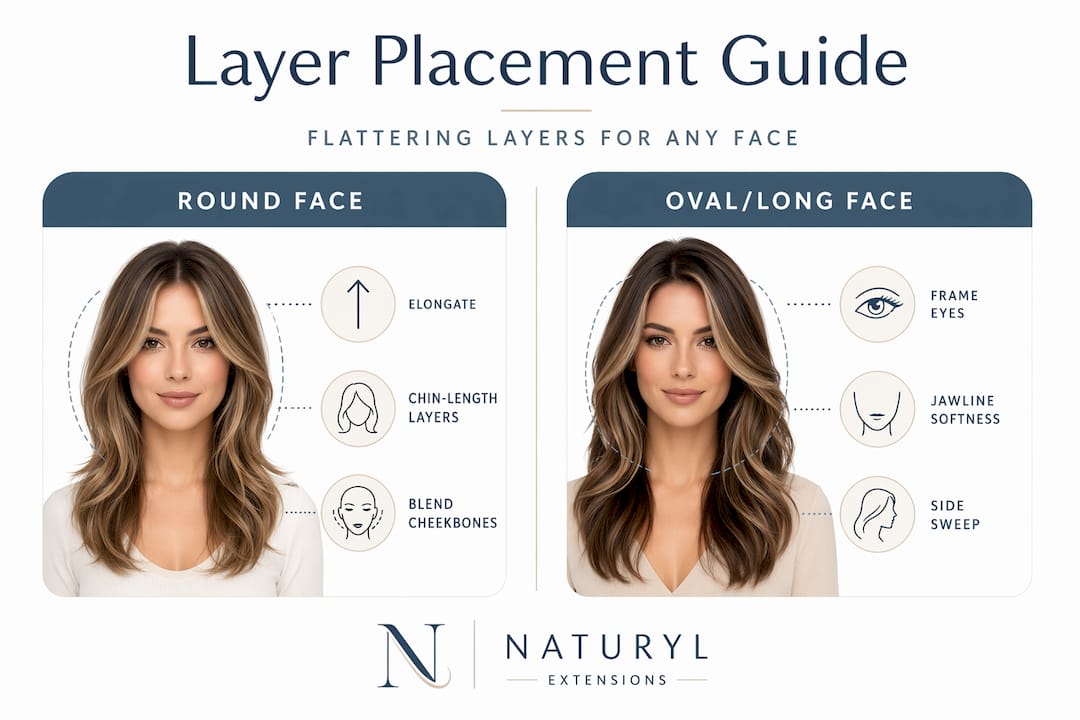
Pro Tip: Ask your stylist to assess your face in natural daylight, not salon lighting. Salon lighting can flatten features and make face shapes harder to read accurately. The cascade effect that well-placed layers create relies on visual balance and proportion, not just textbook shape definitions.
How hair texture affects cutting technique
Your hair texture is just as important as your face shape when it comes to face-framing layers. The same cutting technique will behave completely differently on fine, straight hair compared to thick, curly, or wavy hair. Getting this wrong is one of the most common reasons women end up with layers that do not flatter them.

The two primary cutting approaches are over-directed layering and natural fall cutting. Over-directed layering creates a soft, graduated blend that works well on finer hair because it adds the impression of weight and movement without removing too much density. Natural fall cutting, where the hair is left to fall in its own direction before cutting, suits thicker, textured, or curly hair far better because it respects how the hair naturally behaves.
Key considerations for different hair types include:
- Fine, straight hair: Over-directed method works best; point cutting at the ends creates feathery layers that move rather than sitting flat
- Thick, straight hair: Blunt cuts can cause heavy, helmet-like layers; point cutting softens this effect significantly, as cutting angle directly influences softness
- Wavy hair: A hybrid approach often works well; some over-direction combined with natural fall gives movement without eliminating the wave pattern
- Curly hair: Dry cutting in the natural curl state is the only reliable method; cutting wet curly hair causes unexpected shrinkage and frizz at the cut line once it dries
Razor cutting is another option for creating very soft, feathery layer edges, but it is not suited to every hair type. On fine or damaged hair, a razor can cause splitting at the ends. Scissors with point cutting remain the most universally reliable technique for face-framing work.
Pro Tip: If you have curly hair and your previous face-framing layers ended up looking disconnected or frizzy, the issue was almost certainly the cut happening while your hair was wet. Misapplied wet cutting on curly hair frequently disrupts the curl pattern entirely. Always request dry cutting specifically.
Maintaining and styling your layers
Getting the cut is only part of the picture. How you maintain and style your layers determines whether they continue to flatter you or slowly lose their effect as your hair grows.
-
Book trims every 6 to 8 weeks. Face-framing layers grow out faster and lose their visual impact more quickly than the rest of your hair. The standard three to four month haircut schedule does not work here. If you wait too long, the layers lose their frame and the style starts to look shapeless rather than intentional.
-
Use texturising products on dry hair. Your styling routine needs to adapt to your layers to unlock their full movement. Texturising creams, light serums, or a diffuser on wavy hair all help the layers move and catch the light properly. Simply tying your hair back most days defeats the purpose entirely.
-
Understand the difference between curtain bangs and face-framing layers. Curtain bangs part in the middle and sweep outward, while face-framing layers brush the cheekbones and jawline. They look similar but behave differently when growing out and respond to different styling techniques. Curtain bangs in particular require trims every four to six weeks to retain their shape, which is even more frequent than standard face-framing maintenance.
-
Account for hair growth cycles. Your hair grows at different rates at different times of year, and hormonal shifts can also affect this. If your layers start looking heavy or shapeless more quickly than usual, your growth cycle may have sped up. A minor trim rather than a full cut is usually enough to restore the framing effect.
-
Avoid flattening your layers with heavy conditioner. Rich, thick conditioners applied from root to tip can weigh down the front sections and cause them to clump together rather than framing your face. Apply deep conditioning treatments from mid-length to ends only.
Combining layers with hair extensions
One question that comes up frequently is whether hair extensions work with face-framing layers. The answer is yes, provided the blending is done thoughtfully. Extensions complement layering by enhancing fullness without compromising the face shape enhancement that your layers provide.
Here are the most practical considerations for combining the two:
- Match your layer length when choosing extensions. If your face-framing layers sit at chin level, extensions that blend into that length look most natural.
- Invisible wire extensions work particularly well because they sit below your natural hair and add volume without requiring any permanent attachment near the face-framing sections.
- Blend at the weight line. The point where your extensions meet your natural hair should sit below your face-framing layers, not within them. This preserves the movement of the shorter front sections.
- Style both together. Using a large-barrelled curling iron on your natural layers and extension length together creates cohesion and ensures the framing effect carries across all your hair.
For more detail on how this works in practice, the guide on face-framing extensions walks through integration techniques specifically.
My honest take on face-framing layers
I have seen a lot of women come away from haircuts feeling let down by their face-framing layers, and almost every time the issue was not the concept. It was the execution. Layers that are cut as an afterthought, tacked on at the end of a standard cut, rarely work. Disconnected, poorly planned layers reduce framing effectiveness rather than improving it.
What I have come to believe is that most women underestimate how specific their brief needs to be. Telling a stylist you want face-framing layers is not enough. You need to discuss where your face reads widest, what your hair does naturally when it dries, and how often you are realistically going to come back for a trim.
The other mistake I see often is chasing a trend photograph without considering texture. Fine hair cut with the same technique as thick hair will behave completely differently. The result looks nothing like the picture and the layers get blamed. In reality, it was always a technique mismatch.
When face-framing layers are planned from the start of a cut, adapted to your actual texture, and placed at the right points for your face shape, the difference in how you look and feel is genuinely significant. That is not sentiment. It is proportion working the way it is supposed to.
— Sam
Add volume that works with your layers
If your face-framing layers are looking great but your overall hair feels flat or thin, the solution does not have to involve a major change to your cut.
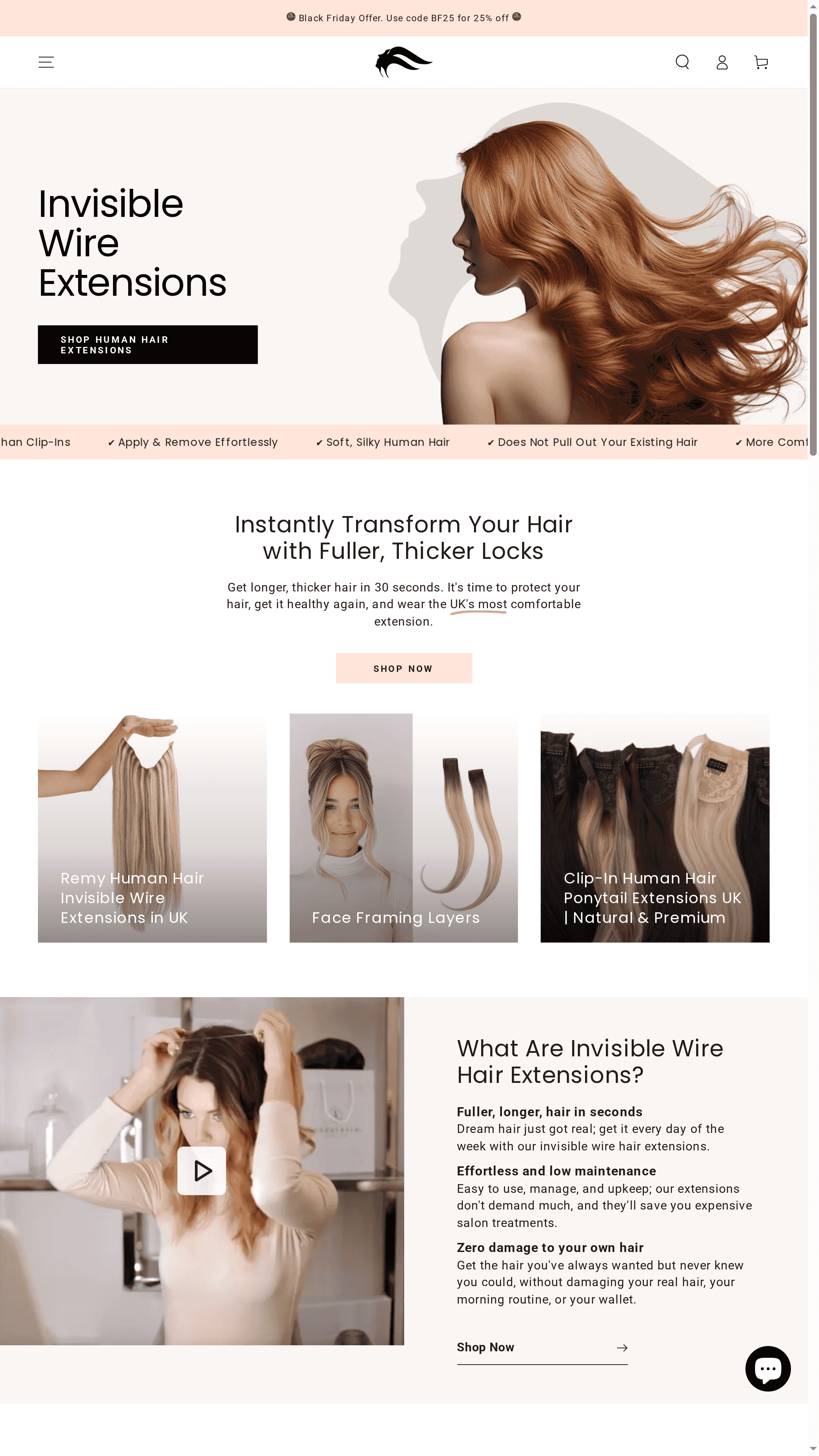
At Naturylextensions, the invisible wire extensions are designed to sit discreetly beneath your natural hair, adding length and volume without any clips, glue, or heat damage. Because they sit below the face-framing sections of your hair, they work with your existing layers rather than flattening them. The Remy human hair extensions blend naturally with your own hair colour and texture, and they are ready to wear in minutes. If you want to see what extension options look like alongside layered hair specifically, the invisible extension wires product page includes full styling guidance. Fast UK delivery and a free exchange policy make it straightforward to find the right match.
FAQ
What does face-framing mean in hairstyling?
Face-framing refers to shorter hair sections cut around the front of your hair, positioned to draw attention toward your facial features. Unlike full-head layers, these pieces sit specifically between the cheekbones and jawline to soften or enhance your face shape.
Do face-framing layers suit everyone?
Face-framing layers can be adapted to suit almost any face shape and hair type, but the placement, length, and cutting technique must be tailored to your individual features. A personalised consultation with your stylist ensures the layers flatter rather than overpower your face shape.
How often should face-framing layers be trimmed?
Face-framing layers typically need a refresh every 6 to 8 weeks. Because they are shorter than the rest of your hair, they grow out faster and lose their framing effect more quickly than a standard cut would.
Can you combine face-framing layers with hair extensions?
Yes. Extensions, particularly invisible wire styles, sit below the face-framing sections and add volume and length without disrupting the shorter front pieces. Blending both at the weight line keeps the framing effect intact and the overall look natural.
What is the difference between curtain bangs and face-framing layers?
Curtain bangs part in the middle and sweep outward from the face, while face-framing layers are longer pieces that brush the cheekbones and jawline. Both frame the face but behave differently when growing out and require different styling and maintenance routines.