TL;DR:
- Choosing Remy human hair with aligned cuticles is essential for preventing tangling and ensuring longevity.
- Matching extension colour to mid-lengths and ends creates a natural, seamless appearance rather than an obvious root line.
Choosing Remy human hair with properly aligned cuticles is the single most important factor on any checklist for buying extensions. Beyond that core criterion, the right purchase depends on matching length, colour, and texture to your natural hair, selecting the correct extension type for your lifestyle, and buying from a seller you can trust. Brands like Naturylextensions, Alma Hair Extensions, and Boho Chic Beauty each approach quality differently, which is why having a structured buying extensions checklist before you spend a penny saves both money and frustration. This guide covers every factor you need to verify, in the order that matters most.
1. Confirm the hair is genuine Remy with aligned cuticles
Remy human hair is defined as hair collected so that all strands run in the same root-to-tip direction, keeping the cuticle layer intact and aligned. This matters because aligned cuticles reduce tangling by allowing strands to slide smoothly past each other rather than catching and knotting. Chemically stripped or silicone-coated hair mimics this smoothness initially but leads to matting after four to eight weeks as the coating wears off.
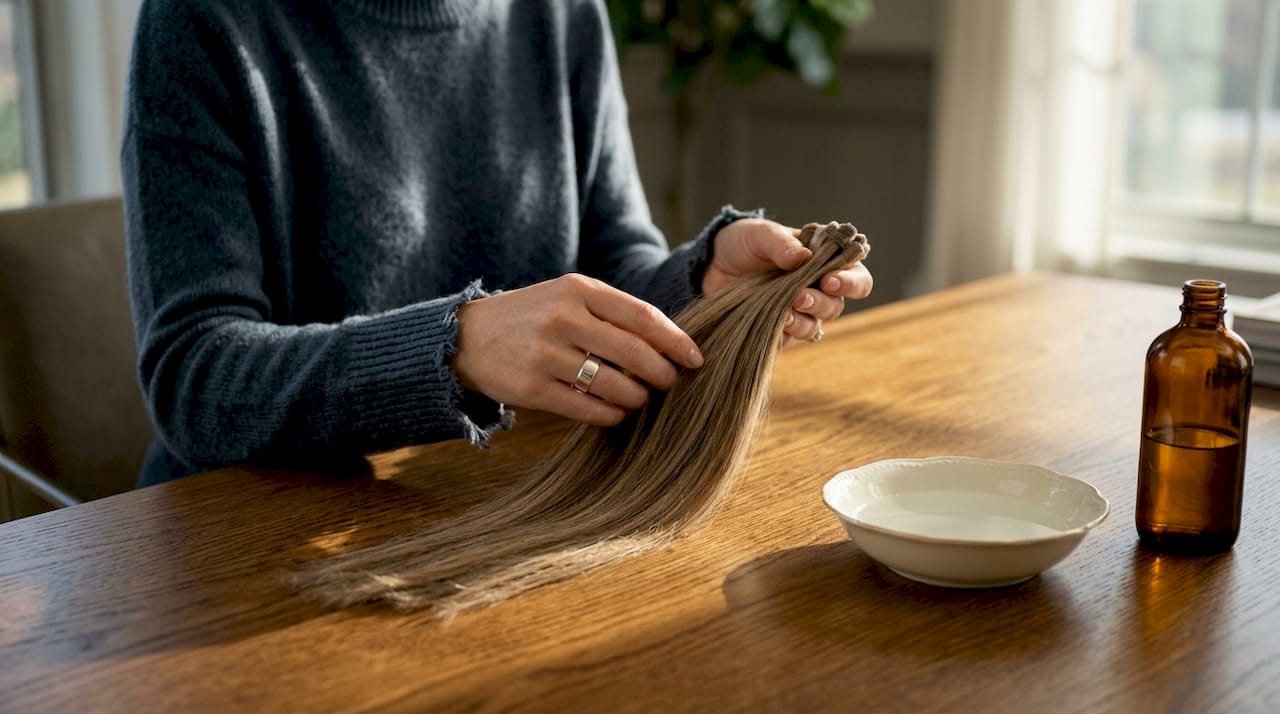
You can test for cuticle alignment at home before committing to a full set. The directional feel test involves running your fingers from root to tip (smooth) and then tip to root (resistant). If the hair feels equally smooth in both directions, the cuticle has been removed and the hair is likely coated. Genuine cuticle-aligned hair will always feel noticeably different depending on direction.
For a more definitive check, professional quality control uses an alkaline sodium hydroxide soak to dissolve silicone coatings while leaving true cuticle structure intact. This lab-grade test is rarely mentioned in consumer guides, but knowing it exists helps you ask the right questions of any seller. Single-donor cuticle-aligned hair provides superior detangling and longevity compared to pooled or chemically processed alternatives.
Pro Tip: Be cautious of marketing claims like “100% Remy.” Reputable sellers will offer transparency about sourcing and processing. If a brand cannot tell you where the hair originates or how it was collected, treat that as a red flag.
2. Check length consistency across the weft
Length consistency means every strand within the weft measures the same from root to tip, which is a nine-point verification standard recommended for online buyers. Inconsistent lengths create a choppy, uneven finish that no amount of styling will fully disguise. Hold the weft up to the light and look for stray shorter strands or uneven hemlines before purchasing.
When buying online, request close-up product photos that show the weft edge clearly. Reputable sellers will have these available, and customer review photos are often more revealing than brand imagery. Inconsistent length is one of the most common complaints in negative reviews and one of the easiest quality issues to spot before purchase.
3. Match colour to your mid-lengths and ends, not your roots
Matching extension colour to your mid-lengths and ends rather than your roots produces a far more natural result. Hair colour naturally lightens from root to tip, so matching to your roots creates an obvious colour block at the point where extensions meet your natural hair. This is one of the most practical tips for purchasing extensions that many first-time buyers overlook.
Always view colour swatches or samples in natural daylight rather than artificial lighting, which distorts tone significantly. If your hair has highlights or a balayage, look for multi-tonal extension sets that replicate that dimension rather than a flat single shade. A good colour chart from a trusted seller will show both the base tone and any secondary tones within the weft.
| Hair type | Best colour matching approach |
|---|---|
| Single-tone hair | Match to mid-lengths and ends using a colour chart |
| Highlighted hair | Choose multi-tonal or highlighted extension sets |
| Balayage hair | Select ombre or blended wefts that mirror the gradient |
| Colour-treated hair | Request a physical sample swatch before full purchase |
4. Assess texture in both wet and dry states
Texture matching is the factor most buyers underestimate on their extension quality checklist. Your natural hair texture changes between wet and dry states, and your extensions need to behave consistently in both. Fine, straight hair will look mismatched next to coarse, wavy extensions even if the colour is perfect.
Assess your own hair when it is freshly washed and air-dried with no products, then compare that to extension samples. If you are buying online, read reviews specifically from buyers who describe their hair type as similar to yours. Sellers like Naturylextensions provide detailed product descriptions that specify texture, which makes this comparison far easier than guessing from a single product photo.
5. Choose the right extension type for your lifestyle
The four most common extension types each carry different commitment levels. Here is what the longevity data shows:
- Clip-ins: Last six to twelve months with proper care. Fully removable daily, making them ideal for occasional wear or first-time buyers.
- Tape-ins: Require repositioning every six to eight weeks. Semi-permanent and better suited to those comfortable with salon visits.
- Sew-ins: Last two to four months. Require professional installation and removal, which adds to the overall cost.
- Micro-links: Also two to four months. Individual strand application gives the most natural movement but demands careful maintenance.
Clip-in extensions are the lowest-risk starting point if you are new to extensions or want flexibility. Invisible wire extensions, such as those offered by Naturylextensions, sit in a similar category: quick to apply, damage-free, and removable without any professional help.
6. Select the correct weight for your hair thickness
Extension weight directly affects comfort, scalp stress, and how natural the result looks. Weight guidelines based on hair thickness are as follows: fine hair suits approximately 100 to 140g, medium hair 120 to 160g, and thick hair 180 to 220g. Going too heavy on fine hair causes visible pulling at the roots and can lead to breakage over time.
Most reputable sellers list the weight of each set clearly in the product description. If you are unsure of your hair thickness, a simple test is to take a single strand and hold it up to the light. Fine hair is barely visible; medium hair has a clear outline; thick hair is clearly defined and feels substantial between your fingers.
7. Verify clip quality and attachment security
Clip quality is a practical detail that separates a comfortable wearing experience from one that causes headaches and slippage. Look for clips with a silicone or rubber lining on the inside, which grips the hair without pulling or causing breakage. Thin metal clips with no lining are a common cost-cutting measure in lower-quality sets and are worth avoiding.
Test clip tension by opening and closing each clip several times before wearing. The spring should feel firm and snap shut with resistance. Loose or wobbly clips will not hold through a full day of wear, particularly if you have fine or silky hair. This is a detail that customer review photos often capture well, so look for close-up images in verified purchase reviews.
8. Evaluate seller reputation and return policies
Return policies for hair extensions typically allow 14 to 30 days for unopened packages, but opened or used sets are almost always excluded due to hygiene regulations. Understanding this before purchase is critical because you cannot test extensions on your head and then return them if the colour is wrong. Order a sample swatch or colour match service wherever possible.
Verified customer reviews with photos and videos are the most reliable signal of seller quality. Watch for warning signs such as excessive shedding in review photos, an unnatural plastic-like shine, or reviewers noting that the colour looked different in person. Brands with transparent sourcing information and clear contact details for customer service are consistently more trustworthy than those with vague product descriptions.
Pro Tip: Before purchasing, check whether the seller offers a colour matching service or sample swatches. Naturylextensions provides this kind of support, which removes the guesswork from online buying entirely.
- Read at least ten verified reviews, prioritising those with photos.
- Confirm the return window and whether it applies to opened packaging.
- Check who pays return shipping costs if an exchange is needed.
- Look for a physical address or registered UK business details on the website.
- Verify that the seller states the hair origin and processing method clearly.
9. Factor in maintenance requirements before you buy
Care routines vary significantly between extension types, and choosing extensions that do not fit your daily routine is one of the most common reasons buyers feel disappointed. Clip-ins require washing every 15 to 20 wears with a sulfate-free shampoo, gentle brushing from ends to roots, and air-drying flat. Tape-ins and micro-links need professional maintenance appointments and specific bond-safe products.
The tools you need also vary. A wide-tooth comb or a loop brush designed for extensions prevents unnecessary shedding during detangling. Heat styling is possible with Remy human hair extensions, but always use a heat protectant spray and keep temperatures below 180°C to preserve the cuticle structure. Neglecting these steps shortens the lifespan of even the highest-quality set.
Balancing the look you want with the maintenance you are genuinely willing to commit to is the honest question at the heart of any hair extension buying guide. A premium clip-in set worn and cared for properly will outlast a semi-permanent set that receives inconsistent upkeep.
10. Calculate cost-per-wear, not just upfront price
Remy human hair extensions range from approximately £40 to £160 for quality clip-in sets, and cost-per-wear is a smarter metric than the sticker price alone. A £120 Remy set worn 60 times costs £2 per wear. A £30 synthetic set that lasts 10 wears costs £3 per wear and looks noticeably less natural throughout. The maths consistently favours investing in quality.
Synthetic extensions also cannot be heat-styled, which limits their versatility significantly. Remy human hair behaves like your own hair under heat tools, meaning you get a genuinely seamless finish that synthetic fibres cannot replicate. Paying more upfront for properly matched Remy extensions saves money over time through better durability and a more natural appearance.
Key takeaways
A successful extension purchase depends on verifying Remy hair quality, matching colour and texture precisely, and choosing a seller with transparent policies and genuine reviews.
| Point | Details |
|---|---|
| Prioritise cuticle alignment | Aligned cuticles prevent tangling; use the directional feel test before buying. |
| Match colour to ends, not roots | Hair lightens from root to tip, so matching ends creates a more natural blend. |
| Choose weight by hair thickness | Fine hair suits 100 to 140g; thick hair suits 180 to 220g for comfort and security. |
| Understand return policies upfront | Most sellers only accept unopened returns, so order swatches before committing. |
| Calculate cost-per-wear | Quality Remy sets cost more upfront but deliver better value over repeated use. |
What I have learnt from years of watching buyers get this wrong
The most consistent mistake I see is buyers focusing entirely on price and colour, then wondering why their extensions look obviously fake after two weeks. The answer is almost always the same: coated, non-cuticle-aligned hair that was marketed as Remy. The term “Remy” is one of the most overused and least regulated claims in the hair extension industry. Discerning buyers should request sample testing and ask direct questions about sourcing and processing rather than accepting the label at face value.
My honest recommendation is to start with clip-ins or an invisible wire set if you are new to extensions. They require no commitment, no salon appointment, and no specialist removal. You learn what length, weight, and texture suit you before investing in anything semi-permanent. Naturylextensions takes this approach seriously with their invisible wire range, which is genuinely one of the most accessible entry points for first-time buyers.
The other thing worth saying plainly: maintenance willingness matters more than most buyers admit to themselves. I have seen beautifully sourced Remy sets ruined within six weeks because the owner brushed them dry from root to tip or used a shampoo with sulphates. The extensions are only as good as the care they receive. Be honest about your routine before you choose your type.
— Sam
Discover Naturylextensions’ Remy hair range
Naturylextensions specialises in premium Remy human hair extensions designed for quick, damage-free wear. Their invisible wire extensions, ponytail sets, and face-framing pieces are crafted from ethically sourced Remy hair with cuticle alignment as standard. Colour matching support is available to help you find the right shade before you order, and fast UK delivery means you are not waiting weeks to try your new look. If you want extensions that blend naturally, hold up to daily wear, and require no salon appointment to apply, Naturylextensions is the place to start.
FAQ
What is the most important factor when buying hair extensions?
Cuticle alignment is the most critical factor. Remy human hair with intact, aligned cuticles resists tangling and lasts significantly longer than coated or chemically processed alternatives.
How do I match extension colour to my natural hair?
Match the extension shade to your mid-lengths and ends rather than your roots. Hair naturally lightens from root to tip, so matching to your roots creates an unnatural colour block.
What weight of extensions should I choose?
Fine hair suits 100 to 140g, medium hair 120 to 160g, and thick hair 180 to 220g. Choosing the correct weight prevents scalp stress and keeps the blend looking natural.
Can I return hair extensions if the colour is wrong?
Most UK sellers accept returns only on unopened packaging due to hygiene regulations, with a typical window of 14 to 30 days. Always order a colour swatch before purchasing a full set.
Are clip-in extensions better than tape-ins for beginners?
Clip-ins are the better starting point for most beginners. They are removable daily, require no professional installation, and last six to twelve months with proper care, making them lower risk and more flexible than semi-permanent options.