TL;DR:
- Choosing extension color is essential for a natural look, with undertone being the most critical factor. Matching warm, neutral, or cool undertones and considering hair depth and dimension ensures seamless blending. Testing swatches under different lights and against mid-lengths prevents mismatches and enhances natural appearance.
Extension colour selection is the single most important factor in whether hair extensions look natural or artificial when worn. Get it right, and your extensions blend invisibly into your natural hair. Get it wrong, and even the highest quality Remy human hair will look mismatched and obvious. The process goes well beyond picking a shade that looks similar in a packet. It requires understanding undertones, hair dimension, and how lighting affects colour perception. This guide covers every factor you need to make a confident, informed choice.
What are the key colour factors in extension matching?
Undertone is the most critical factor in visible extension mismatches, more so than depth or shade level. According to Alma Hair Extensions’ stylist protocol, undertone is the biggest visible mismatch variable, sitting above all other considerations. Undertones fall into three categories: warm (golden, red, or orange), neutral (a balance of warm and cool), and cool (ashy or blue-based). Matching the wrong undertone category to your natural hair is the fastest route to an unnatural result.
Beyond undertone, you need to consider depth. Depth refers to how light or dark your hair is on a scale from 1 (black) to 10 (lightest blonde). Extensions that match your undertone but differ significantly in depth will still create a visible seam. The goal is to align both depth and undertone before you consider anything else.
Natural hair often contains at least two tones, a base and a highlighted dimension, which means a single flat colour extension rarely blends perfectly. Texture and shine also affect how colour reads. High-shine extensions on matte natural hair will appear lighter than they actually are, even if the colour code matches exactly.
Key factors to assess before choosing your extension colour:
- Undertone: Identify whether your hair is warm, neutral, or cool before comparing any shades.
- Base depth: Match the darkest tone in your hair first, then consider highlights.
- Hair dimension: Check whether your natural hair has one tone or multiple tones running through it.
- Texture and shine: High-gloss extensions can read lighter against matte or textured natural hair.
- Lighting conditions: Colour swatches differ visually under salon light, daylight, and phone flash, which means a match confirmed in one setting can fail in another.
Pro Tip: Hold your swatch against the mid-lengths and ends of your hair, not the roots. This is where extensions sit and where mismatches are most visible.
How does colour psychology affect your extension choice?
Colour choice in extensions is not purely about matching. It also communicates personality and mood. Warm colours evoke energy and vibrancy, while cool tones convey calmness and sophistication. This means your extension colour can actively shape how others perceive you, not just how natural your hair looks.
- Warm tones (golden blonde, copper, auburn): These shades project warmth, approachability, and confidence. They work well for people who want their hair to feel lively and expressive.
- Cool tones (ash blonde, cool brown, platinum): These shades read as polished and refined. They suit people who prefer a sleek, understated aesthetic.
- Neutral tones (beige blonde, natural brown): These are the most versatile. They sit between warm and cool, making them easier to blend with a wider range of natural hair colours.
- Contrasting or complementary shades: Complementary extension colours can add visual depth and personal style expression beyond natural matching. A few face-framing pieces in a slightly lighter or warmer shade can lift the whole look without looking unnatural.
Cultural context also plays a role. Certain shades carry different associations across communities and personal histories. Your colour choice should reflect your own style intentions, not just what is technically closest to your natural hair.
Single-colour vs multi-tonal extensions: which is right for you?
The choice between a single colour and a multi-tonal blend is one of the most practical decisions in the colour selection process. Each approach has clear strengths and limitations.
Matching the base colour tone first before layering highlight shades creates a natural blend and avoids flat seams. This is the foundation of the multi-tonal approach, and it reflects how natural hair actually grows. Single-colour extensions simplify the matching process, but they can look flat against natural hair that has dimension.
| Factor | Single colour | Multi-tonal blend |
|---|---|---|
| Naturalness | Can appear flat if natural hair has dimension | Mimics natural highlights and depth more closely |
| Ease of matching | Simpler to select and compare | Requires more careful shade layering |
| Cost | Generally lower | Often higher due to blended manufacturing |
| Best suited for | Very uniform natural hair | Hair with highlights, balayage, or natural variation |
| Maintenance | Easier to maintain colour consistency | May require more attention as shades fade at different rates |
Techniques like balayage blending and superblend extensions use multiple tones woven together to replicate the way light naturally moves through hair. Stylists often layer two or three shades, a deeper base with one or two lighter tones, to create the depth and shadow that makes extensions look like they grew there. For most people with natural hair, a multi-tonal extension will deliver a more convincing result than a single flat shade.
How to choose the perfect extension colour: a practical guide
Selecting the right extension colour becomes straightforward once you follow a clear process. The steps below reflect the methods used by professional stylists and are directly applicable whether you are shopping online or in a salon.
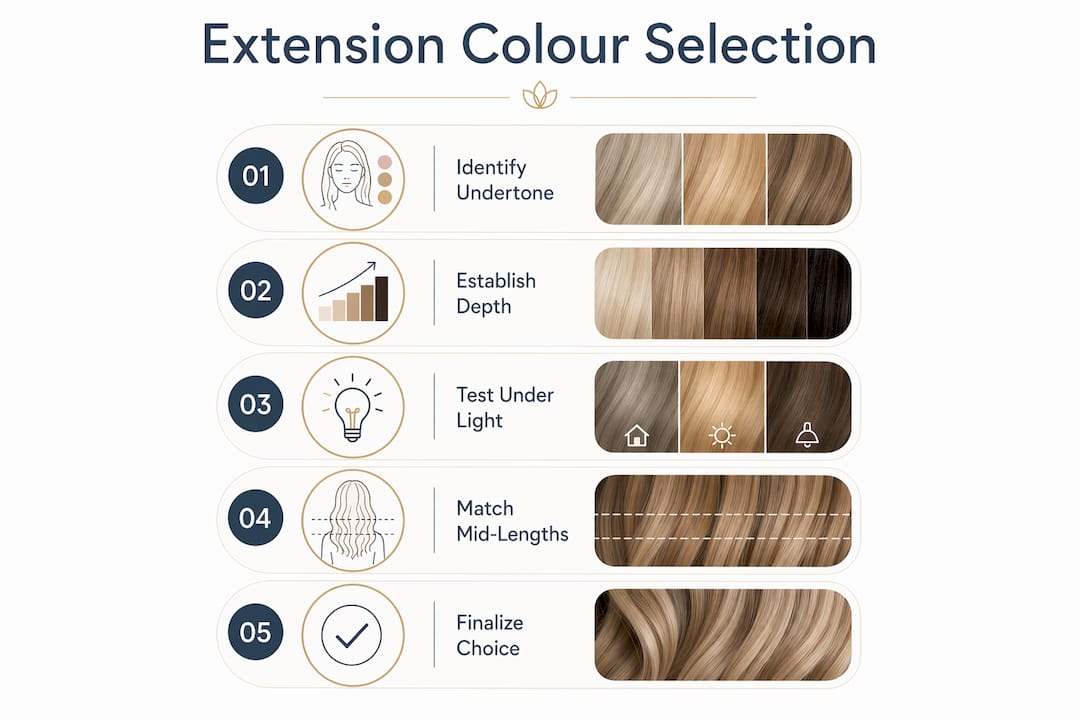
Step 1: Identify your undertone. Stand in natural daylight and look at your hair. Golden, red, or orange tones indicate warm undertones. Ashy or blue-grey tones indicate cool. A mix of both suggests neutral.
Step 2: Establish your base depth. Identify the darkest colour running through your hair. This is your base depth and the first thing your extension colour must match.
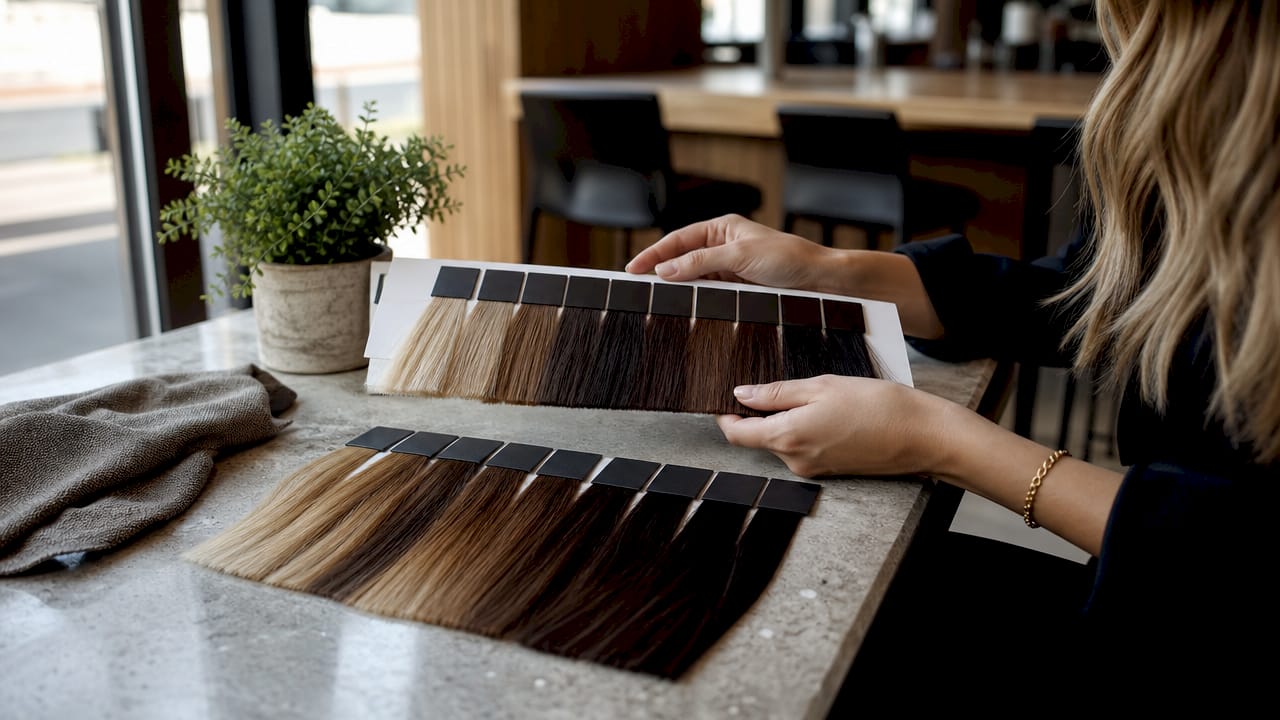
Step 3: Test swatches under multiple light sources. Expert stylists use the three-window protocol, checking colour match under salon light, daylight, and phone flash. A swatch that matches in all three settings is a reliable choice.
Step 4: Hold the swatch against your mid-lengths. Place the extension swatch alongside the mid-lengths and ends of your hair, not the roots. Extensions sit at this level and this is where the blend is most visible.
Step 5: Assess dimension. If your hair has highlights or balayage, a single-colour extension will not blend as well as a multi-tonal option. Look for extensions labelled as blended, superblend, or balayage-style.
Step 6: Consider your style goal. If you want a natural finish, match your base tone first and add dimension with highlights. If you want a statement look, a complementary or slightly contrasting shade can work beautifully when applied to face-framing pieces.
- Consult a colour matching guide if you are unsure between two shades.
- Use the brand’s colour chart rather than relying on screen colour alone, as monitor calibration varies.
- When in doubt, go slightly lighter rather than darker. Lighter extensions are easier to blend and less likely to create a harsh line.
Pro Tip: If you colour your hair regularly, choose your extension colour to match your hair two to three weeks after a fresh colour, not immediately after. This is when your colour settles into its true tone.
What common mistakes should you avoid in colour selection?
Most extension colour failures come down to a small set of repeatable errors. Knowing them in advance saves you time, money, and frustration.
- Mismatching undertones: Cool extensions against warm natural hair appear grey under fluorescent lighting. This is the most common and most visible failure.
- Ignoring base tone: Matching only the highlights in your hair without addressing the base creates a flat, disconnected blend.
- Testing only in one light: A match confirmed under a single light source can fail completely outdoors or under office lighting.
- Choosing too dark a shade: Extensions that are noticeably darker than your natural ends create a harsh, obvious line at the point of attachment.
- Overlooking texture differences: High-shine extensions against low-shine natural hair will always read as a different colour, even if the shade code matches.
- Ignoring long-term colour change: Sun exposure, washing, and styling alter extension colour over time. A perfect match on day one may drift after several weeks of wear.
Avoiding these mistakes is largely a matter of slowing down the selection process. Rushing to a quick match based on a single comparison is where most people go wrong.
Key takeaways
Undertone matching is the single most decisive step in extension colour selection, and getting it right before anything else determines whether your extensions look natural or artificial.
| Point | Details |
|---|---|
| Undertone comes first | Match warm, neutral, or cool undertone before comparing depth or shade level. |
| Base tone before highlights | Align the deepest colour in your hair first, then layer in dimension with lighter tones. |
| Test under three light sources | Check swatches under salon light, daylight, and phone flash to confirm accuracy. |
| Multi-tonal beats single colour | Blended extensions mimic natural hair dimension and blend more convincingly for most people. |
| Avoid common pitfalls | Cool extensions on warm hair, ignoring texture, and testing in one light are the top causes of mismatch. |
Why undertone is the detail most people overlook
I have seen a lot of people spend considerable time comparing shade numbers and colour charts, only to end up with extensions that look obviously wrong. Almost every time, the culprit is undertone. Not depth, not length, not brand. Undertone.
The reason it catches people out is that undertone is not always obvious in artificial light. You can hold two swatches side by side in a shop and they look identical. Step outside, and one turns ashy while the other glows golden. That shift is undertone doing its work. Knowing this, I always recommend checking your hair in natural daylight before you even begin looking at extension shades. It gives you a far more honest read of what you are actually working with.
The other thing I have noticed is that people underestimate how much their hair changes between a fresh colour and a few weeks later. A freshly coloured warm brunette can look quite different to the same hair three weeks on, once the vibrancy has settled. Choosing extensions to match the settled tone, rather than the fresh one, gives you a longer window of accurate blending.
My honest advice is to slow down, test thoroughly, and prioritise seamless colour blending over speed. The difference between a rushed choice and a careful one is visible every single day you wear your extensions.
— Sam
Naturylextensions: find your perfect colour match
Choosing the right extension colour is much easier when you have a quality range built around real colour depth and warmth variation.
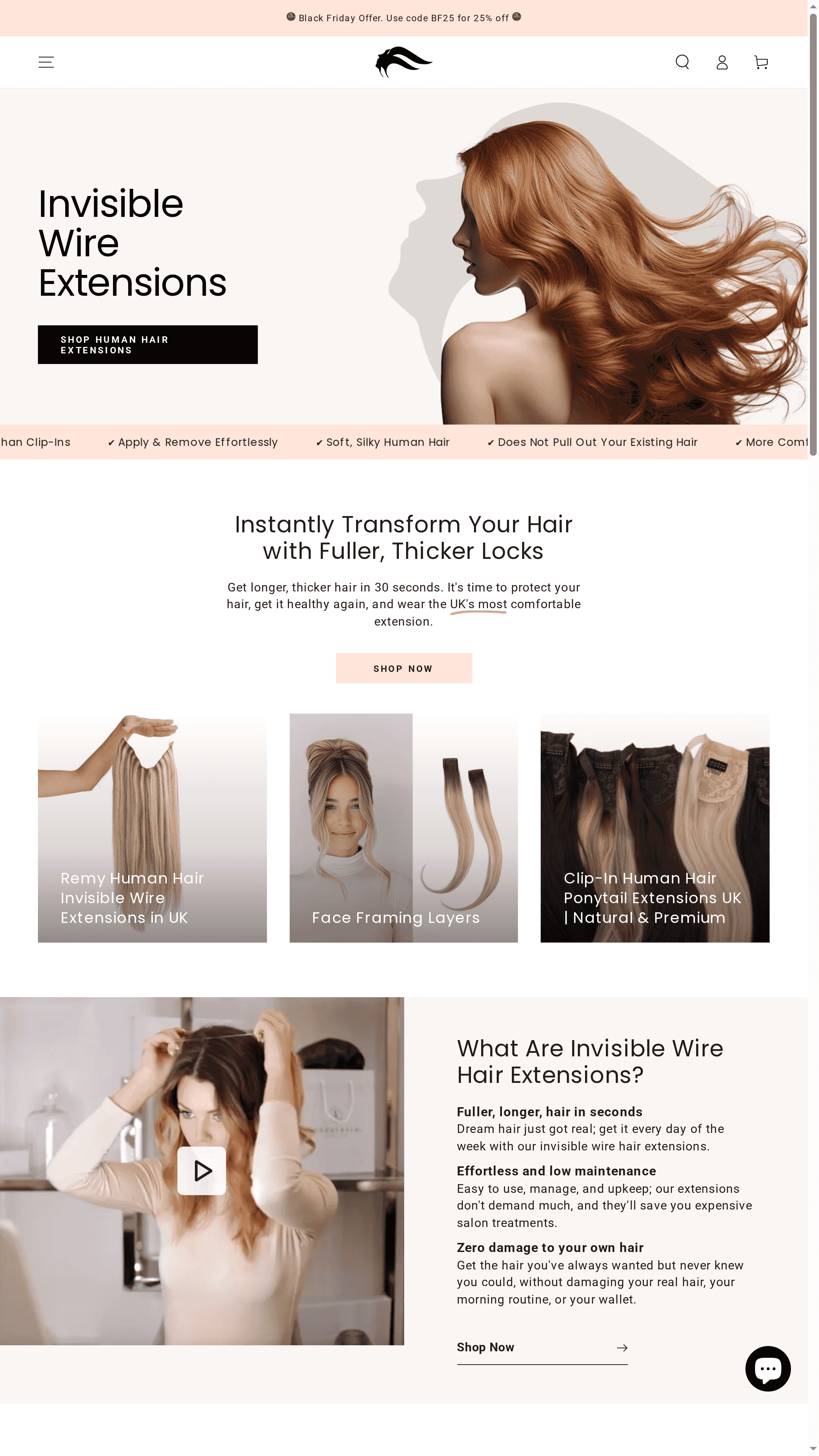
Naturylextensions offers a curated collection of Remy human hair extensions across multiple warmth levels and depth options, designed to suit a wide range of natural hair tones. The invisible wire extensions and face-framing pieces are crafted from ethically sourced Remy hair, which means the cuticle alignment gives a natural shine that blends accurately with your own hair. Naturylextensions also offers a free exchange policy, so if your first colour choice is not quite right, you can swap without stress. Fast UK delivery means you are not waiting long to see the result.
FAQ
What is the most important factor in extension colour matching?
Undertone is the most critical factor. Mismatched undertones, such as cool extensions against warm natural hair, cause extensions to appear grey and unnatural, particularly under fluorescent light.
How do I know if my hair has warm or cool undertones?
Check your hair in natural daylight. Golden, red, or orange tones indicate warm undertones. Ashy or blue-grey tones indicate cool undertones. A mix of both suggests a neutral base.
Should I match extensions to my roots or my ends?
Match extensions to your mid-lengths and ends. This is where extensions sit and where the blend is most visible during wear.
Are multi-tonal extensions better than single-colour extensions?
For most people, yes. Natural hair contains at least two tones, and multi-tonal extensions replicate that dimension far more convincingly than a single flat shade.
How does lighting affect extension colour selection?
Colour swatches can appear significantly different under salon light, daylight, and phone flash. Testing your swatch under all three light sources confirms a reliable match before you commit to a colour.