TL;DR:
- Quick extension methods, such as halo and clip-in extensions, offer fast, damage-free ways to add length and volume at home. They require minimal time and cost compared to traditional salon extensions, making them ideal for women with fine hair, busy schedules, or seeking temporary results. Proper preparation and placement are essential for natural looks and extension longevity.
Quick extension application is defined as any at-home method that adds length or volume to natural hair in under ten minutes, without professional tools, heat bonding, or salon appointments. The two leading methods are invisible wire extensions (also called halo extensions) and clip-in extensions. Halo extensions apply in under 1 minute, while clip-in sets take 5–10 minutes once you have practised the technique. The benefits of quick extension application go well beyond speed. They include zero damage to your natural hair, significant cost savings over time, and the freedom to change your look whenever you want, without booking a single appointment.
How do quick extension methods compare with traditional salon extensions?
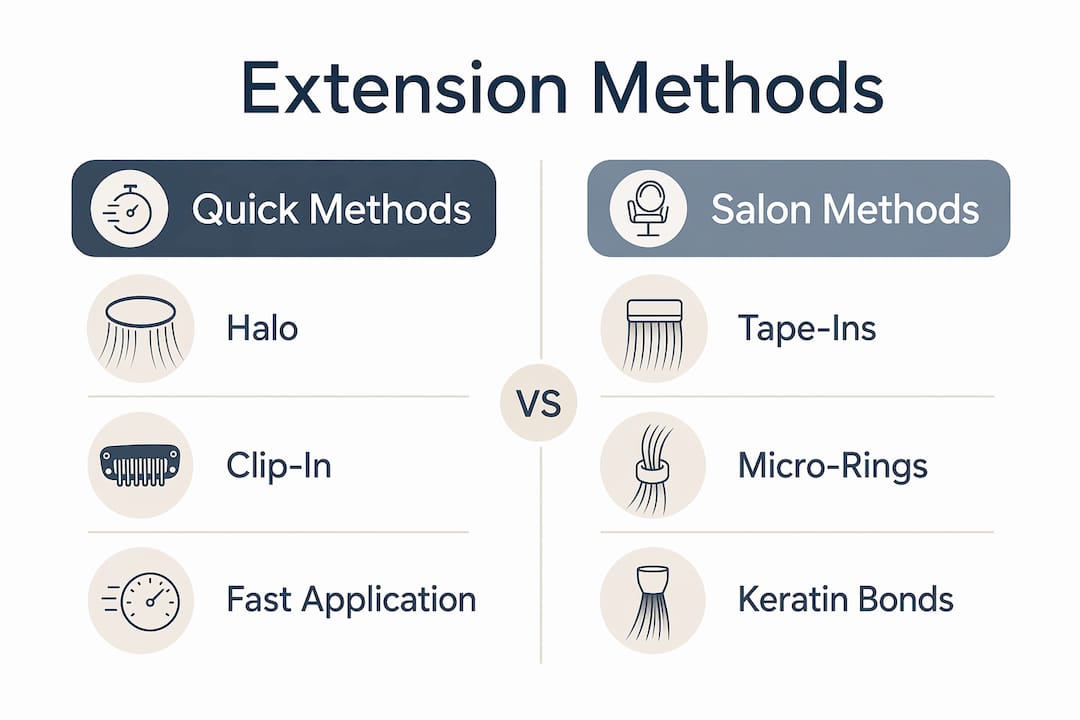
The difference between quick DIY extensions and traditional salon methods is significant, and it shows up in four key areas: application time, damage risk, cost, and flexibility.
Traditional salon extensions, including tape-ins, micro-rings, and keratin-bonded methods, require 60–90 minutes or more in the chair. They also need professional maintenance every 6–8 weeks as your natural hair grows. Halo extensions cause no damage because they rest on your head without glue, heat, or tension. Clip-ins attach with small pressure clips that you remove each evening, so your hair never experiences prolonged pulling or friction.
The table below shows how the main extension types compare across the factors that matter most.
| Factor | Invisible wire (halo) | Clip-in extensions | Salon tape-ins |
|---|---|---|---|
| Application time | Under 1 minute | 5–10 minutes | 60–90+ minutes |
| Damage risk | None | Minimal | Moderate to high |
| Professional needed | No | No | Yes |
| Maintenance visits | None | None | Every 6–8 weeks |
| Styling flexibility | Full | Full | Limited by bonds |
| Upfront cost | One-off purchase | One-off purchase | High, recurring |
DIY damage-free extensions offer flexibility and health-first benefits that salon-dependent tape-ins simply cannot match. That shift reflects a broader consumer preference for methods that protect natural hair rather than compromise it.
Pro Tip: If you are new to extensions, start with a halo style. The single wire sits invisibly beneath your top layer of hair, and there is nothing to clip, glue, or thread. You can be ready in the time it takes to brush your hair.
What are the cost and time savings of quick extension applications?
The financial case for quick extension methods is straightforward. Salon tape-ins or keratin bonds carry a high upfront cost, plus the expense of professional maintenance appointments every 6–8 weeks. Those recurring visits add up quickly over a year.
High-quality Remy extensions last 12+ months with proper care. That lifespan means a single purchase covers a full year of daily wear, with no additional salon fees. The savings compared to repeated professional appointments are considerable.
The time savings are equally real. Consider what you avoid each time you skip a salon visit:
- Travel time to and from the salon
- Waiting time before your appointment begins
- 60–90 minutes in the chair for application or maintenance
- Recovery time if your scalp or hair needs attention after bonding
Quick extension methods also reduce your daily styling time. Halo and clip-in extensions deliver instant volume and length, which means you spend less time with heated tools trying to build body into fine or flat hair.
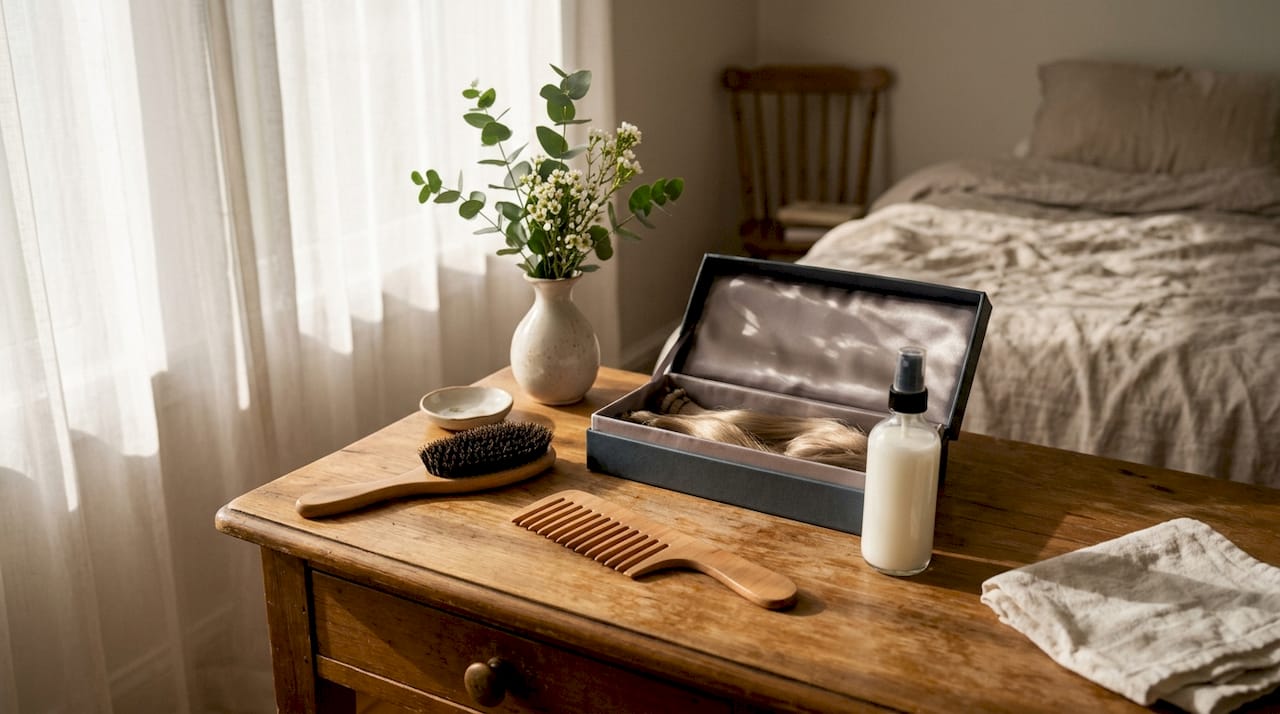
Pro Tip: Store your extensions flat in a silk or satin-lined box after each use. Proper storage is one of the simplest ways to protect your investment and keep the hair looking fresh for longer.
What practical tips improve quick extension application?
Getting the best result from quick extensions comes down to preparation, placement, and daily care. Each step matters, and skipping any one of them is the most common reason extensions look unnatural or slip during the day.
Prepare your hair correctly
Clarifying shampoo before application removes residual oils and conditioner that cause clip-ins to slide. Clean, product-free roots give clips and wires a firm grip. Avoid applying conditioner to your roots on the days you plan to wear extensions.
Follow the correct placement steps
- Section your hair horizontally, leaving a top layer loose to cover the wefts.
- Tease your roots lightly at each clip placement point. This creates a secure anchor and stops wefts from sliding downward.
- Clip each weft close to the root, not mid-shaft, for better hold and a more natural appearance.
- For halo extensions, position the wire just behind your hairline and pull your top layer down over it. Adjust the wire tension so it sits flat.
- Blend the extension hair with your natural hair using a wide-tooth comb or your fingers, working from mid-length to ends.
Care for your extensions daily
Detangle from the ends upward to avoid stressing the hair fibres. Never brush from root to tip, as this causes matting and premature wear. Use a loop brush or a wide-tooth comb rather than a standard paddle brush.
Pro Tip: Avoid applying dry shampoo or heavy styling products directly to the wefts. These products build up on the hair fibres and shorten the lifespan of your extensions significantly.
Proper hair preparation and correct placement are the two factors that professional extensionists prioritise above all else. Replicating that approach at home gives you results that are just as polished.
Who benefits most from quick extension applications?
Quick extension methods suit a wide range of lifestyles and hair types, but certain women get the most value from them.
- Women with fine or fragile hair. Traditional bonded extensions add weight and tension that can worsen thinning. Halo and clip-in methods add volume without any attachment to the hair shaft, making them the safest option for fine or thinning hair.
- Busy professionals. If your morning routine is already tight, a method that takes under ten minutes is genuinely useful. You can go from flat to full without rearranging your schedule.
- Women who want non-committal changes. Clip-ins and halos are completely removable. You wear them when you want to and take them out when you do not. There is no waiting for bonds to grow out or paying for removal appointments.
- At-home self-care enthusiasts. The shift toward DIY damage-free extensions reflects a broader preference for self-care that does not depend on a salon. Quick application methods fit naturally into that routine.
- Women preparing for events. Instant volume and length for a wedding, party, or photoshoot is achievable in minutes. You do not need to book an appointment weeks in advance.
The common thread across all these groups is the desire for control. Quick extension methods put the decision about your hair entirely in your hands.
Key takeaways
Quick extension application is the most practical route to fuller, longer hair for women who value their time, their hair health, and their budget.
| Point | Details |
|---|---|
| Speed of application | Halo extensions apply in under 1 minute; clip-ins take 5–10 minutes with practice. |
| Zero damage | Halo and clip-in methods use no glue, heat, or tension on your natural hair. |
| Long-term savings | Quality Remy extensions last 12+ months, removing the need for recurring salon fees. |
| Preparation is key | Clean, product-free roots and light teasing at clip points prevent slipping and improve hold. |
| Suits most lifestyles | Fine hair, busy schedules, and event styling all benefit from quick DIY extension methods. |
Why I think quick extensions are the most underrated beauty decision you can make
I have watched the conversation around hair extensions shift considerably over the past few years. The old assumption was that good extensions required a salon. That assumption is now outdated, and the women who have moved past it are getting better results at a fraction of the cost.
What strikes me most is how much confidence comes with knowing you can do this yourself. There is something genuinely empowering about not needing an appointment to feel good about your hair. The damage-free approach to extensions also aligns with how younger women are thinking about hair health. They are not willing to sacrifice the condition of their natural hair for a style. Quick application methods make that trade-off unnecessary.
My honest recommendation for anyone starting out is to choose a halo extension first. The learning curve is almost flat. You position the wire, drop your top layer over it, and you are done. Once you see how natural it looks, the idea of sitting in a salon chair for ninety minutes starts to feel like an unnecessary expense.
The one thing I would caution against is buying cheap extensions to test the concept. Poor-quality hair tangles quickly, looks flat, and puts you off the whole method before you have given it a fair chance. Invest in ethically sourced Remy hair from the start. The difference in appearance and longevity is not subtle.
— Sam
Naturylextensions: quick, damage-free extensions delivered to your door
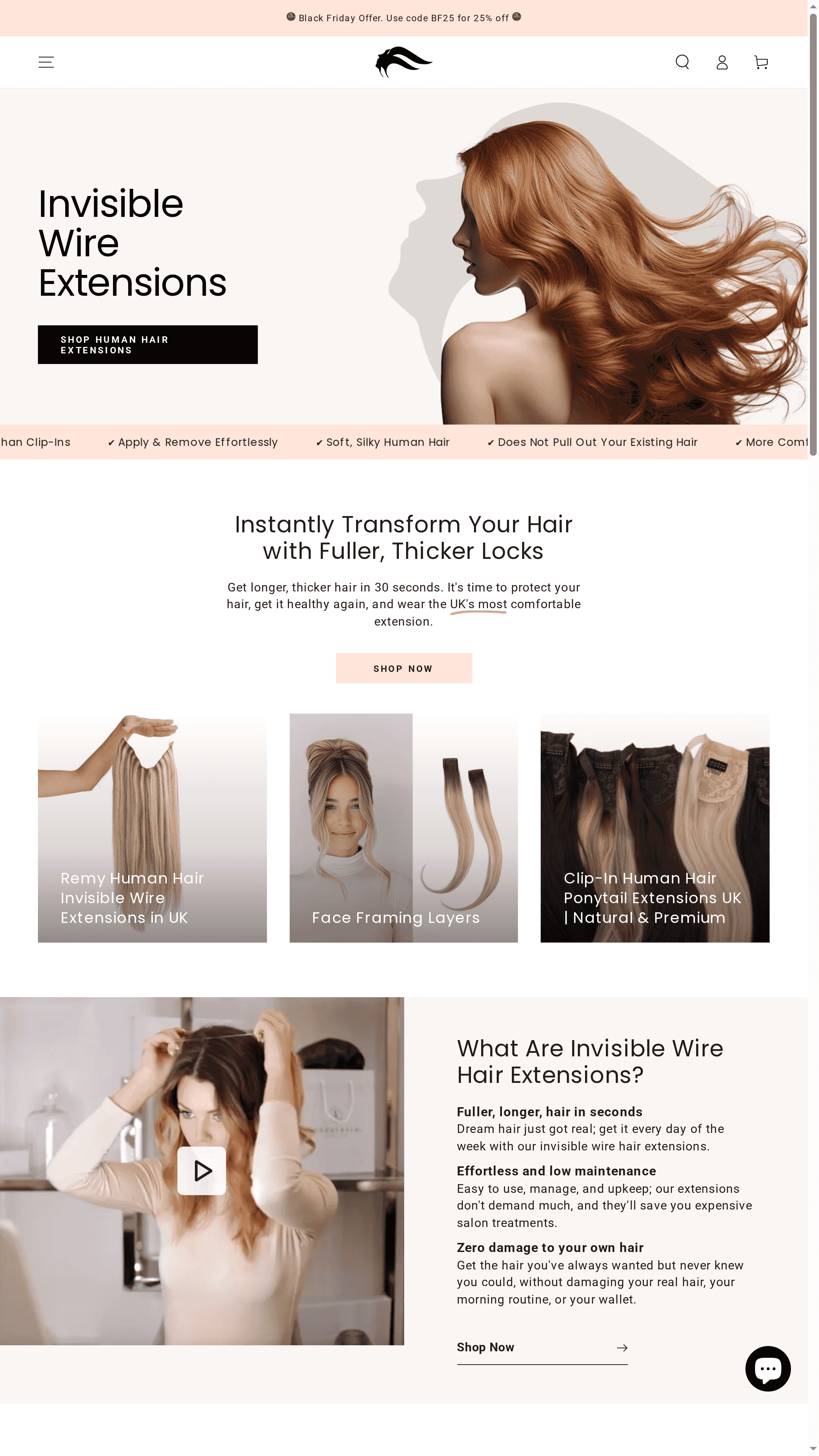
Naturylextensions specialises in invisible wire extensions made from premium, ethically sourced Remy human hair. Each set is designed for fast, at-home application with no tools, no glue, and no professional help required. The hair is full-cuticle Remy quality, which means it blends naturally with your own hair and holds up to heat styling, curling, and straightening. Naturylextensions offers fast UK delivery and a free exchange policy, so finding your perfect match is straightforward. Visit Naturylextensions to browse the full range of invisible wire extensions and find the colour and length that suits you.
FAQ
How fast can you apply halo extensions at home?
Halo extensions apply in under 1 minute once you know the technique. There are no clips to fasten or sections to separate, making them the fastest extension method available.
Do quick extension methods damage natural hair?
Halo extensions cause no damage because they use no glue, heat, or tension. Clip-ins carry minimal risk when removed each evening and applied correctly over teased roots.
How long do clip-in or halo extensions last?
Quality Remy extensions last 12+ months with proper care, including gentle detangling from the ends upward and flat storage after each use.
Are quick extensions suitable for fine or thinning hair?
Yes. Halo and clip-in methods add volume without attaching to the hair shaft, which makes them the safest choice for fine or fragile hair. Specialist fill-in extensions for thinning hair are also available for targeted volume.
What is the most common mistake when applying clip-in extensions?
Skipping root preparation is the most frequent error. Hair with residual conditioner or oil causes clips to slide throughout the day. Clarifying shampoo before application creates the clean, grippy surface that keeps wefts in place.