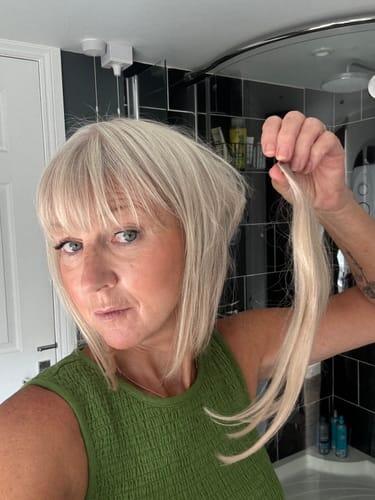
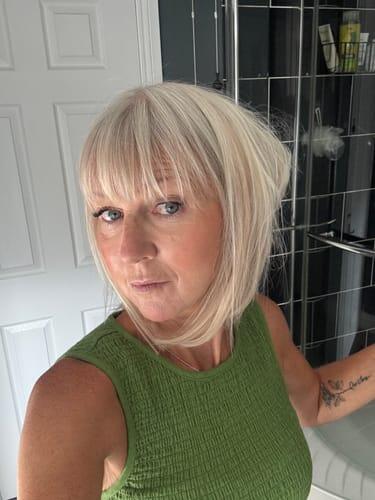
Published September 2026. Based on the shades Naturyl's UK customers choose most often, and 487 verified customer reviews.
Blonde is the most popular hair extension colour in the UK by a wide margin. Blonde shades outsell every other family combined, brown comes second, and the in-between "bronde" and toffee tones third. The single most popular shade is Silver Blonde, an ash blonde with silvery lowlights, followed by Luscious Blonde and Mixed Blonde. Below is the full ranking, why the top shades win, how the picture changes for one-piece invisible wire extensions, and how to pick your own shade without guessing.
The 10 most popular hair extension shades in the UK
Share of Face-Framing Layers pieces ordered, September 2025 to September 2026. Shade names are ours, but each is described so you can map it to any brand's chart.
| # | Shade | What it is | Who it suits |
|---|---|---|---|
| 1 | Silver Blonde | Cool ash blonde with silvery lowlights; blends grey with highlights | Grey coming through blonde or highlighted hair — the most common reason people buy blonde at all |
| 2 | Luscious Blonde | Rich all-over golden blonde | All-over golden blonde with no highlights and little root |
| 3 | Mixed Blonde | Light and dark blonde strands woven together, for highlighted hair | Highlighted or balayage hair, and anyone sitting between two blondes |
| 4 | Dark Brown | Deep natural dark brown, warm-neutral | Natural dark brown that has not been coloured cool |
| 5 | Platinum Blonde Balayage | Platinum ends from a soft light-blonde root | Hair with light roots and much lighter ends |
| 6 | Ivory | Creamy near-white blonde, no yellow | Hair that has gone mostly white, or very pale cool blonde |
| 7 | Summer Blonde | Beige-neutral blonde | Beige or "mushroom" blonde that turns brassy against golden shades |
| 8 | Cool Brown | Neutral-to-cool dark brown, no red or gold | Brunettes whose hair has no red or gold in it — check in daylight |
| 9 | Coffee Biscuit | Warm dark-medium brown | Warm medium-brown hair, the most common UK brunette tone |
| 10 | Scandinavian Blonde | Light natural blonde with fine mixed tones | Natural light blonde that was never coloured |
Eight of the top ten are blondes. The two browns that make the list, Dark Brown and Cool Brown, are both on the cool or neutral side, which tells you something about the UK's most common natural hair colours.
By colour family
| Family | Shades included | When to pick from this family |
|---|---|---|
| Blonde | Silver, Luscious, Mixed, Platinum Balayage, Ivory, Summer, Scandinavian, Champagne, Honey, Teddy Bear, Soft Blonde | Start here if there is any blonde or highlight in your hair |
| Brown | Dark Brown, Cool Brown, Coffee Biscuit, Dark Caramel Balayage, Medium Brown Balayage, Sandy Chocolate, Autumn | Match the temperature first — cool browns and warm browns are not interchangeable |
| Bronde and toffee | Hot Toffee, Brown Soft Blended, Rooted Golden Brown, Natural Caramel, Sunkissed Brown | For hair that reads brown indoors and blonde in sunlight |
| Black | Natural Black, Jet Black | True black only; near-black hair usually matches Dark Brown better |
| Silver and grey | Mature Silver, Grey | Hair that is mostly grey or white, with no blonde left to blend into |
| Red | Copper | Natural or coloured copper |
Why blonde dominates, and why it's a cool blonde
Two things are going on. First, extensions are bought to add hair where hair is thinning or fine, and fine hair is far more common in natural blondes, so the customer base skews blonde before anyone chooses a shade. Second, most UK blondes are coloured blondes, and coloured blonde hair is rarely one flat tone. That's why the multi-tonal shades (Mixed Blonde, Platinum Blonde Balayage, Scandinavian Blonde) sit so high: a single-tone piece shows up as a stripe against foiled hair, while a mixed piece disappears into it.
Silver Blonde at number one is the most telling result in the data. It's an ash blonde with silvery lowlights, and it's the shade women choose when they're blending grey with highlights. Add the outright silver and grey shades and grey-blending is one of the most common reasons people buy at all. That matches what our customers tell us in reviews: a large share of them are over 45 and dealing with hair thinning through menopause, which is exactly when grey and fine hair arrive together.
What brunettes choose
Brown buyers split on temperature, and it's the most common place people get their match wrong. Dark Brown and Cool Brown, both with no red or gold, outsell every warm brown. Coffee Biscuit, a warm milky brown, is the exception at number nine. If your hair looks warm in daylight, Coffee Biscuit or Sandy Chocolate will blend; if it looks ashy or "mushroom", Cool Brown will. True blacks and coppers are a small corner of the market, which is why most brands carry one red and several blondes — and why, if your hair is near-black rather than black, Dark Brown will usually blend better than a true black.

Don't guess your shade
Free colour match from a photo
Send one photo in natural light and we tell you the shade. Or order a £3 tester piece of any colour and hold it against your hair.
28 shades · Free colour exchanges if it isn't right · Rated 4.7 "Excellent" on Trustpilot
Get my colour match → Order a £3 testerThe ranking changes for one-piece invisible wire extensions
Face-framing pieces sit at the front, so buyers match the lightest part of their hair. A full-length invisible wire extension sits underneath the top layer and has to match the mid-lengths and ends. The top five wire shades over the same 12 months:
- Mixed Blonde, by a wide margin (more than double the next shade)
- Silver Blonde
- Cool Brown
- Luscious Blonde
- Coffee Biscuit
Mixed Blonde wins because a full-length piece under highlighted hair needs both tones present, and because a two-tone piece is forgiving: if your hair sits between two of our blondes, Mixed Blonde usually covers both. Cool Brown jumping to third confirms the cool-brunette pattern from the face-framing data.
Does length change your shade choice?
Yes, more than people expect. A short piece sits high and mostly shows the tone of your mid-lengths; a longer one hangs past where your own hair ends, so it shows against your ends — which on coloured hair are usually the lightest, most faded part of you. If you are buying 16 or 18 inch, match to your ends rather than your mid-lengths, and check it in daylight. It is also why a two-tone shade like Mixed Blonde is the safer buy in longer pieces: it carries both tones, so it works whichever part of your hair it lands against.
How to choose your own shade
The light-blonde boundary is where almost all the doubt sits — Silver Blonde, Ivory, Mixed Blonde and Champagne Blonde are the four people most often cannot choose between, and the four worth ordering as testers before you commit. The four mistakes we see most often:
- Matching the roots instead of the mid-lengths. Extensions sit alongside your mid-lengths and ends. Match those, not the regrowth.
- Ignoring undertone. Two browns of the same depth can be warm or cool. Hold your hair next to something silver and something gold; whichever it flatters is your undertone.
- Judging under bathroom lights. Warm bulbs make everything look golden. Take your reference photo by a window in daylight, no flash.
- Going a shade lighter "for highlights". A piece lighter than your hair reads as a block, not a highlight. Match your hair; if you want lift, choose a multi-tonal shade.
Or skip all four: send a photo through our free colour match, and if the shade still isn't right when it arrives, exchanges are free.
Hair extension colour questions
What is the most popular hair extension colour in the UK?
Blonde, by a wide margin, and the single most popular shade is Silver Blonde, an ash blonde with silvery lowlights that blends grey.
What colour hair extensions should I get?
The shade that matches your mid-lengths and ends in daylight, including undertone. If your hair is highlighted, choose a multi-tonal shade rather than a single colour. When in doubt, use a free photo colour match or a £3 tester piece.
Should hair extensions be lighter or darker than your hair?
Neither. They should match. A lighter piece shows as a stripe; a darker one looks like a shadow. If you want dimension, pick a shade that already contains light and dark strands.
Can I get hair extensions colour matched online for free?
Yes. Send a photo of your hair taken by a window in natural light, with no filter or flash, and we recommend a shade by return. The service is free and there is no obligation to buy.
Which hair extension colour is best for grey hair?
For hair that is mostly white or silver, Mature Silver or Ivory. For grey blended with blonde highlights, Silver Blonde, our best-selling shade for exactly that reason. For salt-and-pepper brown hair, Grey blended under a Cool Brown top layer.