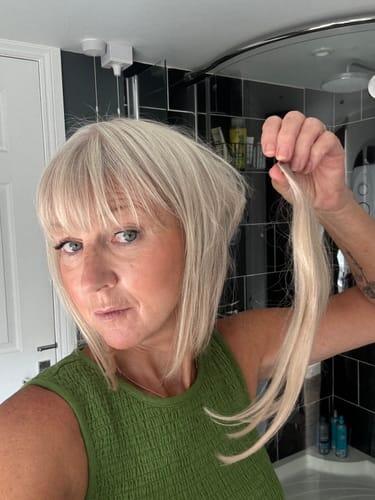
Yes, you can get a money piece with extensions, and for most people it is the smarter route in than reaching for bleach. Three options cover almost every need. Clip-ins give you a temporary, zero-commitment money piece for a weekend or an event. Invisible wire Face-Framing Layers give you a seamless, everyday version that sits in and blends like it grew there. Temporary alternatives, such as small coloured wefts or a wig, suit one-off looks you never want to repeat.
For most readers, invisible wire or clip-in Face-Framing Layers made from Remy human hair are the best starting point. They can be colour-matched to your exact shade, styled with heat like natural hair, and worn without touching your own colour.
- Clip-ins: best for trying the look before committing, or for events
- Invisible wire Face-Framing Layers: best for daily wear and a seamless finish
- Temporary alternatives (wigs, small coloured wefts): best for one-off, high-impact looks
Key Takeaways
Money piece extensions let you achieve a face-framing highlight without bleach, using clip-ins, invisible wire pieces, or semi-permanent wefts depending on how long you want the look to last.
| Point | Details |
|---|---|
| Extensions work for money pieces | Clip-ins, invisible wire, and tape-ins all deliver the look without touching your natural colour. |
| Placement follows your part | Match the money piece to your usual part; changing it after fitting makes the frame look uneven. |
| Weight and texture matter more than shade | A perfect colour match still looks obvious if the weft weight or texture does not suit your hair type. |
| Remy hair tones and styles safely | Genuine Remy human hair can be toned, curled, and straightened repeatedly, unlike synthetic pieces. |
| Naturylextensions reduces the risk | Free colour-matching and free exchanges on Face-Framing Layers and invisible wire pieces protect against a poor shade match. |
Table of Contents
- What is a money piece, and why does it suit so many faces?
- Can you achieve money pieces with extensions?
- Which extension types work best for a money piece?
- How should you place money-piece extensions for a natural look?
- How do you colour-match and blend money-piece extensions?
- Styling ideas: straight, wavy, and with bangs
- Maintenance: washing, storage, and toning for money-piece extensions
- Are there risks, and when should you see a professional?
- How long do money-piece extensions last, and what do they cost?
- How do you choose the right money-piece extensions?
- Why Naturylextensions Face-Framing Layers are worth considering
- Sources
- FAQ
What is a money piece, and why does it suit so many faces?
A money piece is the section of hair framing your face, usually just in front of your ears and along the hairline, lightened or coloured to contrast with the rest of your hair. Hairdressers call it a “money piece” because it delivers a disproportionate amount of visual impact for a relatively small, contained area of colour work. It is the highlight equivalent of a good haircut: small change, big difference.
The effect works because bright or contrasting strands near your cheekbones and eyes catch light exactly where the eye naturally lands on a face. It draws attention upward, adds the illusion of dimension to flat colour, and creates that “expensive” salon look that Hair attributes to the fact that only the face-framing sections need lightening, not the whole head.
How dramatic you go changes the entire feel of the look. A subtle money piece, two to three shades lighter than your base colour, gives a soft, natural lift that reads as sun-kissed rather than styled. A bold version, pushed to platinum against a dark base, creates a strong graphic frame that photographs beautifully but reads as more deliberate. Fantasy colours (rose gold, copper, even pastel tones) turn the money piece into a statement rather than a subtlety.
Your parting matters here too. A centre part gives you two symmetrical money pieces framing each side of the face evenly, which tends to suit rounder or heart-shaped faces well. A side part concentrates more brightness on one side, creating an asymmetric frame that can slim a wider face or add softness to angular features.
Can you achieve money pieces with extensions?
You do not need bleach, developer, or a salon colour appointment to get this look. Extensions let you test the money piece trend without touching your natural hair, and they are fully reversible if you change your mind. RJ Hair Creations points out that human-hair extensions give the most authentic result because they can be toned and heat-styled exactly like your own hair.
The main routes, and where each one fits:
- Clip-ins: temporary, no installation skill needed, easiest to remove daily
- Invisible wire extensions: semi-permanent feel with zero-damage wear, worn daily and removed at night
- Tape-ins or micro-link wefts: semi-permanent, stay in for weeks, need professional fitting
- Wigs or small coloured hairpieces: fully temporary, best for one specific event or look
Each comes with trade-offs. Clip-ins are the lowest commitment but need repositioning if you change your hairstyle mid-day. Invisible wire pieces stay put and look natural but need correct sizing to avoid slipping. Tape-ins and micro-links last longer between appointments but involve more installation time and a proper removal process. Wigs solve the “will this suit me” question instantly, but they are not designed for regular daily wear.
Deciding between them comes down to four questions: how long do you want the colour to last, what is your budget, how dense is your natural hairline, and how much salon time are you willing to give up. If the answer is “I want to try before I commit to bleach,” extensions win outright. There is no damage risk to reverse and no waiting for colour to grow out if you decide the look is not for you.
Which extension types work best for a money piece?
Not every extension construction is built for front-of-face placement. Some are designed for length and volume through the mid-back of the head; others are specifically engineered to sit flat and disappear at the hairline.
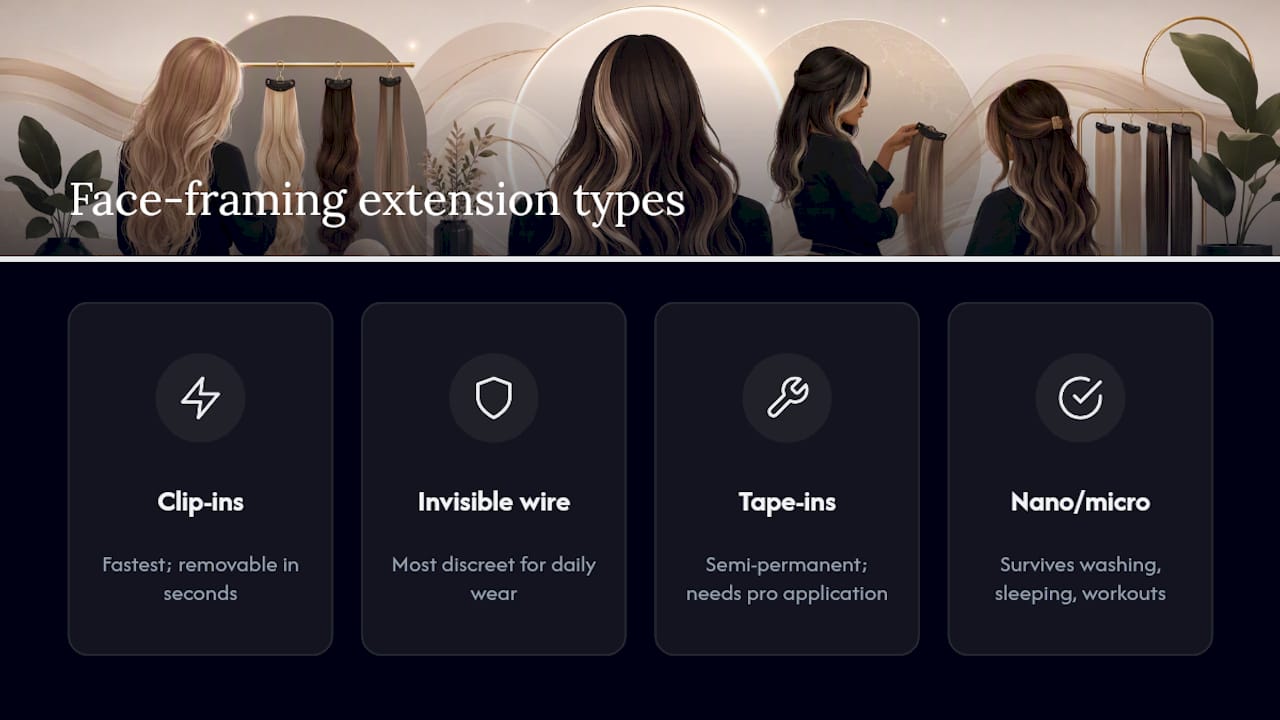
Clip-in Face-Framing Layers are the fastest option. A single small weft with a clip at the top slots in above your ear, and you can remove it in seconds. These suit short-term colour experiments, festival looks, or nights out where you want maximum contrast without any lasting change. TheLaurenAshtynCollection notes that face-framing extensions are built specifically to add targeted volume and movement at the front, rather than bulk through the rest of the head.
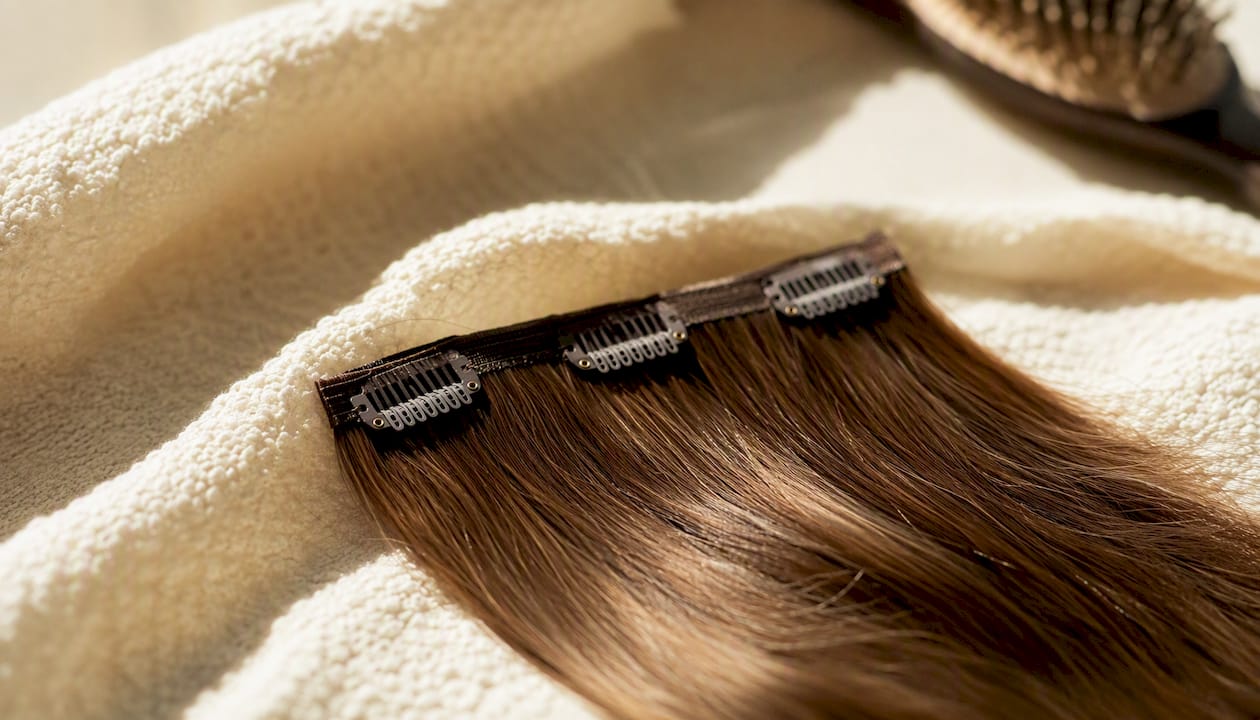
Invisible wire extensions use a thin, flat wire rather than clips or bonds, which makes them the most discreet option for daily wear. Because the wire sits so flat against the scalp, it is a strong choice for fine or thin hair, provided the weft weight is matched properly. Too heavy a weft on delicate hair will show at the root and pull unnaturally; the right weight disappears entirely. This face-framing extensions workflow walks through fitting one correctly.
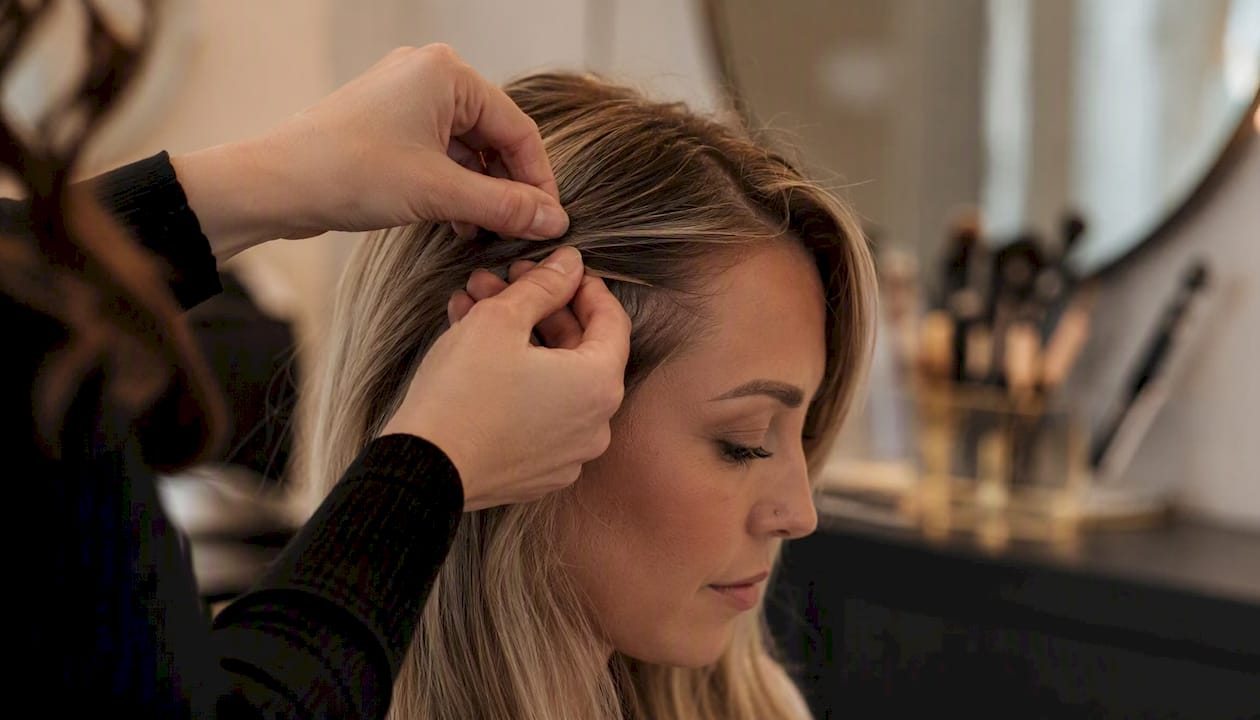
Tape-ins, nano beads, and micro-link wefts offer a semi-permanent middle ground. They last longer between salon visits than clip-ins but require professional application and, eventually, professional removal. These work well if you want the money piece to survive washing, sleeping, and workouts without repositioning, but they are not the right choice for someone who wants to test the look casually first, since removal is more involved than simply unclipping a weft.
Whichever construction you choose, the hair itself matters as much as the method. Remy human hair keeps its cuticle intact and aligned in one direction, which means it can be toned, curled, straightened, and washed without the matting or dulling that affects synthetic or non-Remy hair. If you plan to blend a money piece into your natural colour and style it daily, Remy quality is not optional; it is the difference between a piece that lasts a year and one that frizzes within weeks.
How should you place money-piece extensions for a natural look?
Placement is where most home attempts go wrong, and it has nothing to do with the colour itself. Getting it right comes down to one rule above all others: match the extension placement to your natural part.
If you always part your hair on the left, place the money piece pieces following that same line. Switching the part after installing extensions is the single most common mistake stylists flag, because it makes the brightened section sit visibly out of step with how your hair actually falls. Professional guidance consistently points to this as the difference between a money piece that reads as natural highlights and one that reads as “added on.”
- Map your natural part and note exactly where it sits when your hair is dry and unstyled.
- Select small wefts or clips, sized for a subtle look (one thin piece per side) or a bold frame (two to three sections layered for width).
- Place slightly behind the hairline, not directly at the root edge, so the attachment point stays hidden under your top layer.
- Blend the root area by pulling a few strands of natural hair over the top of the weft or clip to disguise the join.
Weight distribution matters as much as placement. A too-heavy weft anchored right at the hairline puts constant tension on the finest, most fragile hair on your head, which is also the hair most prone to breakage. Spread the tension across two smaller sections rather than one dense piece, and never clip directly into a single strand near the temple.
Pro Tip: Before you commit to a placement, part your hair as you normally would and hold the weft in place with your fingers for a minute. If it pulls or tugs anywhere along the hairline, move the anchor point back half an inch before clipping it in properly.
How do you colour-match and blend money-piece extensions?
A money piece extension only works if the colour transition feels deliberate rather than jarring. Getting there is a short, repeatable process, not guesswork.
- Order swatches or tester strands first. Never guess a shade from a screen; hold a physical strand against your hairline in daylight.
- Use an AI colour-match tool or send a photo to a colour-matching service so the depth and tone are assessed against your actual roots, not just your ends.
- Check root depth separately from mid-length tone. Many people match the ends but forget that the root area needs to blend into their natural regrowth colour too.
- Add texture at the join. A slight wave or soft feathering where the extension meets your natural hair removes the harsh, single-line stripe effect that gives extensions away.
If you are going platinum or icy blonde over a darker natural base, brassiness is the enemy. Purple or blue-toned shampoos used once or twice a week keep warmth from creeping back into the piece, and a professional toner can correct a lift that has gone too gold straight after fitting. Because Remy human hair takes toner the same way natural hair does, this correction is straightforward; it is one of the clearest advantages extensions have over a wig or synthetic piece, which cannot be toned safely at all.
Buying from a brand that offers free exchanges and tester strands removes most of the risk here. If the shade looks slightly off once it arrives in real light, you are not stuck with it.
Styling ideas: straight, wavy, and with bangs
Straight and sleek. Lift the root with a round brush on low heat, then run a flat iron from mid-length to ends at a moderate setting. The trick to making the money piece read as natural highlights rather than an obvious extension is to run the iron over the join between your hair and the piece last, smoothing the two together rather than styling them as separate sections.
Soft waves. Curl away from the face in one-inch sections using a medium barrel wand, alternating direction slightly section to section so the movement looks lived-in rather than uniform. Waves are particularly forgiving for money pieces because the broken texture naturally disguises any hard line at the attachment point. This seamless at-home styling guide covers tool sizing in more detail.
Bangs and curtain fringes. Money pieces need to move with your bangs, not against them. Fabulive’s styling guide recommends keeping the root of the money piece slightly softer than the rest and concentrating the brightest colour at cheekbone level, so the eye reads one continuous frame rather than two competing sections.
For Remy human hair, keep heat tools between 140°C and 180°C; anything hotter risks drying out the cuticle faster than it would on your natural hair, since extensions do not benefit from your scalp’s natural oils. A light heat protector spray before styling, a small amount of finishing oil on the ends afterwards, and a flexible-hold spray to lock movement without stiffness will get you through a full day without the piece separating from the rest of your style. If you are styling for a wedding or formal event, pairing a money piece with the right hair accessory placement can frame the face further without covering the highlight itself.
Maintenance: washing, storage, and toning for money-piece extensions
Extensions do not have a scalp feeding them oils, so they need a slightly different care rhythm than your natural hair, even though the routine is simple once it becomes habit.
- Wash weekly, not daily, using a colour-safe, sulphate-free shampoo and a nourishing conditioner focused on mid-lengths and ends.
- Tone with purple shampoo once or twice a week for blonde pieces; more frequent use dries out the hair and dulls its natural shine.
- Apply a protein or moisture mask every couple of weeks to counter the wear from repeated heat styling.
- Dry fully before storing. Damp hair stored folded or clipped will develop mildew smell and matting far faster than you would expect.
- Store flat or on a padded hanger, never scrunched in a drawer, and use a dedicated case when travelling to stop tangling in transit.
Remy human hair tolerates far more repeated washing, heat, and toning than synthetic hair, which typically cannot handle a flat iron at all and loses its shape after a handful of washes. With proper care, a Remy money piece can be recoloured or gently retouched months into use; synthetic pieces generally need full replacement once the fibre degrades. This care and storage guide has a fuller weekly routine if you want to build it into your regular wash day.
Are there risks, and when should you see a professional?
Extensions are low-risk when fitted and worn correctly, but the risks are real if you ignore weight and tension. Women’s Health reports that extensions can cause breakage or traction alopecia when they are too heavy for the section they are anchored to, poorly installed, or left in continuously without rest.
The main risks worth knowing:
- Traction alopecia: gradual thinning at the anchor points from sustained pulling
- Breakage: caused by heavy wefts on fine strands, or by rough removal
- Scalp irritation: from bonds or clips left in too long without a break
Prevention is simple once you know the rules: match weft weight to your hair’s natural density, distribute the tension across multiple smaller anchor points rather than one heavy section, and never clip directly into the thinnest hair at your temple. If you notice scalp pain, visible thinning at the hairline, or breakage that persists after removing a piece, stop and see a professional stylist rather than continuing to self-install. Clip-ins are the safest choice if you are at all unsure, since there is no bonding or tension left in place overnight.
How long do money-piece extensions last, and what do they cost?
Lifespan depends entirely on the method. Clip-in Face-Framing Layers can last months to several years with proper care, since they go in and out daily and carry no continuous tension. Invisible wire pieces, worn daily and removed at night, typically hold up for many months of regular wear. Tape-ins and bonded methods need reapplication roughly every six to ten weeks as your natural hair grows.
- Install time: clip-ins take seconds to minutes; invisible wire takes a few minutes once fitted correctly; tape-ins need a salon appointment
- Cost drivers: Remy quality, custom colour matching, and length all push price up
- Ongoing costs: toning shampoo, occasional replacement wefts, and salon maintenance for bonded methods only
Clip-ins and invisible wire pieces carry no recurring salon cost beyond the initial purchase and toning products, which makes them the more budget-predictable route over a year of wear.
How do you choose the right money-piece extensions?
A few criteria separate a good purchase from a frustrating one. Match hair type and texture first, not just shade; a piece that is the right colour but the wrong texture will never blend, no matter how carefully you place it. Check the weft weight against your own hair density, confirm the anchor method suits your styling habits, and always check the return or exchange policy before buying, especially for colour.
Questions worth asking before you buy:
- Can I request a tester strand before committing to a full set?
- What is the return policy if the colour does not match once it arrives?
- Is the hair Remy quality, and is that stated clearly on the product page?
- What weight is the weft, and is it suitable for fine or fragile hairlines?
- Do you offer a colour-match service, and how accurate is it typically?
Red flags to walk away from: no clear disclosure of hair type or origin, no exchange option for colour mismatches, and wefts that look unusually dense for a front-placement piece (a giveaway that they were designed for length, not for the delicate hairline area). Matching by texture, not just by shade, prevents the single most common disappointment buyers report: a perfect colour match that still looks obviously separate because the strand texture does not move the same way as natural hair.
Why Naturylextensions Face-Framing Layers are worth considering
Naturylextensions builds its Face-Framing Layers clip-ins and invisible wire extensions from ethically sourced Remy human hair, which means the pieces tone, curl, and straighten exactly like your natural hair rather than fighting against it. The brand’s AI colour-match service takes the guesswork out of ordering online, matching your shade before the piece ever arrives rather than after.
- Everyday brightening: invisible wire pieces designed for daily wear with a flat, seamless fit
- Trial before salon bleach: test a money piece with zero commitment before booking a permanent colour appointment
- Events and festivals: clip-in Face-Framing Layers for a temporary, high-impact look
- Weddings: a subtle frame that photographs well without altering your natural colour beforehand
Every set ships with a free exchange policy if the colour is slightly off once you see it in your own lighting, and UK delivery means you are not waiting weeks to test the look. If you are unsure which shade to order, the colour-matching guide walks through the process, and reading about why Remy hair matters explains why this quality tier tones and styles more reliably than lower-grade alternatives.
A specialist’s note on getting the placement right
Part alignment is where I see most home attempts go wrong, and it is a five-second fix. Hold your hair exactly as you’d normally wear it before you clip or fit anything; if the part shifts once the piece is in, the whole frame looks off no matter how good the colour match is.
A few habits worth keeping: always test a tester strand under your own lighting before ordering a full set, choose Remy hair if you want the flexibility to curl or straighten the piece regularly, and stick to colour-safe shampoo and conditioner to protect the tone. Avoid fitting heavy wefts directly at the hairline if your hair is fine; the weight will show and eventually strain the finest strands. And never rip a bonded piece out in a hurry. Removing extensions incorrectly is where most of the reported breakage actually happens, not from wearing them correctly.
Get your money piece without the salon chair
You have seen the routes: clip-ins for a trial run, semi-permanent bonds for longer wear, or a wig for a single event. Naturylextensions offers a fourth path that solves the biggest frustration with all three: getting the colour wrong and being stuck with it. The brand’s free AI colour-match service checks your shade before you order, and if it still is not quite right once it arrives, free exchanges mean you are never left with an unusable piece.
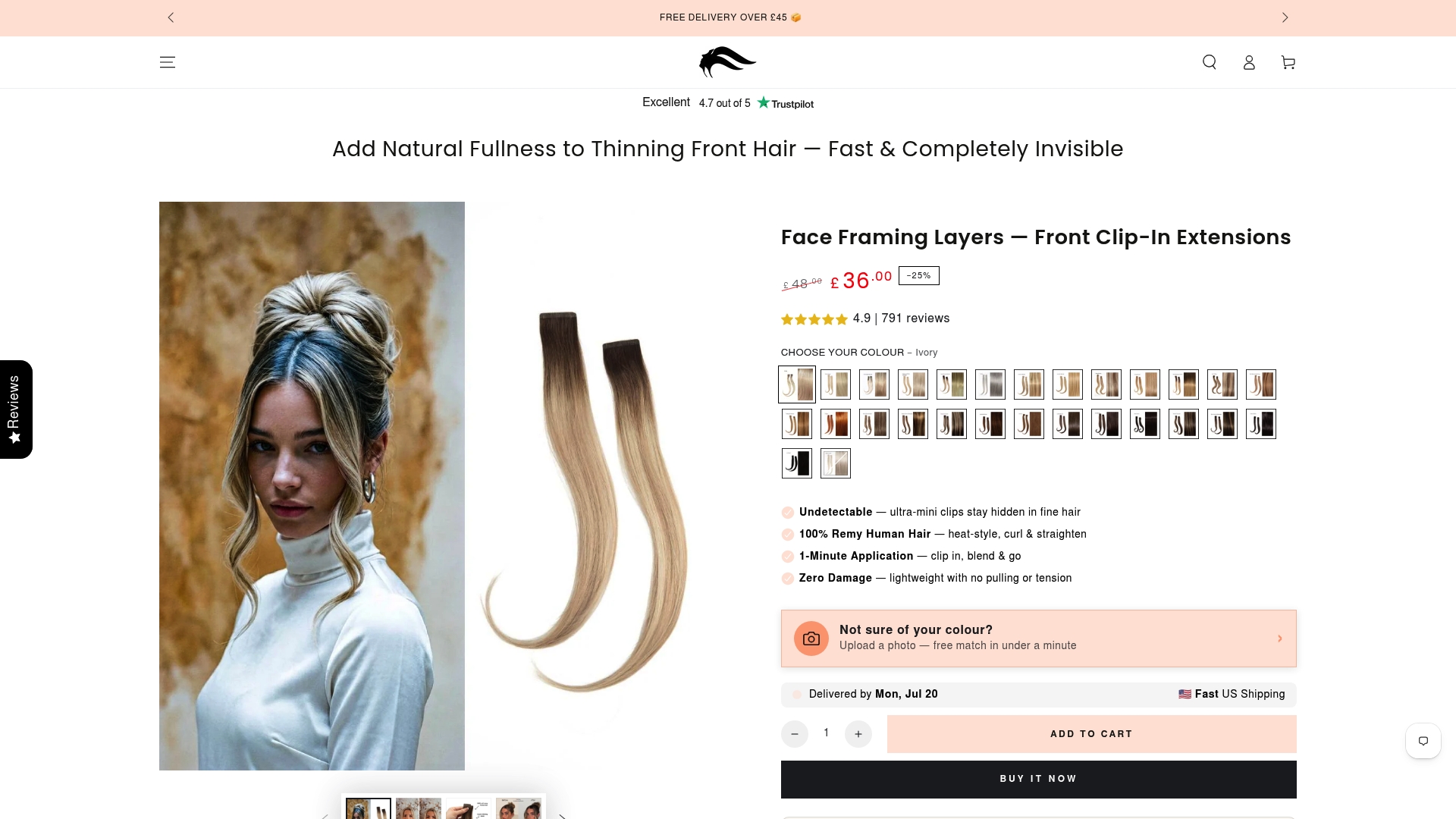
Every Face-Framing Layer and invisible wire piece is made from genuine Remy human hair, so it tones, curls, and straightens exactly like your own hair rather than fighting your styling tools. If your hairline is fine or thinning, the thinning hair collection is built specifically to avoid the weight problems that cause visible strain at the temple. Order a tester strand first if you are unsure of your shade, or reach out to the colour-match team for bespoke advice before you commit to a full set.
Sources
- Hair
- How to Get the Money Piece Hair Without Dye (2026 Guide) – RJ Hair Creations
- Do hair extensions damage your hair? Experts explain
FAQ
Is the money piece still in style in 2026?
Yes. The technique has stayed popular because it is low-maintenance compared with full-head colour and flatters most face shapes by drawing light toward the cheekbones and eyes.
What hair length is best for money pieces?
Money pieces work on most lengths from a long bob upward, since the technique only needs enough length at the front to frame the cheekbone area; very short cropped styles have less room for the contrast to read clearly.
What hair extensions does Kate Middleton use?
There is no publicly confirmed detail on the specific extensions worn by public figures, so this is not something we can state as fact; focus instead on matching extension type and quality to your own hair rather than a celebrity brand claim.
Why do hairdressers call it a money piece?
The name reflects the disproportionate visual impact of the technique. A small, contained section of colour at the front of the face delivers a brightening effect that looks far more expensive than the amount of colour work actually involved.
Can you get a money piece without dyeing your hair?
Yes. Clip-in or invisible wire extensions in Remy human hair let you add a money piece section entirely without bleach, and the piece can be removed or exchanged if you want to change the shade later.