TL;DR:
- Low maintenance hair extensions require minimal professional upkeep and simple at-home care routines. Halo and clip-in extensions are the easiest options, needing no salon visits and quick daily removal. Proper storage, gentle washing, and brushing are essential for maintaining their natural appearance and longevity.
Low maintenance hair extensions are defined as extension types that require minimal professional upkeep, infrequent salon visits, and simple at-home care routines. Halo and clip-in extensions are the gold standard for easy care, while tape-ins and keratin bonds sit in the middle ground, needing scheduled appointments every few weeks. If you want fuller, longer hair without rearranging your calendar around a stylist, choosing the right method from the start is everything. This guide covers the top extension types, practical care advice, and how to match your choice to your lifestyle.
1. Halo extensions: the most hassle-free option
Halo extensions are the simplest extension method available. A single wire sits invisibly on your head, and a weft of hair falls around it to blend with your natural hair. There are no bonds, no clips, and no adhesive. You remove them every evening and put them back on in minutes the next morning.
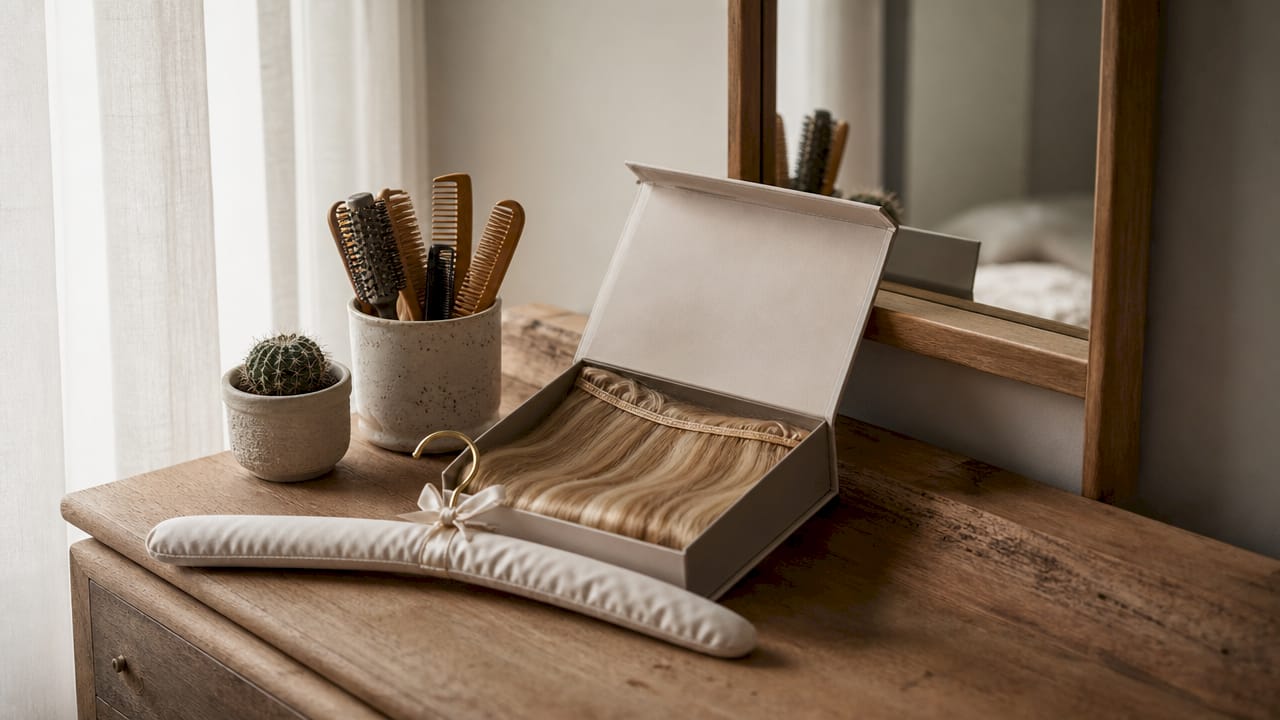
Because halo and clip-ins require no salon visits, they are the lowest maintenance option on the market. That means no move-up appointments, no bond removal sessions, and no waiting rooms. For women with busy schedules, this is the clearest advantage.
Pro Tip: Store your halo on a dedicated extension hanger or in its original box each night. Proper storage prevents tangling and keeps the weft in shape for longer.
2. Clip-in extensions: quick application, zero commitment
Clip-in extensions attach to your natural hair using small pressure clips and can be applied in 5–10 minutes with no professional help. You remove them before bed, which means no overnight tension on your roots. They are the most beginner-friendly option available.
The key advantage is flexibility. You wear them when you want volume or length, and you leave them out when you do not. This makes clip-ins ideal for women who want effortless hair extension styles for events or weekends without a daily commitment.
- Pros: No salon visits, no damage, quick to apply, easy to store
- Cons: Require daily application and removal, not suitable for swimming or sleeping in
3. Tape-in extensions: semi-permanent with moderate upkeep
Tape-in extensions use a thin strip of adhesive to bond a weft of hair close to your scalp. They lie flat, blend naturally, and are particularly well suited to fine or medium hair. The trade-off is that they are semi-permanent, meaning a stylist needs to reposition them as your natural hair grows.
Tape-ins require move-ups every 4–8 weeks, which is more frequent than keratin bonds but less demanding than micro-ring methods. If you have fine hair and want a natural look hair extension that stays in place through your daily routine, tape-ins are a strong choice. They are lightweight enough to avoid pulling, which matters for finer strands.
- Pros: Natural blending, flat against the scalp, good for fine hair
- Cons: Salon appointments every 4–8 weeks, adhesive can weaken with oil-based products
4. Keratin bond extensions: longer-lasting with scheduled care
Keratin bond extensions, also called fusion extensions, use a keratin-based adhesive to attach individual strands to your natural hair. They move freely, blend convincingly, and last considerably longer than tape-ins before needing attention.
Keratin bonds last 10–12 weeks before requiring a maintenance appointment. That longer window makes them a practical choice for women who want minimal salon visits but still prefer a semi-permanent result. They suit active lifestyles well, as they hold up through exercise and daily styling without shifting.
- Pros: Long-lasting, natural movement, suitable for active lifestyles
- Cons: Professional installation and removal required, higher upfront cost
5. Genius wefts and flexible wefts: a mid-range low upkeep option
Genius wefts are a newer category of extension that sit between clip-ins and fully bonded methods. They are thinner and lighter than traditional wefts, which makes them comfortable for extended wear and reduces the risk of visible lines. Lightweight extensions like Genius wefts are particularly suited to fine hair, balancing fullness without adding excessive weight.
These wefts are typically sewn or beaded into the hair by a stylist, but the maintenance schedule is less demanding than keratin bonds. They are a good middle-ground option for women who want something more permanent than clip-ins but less intensive than fusion methods.
How to care for your extensions and keep them looking natural
“Low maintenance” does not mean “no maintenance.” Even easy-care extensions require tailored routines to retain their quality and natural appearance. The good news is that the right habits take very little time once they become part of your routine.
Follow these steps to extend the life of your extensions:
- Wash at the right frequency. Washing clip-ins every 15–20 wears maintains softness and prevents product buildup without stripping the hair. Overwashing is one of the fastest ways to shorten extension lifespan.
- Use sulphate-free shampoo. Sulphates strip moisture from Remy human hair, causing dryness and frizz. A gentle, sulphate-free formula preserves the hair’s natural texture and shine.
- Detangle with a loop brush. Brushing extensions twice daily with a soft loop brush, starting from the ends and working upward, prevents matting and keeps the hair smooth.
- Never sleep in clip-ins or halos. Overnight friction causes tangling and puts unnecessary stress on the weft. Remove them before bed every night without exception.
- Air dry where possible. Excessive heat from blow-dryers weakens the hair shaft over time. When you do use heat, apply a heat protectant spray first.
- Store properly. Keep clip-ins and halos in a breathable bag or on an extension hanger. Loose storage leads to tangling that is difficult to reverse.
Pro Tip: For natural-looking extensions every day, match your extension colour to your mid-lengths rather than your roots. Hair naturally lightens toward the ends, and matching mid-shaft gives the most convincing blend.
Comparing extension types at a glance
| Extension type | Maintenance frequency | Typical lifespan | Salon visits needed | Best suited to |
|---|---|---|---|---|
| Halo | Daily removal, no salon | 6–12 months with care | None | All hair types |
| Clip-in | Daily removal, no salon | 6–12 months with care | None | All hair types |
| Tape-in | Every 4–8 weeks | 3–6 months | Yes | Fine to medium hair |
| Keratin bond | Every 10–12 weeks | 3–6 months | Yes | Medium to thick hair |
| Genius weft | Every 8–12 weeks | 3–6 months | Yes | Fine to medium hair |
Skipping maintenance appointments for semi-permanent methods causes premature matting and tension on your natural hair. For tape-ins and keratin bonds, keeping to your stylist’s schedule protects both the extensions and your own hair.
Which extension type suits your lifestyle?
Choosing the right minimal maintenance hair piece comes down to four factors: how much time you can give to daily upkeep, your hair’s density and condition, how long you want to wear them, and your budget.
- Busy schedules with no time for salons: Halo or clip-in extensions are the clear answer. Both require zero professional appointments and can be ready in under ten minutes.
- Fine or thinning hair: Tape-ins and Genius wefts are the safest options. Their lightweight construction avoids pulling on delicate strands. Naturylextensions also offers thinning hair fill-ins designed specifically for this concern.
- Active lifestyles: Keratin bonds hold up through exercise and daily styling without shifting. They last 10–12 weeks before needing attention, which suits women who want to forget about their extensions between appointments.
- Budget-conscious choices: Clip-ins have the lowest ongoing cost because there are no salon fees. The upfront investment in a quality set pays off over months of use.
- Occasional wear: Clip-ins and halos are the only methods that make sense for women who want extensions for events rather than every day.
Women often underestimate the daily styling effort required for halo and clip-in extensions despite their zero-salon advantage. Set realistic expectations: removable extensions save you salon time but do require a few minutes of daily care and storage. For expert guidance on choosing the right fit, a professional consultation is always worth the time before committing to a method.
Key takeaways
The most effective low maintenance hair extensions combine a simple application method with a consistent, gentle care routine that protects both the extensions and your natural hair.
| Point | Details |
|---|---|
| Halo and clip-ins need no salon visits | These are the easiest options, requiring only daily removal and proper storage. |
| Semi-permanent methods need scheduled care | Tape-ins need move-ups every 4–8 weeks; keratin bonds every 10–12 weeks. |
| Overwashing shortens lifespan | Wash clip-ins every 15–20 wears to maintain softness and avoid damage. |
| Match method to hair type | Fine hair suits tape-ins and Genius wefts; thicker hair suits keratin bonds. |
| Proper storage is non-negotiable | Storing extensions correctly prevents tangling and extends their usable life. |
My honest view on low upkeep extensions
The biggest misconception I encounter is that “low maintenance” means you can neglect your extensions entirely. That thinking leads to matted wefts, shortened lifespan, and frustrated women who blame the product rather than the routine.
What I have found, after years of working with and writing about hair extensions, is that the women who get the most from their extensions are the ones who spend five consistent minutes on care rather than an hour fixing avoidable damage. Halo extensions are my personal favourite for everyday wear. They are genuinely quick to put on, they do not stress your natural hair, and a good-quality set made from Remy human hair looks convincing even up close.
The one thing I would tell anyone starting out: do not skip the loop brush. It feels like a small detail, but proper brushing technique is the single biggest factor in how long your extensions stay tangle-free and soft. Pair that with a sulphate-free shampoo and correct storage, and you will get far more wear from your investment than the average buyer does.
For blending, the advice I give most often is to blend extensions naturally by matching colour to your mid-lengths and using a light wave or curl to unify your natural hair with the extension weft. Simple, repeatable, and genuinely effective.
— Sam
Naturylextensions: effortless extensions for everyday wear
If you want extensions that genuinely deliver on the promise of easy styling, Naturylextensions offers a range of Remy human hair invisible wire extensions designed for exactly that. Each set uses ethically sourced Remy hair, which means the cuticles run in the same direction for a natural finish that resists tangling.
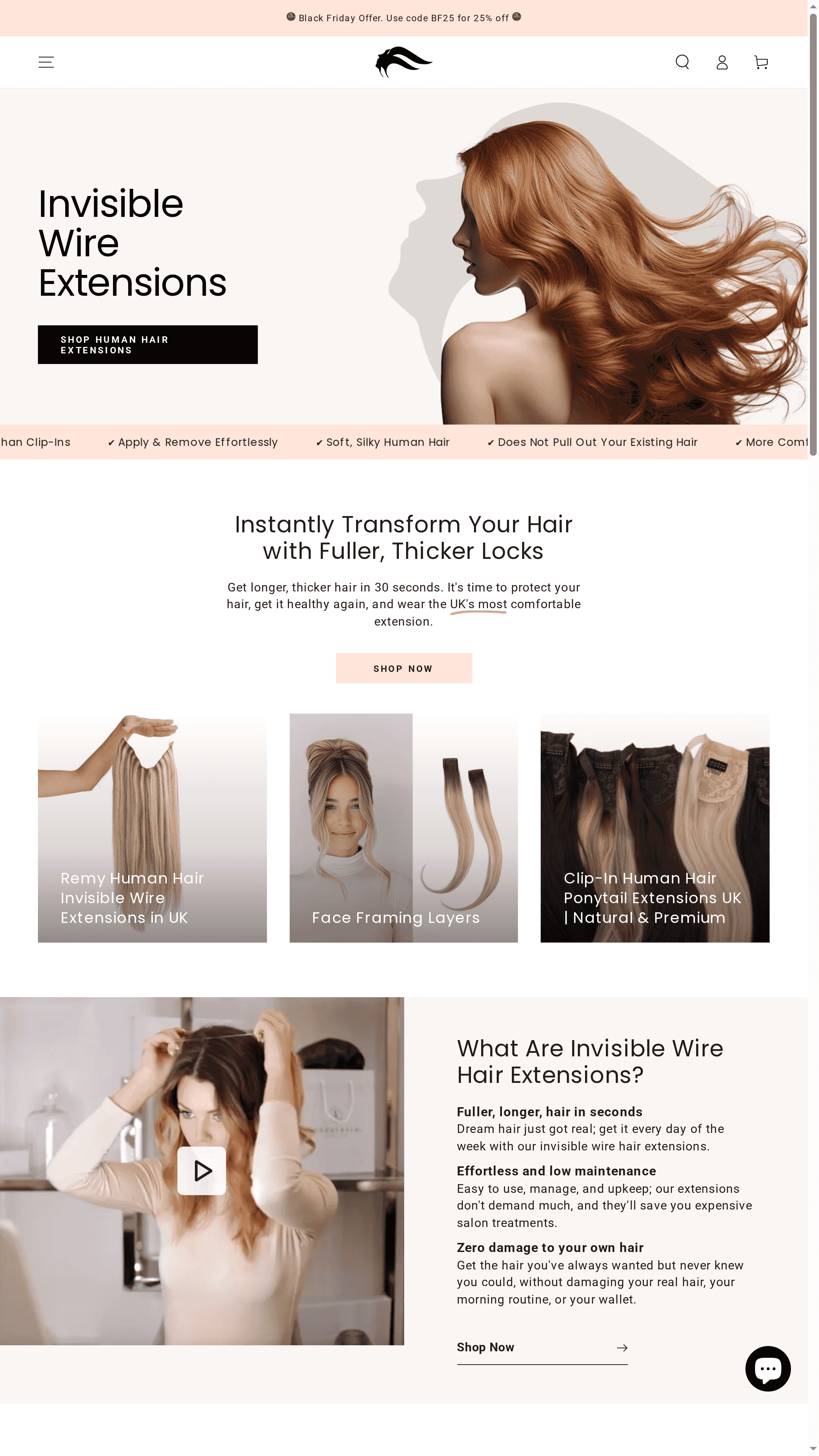
The invisible wire design requires no clips, bonds, or adhesive. You place it, adjust the wire, and you are done. Naturylextensions ships across the UK with fast delivery and a free exchange policy, so finding your perfect colour match is straightforward. Whether you have fine hair, thick hair, or something in between, the range covers a variety of textures and lengths suited to real, everyday life.
FAQ
What are the lowest maintenance hair extensions?
Halo and clip-in extensions are the lowest maintenance options available, requiring no salon visits and only daily removal and storage. Both can be applied and removed at home in under ten minutes.
How often do tape-in extensions need maintenance?
Tape-in extensions require professional move-ups every 4–8 weeks as your natural hair grows. Skipping appointments causes tension on your roots and can lead to matting.
Can I wash my clip-in extensions every week?
Washing clip-ins every week is too frequent and shortens their lifespan. Washing every 15–20 wears is the recommended schedule to maintain softness and avoid unnecessary wear.
Are low maintenance extensions suitable for fine hair?
Yes. Tape-in extensions and Genius wefts are the best choices for fine hair because they are lightweight and lie flat against the scalp without pulling. Halo extensions are also a gentle option for finer strands.
Do I need a sulphate-free shampoo for extensions?
Sulphate-free shampoo is strongly recommended for all Remy human hair extensions. Sulphates strip moisture from the hair, causing dryness, frizz, and a shorter usable lifespan.