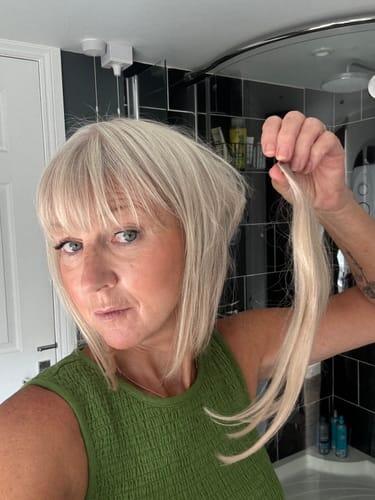
Yes, invisible wire extensions work on short hair, provided your natural hair is long enough to cover and conceal the wire base adequately. Choosing a modest extension length rather than a dramatic one helps create a seamless look.
Three things to get right immediately:
- Check your minimum length first. If your hair falls between 4 and 6 inches, you’re a workable candidate for invisible wire extensions; shorter than that, a small clip-in patch will do more for you.
- Buy modest, not maximum. A 14 to 18 inch wire on short hair reads as fuller, healthier hair. Go longer and you risk a wig-like drop at the ends.
- Use adjustable wires or mini-clips for extra grip. Fine or short hair needs more security than a fixed-size wire offers.
Naturylextensions builds its invisible wire range around exactly this short-hair use case, with adjustable fishing-line wires and smaller base options designed to sit close to the scalp rather than fight it.
Key Takeaways
Invisible wire extensions work reliably on short hair once natural length reaches 4 to 6 inches, and choosing a modest 14 to 18 inch length with adjustable wire produces the most natural result.
| Point | Details |
|---|---|
| Confirm minimum length | Aim for at least 4 to 6 inches of natural hair to fully conceal the wire base. |
| Buy modest length | Choose 14 to 18 inches for short hair rather than maximum length options. |
| Fit two inches back | Place the wire roughly 2 inches (5cm) behind the hairline for a natural fall. |
| Trim after placement | Have ends feathered once the extension is fitted, not cut beforehand. |
| Choose Naturylextensions for fit control | Adjustable wires, smaller wefts and Face-Framing Layers suit short hair specifically. |
Table of Contents
- Which short hairstyles suit invisible wire extensions?
- The 4 to 6 inch rule and how much length to actually buy
- How to choose the right invisible wire extension for short hair
- How to fit an invisible wire extension into short hair, step by step
- Blending techniques that make the join disappear
- Security options when one wire isn’t enough
- Caring for invisible wire extensions on short hair
- Why Naturylextensions suits short hair specifically
- The honest take on short-hair extensions
- Get a natural-looking set built for your actual hair length
- Sources
- FAQ
Which short hairstyles suit invisible wire extensions?
A long pixie, a layered bob, or a lob with graduated ends are the three styles that typically work well with invisible wire extensions. The layers break up the hairline, giving natural texture to conceal the wire rather than exposing it along a flat, blunt edge.
Very short crops and shaved-side styles are harder work. There isn’t enough length above the ear to drape over the wire, so the base tends to peek through no matter how carefully it’s placed. If that’s your cut, a small clip-in patch at the crown will get you closer to a natural result than a full wire will.
Hair texture changes the outcome too. Fine hair shows the wire more easily and needs a slightly denser weft to compensate. Medium and coarse textures generally hide the base with less effort.
Run this checklist before you buy:
- Can you gather a section of hair long enough above your ears to securely hold and conceal the wire base?
- Does your cut have any layering, or is it a single blunt line?
- Is your hair fine, and will it need extra density to conceal the weft?
- Do you have 2 to 4 inches of realistic growth in mind, not 10?
The 4 to 6 inch rule and how much length to actually buy
The 4 to 6 inch guideline isn’t arbitrary. It’s the amount of hair needed to fully drape over the wire and conceal the base, and it is the threshold most hidden crown and wire-extension guidance points to for anyone working with short styles. Below that, the base has nowhere to hide, and even a perfectly colour-matched wire will show at the roots.
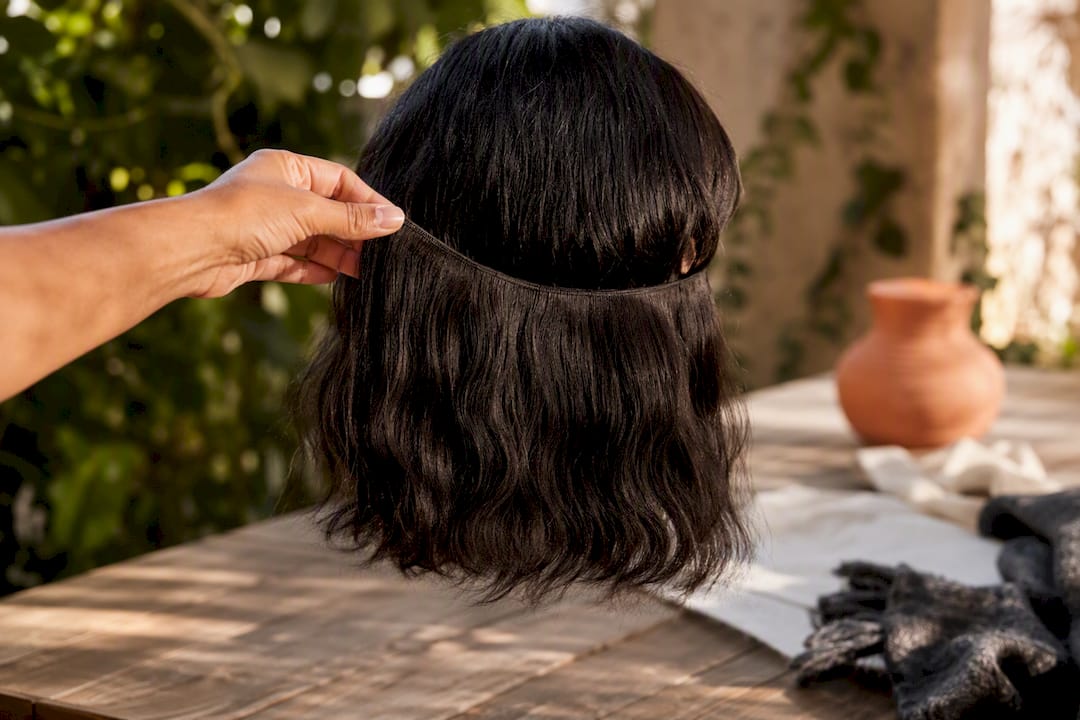
Once you clear that minimum, length choice is the next decision, and it’s the one most people get wrong. 14 to 18 inches is the sweet spot for short hair, giving a visible boost in fullness and length without creating an obvious jump between your natural ends and the extension.
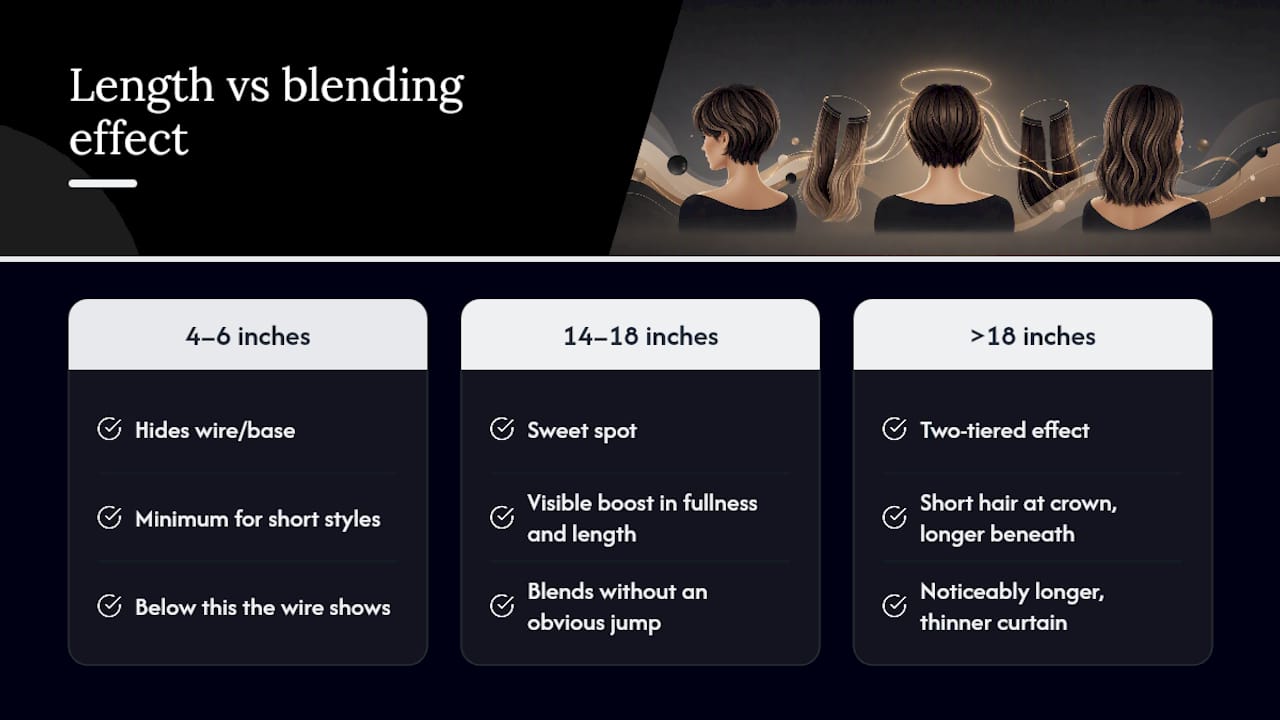
Go for anything longer and you’ll likely end up with a two-tiered effect: your own hair sitting short at the crown, with a noticeably longer, thinner curtain hanging beneath it. If your natural hair sits above the 4 to 6 inch mark but you still want more coverage around the face than length at the back, a set of clip-in Face-Framing Layers is often the better call than a full-length weft, since it adds fullness exactly where short hair needs it most.
How to choose the right invisible wire extension for short hair
Getting the product right before you buy avoids the two most common short-hair problems: a visible seam and a colour that reads a shade too flat or too warm once it’s under your bathroom lights.
- Test colour at the roots, in daylight. Multi-tonal or grown-out hair rarely matches a single flat shade, so look for a blended colour option that mixes two or three tones rather than one uniform block.
- Choose slightly higher density for short layers. A thicker weft hides more effectively at the crown without adding visible bulk, which matters more on short hair than on long hair where extra length disguises thickness anyway.
- Pick a smaller base for partial coverage. If you only need fullness at the crown or through the mid-lengths, a narrower weft with adjustable wire and removable mini-clips gives you targeted coverage instead of a full-width wire you don’t need.
- Order a colour tester strand first. Naturylextensions’ colour matching guide explains how to test shades against your roots before committing, and the brand’s AI colour-match service will narrow the shortlist for you if your colour sits between two options.
Skipping the tester strand is the single most common reason for a return. A shade that looks right on a screen rarely behaves the same way against your actual roots.
How to fit an invisible wire extension into short hair, step by step
Fitting takes practice, but the sequence itself is straightforward once you’ve done it two or three times.
- Prep your hair. Wash and fully dry it, then brush through and add a light texture with dry shampoo at the roots. Grip comes from texture, not from clean, slippery strands.
- Find your placement line. Position the wire roughly 2 inches (about 5cm) behind your hairline and above your ears, following the standard placement method for blending wire extensions with short hair.
- Size the wire. Adjust the fishing line so the wire sits snug against your scalp without pulling or gapping at the sides.
- Section your hair. Clip the top layer of hair out of the way, place the wire flat against your head, then release that top layer so it falls over the wire and conceals it.
- Smooth and check. Run your fingers along the hairline to confirm no wire is visible, then adjust the parting if needed.
- Secure with mini-clips if required. For extra hold around the temples or nape, use small removable clips rather than tightening the wire itself, which can create pressure points.
Pro Tip: Leave a thin panel of hair out at the very front before placing the wire, then drape that panel over the join last. It hides the base and keeps natural movement right at the hairline, which is where short styles show a seam first.
If the wire slips, it’s usually sized too loose rather than genuinely faulty. If the weft shows through at the crown, you likely need higher density rather than a different placement. And if you feel pressure points after an hour, the wire is sitting too tight rather than too loose, so loosen the adjustable line by a small amount before layering hair back over it.
Blending techniques that make the join disappear
Placement gets you most of the way there, but blending is what makes the set look like your own hair rather than something clipped on top of it.
- Trim after placement, not before. Have the extension fitted first, then trim the ends with feathering or point-cutting so they fall in line with your natural hair, as illustrated in the Hair Transformations & Balayage Gallery | ARQ Hair Fulham. Cutting blind before you fit it almost always leaves the length slightly wrong.
- Add texture to merge the fibres. A small-barrel curling wand or loose waves through both your own hair and the extension blur the line between the two far more effectively than leaving everything poker-straight.
- Match the technique to your cut. A blunt bob needs a soft, slightly undone wave to avoid a hard line at the join. A layered lob can take looser, beachier waves. A long pixie benefits from soft texture right at the crown, where the wire sits closest to visible skin.
- Use lightweight products only. Heavy creams or oils will weigh down short layers and flatten the volume the extension is meant to add.
Heat settings matter more on short hair because there’s less length to absorb any damage from repeated styling. A mid-range heat, roughly 160 to 180°C, is usually enough to set a soft wave in quality Remy hair without stressing the strands, and Naturylextensions’ blending guide walks through tool choices for each cut in more detail.
Security options when one wire isn’t enough
Short sides or exposed temples sometimes reveal a single wire no matter how well it’s fitted, and that’s where hybrid fixes earn their place.
- Add mini clip-ins at the temples or nape for extra concealment where the main wire alone leaves a gap.
- Use small tape patches or narrow wefts to fill thin spots without adding bulk, a technique salons use specifically when a single weft doesn’t give full coverage on short styles.
- Lean on accessories strategically. A headband, a half-up knot, or a shifted parting can disguise a join while you’re still learning to fit the wire confidently.
- Weigh the trade-offs. Mini-clips are the fastest to add and remove, tape patches last longer but need more careful removal, and headbands cost nothing but limit your styling options for the day.
More detail on combining these methods sits in Naturylextensions’ guide to disguising short hair with extensions, including which combination suits fine versus thick natural hair.
Caring for invisible wire extensions on short hair
Short hair blends need slightly different upkeep than longer sets, mostly because there’s less natural hair to cushion the base against friction.
- Wash every 7 to 10 wears, using a sulphate-free shampoo to protect the Remy cuticle and keep the wire’s grip consistent.
- Brush gently from the ends upward before storing the extension flat or on a hanger, never scrunched into a drawer.
- Watch for wear signs such as a looser wire fit or shedding at the weft edge, both signals it’s time for a re-fit or a light trim.
- Keep heat styling to around 160 to 180°C. Quality human hair tolerates moderate heat when the manufacturer’s guidance is followed, but short sets get styled more often relative to their size, so a heat protectant every time is worth the extra thirty seconds.
Why Naturylextensions suits short hair specifically
Naturylextensions sources ethically obtained Remy human hair and builds every invisible wire set with adjustable fishing-line wires, so the fit tightens or loosens rather than staying fixed at one size. That matters more on short hair than long, where a poor fit is far more visible.
- Smaller weft options for partial coverage, rather than forcing a full-width wire onto a head that doesn’t need one.
- Face-Framing Layers clip-ins for anyone who wants fullness around the face without committing to a full-length set.
- Free UK delivery and free exchanges, useful given how often a first colour choice needs adjusting once it’s tested against real roots.
- An AI colour-match service to narrow shade options before you buy, backed by written guidance on why colour matching matters for a natural finish.
| Feature | Why it matters for short hair |
|---|---|
| Adjustable wire | Tightens to fit smaller heads and finer hair without slipping |
| Face-Framing Layers | Adds fullness at the face without a full-length commitment |
| Free exchanges | Covers colour misjudgements common with short, multi-tonal hair |
The honest take on short-hair extensions
Most advice on invisible wire extensions is written for people with mid-length or long hair, then loosely adapted for short cuts as an afterthought. That’s backwards. Short hair has different rules, and the biggest mistake is treating length as the goal rather than proportion.
Chasing 20 or 22 inches on a bob almost never works, no matter how good the blend technique. The eye reads the mismatch between short natural hair at the crown and long extension underneath long before it registers “extensions” as the cause. What works consistently is restraint: 14 to 18 inches, a density chosen for your actual hair, and a wire that’s adjustable rather than fixed.
The conventional wisdom that “any length works with the right technique” sells false confidence. Technique helps, but it can’t fully override the wrong ratio of extension length to natural hair length. Prioritise the length decision first, get the colour right second, and treat styling technique as the finishing step, not the fix for a set that was mismatched from the start.
— Sam
Get a natural-looking set built for your actual hair length
There are other routes to fuller-looking short hair. Clip-in wefts, tape patches, and salon-fitted extensions all have their place. But if you want a set that adjusts to your own head rather than forcing your head to fit a fixed product, an invisible wire extension built with adjustable fishing-line wire solves the exact problem short hair creates: fit that loosens over time or a base that shows because it was sized for someone with more hair to hide it in.
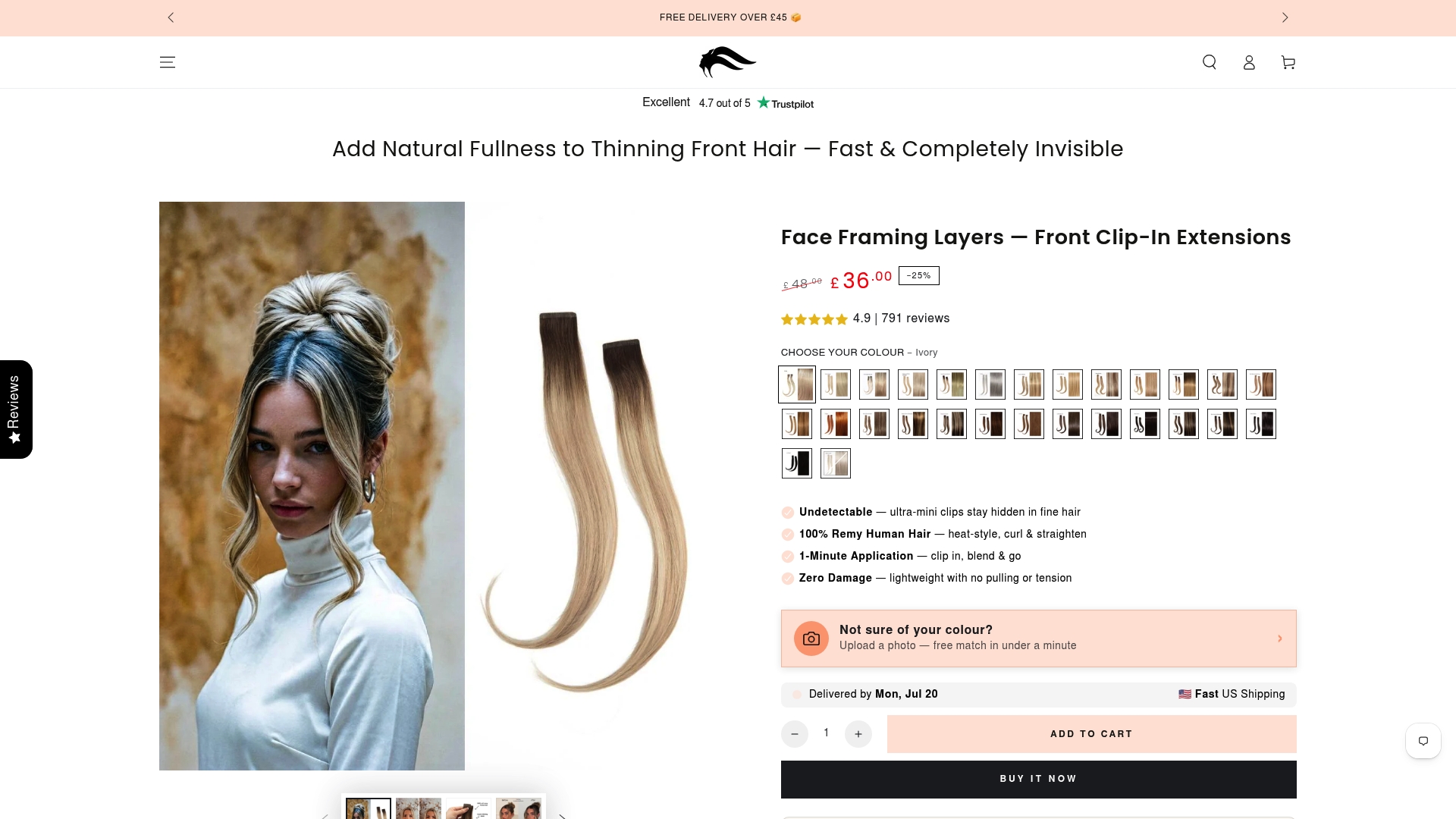
Naturylextensions’ invisible wire range comes in the 14 to 18 inch lengths this guide recommends for short cuts, with smaller weft options for partial coverage and free UK delivery on every order. If a full wire feels like more than your cut needs, the Face-Framing Layers clip-ins add fullness at the face without the commitment of a full-length set. Not sure which shade to pick? Try the AI colour-match tool before you order, and remember every purchase comes with a free exchange if the tone needs adjusting once it’s against your actual roots. Browse the current range and find the length and density that matches your hair today.
Sources
- How to blend your halo hair extensions seamlessly with short hair — Randy Lemmon
- Do hidden crowns work in short hair? — ShunSalon
FAQ
Do invisible wire extensions work with short hair?
Yes, provided your natural hair reaches at least 4 to 6 inches, which gives enough length to drape over and conceal the wire base.
How do you put invisible wire extensions in short hair?
Place the wire around 2 inches behind your hairline, adjust the fishing line for a snug fit, then release the top section of hair over the wire to hide it completely.
What are the downsides of invisible wire extensions?
The main risks are a visible base on very short or fine hair, slippage if the wire isn’t properly adjusted, and a mismatched length if you choose an extension that’s too long for your natural hair.
What is the 2.5 rule for short hair?
There’s no single agreed rule in the industry, but the widely used guideline is to aim for a modest length increase over your natural length, which keeps proportions believable on short styles.