No. The safest practice is to remove clip-in extensions before any sleep, whether that’s a full night or a twenty-minute nap on the sofa. Sleeping in them raises the odds of root tension, tangling, clip damage and scalp discomfort, and none of these problems announce themselves gently. They build up wear by wear.
If you genuinely cannot take your clip-ins out before you doze off, here’s the damage-limitation checklist:
- Limit the time you spend asleep in them. Ten minutes is manageable; three hours is not.
- Protect with silk. A silk pillowcase or scarf cuts down the friction that causes matting.
- Secure lengths in a loose braid to stop the wefts twisting and catching against your natural hair.
Key Takeaways
Removing clip-in extensions before sleep is the single most reliable way to prevent root tension, tangling and clip damage.
| Point | Details |
|---|---|
| Remove before sleep | Clips plus pillow friction cause root tension, matting and accelerated weft wear overnight. |
| Nap protocol matters | Limit time, loose braid the lengths, use silk, and spread pressure with a neck pillow if you must nap. |
| Silk reduces friction, not pressure | Silk pillowcases and scarves help but don’t replace nightly removal. |
| Store flat and dry | Breathable bags or extension hangers protect clip tension and stitching between wears. |
| Choose lighter wefts for fine hair | Naturylextensions’ Remy human hair and invisible wire designs distribute weight to reduce root stress. |
Table of Contents
- Why sleeping with clip-ins damages your hair
- What to do if you must nap or can’t remove them
- How to remove and store clip-ins properly at night
- Aftercare that extends the life of your extensions
- How Naturylextensions reduces overnight risk before it starts
- What the evidence actually tells you
- Ready for extensions that suit real life, not just photos?
- Sources
- FAQ
Why sleeping with clip-ins damages your hair
Clip-in wefts rely on small pressure-sensitive clips that grip a section of your natural hair close to the root. That grip works brilliantly for a dinner out or a full working day. It works against you the moment your head hits a pillow, because your scalp keeps moving while the clips stay clamped in place.
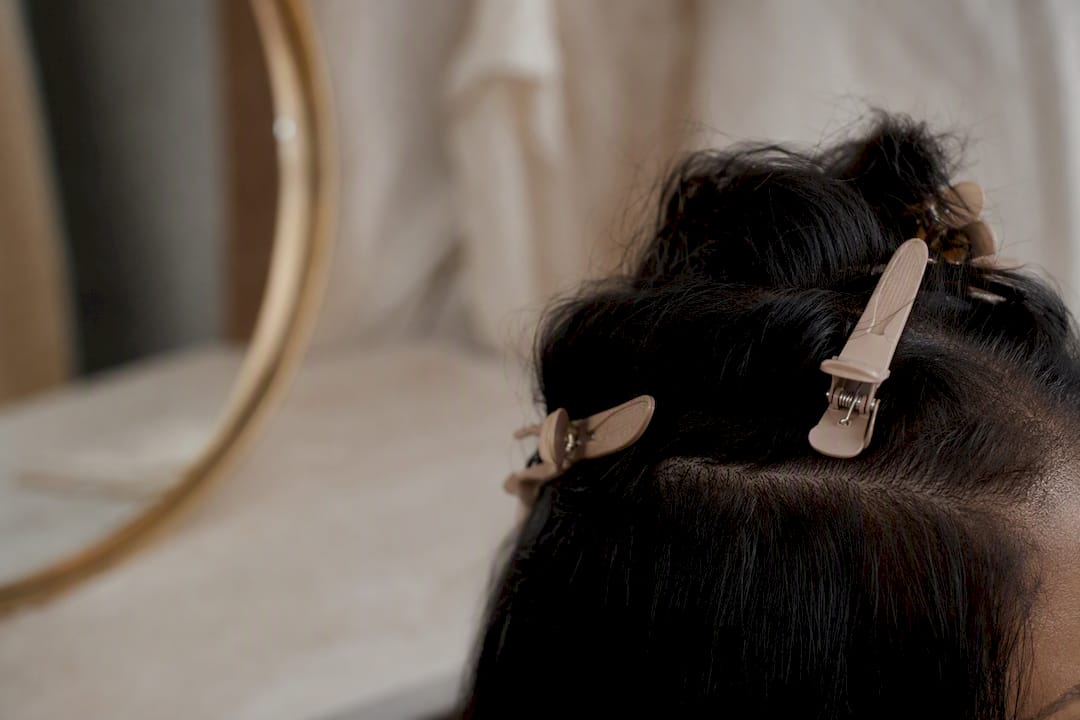
Every roll onto your side, every shift to find a comfortable position, drags the clip against the same patch of hair. Sleeping in clip-in extensions isn’t recommended because clips combined with pillow friction cause root tension, tangling and accelerated wear on both the weft and the clips themselves. The mechanism is simple: pressure plus movement equals friction, and friction is what turns smooth strands into knots.
The damage shows up in a few predictable places:
- Traction at the root, where the clip’s grip pulls against hair that’s already under load from your own head weight.
- Matting where your natural hair meets the weft, the exact spot where two different hair textures rub together all night.
- Clip deformation and loosened stitching, since the metal teeth aren’t designed to hold a static grip for eight hours.
- Scalp soreness, particularly along the parting where clips sit closest to the skin.
Fine or thin hair takes the brunt of this. There’s simply less hair mass to distribute the clip’s grip, so the same pressure concentrates on fewer strands. Textured hair carries a different risk: the natural coil pattern tangles with a weft’s texture far more readily than straight hair does, so a single restless night can mean a much longer detangling session in the morning. If your hair is fine or fragile, a lighter-density weft reduces how much pressure any one clip has to bear.
What to do if you must nap or can’t remove them
Life happens. You fall asleep on the train, at a friend’s, or you’re simply too exhausted to reach up and unclip. When that’s the reality, follow a short protocol that limits the damage rather than trying to eliminate it entirely, because nothing short of removal fully protects your hair once clips are in for sleep.
- Set an alarm. Treat any sleep in clip-ins as a strict exception, not a habit. Fifteen to twenty minutes is a reasonable ceiling for an unplanned nap.
- Move clips away from fragile edges. If you can adjust anything before dozing off, reposition clips away from the hairline and temples, where hair is thinnest.
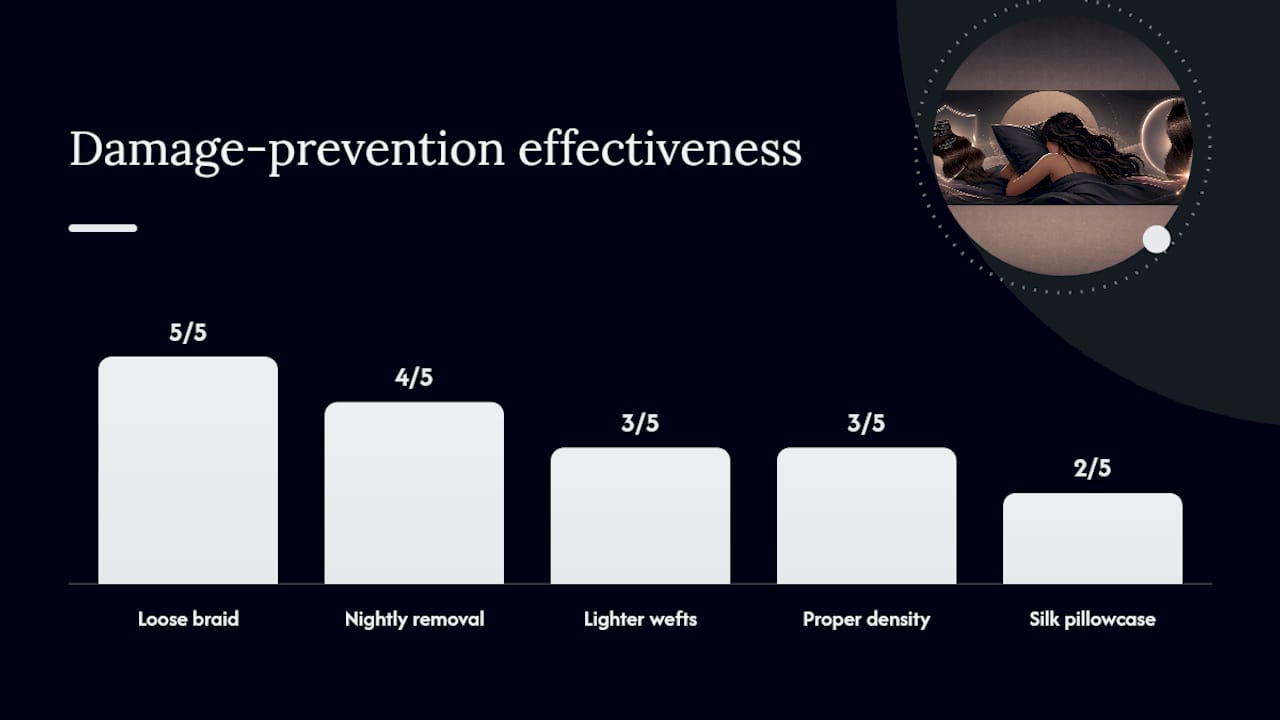
- Gather lengths into one loose, low braid or a loose low ponytail. This single move does more to prevent tangling than almost anything else on this list.
- Switch to silk. A silk scarf tied loosely round the head, or a silk pillowcase, cuts friction significantly, though silk reduces friction without removing the pressure clips place on your scalp.
- Spread the pressure. A neck pillow or a rolled towel under your neck stops your full head weight bearing down on one side, where most clips tend to sit.
- Keep the room cool. Heat encourages sweating, and damp hair tangles faster than dry hair.
- Reset in the morning. Remove any braid or scarf first, then unclip gently, detangle from the ends upward, and check your scalp and the wefts for soreness or stress before wearing them again.
Pro Tip: Keep a silk scarf folded in your bag or bedside drawer specifically for accidental naps. Having it within reach means you’ll actually use it instead of reaching for a cotton pillowcase out of convenience.
How to remove and store clip-ins properly at night
A consistent nightly routine does more for the lifespan of your extensions than any single product. It takes under five minutes once it’s habitual.
- Start with the bottom rows. Unclip the lowest wefts first, since they carry the most weight and are easiest to support while you work upward.
- Support your natural hair as you open each clip. Holding the hair just above the clip while you release it reduces pull and prevents unnecessary breakage, rather than yanking the weft straight out.
- Detangle from the ends first. Work a wide-tooth comb or an extension-specific brush through the tips before moving towards the weft itself, never the reverse.
- Apply a leave-in product sparingly, focused on the mid-lengths and ends rather than anywhere near the clips.
Storage matters just as much as removal technique. Storing clip-ins flat in a breathable bag, or hung on an extension hanger, keeps the clips’ tension intact and prevents the stitching from warping over weeks of use. Our storage guide covers this in more depth.
A few storage rules worth keeping in mind:
- Avoid sealed plastic bags. They trap moisture and encourage a musty smell.
- Use a breathable fabric bag or a dedicated extension hanger for heavier wefts.
- Keep them away from direct heat sources, including radiators and windowsills in summer.
If you accidentally fall asleep in your clip-ins, don’t panic. One accidental overnight won’t necessarily cause permanent damage, though it does raise the chance of tangles and scalp soreness, so a careful morning inspection is worth the extra two minutes. A light spritz of water helps loosen tangles; skip heavy oils near the roots, since they can migrate towards the clips and make them slip.
Aftercare that extends the life of your extensions
How you treat clip-ins between wears decides whether they last six months or two years. Remy human hair, the kind Naturylextensions uses, behaves like your own hair because the cuticles run in one direction, but it still needs a routine built around that fact.
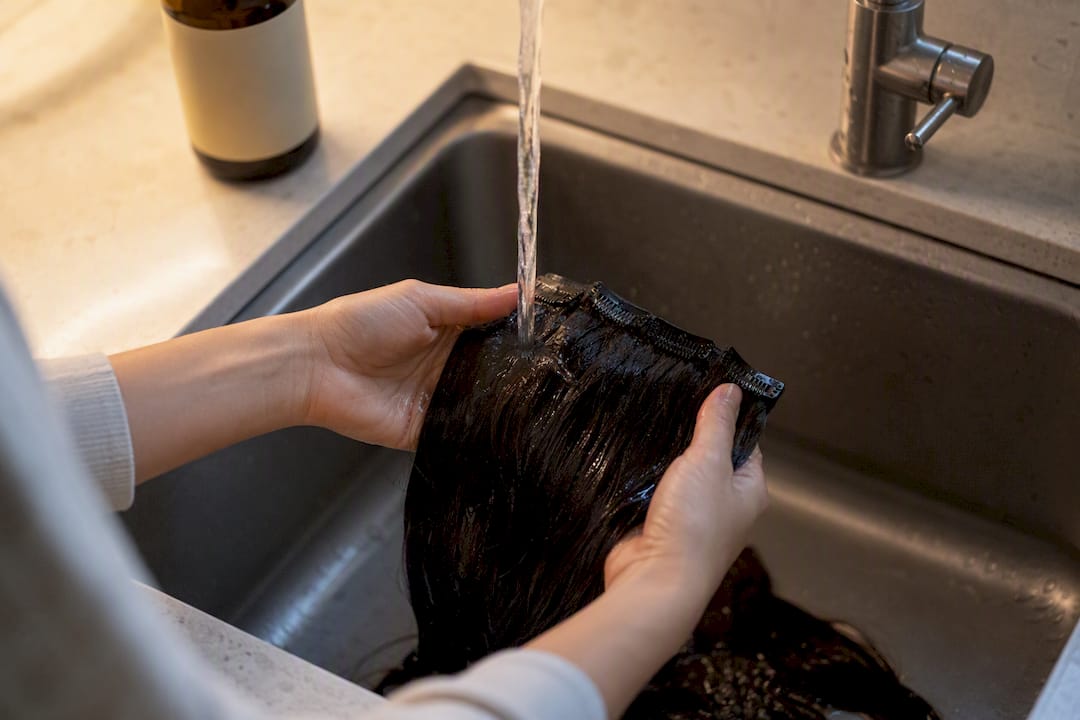
Wash Remy clip-ins only when they start to lose bounce or pick up product build-up, typically every 15 to 20 wears rather than after every use. Use a sulphate-free shampoo, and keep conditioner away from the weft roots, where it can loosen the bond over time.
Heat styling deserves the same caution you’d give your own hair, arguably more. Keep tools under 180°C, always apply a heat protector first, and avoid high heat on a daily basis, as repeated exposure dries out the cuticle faster on extensions than on hair still attached to a scalp’s natural oils.
A few habits worth building in:
- Rotate clip placement slightly between wears so the same strands don’t bear the load every single time.
- Match weft weight to your natural density. Daily wear is manageable when you remove extensions nightly, rotate placement and choose a weft weight suited to your hair, rather than defaulting to the heaviest set available.
- Check clips regularly for bending, as a bent clip grips unevenly and puts more strain on fewer strands.
- Watch for loose stitching or persistent matting at the weft. Once stitching starts to fray, no amount of careful handling will stop it worsening.
For a broader maintenance routine, our hair extension care guide and maintenance checklist walk through washing schedules and product choices in more detail.
How Naturylextensions reduces overnight risk before it starts
Some of the risk in clip-ins comes down to the product itself, not just how you wear it. Naturylextensions builds every set from ethically sourced Remy human hair, which behaves predictably under heat and brushing because the cuticle layer runs in one direction, unlike hair blended from multiple sources.
The invisible wire design and Face-Framing Layers clip-ins are engineered to distribute weight rather than concentrate it at a handful of pressure points, which matters most for anyone with fine or fragile hair. A lighter weft simply asks less of each clip and each strand it grips.
A few practical points worth acting on before you buy:
- Choose a lighter-density set if your natural hair is fine. It reduces the pull at the root during normal daytime wear, which lowers the accumulated stress if you ever do drift off in them.
- Use the free colour-matching service before ordering, so your extensions blend seamlessly and you’re not tempted to overuse heat styling to disguise a mismatch.
- Build the nightly removal routine into habit from day one. Product quality helps, but it doesn’t replace consistent care.
Pro Tip: Ask for a colour match sample before committing to a full set. Getting the shade right the first time means less heat styling later, which is one of the quieter ways extensions age faster than they should.
What the evidence actually tells you
Most advice on this topic treats “never sleep in clip-ins” as an absolute rule, then moves on. That’s technically correct but practically useless, because it ignores the reality that people fall asleep by accident far more often than they plan to nap in extensions. The more useful judgement is this: clip-ins are a daytime tool, full stop, and treating them as anything else is where the damage creeps in.
Where conventional advice falls short is the silence on what to actually do when removal isn’t an option. Silk gets recommended constantly, and rightly so, but silk alone won’t stop root tension from a clip that’s still clamped shut. The pressure is the real problem, not just the friction.
If you take one thing from this, prioritise the loose braid over anything else on the emergency list. It’s the cheapest, fastest habit to build, and it does more to prevent the tangling that ruins a morning than any pillowcase upgrade. Product choice matters too. Lighter wefts and properly matched density genuinely reduce the baseline risk, but no weft design removes the need for a nightly routine.
Ready for extensions that suit real life, not just photos?
Naturylextensions is built around the fact that most women wear clip-ins during a busy day, not a curated one, which is why every set uses ethically sourced Remy human hair and a lighter-weight construction designed to sit comfortably without heavy pressure on any single section. If tangling and root strain have put you off clip-ins before, an invisible wire design distributes weight differently to a traditional weft and suits fine or fragile hair particularly well.
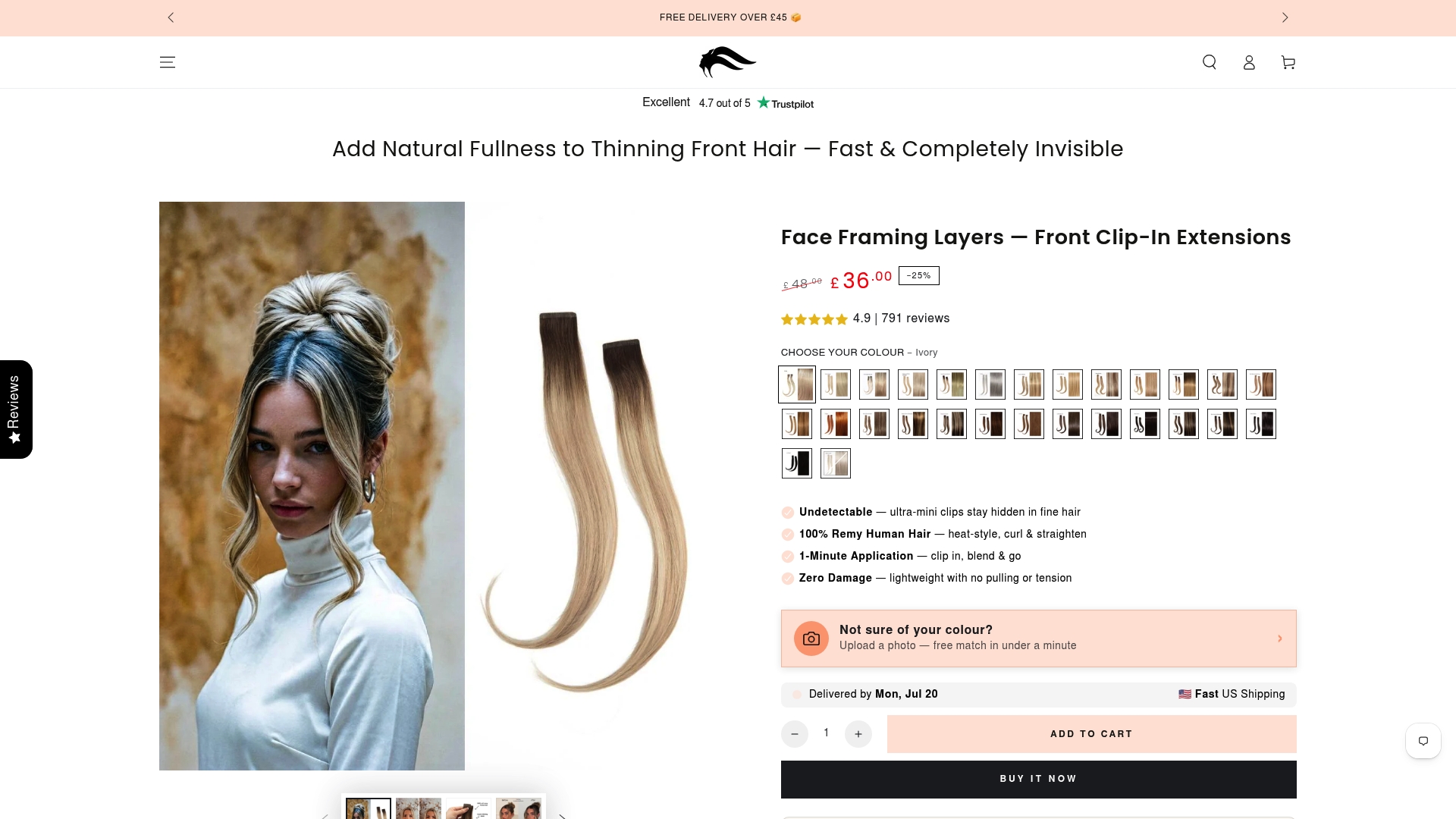
For anyone who wants an even gentler daily option, the additional length wires reduce clip contact further while still adding fullness. Free UK delivery and a free exchange policy mean getting the wrong shade or weight isn’t a costly mistake to fix. Start with a colour match, then explore the Face-Framing Layers clip-in extensions to see which weight suits your natural density before you buy.
Sources
- Can You Sleep With Clip In Hair Extensions? No | HairDepth
- How to sleep with hair extensions: everything you need to know | Blissy
FAQ
Is it bad to sleep with clip-in hair extensions?
Yes. Sleeping in clip-ins increases the risk of root tension, tangling and clip damage, so removing them before bed is the safer habit.
Is it safe to sleep with hair clips in?
Occasional accidental sleep is unlikely to cause lasting damage, but repeated overnight wear stresses both the clips and your scalp, so treat it as an exception rather than routine.
Can you go to bed with clip-in extensions?
You can, but it isn’t recommended. If it happens, a loose braid, silk pillowcase and a shorter sleep window limit the damage significantly.
How do you sleep with clip-in extensions if you can’t remove them?
Move the clips away from fragile edges, gather your hair into one loose low braid, switch to a silk pillowcase or scarf, and set an alarm to keep the time asleep as short as possible. Lighter-weight sets, like Naturylextensions’ invisible wire designs, also reduce the pressure any single clip has to bear.