TL;DR:
- Lightweight hair extensions protect natural hair and avoid scalp tension that can cause damage. They use fine strands, tapered ends, and flat attachment methods for comfort and a natural look. Choosing the right weight and style based on hair type improves long-term health and ease of styling.
Lightweight hair extensions are defined as extension sets constructed with fine strand diameters, tapered ends, and flat attachment methods that distribute weight evenly across the scalp rather than concentrating it at individual roots. The core reason why lightweight extensions are better is straightforward: they protect your natural hair while delivering a fuller, more natural result. Heavy extensions pull on roots, cause scalp tension, and can trigger traction alopecia over time. Lightweight alternatives, including flat tape-ins, genius wefts, and invisible wire designs, avoid all of that. Naturylextensions builds its entire product range around this principle, using ethically sourced Remy human hair to keep weight low and comfort high.
Why lightweight extensions are better for hair health
Extension weight is the single most important factor in long-term hair health. Choosing the right gram weight for your hair type prevents slippage and damage, with 180–220 grams suiting thick hair and lighter sets recommended for fine hair. That range matters because fine hair simply cannot bear the same load as thick hair without showing strain at the roots.
Heavy extensions create concentrated tension at each attachment point. That tension, applied daily over weeks or months, leads to headaches, scalp soreness, and in persistent cases, traction damage to the follicle itself. Lightweight extensions spread the load more evenly, which means your scalp feels comfortable from the first day of wear rather than just tolerating the weight.
The risks are not limited to discomfort. Lightweight extension methods reduce scalp tension and lower the risk of traction alopecia compared to bulky methods. Traction alopecia is a form of gradual hair loss caused by repeated pulling on the follicle. It is preventable, and choosing a lighter extension set is one of the most direct ways to avoid it.
Pro Tip: Weigh your extension set before purchase if possible. For fine or medium hair, aim for sets under 150 grams. If a set feels heavy in your hand, it will feel heavier still after a full day of wear.
- Concentrated root tension causes headaches and scalp soreness within days of application.
- Traction alopecia develops slowly but becomes permanent if the cause is not removed.
- Lightweight sets reduce daily strain, making long-term wear genuinely comfortable.
- Even weight distribution across multiple attachment points is safer than heavy weight at fewer points.
What technical features distinguish lightweight from bulky extensions?
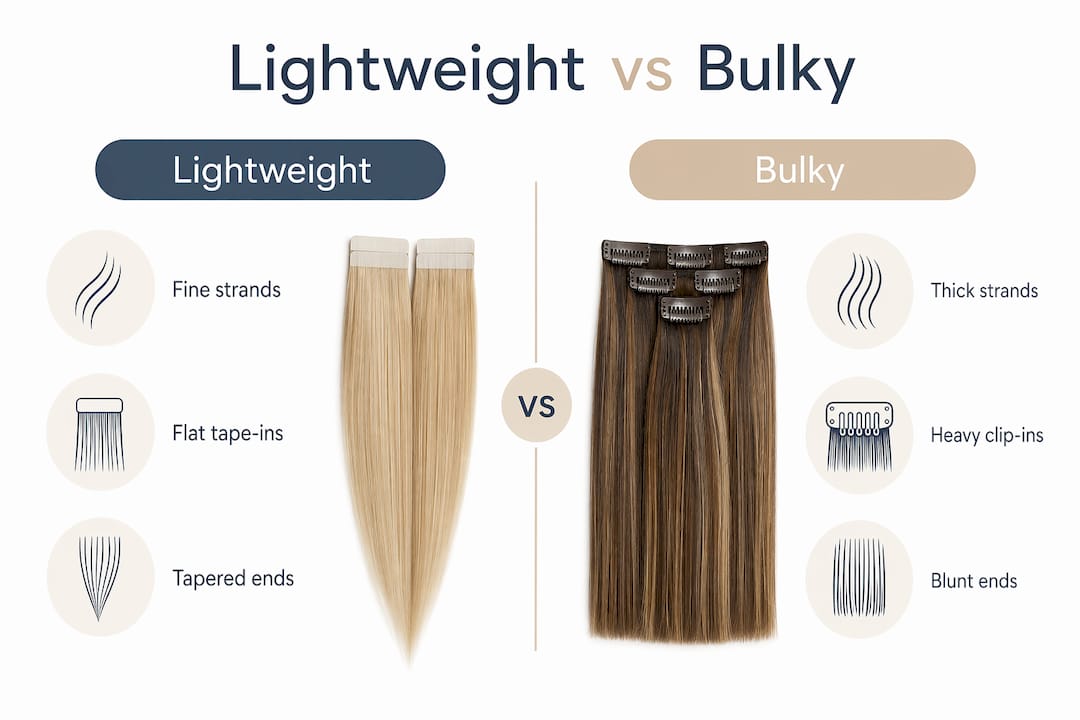
The difference between lightweight and bulky extensions comes down to three construction details: strand diameter, end tapering, and attachment method. Each one affects how the extension sits against your natural hair and how much stress it places on your scalp.
Strand diameter and texture
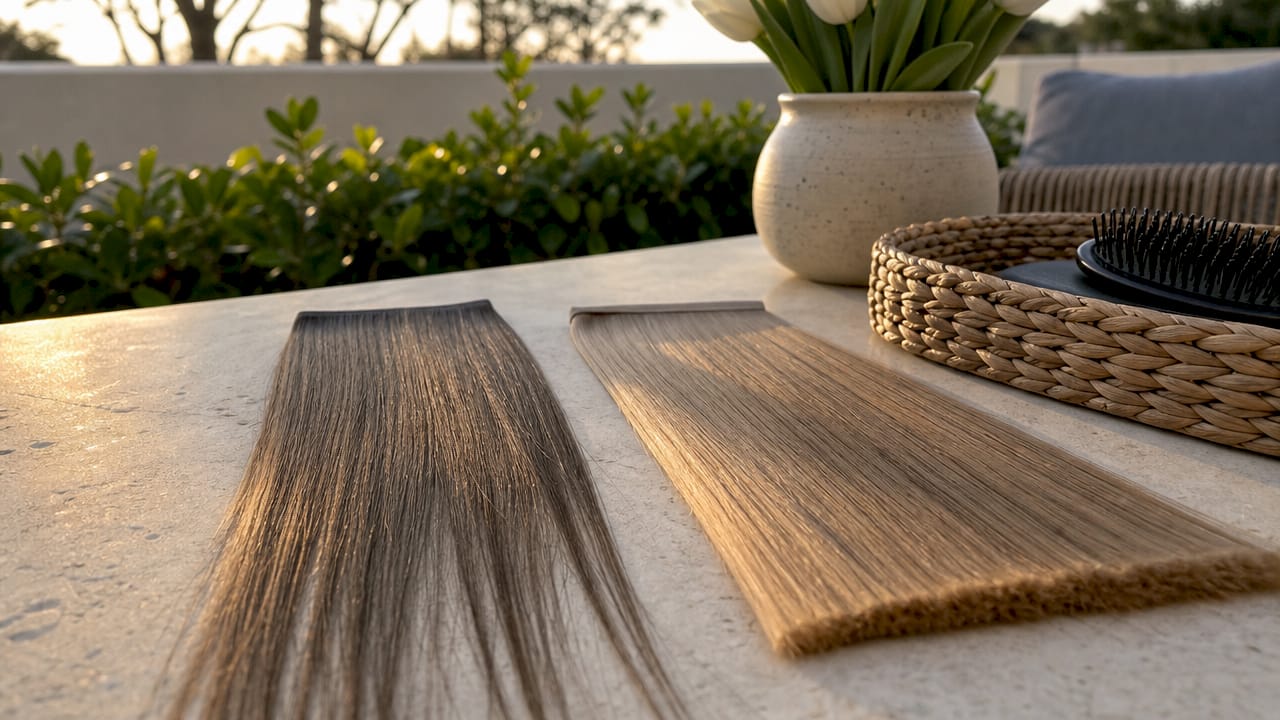
Fine or baby-fine hair requires soft, silky extensions with a strand diameter that matches natural hair rather than thick, blunt ends. When extension strands are thicker than your own hair, they sit proud of the scalp and create visible bulk. Matching the diameter means the extension hair lies flat and blends without effort.
Natural taper at the ends
Tapered ends blend better with fine natural hair and maintain a natural finish. Blunt-cut extension ends create what professionals call a “wall of hair” effect, where the extension hair sits as a dense block rather than flowing with your natural strands. A natural taper mimics the way real hair grows and thins toward the tip, so the blend is invisible rather than obvious.
Attachment method comparison
The attachment method determines how weight is distributed across your scalp. The table below compares flat and bulky weft types across the factors that matter most for fine or fragile hair.
| Feature | Flat attachment methods (tape-ins, genius wefts) | Bulky attachment methods (thick wefts, heavy clip-ins) |
|---|---|---|
| Weight distribution | Spread across a wide, flat surface area | Concentrated at clip or bond points |
| Scalp comfort | Low tension, sits close to the head | Higher tension, can lift away from scalp |
| Blend with fine hair | Natural, low-profile finish | Visible bulk, harder to conceal |
| Damage risk | Reduced traction on roots | Higher risk of traction damage over time |
| Styling ease | Lies flat under styles | Can create ridges under smooth styles |
Tape-ins lie flatter and genius wefts work well when kept low-density and properly installed. Both methods keep the extension close to the scalp, which reduces the lever-arm effect that makes heavy extensions feel so uncomfortable by the end of the day.
How do lightweight extensions improve styling flexibility?
Lighter sets move the way your natural hair moves. That single quality changes everything about the styling experience. Lighter sets blend more naturally, move easily, and are quicker to install or remove, reducing styling damage risk. When your extensions swing and bounce with your natural hair, no one can tell where your hair ends and the extension begins.
Practical styling benefits include:
- Faster installation and removal. Flat, lightweight sets take less time to apply and cause less disruption to your natural hair during removal. This matters if you wear extensions regularly and need a quick change.
- Better heat styling results. Heavy extensions resist movement under a curling iron or straightener. Lightweight sets respond to heat tools the way natural hair does, so curls hold their shape and straight styles stay smooth.
- Easier at-home maintenance. Bulky extensions tangle at the attachment points and require careful, time-consuming detangling. Lightweight sets with tapered ends tangle far less because there is no blunt edge to catch on neighbouring strands.
- More versatile updos and ponytails. A heavy extension set creates a visible ridge under a ponytail or bun. Flat, lightweight attachments stay hidden even in sleek, pulled-back styles.
For daily extension care, a wide-tooth comb and a lightweight leave-in conditioner are all you need to keep a fine-hair-friendly set looking fresh between washes.
How to choose the right lightweight extension for your hair type
Selecting the right lightweight set requires you to assess your natural hair before you buy. Skipping this step is the most common reason extensions feel uncomfortable or look unnatural.
-
Assess your natural density. Gather your hair into a ponytail to assess thickness and select a gram weight that blends without adding unnatural bulk. A thin ponytail (under 5 centimetres in circumference) indicates fine hair that needs a lighter set.
-
Match texture, not just colour. Your extension hair should feel similar to your natural hair when you run it between your fingers. Raw human hair extensions that behave like your own hair are the safest starting point for fine or fragile hair.
-
Prioritise flat attachment methods. If your scalp is sensitive or your hair is fine, choose tape-ins, genius wefts, or invisible wire designs over clip-in sets with heavy metal clips. The attachment method affects comfort as much as the total gram weight does.
-
Check the taper. Before purchasing, ask whether the extension hair has a natural taper at the ends. Blunt-cut extensions are cheaper to produce but harder to blend, particularly on fine hair.
-
Choose ethically sourced Remy hair. Remy human hair keeps the cuticle aligned in one direction, which prevents tangling and matting. Extensions made from non-Remy or synthetic hair shed and tangle quickly, adding weight and bulk over time as the fibres degrade.
Pro Tip: If you are unsure about gram weight, start lighter than you think you need. You can always add a second row or supplementary wires for more volume. Removing an overly heavy set mid-wear is far more disruptive than building up gradually.
Preparing your natural hair before application also makes a significant difference. A health-first preparation routine strengthens your hair and scalp before any attachment method is applied, reducing the risk of breakage during wear.
Key takeaways
Lightweight extensions are better because they distribute weight evenly, match natural strand diameter, and use flat attachment methods that protect fine hair from traction damage and long-term follicle stress.
| Point | Details |
|---|---|
| Weight determines comfort | Sets under 150 grams suit fine hair and prevent root tension and headaches. |
| Taper prevents bulk | Naturally tapered ends blend invisibly with fine hair and avoid the “wall of hair” effect. |
| Flat attachments reduce damage | Tape-ins and genius wefts spread weight evenly, lowering traction alopecia risk. |
| Match texture before buying | Choose Remy human hair with a strand diameter close to your own for the best blend. |
| Start lighter, build up | Beginning with a lower gram weight protects your hair and lets you add volume gradually. |
Why I think most people choose extensions that are too heavy
The most common mistake I see is people choosing extensions based on how full they look in the packet rather than how they will feel after eight hours of wear. A thick, heavy set looks impressive on the shelf. By day three, it feels like a vice around your scalp.
The industry has moved decisively toward lightweight construction for good reason. Flat tape-ins and genius wefts are not just trends. They reflect a genuine understanding of what fine and fragile hair can actually bear. The brands that still sell heavy, blunt-cut wefts as a premium product are selling volume at the expense of your hair health.
What I find most telling is how quickly people notice the difference when they switch. The absence of a headache by midday. The way the hair moves when you turn your head. The fact that you forget you are wearing extensions at all. That is what a well-matched, lightweight set feels like, and it is a completely different experience from tolerating a heavy one.
The technical details, strand diameter, taper, attachment method, gram weight, are not marketing language. They are the actual reasons one set protects your hair and another damages it. Knowing them before you buy is the most useful thing you can do for your hair.
— Sam
Naturylextensions: lightweight Remy hair extensions made for comfort
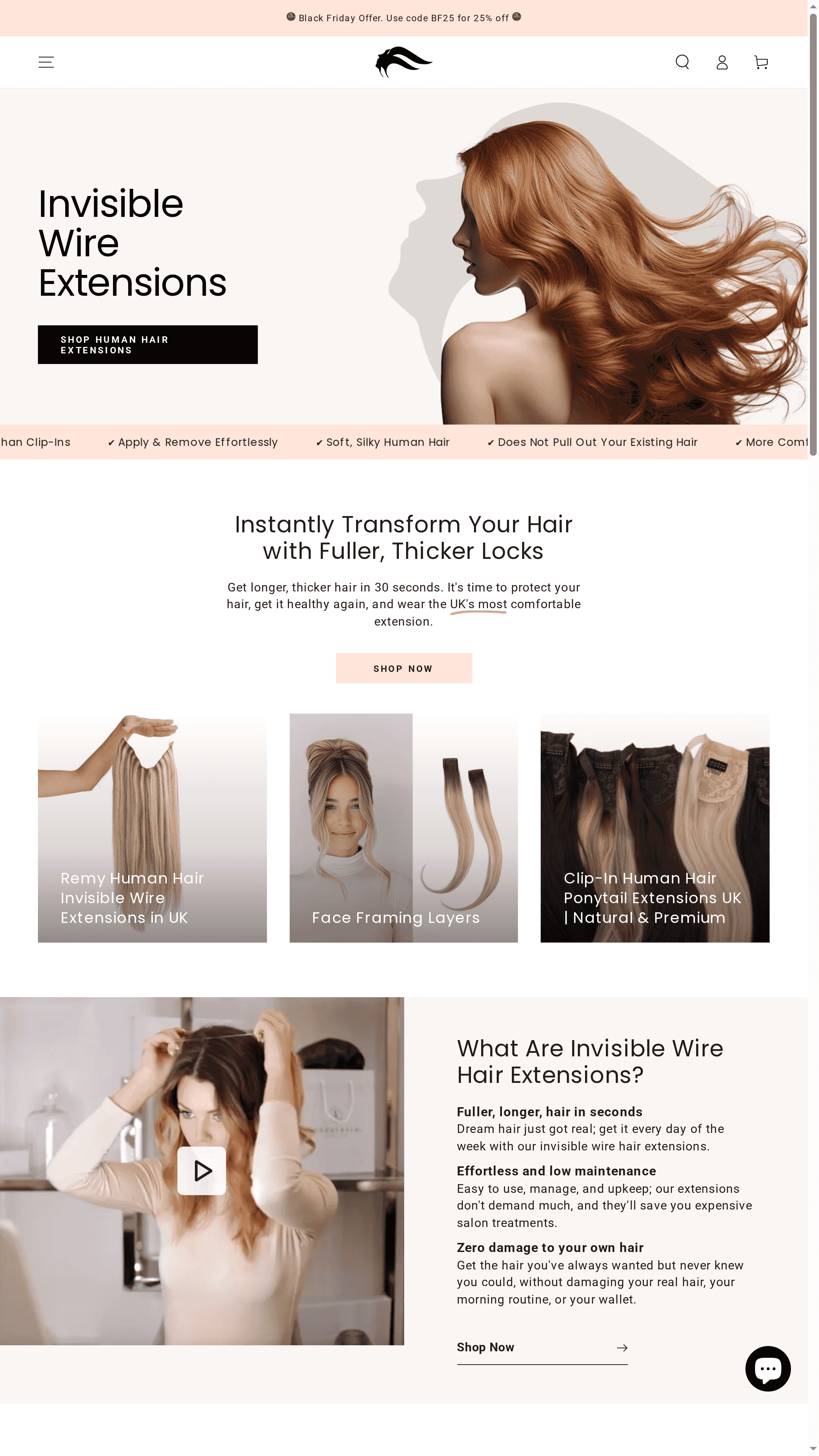
Naturylextensions specialises in lightweight Remy human hair extensions designed specifically for comfort, natural movement, and damage-free wear. The invisible wire extensions sit flat against the scalp, distribute weight evenly, and require no heat, glue, or clips for application. Every set uses ethically sourced Remy hair with aligned cuticles, which means the hair behaves like your own and resists tangling from day one. If you want more length without the bulk, the additional length wires let you build volume gradually at a weight your hair can comfortably carry. Fast UK delivery and a free exchange policy mean you can find your perfect match without risk.
FAQ
What gram weight is best for fine hair?
Fine hair suits extension sets under 150 grams. Choosing the right gram weight prevents slippage and root tension, with lighter sets recommended for fine or baby-fine hair.
Are lightweight extensions better for preventing hair loss?
Lightweight extension methods reduce scalp tension and lower the risk of traction alopecia compared to heavy or bulky methods. Flat attachment methods such as tape-ins and genius wefts are the safest choice for fragile hair.
How do I know if my extensions are too heavy?
Headaches, scalp soreness, and visible root tension within the first day of wear are clear signs your extensions are too heavy for your natural hair density.
Do lightweight extensions still give enough volume?
Lightweight extensions provide natural-looking volume without bulk. Starting with a lighter set and adding supplementary wires or a second row gives you control over volume without overloading your roots.
What is the difference between Remy and non-Remy hair extensions?
Remy human hair keeps all cuticles aligned in one direction, which prevents tangling and matting. Non-Remy hair sheds and tangles quickly, adding unwanted bulk and weight over time.