TL;DR:
- Hair density counts follicular units per square centimeter, affecting hair fullness and styling choices. It differs from hair thickness, which measures strand diameter, and both influence appearance and extension selection. Accurately measuring density involves a ponytail circumference test and consistent photography over time.
Hair density is defined as the number of hair strands or follicular units growing per square centimetre of scalp. It is not the same as hair thickness, which refers to the diameter of each individual strand. Normal density in adults spans roughly 65 to 85 follicular units per square centimetre, with each follicular unit holding between one and four individual hairs. Understanding your hair density tells you why your hair looks full or flat, how to choose the right products, and which hairstyles or extensions will actually suit you.
What is hair density and how does it affect your hair?
Hair density is the count of follicular units packed into each square centimetre of your scalp. A single follicular unit is a naturally occurring group of one to four hairs that share one root. This means two people can have the same number of follicular units yet very different total strand counts, depending on how many hairs each unit contains.
Visual fullness is the combined result of density, strand thickness, and total hair count. That is why conflating these terms leads to poor product choices and unrealistic styling expectations. Someone with high density but very fine strands may still struggle to achieve a voluminous look without the right technique.
Density also determines how your scalp appears. Low density makes the scalp more visible, particularly under bright light. High density creates a full, covered appearance even when hair is wet or pulled back. Knowing where you fall on the scale is the first step to making better decisions about your hair.
How to measure hair density accurately
Trichoscopy is the professional gold standard for measuring hair density. It uses dermoscopic imaging to count follicular units precisely, removing the guesswork that affects home methods. Professionals typically assess density at three scalp locations: the frontal hairline, the mid-vertex, and the occipital region. Each area can show different density values, which is why a single measurement point gives an incomplete picture.
At home, the most practical method is the ponytail circumference test. Gather all your hair into a low ponytail and measure the circumference at the base:
- Less than 5 cm: low density
- 5–10 cm: medium density
- Over 10 cm: high density
This test guides haircare professionals when recommending product weight and styling volume. It is not perfectly precise, but it gives a reliable starting point for self-assessment.
Photography is the best way to track changes over time. A consistent photo record taken under the same lighting, at the same camera distance, and at the same time of day removes the distortion that varying light angles introduce. Take photos monthly from the crown, front, and sides.
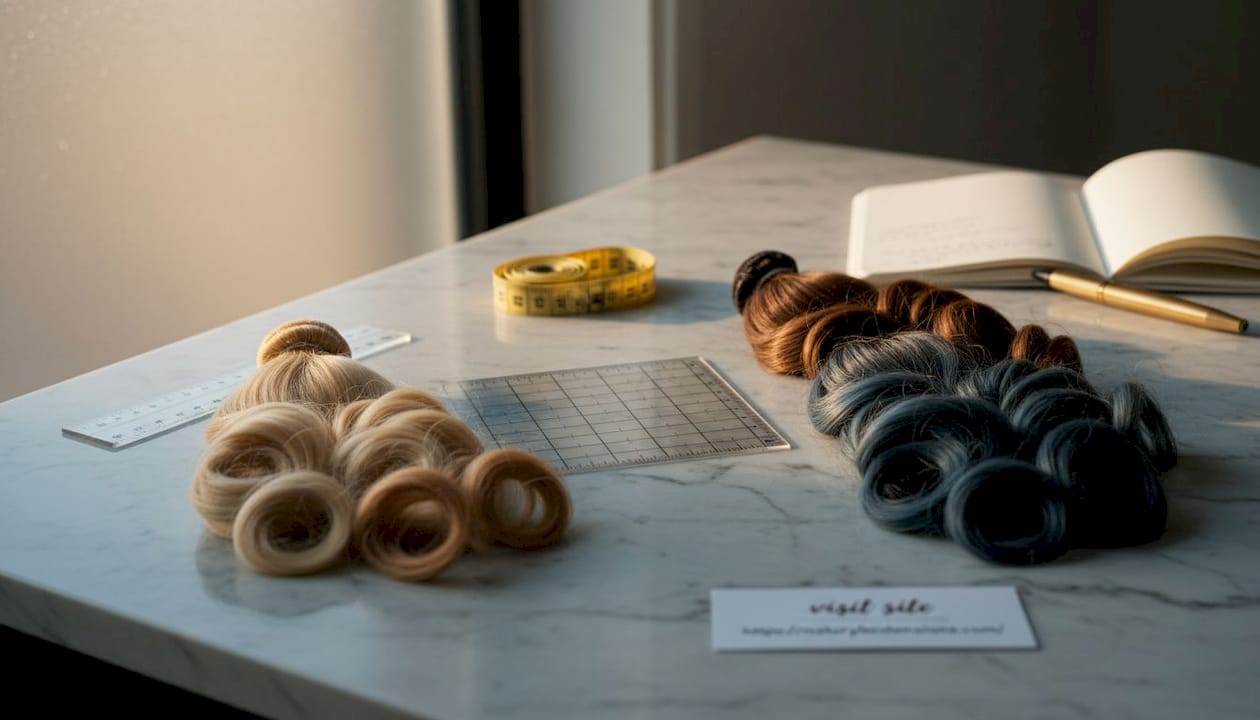
Pro Tip: Wash your hair before any density assessment. Product buildup adds artificial volume and makes density appear higher than it actually is, skewing your results.
Hair density types: low, medium, and high
Hair density falls into three broad categories, each with distinct visual and tactile characteristics. Knowing your category helps you set realistic expectations and choose styles that work with your hair rather than against it.
| Density type | Follicular units per cm² | Ponytail circumference | Visual effect | Feel |
|---|---|---|---|---|
| Low | Below 65 | Under 5 cm | Scalp visible, less volume | Light, airy |
| Medium | 65–85 | 5–10 cm | Balanced fullness, scalp less visible | Moderate weight |
| High | Above 85 | Over 10 cm | Full, scalp rarely visible | Heavy, thick |
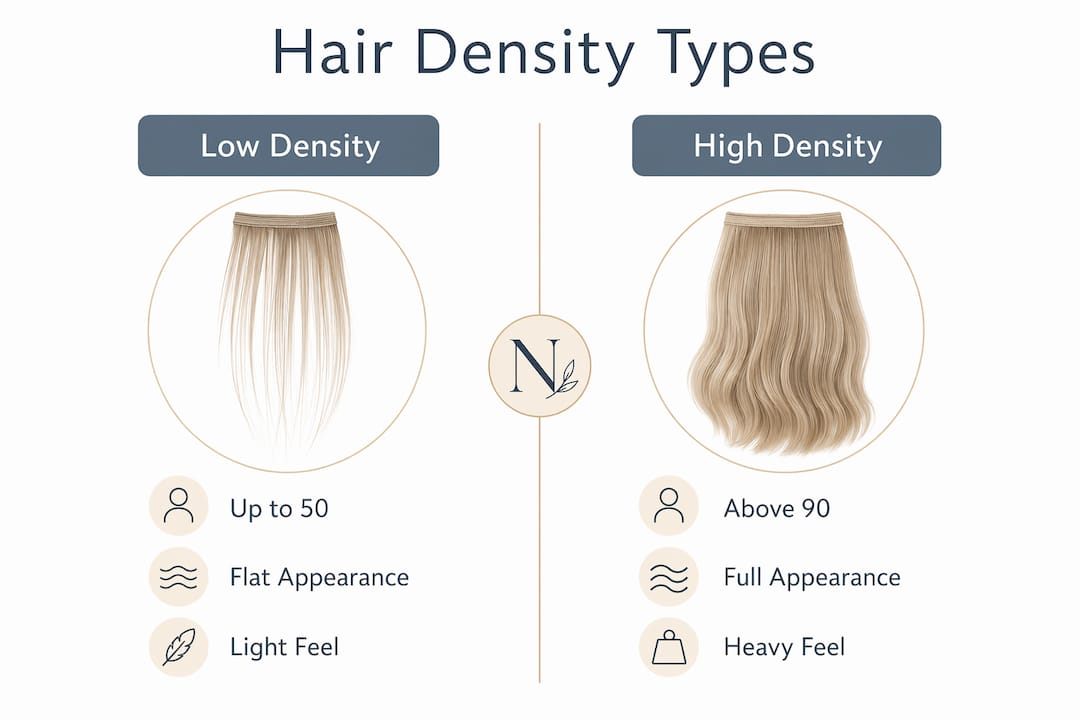
Low density hair often appears flat, particularly when wet. The scalp shows through more readily, and styles that rely on volume, such as blowouts or bouncy curls, require more product and technique to hold shape.
Medium density is the most common range among adults. Hair sits with natural body and responds well to most styling approaches without needing significant product support.
High density hair looks full and lush but can feel heavy. It takes longer to dry, uses more product, and can be harder to style into sleek, flat looks. Ethnic background plays a role here: individuals of African descent often have higher follicular unit counts per area, while those of East Asian descent may have fewer units but thicker individual strands.
How does hair density differ from hair thickness?
Hair thickness is the diameter of a single strand, measured in micrometres. Human hair diameter averages 70 to 75 micrometres, though healthy adult hair can range from 17 to 181 micrometres depending on the individual and their ethnic background. Density counts how many strands are present. Thickness describes how wide each one is.
Thick hair does not always mean high density. You can have thick, coarse strands growing sparsely across your scalp, giving you a low-density profile despite each strand feeling substantial. Equally, fine strands can grow in dense clusters, producing a full-looking head of hair that feels soft and light to the touch.
| Characteristic | Hair density | Hair thickness |
|---|---|---|
| What it measures | Strands per cm² of scalp | Diameter of each strand |
| Unit of measurement | Follicular units or strand count | Micrometres |
| Visual effect | Overall fullness and scalp coverage | Strand coarseness or fineness |
| Impact on styling | Volume and weight of the whole head | Texture, hold, and product absorption |
| Extension relevance | How many wefts are needed | Which weft weight suits the hair |
These two characteristics work together to create your hair’s overall appearance. Understanding both helps you choose the right products, the right styling tools, and the right extensions for your specific hair profile.
Pro Tip: Run a single strand between your fingers. If you can barely feel it, your strands are fine. If it feels like thread, they are coarse. Then check your ponytail circumference to understand your density separately.
What affects hair density and how can you care for it?
Hair density is not entirely fixed. Genetics set your baseline, but several biological and lifestyle factors influence how many active, healthy strands you maintain over time.
Biological factors:
- Genetics determine your natural follicular unit count and how many hairs each unit produces.
- The hair growth cycle directly affects apparent density. The anagen phase is the active growth stage, and prolonging it through good nutrition and scalp health keeps more strands in active growth simultaneously.
- Miniaturisation, where terminal hairs gradually shrink into vellus hairs, reduces visible density before follicles stop producing altogether. A pluck test that reveals a high ratio of vellus to terminal hairs can signal early miniaturisation.
- Hormonal changes, including those related to pregnancy, menopause, and thyroid conditions, can shift the balance between growth and shedding phases.
Lifestyle and care factors:
- Nutritional deficiencies in iron, biotin, zinc, and protein are linked to increased shedding and reduced strand quality.
- Harsh chemical treatments, excessive heat, and tight hairstyles cause breakage that reduces the number of visible strands, even when follicles remain healthy.
- Scalp health matters. A clean, well-circulated scalp supports follicle function. Blocked follicles from product buildup or inflammation can impair growth.
- Protective styling reduces mechanical damage and preserves the strands you have.
Experts caution against relying on heavy volumising products as a long-term density solution. The focus should be on protecting strands from breakage and supporting the anagen phase through consistent care. Products can improve the appearance of density temporarily, but they do not address the underlying follicle health. For practical methods to build visible fullness, the fuller hair guide from Naturylextensions covers twelve expert-backed approaches.
How hair density shapes your hairstyle and extension choices
Your hair density directly determines which hairstyles hold well and which extensions integrate naturally. Getting this right means better results and less damage.
For low density hair:
- Lightweight extensions prevent pulling on existing strands. Invisible wire extensions are particularly well suited because they distribute weight evenly without attachment points.
- Avoid heavy, thick wefts that overwhelm sparse natural hair and create visible lines of difference.
- Styles with layers and movement create the illusion of more volume without requiring density that is not there.
For high density hair:
- Extensions need to match the weight and volume of your natural hair to blend convincingly.
- Thicker wefts or additional panels are often needed to avoid a noticeable contrast between natural and added hair.
- Sleek styles are achievable but require more time and product to manage the volume.
Matching extension density to your natural hair prevents damage and achieves better integration. An extension set that is too light for dense hair looks thin and artificial. One that is too heavy for low-density hair puts strain on existing strands. Understanding hair weight in extensions helps you find the right balance between comfort and volume. The extension thickness guide from Naturylextensions explains how to match weft volume to your specific density profile.
Key takeaways
Hair density is the number of follicular units per square centimetre of scalp, and it is distinct from hair thickness, which is the diameter of each strand. Both factors together determine your hair’s true volume and the best approach to styling and extensions.
| Point | Details |
|---|---|
| Density vs thickness | Density counts strands per cm²; thickness measures strand diameter in micrometres. |
| Normal density range | Adults typically have 65–85 follicular units per cm², with individual and ethnic variation. |
| Home measurement | The ponytail circumference test gives a reliable low, medium, or high density reading. |
| Care and maintenance | Prolonging the anagen phase and preventing breakage preserves and improves apparent density. |
| Extension matching | Choosing extensions that match your natural density prevents damage and ensures a natural result. |
Why I think most people measure their density wrong
The most common mistake I see is people assessing their density on dirty, product-laden hair. Dry shampoo, mousse, and thickening sprays all add artificial bulk to the ponytail and to the visual appearance of the scalp. The result is a flattering but inaccurate picture. When those people then choose extensions or volumising treatments based on that reading, they end up with products that do not match their actual hair.
The second mistake is treating density and thickness as interchangeable. I have spoken with readers who describe their hair as “thick” when they mean “dense,” and others who say “thin” when they mean “fine.” These are genuinely different things, and the distinction changes every product and styling decision that follows. A person with fine but dense hair needs lightweight, flexible products. A person with coarse but sparse hair needs something entirely different.
My honest recommendation is to do the ponytail test on freshly washed, product-free hair, photograph your scalp under consistent lighting, and repeat this monthly for three months before drawing any conclusions. Single measurements are too easily influenced by variables. Patterns over time are where the real information lives. If you notice consistent thinning or a shift in your density readings, that is the point to consult a trichologist rather than reaching for another product.
— Sam
Naturylextensions: extensions matched to your hair density
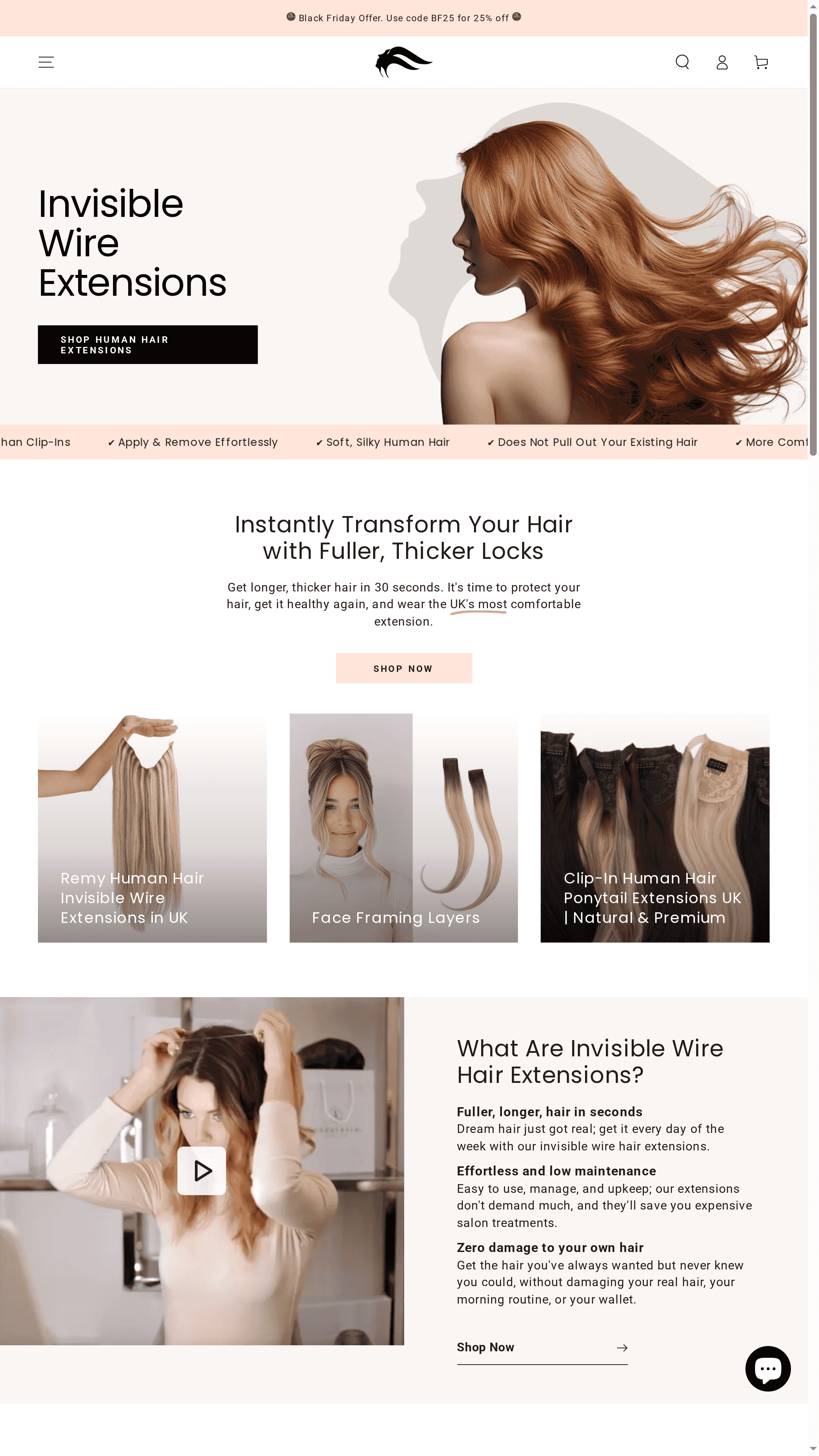
Understanding your hair density is only useful when you act on it. Naturylextensions specialises in premium Remy human hair extensions designed to complement your natural density, whether you have fine, sparse strands or a full, dense head of hair. Remy hair maintains its cuticle alignment, which means it blends naturally with your own hair and behaves the way real hair does. The invisible wire extensions are particularly well suited to low and medium density hair, distributing weight without attachment points that could strain existing strands. Browse the full range at Naturylextensions and find the right match for your hair profile.
FAQ
What is the normal range for hair density?
Normal hair density in adults spans 65 to 85 follicular units per square centimetre of scalp. Individual and ethnic variation means some people fall outside this range without any underlying hair concern.
How do I measure my hair density at home?
Gather your hair into a low ponytail and measure the circumference at the base. Under 5 cm indicates low density, 5–10 cm indicates medium density, and over 10 cm indicates high density.
Is thick hair the same as high density hair?
No. Thick hair describes strand diameter, while high density describes the number of strands per square centimetre. You can have thick strands with low density, or fine strands with high density.
Can hair density improve over time?
Density can respond positively to consistent care, good nutrition, and protective styling. Prolonging the anagen growth phase and reducing breakage are the two most effective approaches.
Why does hair density matter for extensions?
Extension density must match your natural hair to achieve a natural result and avoid damage. Extensions that are too heavy for low-density hair place strain on existing strands, while extensions that are too light look visibly different from dense natural hair.