


TL;DR:
- Tangle-free hair has a smooth, intact cuticle surface that prevents strands from interlocking. Advances like DN-PIC treatments repair the cuticle structurally, providing lasting lubrication and reducing tangling. Proper haircuts, night-time protection, and gentle daily routines further help maintain smooth, knot-free hair.
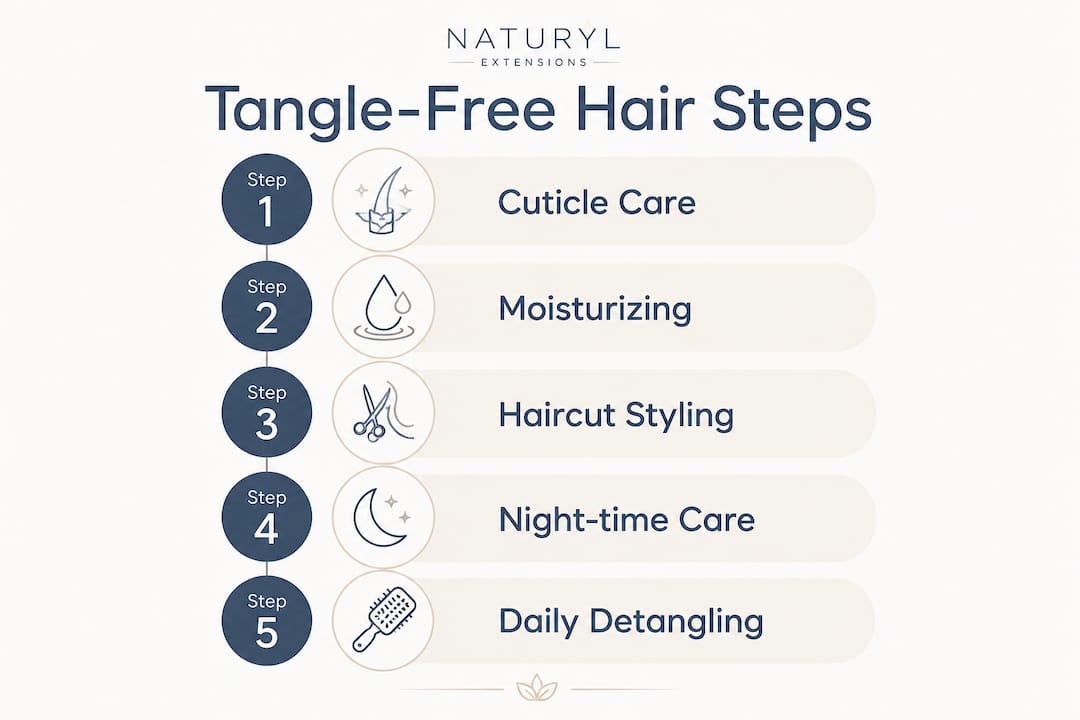
Tangle-free hair is defined as hair whose cuticle surface is smooth and intact enough to prevent strands from snagging and forming knots. The cuticle, the outermost layer of each hair strand, acts like overlapping roof tiles. When those tiles lie flat, strands glide past one another. When they are raised or damaged, they interlock like Velcro, creating the knots and matting that make brushing painful. Recent advances in cosmetic science, including dual-network polyion complex (DN-PIC) treatments, now offer durable cuticle repair that holds through thousands of friction cycles. Combined with the right haircut, styling habits, and night-time care, genuinely smooth, knot-free hair is achievable for most people.
What is tangle-free hair and what causes it to knot?
Tangles form when the hair cuticle is raised, the hair is dry, friction is high, or the hair structure naturally overlaps. Curly and coily hair types are particularly prone to tangling because their spiral shape creates more contact points between strands. Fine hair tangles easily because strands are lightweight and shift constantly. Long hair accumulates more friction simply because there is more surface area for strands to wrap around one another.
The main causes of tangling break down into four categories:
- Damaged cuticles. Heat styling, chemical processing, and UV exposure lift the cuticle scales. Raised scales snag neighbouring strands on contact.
- Split ends. Split ends act as tiny hooks that catch surrounding hairs and worsen knot formation rapidly.
- Mechanical friction. Clothing collars, scarves, wind, and rough pillowcases all rub against the hair shaft and lift the cuticle over time.
- Product misuse. Heavy silicone buildup or insufficient moisture leaves hair brittle and prone to breakage, which creates more rough edges for strands to catch on.
Pro Tip: If your hair tangles most at the nape of your neck, friction from coat collars is likely the culprit. Tuck your hair inside your collar on windy days or switch to a silk-lined hood.
Hair type also plays a role in how quickly tangles form. Wavy and curly textures have a natural tendency to coil around themselves, which means even a short period without detangling can result in significant knotting. Understanding your specific hair type is the first step toward building a care routine that actually prevents tangles rather than just managing them after the fact.
How do recent scientific advances help achieve tangle-free hair?
The most significant advance in tangle-free hair care is the development of dual-network polyion complex treatments, known as DN-PIC. These treatments work by selectively depositing a polymer network onto damaged areas of the cuticle, restoring a smooth, lubricated surface without affecting healthy sections of the hair shaft. The selectivity matters because it means the treatment repairs where repair is needed rather than coating the entire strand uniformly, which can weigh hair down.
The durability of DN-PIC technology is what sets it apart from standard conditioning treatments. DN-PIC treatments maintain lubrication through 10,000 rubbing cycles and six wash sessions. That level of durability means the slip and smoothness created by the treatment persist through normal daily wear, not just immediately after application.
| Treatment type | Durability | Key benefit |
|---|---|---|
| Standard conditioner | Rinses out after one wash | Temporary slip and softness |
| Leave-in conditioner | Lasts until next wash | Moisture retention between washes |
| DN-PIC treatment | 10,000 rubbing cycles, 6 washes | Durable cuticle repair and lasting lubrication |
| 18-MEA recovery treatment | Multiple wash cycles | Restores natural surface lipid layer |
The table above shows why DN-PIC and 18-MEA recovery treatments represent a meaningful step forward. Standard conditioners provide temporary slip. DN-PIC treatments restore the cuticle structure itself, which is the root cause of tangling. The recovery of 18-MEA, the fatty acid naturally present on the hair surface, further enhances the hair’s ability to repel friction and maintain smoothness between washes.
Pro Tip: Ask your salon specifically about cuticle repair treatments rather than general conditioning services. The distinction matters. Cuticle repair addresses the structural cause of tangling; conditioning only masks it temporarily.
What haircut and styling techniques prevent tangling?
The right haircut reduces tangling before you even pick up a brush. Ghost layers and internal layering reduce bulk and friction by allowing strands to glide past one another rather than piling up at the ends. Ghost layers are cut internally, so the overall length and shape of the hair remain intact. This technique is particularly effective for thick, heavy hair that tends to mat at the nape.
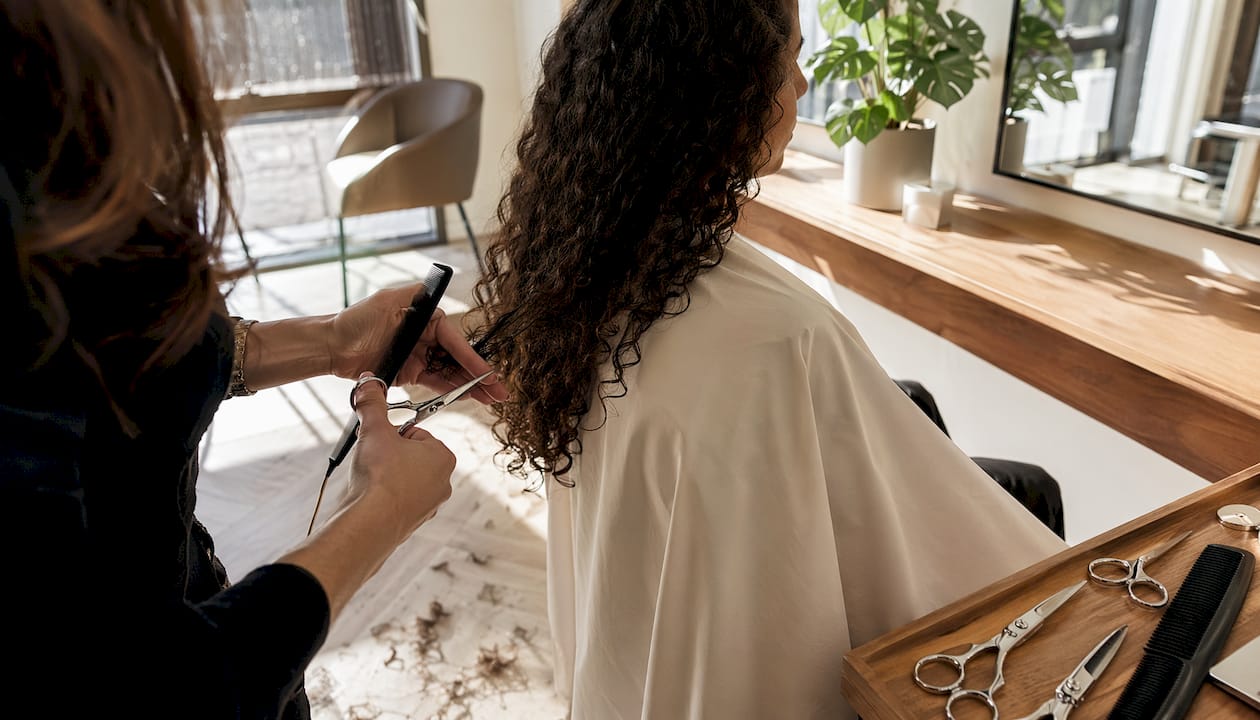
Trimming every 8–12 weeks removes split ends before they travel further up the hair shaft. Professional trims prevent split ends from acting as hooks that catch surrounding strands. Leaving split ends untreated does not just cause tangling. It accelerates breakage, which creates more rough edges and compounds the problem over time.
The shape of your cut also affects how much friction your hair generates at the nape and shoulders. V-shaped and U-shaped cuts reduce the amount of hair sitting against the collar and neck, which are high-friction zones. Blunt cuts, while stylish, create a dense, flat edge that is more likely to mat against clothing.
Styling choices matter just as much as the cut itself:
- Loose hairstyles. Low buns, loose braids, and soft ponytails reduce the surface area of hair exposed to friction and wind.
- Avoid tight styles. Tight ponytails and buns create tension at the root and cause breakage, which worsens tangling over time.
- Protective styles. Styles that tuck the ends away, such as a loose plait, prevent the most vulnerable part of the hair from rubbing against clothing.
- Avoid rough accessories. Elastic bands with metal clasps and rough fabric scrunchies snag the cuticle. Silk or satin scrunchies are a straightforward upgrade.
How does night-time care affect hair tangling?
Night-time is when a significant amount of mechanical damage to the hair cuticle occurs. Hours of movement against a cotton pillowcase create repeated friction that lifts the cuticle scales, leaving hair rough and prone to knotting by morning. Silk pillowcases reduce friction, which is the primary mechanical cause of overnight hair matting. The smooth surface of silk allows hair to slide rather than snag, preserving the cuticle through the night.
A consistent night-time routine makes a measurable difference to how your hair feels each morning. Regular use of silk and protective styles reduces mechanical damage and breakage over time. The cumulative effect of protecting your hair each night is smoother, more manageable hair across weeks and months.
The most effective night-time practices are:
- Silk or satin pillowcase. The single most impactful change for most people. Reduces friction across the entire head simultaneously.
- Silk bonnet or hair wrap. Provides full coverage and is particularly effective for curly and coily textures.
- Gentle detangling before bed. Removing existing knots before sleep prevents them from tightening overnight.
- Leave-in conditioner or light oil. Applied before bed, these products maintain moisture levels and reduce the brittleness that makes hair more prone to breakage.
- Loose protective style. A loose braid or low bun keeps the hair contained and reduces the surface area exposed to pillow friction.
Pro Tip: Detangle your hair before bed rather than in the morning. Knots that form overnight are far easier to remove when they are fresh. Leaving them until morning allows them to tighten and compact, which increases breakage during the morning brush.
What are the most effective daily care methods for smooth hair?
The single most important daily habit for tangle-free hair is detangling correctly. Detangling on wet, conditioned hair preserves strand integrity and reduces snapping. Dry detangling forces the brush through knots without the slip that conditioner provides, which snaps strands and creates the rough edges that cause future tangling. Always apply conditioner generously, allow it to sit for a few minutes, and then work through knots in small sections.
Starting brush strokes from the ends prevents knots from compacting and becoming difficult to remove. Working from root to tip pushes existing knots downward and tightens them. Working from ends upward removes each knot progressively without adding pressure from above. A wide-tooth comb or a detangling brush with flexible bristles is the right tool for wet hair. Fine-tooth combs and paddle brushes are better suited to dry, already-detangled hair.
Daily habits that support smooth, knot-free hair include:
- Moisture retention. Light oils such as argan or jojoba applied to the mid-lengths and ends maintain flexibility and reduce brittleness.
- Deep conditioning weekly. A weekly deep conditioning treatment replenishes moisture lost through heat styling and environmental exposure.
- Avoid hard water buildup. Hard water deposits minerals on the hair shaft that roughen the cuticle. A clarifying shampoo used monthly removes this buildup effectively.
- Limit heat styling. Heat raises the cuticle. When heat styling is necessary, a heat protectant applied beforehand reduces cuticle damage.
- Regular trims. Maintaining a trim schedule of every 8–12 weeks keeps split ends from accumulating and acting as friction points.
For guidance on detangling without damage, the same principles that apply to extensions apply directly to natural hair. The technique is the same: wet, conditioned, and worked from the ends upward.
Key takeaways
Tangle-free hair requires smooth, intact cuticles, consistent moisture, the right haircut, and protective habits both day and night.
| Point | Details |
|---|---|
| Cuticle health is the root cause | Raised or damaged cuticles cause strands to interlock; repairing them is the most effective fix. |
| DN-PIC treatments offer durable repair | These treatments maintain lubrication through 10,000 rubbing cycles and six wash sessions. |
| Haircut technique matters | Ghost layers and trims every 8–12 weeks reduce bulk, split ends, and friction zones. |
| Night-time protection is non-negotiable | Silk pillowcases and loose protective styles prevent overnight mechanical damage to the cuticle. |
| Detangle wet, from ends upward | Working from ends to roots on conditioned hair reduces breakage and prevents knots from compacting. |
What I have learned from years of watching people fight their hair
Most people approach tangling as a detangling problem. They buy better brushes, stronger detangling sprays, and more conditioner. The real problem is almost always upstream. Tangling is a cuticle problem, and the cuticle gets damaged long before the knots appear.
The clients I see who struggle most with tangling share one habit: they brush dry. They brush in the morning before any product, they brush through knots from root to tip, and they wonder why their hair feels rougher each month. The fix is not a new brush. It is changing the moment and direction of detangling entirely.
The other misunderstanding I encounter regularly is that layering means losing length. Ghost layers and internal layering are specifically designed to remove bulk without touching the perimeter of the hair. A skilled stylist can take a thick, matting mane and transform it into hair that moves freely, without cutting a single centimetre of visible length. If your stylist has not mentioned this technique, ask for it by name.
Patience is the part nobody wants to hear. A damaged cuticle does not recover in one conditioning treatment. Consistent moisture, protective habits, and regular trims over several months are what produce genuinely smooth hair. The science behind DN-PIC treatments is encouraging because it offers more durable repair than anything available previously. But even the best treatment works best when supported by daily habits that stop further damage from occurring.
Consult a professional stylist who understands your specific hair type before committing to a major cut or treatment. A personalised assessment is worth more than any general advice, including this article.
— Sam
Naturylextensions and the tangle-free difference
If you are working toward smoother, more manageable hair and considering extensions as part of that goal, the quality of the extension itself matters as much as your care routine.

Naturylextensions specialises in premium Remy human hair extensions that are ethically sourced and designed to maintain their smoothness over time. Remy hair retains its cuticle alignment, which means the strands run in the same direction and resist tangling far more effectively than non-Remy alternatives. The invisible wire extensions and additional length wires from Naturylextensions are built for daily wear without the matting or friction that lower-quality extensions create. Fast UK delivery and a free exchange policy mean you can find the right match for your natural hair without risk.
FAQ
What is tangle-free hair?
Tangle-free hair is hair with a smooth, intact cuticle surface that prevents strands from interlocking and forming knots. When the cuticle lies flat, strands glide past one another rather than snagging.
What causes hair to tangle so easily?
Tangling is caused by raised or damaged cuticles, split ends, mechanical friction from clothing and pillowcases, and hair types such as curly or fine hair that naturally create more contact between strands.
Is tangle-free hair actually possible for all hair types?
Yes, though the approach varies by hair type. Curly and coily textures require more consistent moisture and protective styling, while fine hair benefits most from lightweight products and gentle detangling techniques.
How often should I trim my hair to prevent tangling?
Trimming every 8–12 weeks removes split ends before they travel up the hair shaft and act as hooks that snag surrounding strands, which is the most direct way to reduce tangling from the ends.
Do silk pillowcases genuinely reduce hair tangling?
Yes. Silk pillowcases reduce friction against the hair cuticle during sleep, which is one of the primary causes of overnight matting and morning knots. Regular use leads to smoother hair over time.


