TL;DR:
- The term ‘tangle-free extensions’ often misleads consumers, as true tangling depends on hair quality and maintenance. High-quality Remy hair with aligned cuticles reduces friction and tangling, especially when paired with appropriate attachment methods and diligent aftercare. A consistent routine and choosing the right products are essential for maintaining smooth, knot-free extensions daily.
The phrase ‘tangle-free extensions’ appears on product pages, salon menus, and social media feeds so frequently that it has almost lost its meaning. Yet thousands of women in the UK invest in extensions every year and still find themselves fighting through stubborn knots the morning after. The frustration is real, and it is almost always avoidable. Whether you are curious about invisible wire styles, Remy human hair, or micro-loop systems, this guide breaks down what ‘tangle-free’ genuinely means, which products deliver on the promise, and exactly what you need to do to keep your hair smooth, voluminous, and knot-free every single day.
Key Takeaways
| Point | Details |
|---|---|
| Quality is crucial | Aligned cuticle Remy hair offers far better tangle resistance than generic extensions. |
| Attachment matters | Methods like micro-loop and invisible wire systems minimise friction and reduce tangling. |
| Consistent maintenance | Gentle, regular brushing and night routines are essential for real tangle-free results. |
| No single magic product | The ‘tangle-free’ effect is partnership of hair quality, fit, and how you care for your extensions. |

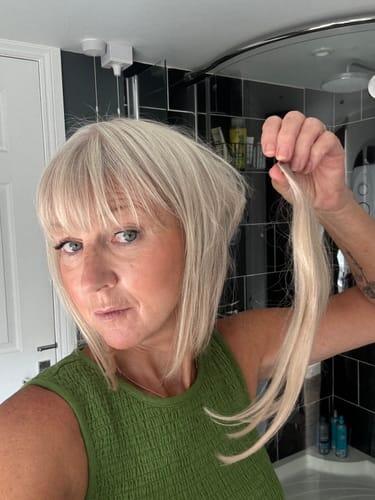
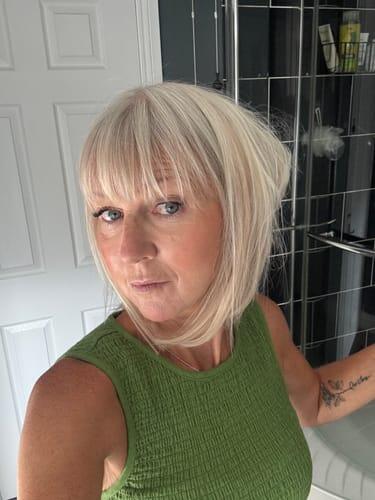
Recommended for this guide
Face-Framing Layers
Add natural fullness to thinning front hair in seconds. Completely invisible.
Front clip-in extensions · 100% Remy · £39.95 · Rated 4.7 “Excellent” on Trustpilot · Free UK delivery · Free colour exchanges
Shop Face-Framing Layers → Free colour match from a photoWhat does ‘tangle-free extension’ actually mean?
First, let us clarify exactly what is behind the label ‘tangle-free extension’ and why not all extensions live up to that promise.
The term ‘tangle-free’ is used loosely across the extensions industry, and that creates confusion. When a brand calls a product tangle-free, it rarely guarantees that you will never experience a knot. What it should mean is that the hair is engineered and sourced to minimise friction, reducing the likelihood of tangling under normal use. The key factor here is cuticle alignment.
Tangle-free extensions result from smooth extension hair with aligned cuticles, which is precisely what Remy and full-cuticle hair provides. Each strand of hair is covered in tiny overlapping scales called cuticles. In high-quality extensions, all strands run in the same direction, so those scales lie flat and smooth rather than catching against neighbouring strands. When cuticles are misaligned, even in hair marketed as ‘premium’, the scales snag on each other constantly, creating the kind of tangle that can feel like a daily battle.
Beyond cuticle quality, the attachment method and your aftercare routine both shape whether your extensions stay smooth. Understanding why Remy quality matters is the foundation of making an informed choice. Here are a few common myths worth setting straight:
- Myth: All human hair extensions are tangle-free by default.
- Reality: Only hair with properly aligned cuticles resists tangling. Processed or mixed-origin hair can still tangle severely.
- Myth: Expensive extensions always mean better performance.
- Reality: Price is not a reliable indicator. Cuticle alignment, hair origin, and attachment method are far better measures.
- Myth: Once fitted by a professional, extensions are maintenance-free.
- Reality: Even the best extensions require consistent aftercare to remain tangle-free.
A genuinely tangle-free extension experience feels effortless in daily life. Your brush moves through the hair with minimal resistance, you do not lose significant hair during detangling, and the extensions blend smoothly with your natural hair throughout the day.
To learn more about what defines quality at a molecular level, take a look at Remy hair explained for a clear breakdown.
How does hair quality and structure impact tangling?
Having defined the ‘tangle-free’ promise, it is essential to understand how the hair’s quality and internal structure shape real-world results.

Smooth extension hair with aligned cuticles, especially Remy hair, directly lowers friction and tangling compared with lower-grade hair. But what does that actually look like day to day? The table below shows the key differences between Remy and non-Remy options:

| Feature | Remy human hair | Non-Remy or synthetic hair |
|---|---|---|
| Cuticle direction | All strands aligned in one direction | Mixed or stripped cuticles |
| Surface texture | Smooth, low friction | Rough, higher friction |
| Tangling risk | Low under normal use | High, even with care |
| Lifespan with proper care | 6 to 12 months or more | Weeks to a few months |
| Shine and natural appearance | Consistent and natural | Can appear dull or artificial |
| Response to heat styling | Tolerates heat well | May frizz or degrade quickly |
The practical signs of lower-quality hair appear quickly. You might notice excessive shedding within days of fitting, difficulty running a brush through the extensions even after washing, or a rough, almost scratchy texture when you run your fingers along the shaft. With quality Remy hair, the experience is noticeably different. Strands flow together rather than catching, and the hair behaves in a way that is very close to your own natural growth.
For ongoing guidance on keeping Remy hair in its best condition, the Remy hair care guide provides practical and UK-specific advice for every extension type.
Pro Tip: When shopping online, look for extensions described specifically as single-drawn or double-drawn Remy human hair. Double-drawn means that the shorter hairs have been removed, giving a thicker, more uniform look from root to tip and reducing the chance of thinner ends tangling together.
Attachment methods: which extensions avoid tangling and damage?
Beyond just the hair itself, the way extensions are attached to your head plays a major role in whether you end up battling knots or enjoying a smooth experience.
Some tangle-free extensions avoid heat, glue, or braiding, instead attaching with micro-loops or rings for lower damage and tangle risk. The method you choose has a direct effect on both your scalp health and your daily experience. Here is how the most popular systems compare:
| Attachment method | Tangle risk | Damage potential | Ease of removal | Best suited for |
|---|---|---|---|---|
| Invisible wire (invisible wire) | Very low | None | Immediate, no tools | All hair types, daily wearers |
| Micro-loop / micro-ring | Low | Very low | Professional removal | Long-term wear seekers |
| Tape-in | Moderate | Low to moderate | Professional removal | Straight to wavy hair |
| Glue-in (keratin bond) | Moderate | Moderate to high | Professional, uses heat | Experienced extension wearers |
| Clip-in | Low | Very low | Self-removal daily | Occasional wearers |
Key points about each method:
- Invisible wire extensions sit on a near-invisible wire that rests on top of your head and blends beneath your natural hair. There is no glue, no heat, and no attachment to your own strands, making them the most damage-free option available. They are also quick to apply and remove at home, which suits busy women who want flexibility.
- Micro-loop extensions involve small pre-tipped wefts threaded through a tiny metal ring clamped onto your hair. No heat or adhesive is involved, which protects both the extension and your natural hair from unnecessary stress.
- Tape-in extensions bond small wefts of hair to your own using a medical-grade adhesive. They lie flat and feel natural but require careful maintenance to avoid adhesive build-up, which can cause tangling at the root.
- Glue-in extensions use a keratin-based adhesive melted with a heat tool. The bond can be strong, but incorrect removal or heat exposure can lead to breakage. They are the highest-risk option for damage.
For ideas on styling once your extensions are in place, the styling tips for damage-free looks guide covers everything from heat styling to protective updos.
The truth about ‘tangle-free’: why maintenance makes the difference
Of course, even the highest quality, most thoughtfully attached extension can still end up tangled without the right at-home care.
Care and brushing methods, including progressive detangling from ends upward and controlling friction and moisture, are essential for tangle-free extensions. And tangling can still occur with ‘tangle-free’ extensions if the install is too tight, there is product build-up, or the hair is dry. This is why maintenance is not optional. It is the deciding factor between extensions that last and ones that disappoint.
Here is a step-by-step daily and weekly routine that works particularly well for UK weather conditions, where humidity and damp winters can accelerate tangling:
- Start each morning with a wide-tooth comb or extension brush. Begin at the ends and work upward in small sections. Never drag from the root downward, as this pulls the extension attachment point and creates knots at the weft.
- Apply a lightweight, extension-safe leave-in conditioner or detangling spray. This adds slip to the hair, reducing friction before you even begin brushing. Avoid anything heavy or silicone-rich, as build-up settles at the bonds and attracts tangles.
- Before washing, gently brush through extensions to remove any existing tangles. Wet hair is significantly more fragile, and attempting to detangle in the shower increases the risk of matting.
- Wash with a sulphate-free shampoo and a moisturising conditioner. UK tap water tends to be hard, especially in the south of England, and hard water mineral deposits can make extensions feel rougher over time. A clarifying rinse every few weeks helps.
- Allow extensions to dry naturally where possible or use a low heat setting on your dryer. Heat concentrates at attachment points and can weaken bonds or dry out the hair shaft.
- Before sleeping, loosely plait your extensions or gather them into a low ponytail. This keeps strands from rubbing against your pillow throughout the night and arriving knotted in the morning.
Pro Tip: Swap your cotton pillowcase for a silk or satin alternative. Cotton creates friction with every movement during sleep, gradually roughening the cuticle surface of your extensions and making tangling far more likely. A silk pillowcase is one of the simplest and most effective investments you can make.
Even the most tangled extensions can often be salvaged. Work from the ends upward with a detangling spray and take your time. Rushing the process is the single biggest cause of unnecessary hair loss during detangling.
For a full breakdown of everything you should be doing, the extension care tips guide covers daily habits alongside a practical maintenance checklist. You can also consult the extension longevity guide for a comprehensive overview of long-term care.
Choosing tangle-free extensions: what to ask, common pitfalls, and UK tips
Now that you know the moving pieces for a tangle-free experience, here is a cheat sheet for confidently choosing the right set and avoiding the common mistakes many UK women make.
The practical ‘tangle-free’ differentiator is a combination of hair structure, attachment method, and maintenance routine. No single element works alone. Use these points to assess any product before you buy:
- Ask specifically whether the hair is Remy and cuticle-intact. ‘Human hair’ alone does not confirm cuticle alignment. Push for specifics.
- Check whether the hair has been chemically processed. Bleached or heavily processed hair, even if originally Remy, will have weakened cuticles that are more prone to tangling.
- Request information about the hair’s origin. Single-origin hair tends to have more consistent texture and behaves more predictably than hair blended from multiple sources.
- Look for a clear returns or exchange policy. Reputable UK brands stand behind their products. A free exchange policy is a good indicator of confidence in quality.
- Avoid products that only describe themselves as ‘tangle-resistant’ without any detail about hair structure or grade. Vague language is often a red flag.
When it comes to UK-specific considerations, here are three maintenance rules particularly relevant to living in Britain:
- Manage hard water exposure. Install a shower filter or use a chelating shampoo monthly to remove mineral build-up that roughens hair cuticles.
- Account for British humidity. Damp conditions cause the hair shaft to swell slightly, which can exacerbate tangling. A light anti-humidity serum applied to mid-lengths and ends helps seal the cuticle.
- Be cautious with heated styling tools in winter. Indoor heating dries extensions out quickly. Balance any heat styling with a hydrating mask applied to extensions once a week.
For advice on protecting your natural hair beneath your extensions, the natural hair care with extensions guide is an excellent companion resource.
Pro Tip: Before purchasing extensions online, run a quick search to see whether the retailer publishes detailed product specifications alongside customer photographs. Real-world photos from buyers with similar hair types to yours are far more informative than professionally lit campaign images.
A realistic perspective: why ‘tangle-free’ is a partnership, not a promise
The UK extension market is filled with confident claims. ‘Guaranteed tangle-free’, ‘zero maintenance’, ‘lasts all day without a single knot.’ We understand why these messages appeal. You want convenience and confidence, not a new set of hair problems. But the most honest thing we can tell you is this: no extension is truly tangle-free on its own.
What actually creates a tangle-free experience is a three-way partnership between the quality of the hair, the suitability of the attachment method for your hair type and lifestyle, and the consistency of your care routine. Remove any one of those elements and the experience falls apart regardless of how much you spent or how reputable the brand was.
What frustrates us most about oversimplified marketing is that it sets women up to feel as though they have done something wrong when their extensions tangle. The reality, as the evidence consistently shows, is that tangling is almost always a systems failure, not a personal one. The wrong hair grade combined with a poorly fitted method and no real aftercare guidance produces the same result every time.
We believe why Remy matters is a conversation worth having openly with every customer before they purchase. When you understand that cuticle alignment is the non-negotiable foundation, that your attachment choice should reflect your lifestyle, and that simple daily habits genuinely protect your investment, you stop feeling like a passive consumer of extension promises and start feeling like someone in control of their own results.
That shift in mindset is worth more than any single product claim.
Next steps for your perfect, tangle-free look
Ready to experience the benefits of tangle-free extensions for yourself? Take the next step with these resources.
At Naturyl Extensions, every product in our range is crafted from ethically sourced Remy human hair with cuticle integrity at the centre of what we do. Whether you are drawn to the effortless convenience of our invisible wire extensions, the fullness of a ponytail extension, or the face-framing softness of our highlighted wefts, you will find options built for real women with busy lives.

We also offer fast UK delivery and a free exchange policy, because we know that finding your perfect match sometimes takes a little fine-tuning. Explore our full range and complement your purchase with our in-depth care resources, all written to help you get the longest, smoothest wear possible from your extensions. Your tangle-free experience starts with the right choice, and we are here to help you make it.
Frequently asked questions
What is the main cause of extensions tangling?
The main causes are poor hair quality, misaligned cuticles, and improper aftercare routines that increase friction and dryness. Addressing all three factors together gives you the best chance of a consistently smooth experience.
Are micro-loop extensions really tangle-free and damage-free?
Micro-loop extensions significantly reduce tangling and damage by avoiding glue and heat, but proper maintenance and a secure, well-fitted installation still play a decisive role in the outcome.
Can Remy hair extensions ever get tangled?
Yes, Remy hair extensions can tangle if not cared for properly, though they are far less prone to this than lower-grade options. Consistent brushing and moisture management remain essential even with the highest quality hair.
How can I prevent tangling overnight with extensions?
Protect your extensions nightly by securing them in a loose plait or wrapping your hair in a silk or satin scarf before bed, then gently detangle from the ends upward each morning before any other styling.
What are the best products to use for tangle-free extensions?
Use lightweight, extension-safe moisturising sprays and sulphate-free shampoos, and avoid heavy or sticky products that cause build-up at the weft or bond points, as this is a common trigger for stubborn tangling.
Ready to try it?
Face-Framing Layers
Add natural fullness to thinning front hair in seconds. Completely invisible.
Front clip-in extensions · 100% Remy · £39.95 · Rated 4.7 “Excellent” on Trustpilot · Free UK delivery · Free colour exchanges
Shop Face-Framing Layers → Free colour match from a photo