TL;DR:
- A seamless weft features a thin polyurethane or silicone base that lies flat against the scalp for a natural look. It is constructed with a flat, skin-like strip that reduces visibility and bulk compared to traditional stitched fabric wefts. Proper maintenance and professional application extend its lifespan to about 12 months, especially for fine to medium hair types.
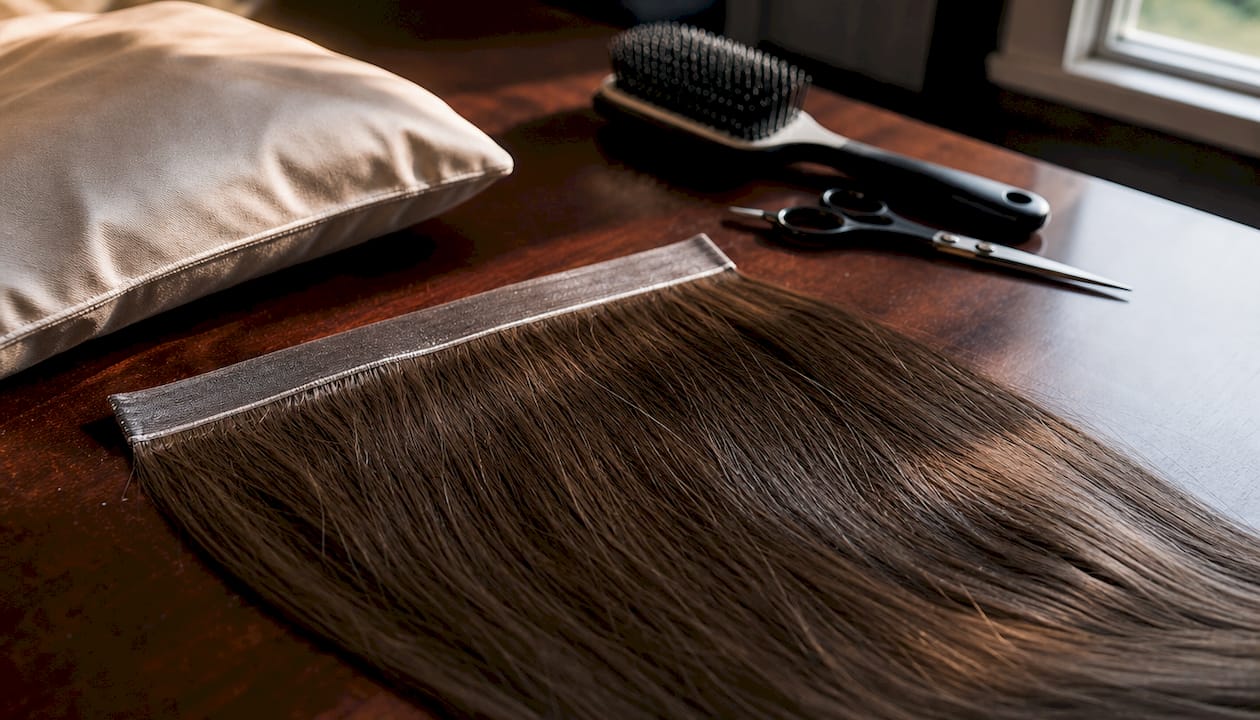
A seamless weft is defined as a hair extension strip constructed with an ultra-thin polyurethane or silicone base, typically 0.8mm to 1.2mm thick, that lies flat against the scalp to create a virtually undetectable finish. Unlike traditional wefts, which rely on thick stitched fabric seams measuring 2.0mm to 3.0mm, the seamless weft replaces that bulk with a skin-like strip that moulds to the curve of your head. The result is a hair extension type that blends naturally, sits comfortably, and works particularly well for fine to medium hair. Naturylextensions specialises in premium Remy human hair extensions built on exactly this principle: quality you can wear every day without compromise.
What is a seamless weft and how is it constructed?
The defining feature of a seamless weft is its base material. A thin silicone or polyurethane strip replaces the traditional sewn seam, producing a flat, flush profile that sits close to the scalp. That construction is what separates seamless wefts from every other weft type on the market.
Traditional machine wefts carry a base thickness of 2.0mm to 3.0mm. Seamless wefts measure just 0.8mm to 1.2mm. That difference is significant: the thinner the base, the less visible the attachment point through your natural hair, and the less pressure placed on your scalp throughout the day.
The hair itself is equally important. Double-drawn Remy human hair is used in quality seamless wefts, meaning the strands are aligned cuticle-to-cuticle from root to tip. This alignment prevents tangling, maintains smoothness, and gives the extension a consistent thickness that mirrors the look of healthy natural hair.
| Feature | Seamless weft | Traditional weft |
|---|---|---|
| Base thickness | 0.8mm–1.2mm | 2.0mm–3.0mm |
| Base material | Polyurethane or silicone strip | Stitched fabric seam |
| Scalp visibility | Very low | Moderate to high |
| Bulk at attachment | Minimal | Noticeable |
| Flexibility | High | Low to moderate |
Pro Tip: Ask your stylist to part your hair at the nape and press a finger against the weft base. A quality seamless weft should feel almost flush with your scalp, with no raised ridge.
What benefits do seamless wefts offer?
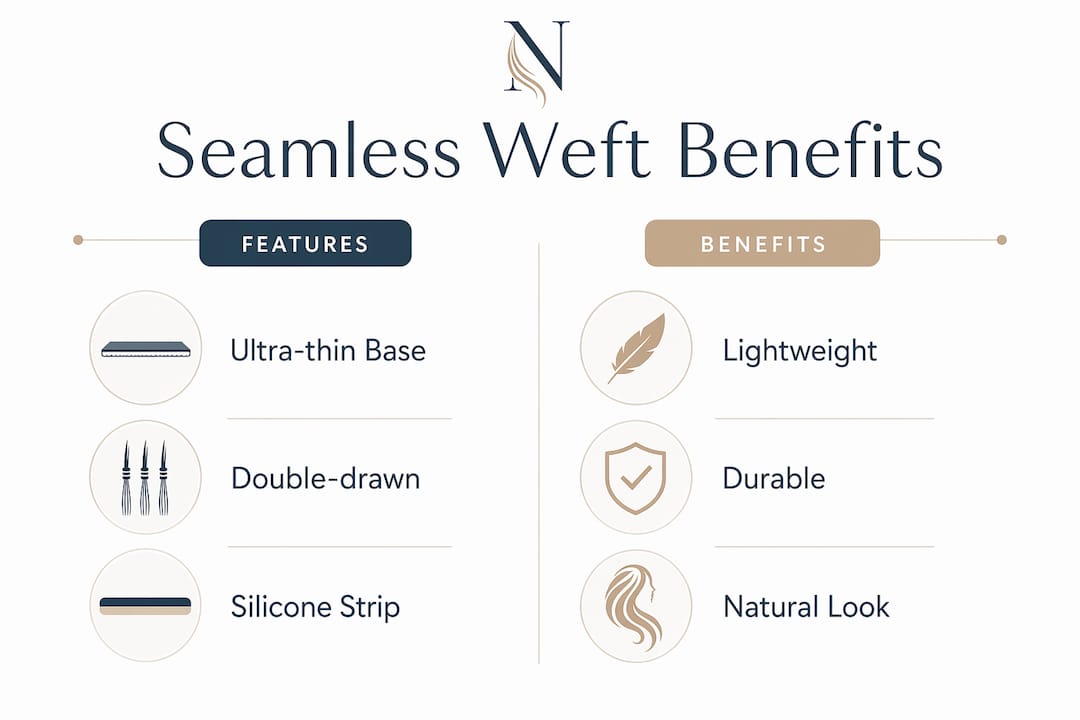
Seamless wefts deliver a combination of comfort, appearance, and durability that most other extension types cannot match in a single product. The flexible weft design follows the natural curve of your head, preventing visible bumps or edges even when your hair moves. That flexibility is what makes them so wearable day to day.
The key benefits include:
- Flat, low-profile fit. The ultra-thin base sits close to the scalp, reducing the risk of visible ridges under your natural hair.
- Lightweight wear. Seamless wefts are lighter than machine wefts, which reduces tension on your roots and lowers the risk of traction-related hair loss over time.
- Superior blending. The fine to medium hair suitability of seamless wefts is well established. The thin base and aligned Remy hair blend naturally with finer textures that would show the bulk of a traditional weft.
- Durability with proper care. High-quality Remy human hair used in seamless wefts can last up to 12 months with consistent maintenance. That longevity makes them a cost-effective choice over time.
- Styling versatility. Because the base is thin and the hair is double-drawn, seamless wefts can be curled, straightened, and styled much like your natural hair.
- Reusability. With professional maintenance, the weft itself can be repositioned and reused across multiple appointments, extending its value further.
Seamless wefts combine durability with a flat profile in a way that neither machine wefts nor hand-tied wefts achieve alone. Machine wefts are thicker and more durable but bulkier. Hand-tied wefts are thin and light but less durable. Seamless wefts sit between the two, offering the best practical balance for most wearers.
How to apply and maintain seamless weft hair extensions
Seamless weft installation is a professional technique. The weft is typically secured using a beaded row method, where small silicone-lined micro-beads are threaded onto sections of your natural hair, and the weft is sewn or attached along that row. Some stylists use a bonded application with keratin-based adhesive, though the beaded row method is more common for seamless wefts because it avoids heat near the base.
The application process follows these general steps:
- Section the hair. Your stylist creates a horizontal parting across the back of your head, usually starting at the nape.
- Place the beads. Micro-beads are threaded onto small sections of natural hair along the parting and clamped flat.
- Attach the weft. The seamless weft is sewn or clipped along the bead row, sitting flush against the scalp.
- Blend and cut. The stylist trims and blends the extension hair with your natural hair for a uniform finish.
- Style as normal. Once fitted, you can style the hair with heat tools at a moderate temperature, using a heat protectant spray.
Maintenance appointments are recommended every 6 to 10 weeks as your natural hair grows and the weft moves away from the scalp. Skipping these appointments causes the weft to sit too low, which increases visible gaps and puts uneven tension on your roots. A full hair extension maintenance checklist can help you track what needs attention between salon visits.
Pro Tip: Use a sulphate-free shampoo and apply conditioner from mid-length to ends only. Sulphates strip the polyurethane base and dry out Remy hair faster, shortening the lifespan of your weft.
Caring for the hair between appointments is straightforward. Brush gently from ends to roots using a soft-bristle or loop brush, sleep with your hair in a loose plait, and avoid applying heavy oils directly to the weft base. A dedicated Remy human hair care guide covers the full routine in detail.
Which hair types are best suited for seamless wefts?
Seamless wefts work best for fine to medium hair. The thin base profile means there is less bulk to conceal under your natural hair, which is critical when your hair is fine and lies flat. Thicker wefts create visible ridges in fine hair that no amount of styling can fully hide.
| Hair type | Suitability for seamless wefts | Recommended alternative |
|---|---|---|
| Fine to medium | Excellent | N/A |
| Medium to thick | Good | Machine weft for added volume |
| Coarse or very thick | Moderate | Machine weft for durability |
| Severely fragile or thinning | Low | Hand-tied or micro weft |
| Chemically damaged | Low to moderate | Consult a specialist first |
Experts caution that severely fragile or thinning hair is not well suited to seamless wefts. Even a lightweight weft adds tension to the attachment points, and hair that is already weakened by breakage or thinning may not tolerate that load without further damage. For those clients, hand-tied wefts or micro wefts distribute weight more evenly across smaller sections, reducing the risk of traction damage. You can read more about the differences in our guide to hand-tied extensions.
For medium to thick hair, seamless wefts remain a strong option. The flat base blends well even with denser natural hair, and the durability of the Remy hair means the extensions hold up through regular styling. Very thick or coarse hair may require more wefts to achieve full coverage, which increases the total weight load. A professional consultation will determine the right number of wefts for your specific density.
Key takeaways
Seamless wefts are the most practical choice for fine to medium hair, combining a flat 0.8mm–1.2mm base with double-drawn Remy human hair for a natural finish that lasts up to 12 months with proper care.
| Point | Details |
|---|---|
| Ultra-thin base | Seamless wefts measure 0.8mm–1.2mm thick, far thinner than traditional wefts at 2.0mm–3.0mm. |
| Best for fine to medium hair | The flat profile blends naturally with finer textures that would show the bulk of a standard weft. |
| Maintenance every 6–10 weeks | Regular appointments move the weft up as your natural hair grows, preventing gaps and root tension. |
| Remy hair longevity | Double-drawn Remy human hair can last up to 12 months with sulphate-free care and gentle brushing. |
| Not for severely fragile hair | Thinning or chemically damaged hair needs hand-tied or micro wefts to minimise traction risk. |
Why I think seamless wefts are misunderstood
Most people assume that “thin” means “fragile.” With seamless wefts, the opposite is true. The polyurethane base is actually more resistant to fraying than a traditional sewn seam, which can unravel at the edges over time. The thinness is an engineering choice, not a compromise.
The bigger misconception I see is around maintenance. Clients often think that skipping a six-week appointment is harmless. It is not. When the weft drops two centimetres below the scalp, the weight distribution shifts entirely onto a smaller section of hair. That is when traction damage starts, quietly, before you notice any shedding.
My honest view is that professional fitting and regular maintenance are not optional extras. They are the product. A well-fitted seamless weft on the right hair type, maintained on schedule, looks genuinely indistinguishable from natural hair. A poorly fitted one, or one left too long between appointments, looks exactly like what it is. The extension is only as good as the care around it.
If you are on the fence about whether seamless wefts suit your hair, the answer is almost always to get a consultation before committing. A stylist who specialises in weft extensions will assess your hair density, fragility, and growth pattern before recommending a weft count or attachment method. That conversation is worth more than any guide.
— Sam
Premium Remy hair extensions from Naturylextensions
Naturylextensions offers a curated range of premium Remy human hair extensions designed for a natural, comfortable finish. Whether you are adding length, volume, or both, the focus is on ethically sourced hair that behaves like your own. Every product is built around the same principle as the seamless weft: quality materials, flat profiles, and a finish that holds up through daily styling.
Browse the full collection at Naturylextensions to find the right extension type for your hair. Fast UK delivery and a free exchange policy mean you can shop with confidence. For clients managing finer or thinning hair, the thinning hair fill-ins collection offers targeted solutions designed to add coverage without overloading fragile strands.
FAQ
What is a seamless weft made of?
A seamless weft is made from 100% Remy human hair attached to an ultra-thin polyurethane or silicone strip base, typically 0.8mm to 1.2mm thick. The strip replaces the traditional stitched fabric seam, creating a flatter, less bulky attachment point.
How long do seamless weft hair extensions last?
With proper care, the Remy human hair in a seamless weft can last up to 12 months. Maintenance appointments every 6 to 10 weeks are required to reposition the weft as your natural hair grows.
Are seamless wefts good for fine hair?
Seamless wefts are particularly well suited to fine and medium hair. The ultra-thin base sits close to the scalp and blends naturally with finer textures that would show the bulk of a traditional weft.
What is the difference between a seamless weft and a tape-in extension?
A seamless weft is a continuous strip of hair secured along a bead row, while tape-in extensions use adhesive tabs applied in small sandwich sections throughout the hair. Seamless wefts generally offer more volume per row and are repositioned rather than replaced at each maintenance visit.
Can seamless wefts damage your hair?
Seamless wefts carry a low damage risk for fine to medium hair when fitted professionally and maintained on schedule. Severely fragile or thinning hair is better suited to hand-tied or micro wefts, which distribute weight across smaller sections and reduce traction on the roots.