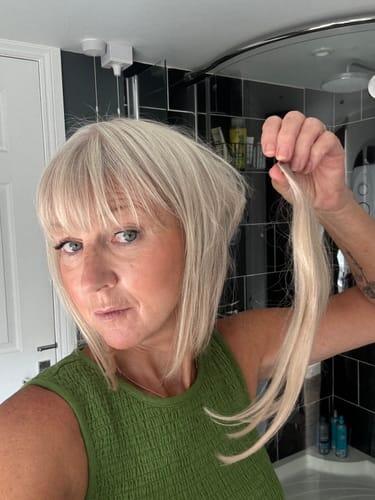
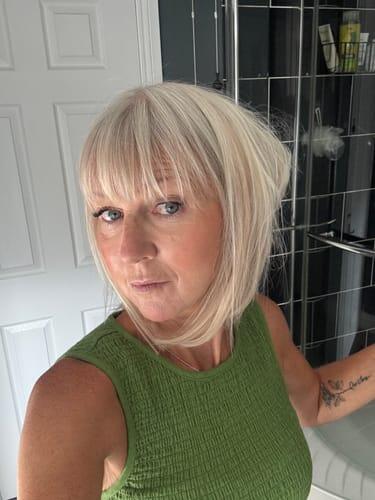
Struggling to make your dream hair blend seamlessly with your natural strands can feel like an endless beauty challenge. For many British women, understanding the role of hair density in extensions is the key to achieving natural, full-looking volume without risking damage or time-consuming salon visits. Get ready to discover why matching density matters when choosing invisible wire hair extensions, and how this single step transforms the final look from obvious add-on to effortlessly flawless.
Table of Contents
- Hair Density In Extensions: Core Meaning
- Types Of Hair Density And Their Differences
- How Density Affects Blending And Appearance
- Matching Extension Density To Natural Hair
- Mistakes To Avoid And Choosing Alternatives
Key Takeaways
| Point | Details |
|---|---|
| Hair Density Matters | Understanding hair density is crucial for selecting extensions that blend seamlessly with your natural hair. A mismatch can lead to an unnatural appearance. |
| Types of Density | Hair density is categorised into low, medium, and high, each affecting extension choice and overall appearance. Selecting the right density ensures optimal blending and comfort. |
| Impact on Styling | The right density allows for greater styling versatility and natural movement of the hair. Incorrect density can limit styling options and create noticeable lines. |
| Assess Before You Buy | Always assess your natural hair density and compare it with extension specifications before purchasing to avoid costly mistakes and ensure satisfaction. |
Hair density in extensions: Core meaning
Hair density in extensions refers to how many individual hair strands are packed into a specific area of the extension piece, typically measured per square inch. This is fundamentally different from hair thickness, which describes the width of each individual strand itself. When you’re choosing extensions, understanding density matters because it directly impacts how full and natural your hair will look once the extensions are in place.
Think of it this way: you could have thin strands packed tightly together (high density with thin hair) or thick strands spread further apart (low density with thick hair). Both combinations exist, and both can work beautifully depending on your natural hair and the look you’re after. Hair density is determined by the number of hair follicles active on your scalp at any given time, which varies from person to person based on genetics, age, diet, and overall health.
For extension wearers, this concept becomes crucial because you want your extensions to blend seamlessly with your natural hair. If your natural hair has lower density (fewer strands per square inch), adding extensions with extremely high density can look unnatural and feel heavy on your head. Conversely, if you have naturally dense hair, extensions with low density might look sparse and fail to create the fuller effect you’re seeking.
The key density factors that affect your extension choice include:
- Strand count per extension piece: More strands create a fuller appearance instantly
- Weight distribution: Higher density extensions can feel heavier and may stress your natural hair more
- Blending capability: Matching your natural hair density ensures extensions blend without obvious lines or gaps
- Styling versatility: Certain densities work better for specific hairstyles and parting options
- Long-term comfort: Extensions that match your natural density feel more comfortable throughout the day
When your extension density matches your natural hair density, blending becomes effortless and your hair transformation looks genuine rather than obviously enhanced.
When you’re shopping for invisible wire extensions or other hair enhancement products, paying attention to density specifications helps you make informed decisions. Many people focus solely on length and colour, overlooking how density affects the final result. Our Face Framing Layers clip-in extensions come in carefully calculated densities to work with various natural hair types, ensuring you get that natural-looking fullness you’re after.
Understanding hair extension thickness and volume goes hand-in-hand with grasping density concepts. They’re separate measurements, but both influence how your final look appears. Your natural hair characteristics—including its own density—should guide which extension density you select.
Pro tip: When assessing whether an extension density will work for you, compare it directly to your natural hair by holding them side-by-side under natural lighting; if the extension piece looks noticeably fuller or thinner than your own hair, the density likely won’t blend seamlessly.
Types of hair density and their differences
Hair density breaks down into three distinct categories: low, medium, and high. Understanding where your natural hair falls within this spectrum is crucial when selecting extensions, because the wrong density match can result in an unnatural appearance or uncomfortable wear. Each density type has unique characteristics that affect how extensions will blend and perform on your head.
Low density hair features noticeable gaps between individual strands, with your scalp clearly visible when you part your hair or tie it back. People with low-density hair often struggle with styling because the scalp shows through more easily. When wet, this becomes even more apparent. If you have low-density hair, adding high-density extensions creates an obvious contrast that immediately looks fake. You need extensions that respect your natural strand spacing.

Medium density hair represents the balanced middle ground. Your scalp has good coverage without appearing overly thick, and individual strands blend smoothly together. Most people fall into this category, which makes medium-density extensions the most versatile option for the general population. The scalp remains mostly hidden when dry and shows only minimally when wet or parted. This density type offers flexibility in styling and product choices, making it ideal for those wanting straightforward extension application.
High density hair means strands are tightly packed together, creating a voluminous appearance with minimal scalp visibility. Your hair looks thick and full naturally, and you can wear it parted in any direction without worrying about scalp show-through. High-density extensions complement this hair type perfectly, but adding even higher density can look unnatural and feel uncomfortably heavy. Understanding the three categories of hair density helps you avoid these pitfalls.
Here’s how the three types compare visually and functionally:
- Low density: Visible scalp, larger gaps between strands, thinner appearance, requires careful product selection
- Medium density: Balanced coverage, minimal scalp visibility when dry, versatile styling options, most common type
- High density: Fully covered scalp, thick voluminous look, limited scalp visibility, feels heavier
Matching your extension density to your natural hair type is the single most important factor in achieving extensions that look genuinely like your own hair rather than obviously enhanced.
Identifying your density type doesn’t require professional testing. You can use simple at-home assessments to determine where you fall. The ponytail test works well: tie your hair into a tight ponytail and observe how much scalp shows at the base. If substantial scalp is visible, you likely have low density. If minimal scalp shows, you probably have high density. For a clearer picture, part your hair down the middle and look directly at the scalp under natural lighting—this reveals the true gaps between your strands.
When shopping for extensions like our ponytail extensions, knowing your density type guides your selection immediately. You’ll know exactly which density to order, avoiding the guesswork that leads to returns and frustration. The role of hair texture in extensions works alongside density to create seamless blending. Both elements matter, but density determines the foundation of how your extensions will appear.
Your individual strand count matters less than overall scalp coverage when determining your density category. Two people might have completely different total hair counts yet share the same density category because one has thicker individual strands and fewer of them, whilst the other has thinner strands packed more densely. This is why density classification focuses on appearance and coverage rather than absolute numbers.
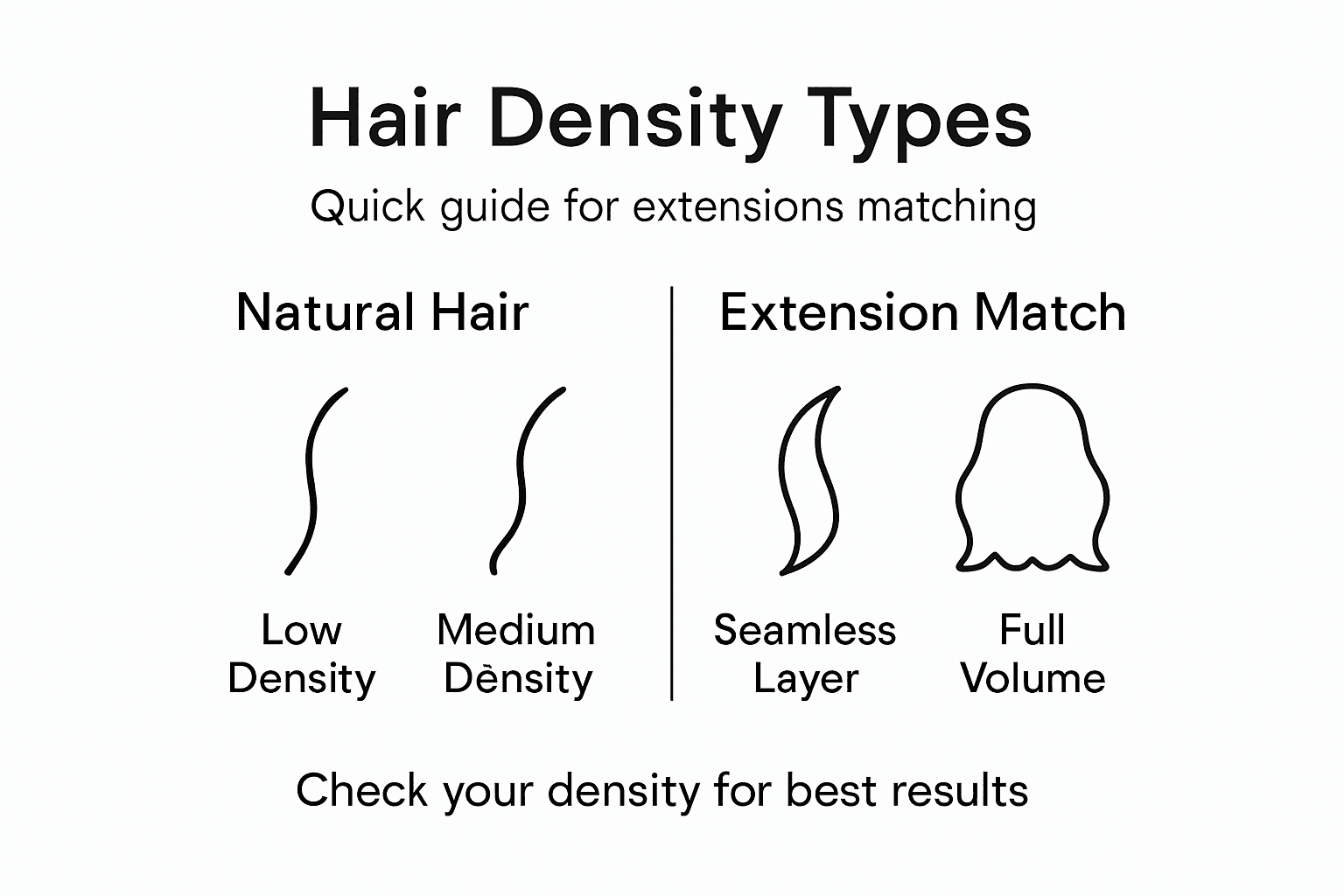
To aid your selection, here’s a comparison of hair density types and their best extension matches:
| Density Type | Visual Characteristics | Suitable Extension Density | Common Challenges |
|---|---|---|---|
| Low | Scalp visible, spaced strands | Low-density, lightweight | Blending, avoiding heaviness |
| Medium | Good coverage, balanced look | Medium-density, versatile | Finding flexible styling |
| High | Thick, full, minimal scalp | High-density, robust | Avoiding excess weight |
Carefully matching your natural density helps achieve seamless, comfortable results.
Pro tip: Take photos of your natural hair parted in different directions under bright natural light; compare these images side-by-side with extension product photos to verify density matching before purchasing, ensuring your extensions will blend seamlessly with your specific hair type.
How density affects blending and appearance
Density is the invisible force that determines whether your extensions look like a natural part of your hair or obviously added pieces sitting on top. When density matches correctly, the transition between your natural hair and extensions becomes virtually undetectable. When it doesn’t, even the most expensive, highest-quality hair will look off. This is because blending depends entirely on how closely the extension strands mirror the spacing and coverage of your own hair.
Imagine your natural hair as a canvas with a specific pattern of coverage. Your scalp has gaps between strands arranged in a particular way unique to you. Extensions with mismatched density create visual discord because they either fill those gaps too densely or leave them too sparse. With too-high density, you’ll see a sudden transition where your thinner natural hair meets the thicker extension base. With too-low density, your extensions won’t create the fuller effect you’re after, and gaps may appear where you expect seamless coverage.
The blending challenge works in both directions:
- Low natural hair + high-density extensions: Creates an obvious line where your fine natural hair meets the bulkier extensions; roots show quickly as new growth appears
- High natural hair + low-density extensions: Extensions look sparse and fail to create fullness; hair appears patchy despite adding length
- Matched densities: Seamless transition; extensions become virtually invisible; fuller appearance looks genuinely natural
Appearance is affected in practical, visible ways beyond just blending. When density matches your natural hair, your extensions move naturally with your own strands, creating fluid movement and realistic volume. Mismatched density causes extensions to move independently, creating that telltale “wiggy” look where your hair moves in sections rather than as one cohesive unit. This is particularly noticeable when wearing your hair up or moving in windy conditions.
The styling flexibility you have also depends on density matching. If your extensions are denser than your natural hair, you’re limited in how you can style because parting reveals the contrast immediately. You might need to avoid centre partings or certain upstyles altogether. Matched density removes these restrictions, allowing you to wear your hair however you like without worrying about obvious extension lines or scalp visibility.
Density matching isn’t about vanity—it’s about physics and visual cohesion; when extensions match your natural hair’s density, they function as one unified hair system rather than two separate entities.
When exploring options like our invisible wire extensions, density specifications tell you exactly how the finished look will appear. You’re not just getting length and volume; you’re investing in a specific visual effect. Higher-density extensions create the dramatic transformation many people want, but only when paired with naturally denser hair. Those with finer hair should seek medium or lower-density extensions that complement their natural texture and coverage.
The weight distribution of mismatched density also affects comfort and scalp health. Extensions with density significantly higher than your natural hair feel heavier on your head, placing more stress on your scalp and potentially causing discomfort during extended wear. Over time, this can affect your natural hair’s health. Properly matched density distributes weight evenly, feeling almost weightless because it’s proportional to what your scalp is already supporting.
Consider how density interacts with your daily routines. If you workout regularly, swim, or spend significant time outdoors, density matching becomes even more critical. Visible scalp on low-density hair becomes extremely apparent when wet, and mismatched extensions emphasise this contrast. Extensions that match your natural density maintain their appearance across all conditions—wet, dry, moving, still.
For quick reference, here’s how density impacts blending and daily comfort:
| Density Matching | Blending Quality | Styling Flexibility | Long-Term Comfort |
|---|---|---|---|
| Perfect Match | Virtually invisible join | Full range of hairstyles | Feels natural, minimal stress |
| Too High Density | Noticeable line, heavy | Limited parting, bulky effect | Scalp stress, possible discomfort |
| Too Low Density | Sparse, patchy appearance | Restricted fullness, gaps | Extensions feel light but lack volume |
Matching density minimises blending issues and ensures your extensions suit your lifestyle.
Pro tip: Request density swatches from extension suppliers before committing to a full set; hold swatches directly against your own hair under different lighting conditions and when wet to see exactly how they’ll blend, ensuring you’re purchasing extensions that genuinely match your natural hair’s coverage pattern.
Matching extension density to natural hair
Matching your extension density to your natural hair is the foundation of a successful transformation. This isn’t a optional extra—it’s the critical step that separates extensions that look naturally like your own hair from those that obviously look added. When density is properly matched, your extensions integrate seamlessly with your existing strands, creating a cohesive appearance that requires no explanation or apology.
The matching process begins with honest assessment of your natural hair. You need to know exactly where your hair falls on the density spectrum before you can select extensions that complement it. Many people underestimate their natural density or overestimate it, leading to purchasing extensions that don’t blend properly. Taking time to accurately identify your density type prevents costly mistakes and returns. This assessment doesn’t require professional help—you can do it at home using the simple tests mentioned earlier.
Once you’ve identified your natural density, the next step is finding extensions that match it precisely. This is where tailoring hair replacement systems to match natural density becomes essential for achieving balanced, realistic results. Extension suppliers should provide detailed density information for every product. Don’t rely on vague descriptions like “medium” or “thick”—look for specific measurements or comparison photos that show exactly how dense the extensions are.
Here’s what to evaluate when matching:
- Compare density specifications to your natural hair classification (low, medium, or high)
- Request product samples or swatches to hold against your own hair
- Examine the swatch under multiple lighting conditions and when wet
- Look at how the extension strand spacing compares to your natural strand spacing
- Consider the weight of the extensions relative to your natural hair’s weight
Density matching becomes especially important with specific extension types. When choosing Face Framing Layers clip-in extensions, you’re working with pieces that sit right at your hairline where any density mismatch is immediately obvious. The framing layers must match your natural density perfectly, or they’ll either stick out awkwardly or disappear entirely depending on whether they’re too dense or too sparse.
Density matching creates the illusion that extensions are your natural hair growth—when density mismatches, that illusion shatters instantly regardless of how expensive or high-quality the hair is.
The challenge intensifies if your natural hair density sits at the extremes. People with very low-density hair often struggle to find extensions sparse enough to match without looking artificial. Conversely, those with exceptionally high-density hair might find standard extensions too thin. In these cases, custom density matching becomes worth considering, even if it costs more. A custom solution that matches perfectly will serve you far better than an off-the-shelf product that doesn’t blend.
Consider your lifestyle when matching density. If you wear your hair up frequently, density matching matters less because your scalp won’t be visible. However, if you wear your hair down and frequently style it with centre partings, perfect density matching becomes non-negotiable. The more your styling exposes the hairline and scalp area, the more critical precise density matching becomes. This is why understanding how you typically wear your hair helps guide your matching decisions.
Density matching also affects your extension maintenance routine. Extensions that match your natural density will shed at a similar rate to your natural hair, making maintenance feel normal rather than alarming. Mismatched density often leads to unexpected shedding patterns because the extensions aren’t working with your natural hair—they’re fighting against it. Proper matching means your extensions age and wear alongside your natural hair rather than deteriorating at a different pace.
Naturyl Extensions focuses on human hair products specifically because Remy human hair can be selected and matched to your exact density requirements. Synthetic options offer less flexibility for matching because they’re manufactured at fixed densities. With human hair, you have options that allow for precise customisation, ensuring the extensions you choose genuinely complement your natural hair.
Pro tip: Request multiple density samples from your extension supplier and wear them clipped in for an entire day before committing to a full set; this real-world wear test reveals how well density matching actually works with your natural hair movement, styling preferences, and daily activities.
Mistakes to avoid and choosing alternatives
The most common mistake people make when selecting extensions is prioritising length and colour whilst completely ignoring density. You see a stunning product photo showing gorgeous long hair, fall in love with it, and order without checking whether the density matches your natural hair. This impulse purchase mentality leads to extensions that arrive looking nothing like what you expected. The length and colour might be perfect, but if the density doesn’t match, the entire look falls flat. Always evaluate density specifications before price, aesthetics, or any other factor.
Another widespread error is assuming your natural hair density visually. Low-density hair doesn’t always look thin, and high-density hair doesn’t necessarily look thick because individual strand thickness varies enormously between people. You might have naturally fine strands packed densely, creating the illusion of thick hair. Or you might have thick strands spaced further apart, looking thinner than you actually are. Without objective assessment using the tests mentioned earlier, you’re essentially guessing. Guessing leads to purchasing extensions that don’t match, creating frustration and wasted money.
People also make the mistake of purchasing extensions based on someone else’s recommendation without considering their own hair type. Your friend might rave about specific extensions because they work beautifully with her hair density, but that doesn’t mean they’ll work for you. Hair density varies significantly from person to person, even among people with similar hair colours or textures. What’s perfect for someone else might be entirely wrong for your specific needs. Always make density decisions based on your own hair, not on others’ experiences.
Common density-related mistakes include:
- Choosing extensions purely by density number without visual comparison to your actual hair
- Assuming higher density equals better results (it only works if your hair is dense)
- Mixing multiple extension densities in one application, creating obvious transitions
- Ignoring how density affects styling options and flexibility
- Failing to test density matching before committing to a full purchase
- Selecting extensions based on price rather than density accuracy
The most expensive extensions in the world will look cheap and obviously fake if the density doesn’t match your natural hair; conversely, moderately priced extensions that match your density perfectly will look premium and genuinely natural.
When choosing alternatives to poor density matches, consider your available options based on your hair type. If you have low-density hair and standard extensions are too thick, look for lightweight, lower-density options. If you have high-density hair and extensions feel too sparse, seek out higher-density alternatives. Naturyl Extensions specialises in human hair products precisely because human hair allows for density customisation that synthetic alternatives cannot provide. With our range of invisible wire extensions, you’ll find density options tailored to various hair types.
Some people make the mistake of thinking all clip-in extensions work the same regardless of density. This simply isn’t true. Different application methods and styles work better with certain densities. For example, our Face Framing Layers clip-in extensions require precision density matching because they sit so close to your natural hairline. Choosing alternatives with this type of extension means selecting pieces specifically designed for your density category, not just finding the cheapest option.
Another critical mistake is ignoring how density affects extension longevity. Extensions with density significantly higher than your natural hair experience more friction and stress during wear, causing them to deteriorate faster. You might purchase seemingly durable extensions only to have them shed excessively or tangle within weeks. Proper density matching means extensions last longer because they’re not constantly fighting against your natural hair movement. This is where investing in well-matched extensions becomes cost-effective—they last longer and perform better than mismatched alternatives.
Some people also fail to account for how density interacts with their lifestyle. If you exercise regularly or swim frequently, density matching becomes even more critical because exposed scalp becomes extremely obvious when wet. Mismatched extensions worsen this problem dramatically. Choosing alternatives that account for your specific lifestyle ensures your extensions perform well across all your activities, not just in ideal conditions.
Pro tip: Before purchasing extensions, create a detailed profile of your hair: photograph it wet and dry, in different lighting, with various parting styles, and measure your natural density category; bring this profile when shopping, using it as your reference guide to eliminate guesswork and ensure density-matched selections that actually complement your hair.
Discover the Perfect Hair Density Match for Natural-Looking Extensions
Choosing the right hair density is the most important step to ensure your extensions look seamless and feel comfortable. If you are struggling with unnatural blending or unwanted heaviness, it’s time to focus on density that truly matches your natural hair. At Naturyl Extensions, we specialise in high-quality Remy human hair products designed to suit various natural hair densities, helping you avoid the common pitfalls of mismatched extensions.
Explore our range of Remy Invisible Wire Extensions and Face Framing Layers clip-in extensions crafted to provide effortless, damage-free transformation with densities tailored to your hair type. With fast UK delivery and free exchanges, there has never been a better time to experience a fuller, naturally blended look that feels weightless and real. Visit Naturyl Extensions now and find the perfect density for your hair to transform your style with confidence.
Frequently Asked Questions
What is hair density in extensions?
Hair density in extensions refers to the number of individual hair strands packed into a specific area, typically measured per square inch. It affects how full and natural the extensions will look once applied.
How does hair density affect blending with natural hair?
Matching the hair density of extensions to your natural hair is crucial for seamless blending. If the densities do not match, it can create an obvious line or contrast that makes the extensions look unnatural.
What are the different types of hair density?
Hair density is categorized into low, medium, and high. Low density features noticeable gaps between strands, medium density offers balanced coverage, and high density consists of tightly packed strands that create a voluminous look.
Why is it important to consider density when choosing hair extensions?
Choosing extensions with the correct density is essential for achieving a natural appearance, ensuring comfort, and allowing for versatile styling. Mismatched densities can lead to discomfort and an unnatural look, regardless of the hair’s length or colour.