Invisible wire extensions do not inherently damage hair when they’re the right weight for your density and worn on a sensible cycle. They sit over your own hair rather than attaching to individual strands, which removes the traction risk that comes with bonded methods. That said, a wire that’s too heavy, fitted too tightly, or left in for days on end can still cause tension damage. The verdict depends almost entirely on fit and habits, not the method itself.
TL;DR:
- Invisible wire extensions are lower risk than bonded methods mainly because they sit over natural hair rather than attaching to strands, reducing sustained tension.
- Proper fit, moderate weight, and built-in rest periods are essential to prevent traction damage, especially for fine, short, or chemically damaged hair.
- Clinical evidence shows tension from extensions can shorten the hair’s growth phase or cause irreversible traction alopecia if unmanaged over time.
- Selecting Remy human hair and avoiding continuous wear with heavy Wefts help mitigate the risk of stress-related hair damage.
- Correct placement, gentle removal, and avoiding sleeping or exercising in extensions are critical to maintaining scalp health and preventing tension injuries.
Table of Contents
- Do halo extensions damage hair? What the attachment method actually means
- What does the clinical evidence say about extension damage?
- Are you more at risk? Hair and scalp factors that change the equation
- How to choose weight, wear cycles and care routines that protect your hair
- How do you fit and remove invisible wire extensions without causing tension?
- Invisible wire vs clip-ins, tape-ins and bonded extensions: which carries less risk?
- Why Naturyl builds invisible wire extensions around damage minimisation
- Ready to try invisible wire extensions that put your hair first?
- Sources
- FAQ
Do halo extensions damage hair? What the attachment method actually means
To understand the risk, you need to understand how invisible wire extensions physically sit on your head. The style uses a thin, adjustable wire (nylon coated or similar) sewn into a weft of hair. You rest the wire on your crown, let it fall just behind your natural hairline, and your own hair conceals it on top. Nothing is clamped, glued, or braided onto individual strands.
That’s the mechanical detail that matters most when people ask whether invisible wire extensions damage hair. Because the weft rests on the head rather than fastening to hair shafts, the weight is distributed across a wider area instead of concentrated on small sections. This is fundamentally different from methods that grip, bond, or thread through your natural hair.
Material choice affects the picture too:
- Remy human hair: cuticles remain aligned in one direction, so the weft moves naturally, tangles less, and blends more convincingly with your own hair.
- Non-Remy or synthetic hair: cuticles are often stripped or misaligned during processing, causing more friction, matting, and tangling that can transfer stress back onto your natural strands during brushing.
The mechanical contrast with other extension types is worth spelling out. Clip-ins and invisible wire extensions are both non-bonded, meaning they attach and detach without adhesive, heat, or a connector fused to your hair. Tape-ins and bonded (fusion, keratin, micro-ring) methods, by contrast, physically attach to sections of your natural hair for weeks at a time. That distinction, non-attachment versus attachment, is the single biggest factor separating lower-risk methods from higher-risk ones, and it’s why Remy human hair wefts are generally the safer starting point regardless of which style you choose.
What does the clinical evidence say about extension damage?
The strongest available answer comes from the Journal of Craniofacial Surgery Open, which examined how extension attachment systems physically affect the scalp over time. Its central finding is that sustained mechanical load, essentially pulling weight, remodels the perifollicular tissue around each follicle. Persistent tension can shorten the hair’s anagen (growth) phase, triggering telogen effluvium, a temporary shedding phase that usually reverses once the load is removed. Left unaddressed across repeated cycles, that same tension can progress to fibrosis and irreversible traction alopecia.
That’s the mechanism behind almost every extension horror story you’ve heard. It isn’t the hair type or the product itself doing the damage. It’s cumulative, unmanaged pulling force on the follicle, over time, without recovery periods.
“Risk management is a physics-plus-biology problem: distribute the load, reduce the mass, and allow recovery periods.” This is the framing the clinical literature uses when discussing extension attachment systems, and it applies directly to how you should think about invisible wire extensions specifically.
Here’s where the method matters again. Because invisible wire extensions don’t attach to the hair shaft, Women’s Health’s reporting on hair extension safety notes that temporary, non-bonded devices generally carry a lower risk of traction injury compared with bonded or tape methods, when fitted and worn correctly. Salon extensionists and trichologists quoted in that coverage are consistent on one point: correct fitting and reasonable wear cycles are what make non-bonded systems a low-risk option for most people. The method reduces risk. It doesn’t eliminate it.
On thresholds: the same craniofacial journal analysis suggests keeping added mass to a moderate proportion of your native hair’s weight where possible, and building in rest periods between wear cycles rather than leaving extensions in continuously. That single guideline does more to prevent damage than any product claim you’ll read on a packaging label. Industry guidance from extension retailers echoes this: wire-based extensions add volume with minimal localised tension when fitted correctly, but improper fit or overuse can still create pressure points and irritation at the crown, which is exactly where the wire rests.
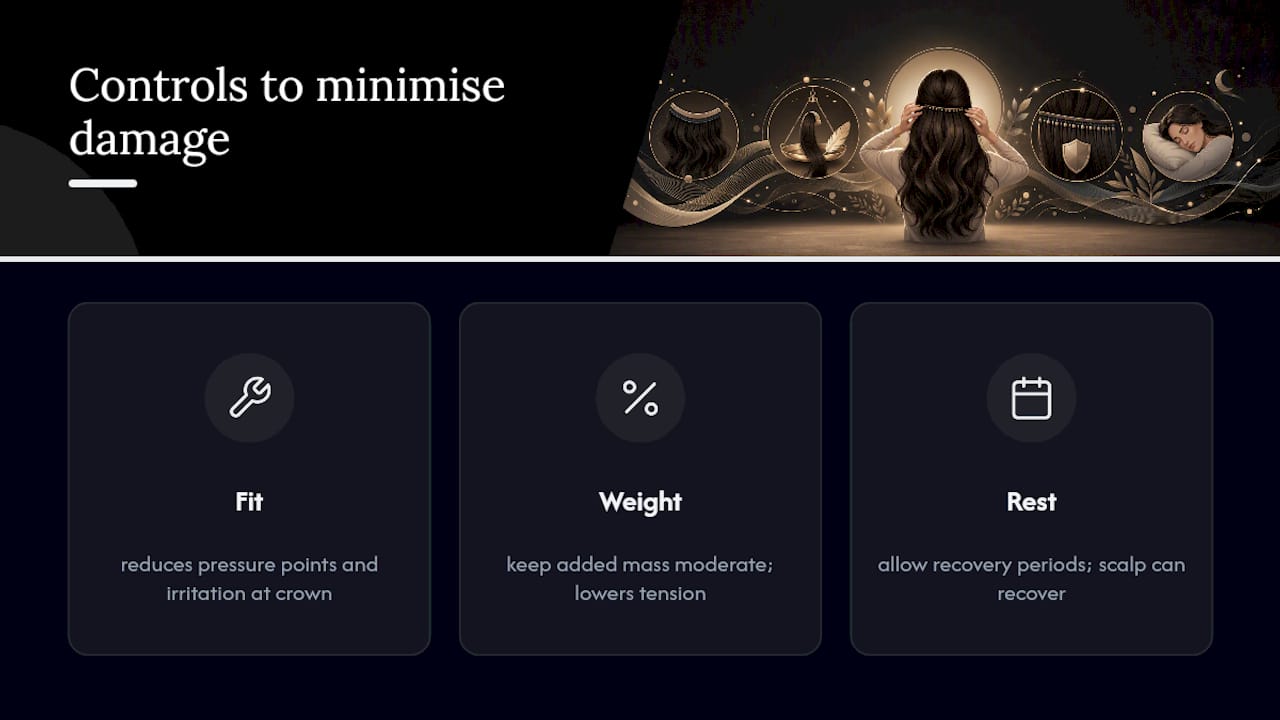
The takeaway from the clinical side isn’t that invisible wire extensions are risk-free. It’s that the risk is manageable, predictable, and largely within your control, provided you respect weight limits and give your scalp regular breaks.
Are you more at risk? Hair and scalp factors that change the equation
Not everyone carries the same risk profile, and pretending otherwise does readers a disservice. Certain hair and scalp characteristics lower the amount of added weight your follicles can comfortably tolerate before tension becomes a problem.
Watch for these risk factors before you buy:
- Thin or fine hair: lower density means each follicle bears more of the load per strand, so the same weft weight that’s fine for thick hair may be too heavy for fine hair.
- Short hair: less length to distribute the wire’s weight along, which can concentrate pressure closer to the root.
- Brittle or previously damaged shafts: hair weakened by colour treatments, heat styling, or chemical processing has less structural tolerance for added tension.
- A history of traction alopecia: if you’ve experienced traction thinning before (from tight ponytails, braids, or previous extensions), your follicles are already sensitised to mechanical stress.
- Scalp dermatitis or other inflammatory conditions: an already irritated scalp is more reactive to pressure points and friction.
If any of these apply to you, it doesn’t rule out invisible wire extensions. It does mean you should size down in weight, extend your rest periods, and pay closer attention to early warning signs.
Those signs are worth memorising: scalp tenderness that persists after removal, unusual shedding when you brush, visible thinning along the parting where the wire sits, or small bumps and redness at the crown. None of these are things to push through. Practitioner guidance in the craniofacial surgery literature is clear that early intervention, removing the extensions and consulting a trichologist, returns most cases to normal, while ignoring symptoms into late-stage fibrosis may not be reversible.
Pro Tip: If you’re unsure whether your hair is fine enough to need a lighter weft, try the strand test: take a small section of your natural hair between two fingers and gently tug. If it feels like it’s straining or thinning noticeably compared to a thicker section, size down your extension weight before you buy.
How to choose weight, wear cycles and care routines that protect your hair
Prevention isn’t complicated, but it does require a few deliberate choices before and after you buy.
- Match weight to density, not preference. A heavier weft looks fuller in photos, but if it exceeds what your natural hair can comfortably support, you’re trading a short-term look for longer-term thinning. Lighter wefts paired with the right texture match give a more sustainable result, and choosing the right length and weight matters more than most buyers assume.
- Prefer 100% Remy human hair. Remy wefts move with your natural hair rather than against it, reducing the friction and manipulation that stresses your own strands during brushing and styling.
- Respect wear cycles. Wearing invisible wire extensions all day is fine for most people, but avoid sleeping or exercising heavily in them, and build in full rest days where your scalp carries no added weight at all.
- Detangle before you wear and before you remove. Gently brushing both your natural hair and the weft before fitting prevents knots from forming under tension once the wire is in place.
- Wash less frequently than you think you need to. Over-washing dries out the weft and your scalp alike; most Remy wefts hold their condition well with washing roughly every 10 to 15 wears, depending on styling product use. Keep styling products away from the wire itself to avoid product buildup that stiffens the coating.
- Store extensions properly between wears. Hanging or laying them flat in their original packaging prevents matting that would otherwise require extra brushing (and extra stress) before the next wear.
- See a professional for your first fitting. A stylist or extensionist can confirm the wire sits correctly against your head shape and that the weight distribution feels even, not concentrated at one point.
Pro Tip: Keep a simple wear log for your first month, noting how many hours you wore the extensions and how your scalp felt afterwards. Patterns show up fast, and adjusting your cycle early is far easier than repairing damage later. For broader upkeep between wears, caring for your natural hair while wearing extensions covers the daily habits worth building.
How do you fit and remove invisible wire extensions without causing tension?
Placement is where a lot of preventable damage actually happens, not in the product itself but in how it’s put on.
- Position the wire one to two inches behind your natural hairline. Tuck it under the occipital bone (the ridge at the base of your skull) rather than sitting it directly on top of your crown. This distributes the weight across a broader, sturdier area instead of concentrating it at a single high point.
- Section your hair before placing the wire. Take a horizontal section of hair from your hairline back, drop it over the wire, and let the rest of your hair fall naturally on top to hide the wire completely.
- Blend the ends by trimming to match your natural hair’s layers. If you’re using Face-Framing Layers alongside your invisible wire piece, matching both colour and texture avoids visible demarcation lines and reduces the need for extra styling heat to disguise the join.
- Remove by reversing the placement, not by pulling straight down. Lift the top section of your natural hair, locate the wire, and gently lift it up and away from your scalp rather than tugging it forward through your hair.
- Never sleep in the extensions or force removal when tangled. If the wire has shifted or tangled during wear, detangle gently with your fingers first rather than pulling the whole piece free while snagged.
The most common mistake isn’t the fitting itself, it’s rushing removal when hair has tangled around the wire overnight. Take the extra two minutes to detangle first.
Invisible wire vs clip-ins, tape-ins and bonded extensions: which carries less risk?
If you’re weighing your options purely on damage risk, the hierarchy is fairly consistent across clinical and industry sources.
- Clip-ins and invisible wire extensions: lowest risk. Both are temporary and non-bonded, so there’s no adhesive, heat, or fusion point pulling on your natural hair shaft. Invisible wire distributes weight more evenly across the head than individual clips, making it the more comfortable option for all-day wear.
- Tape-ins: moderate to higher risk. They bond directly to sections of natural hair using adhesive strips and typically stay in for four to eight weeks, meaning sustained tension without a daily rest period.
- Bonded (fusion, keratin, micro-ring): highest long-term risk. These methods fuse to individual strands and remain in place for months, which is exactly the sustained-load scenario the craniofacial journal research flags as the pathway to traction alopecia.
A comparison of removable versus permanent extension methods is worth reading if you’re deciding between styles rather than just within the invisible wire category. Salon methods still have their place, particularly if you want extensions to survive weeks of swimming, sport, or daily heat styling without repositioning. But if you have fine hair and want volume without committing to a higher-risk method, invisible wire extensions remain the more forgiving route.
Why Naturyl builds invisible wire extensions around damage minimisation

We designed our invisible wire range around one question: what would this look like if damage prevention came before styling convenience? That’s why every weft uses 100% Remy human hair, cuticles aligned, so the piece moves naturally and doesn’t fight against your own strands during brushing or wear.
The wires themselves are adjustable and lightweight, built to distribute weight rather than concentrate it, which directly addresses the traction risk the clinical research describes. We also back every purchase with free exchanges and fast UK delivery, because getting the weight and colour right the first time matters more than most buyers realise until they’ve worn the wrong size. If you’re unsure what you need, our dos and don’ts guide for healthy extension wear is a genuinely useful starting point before you buy anything.
— Sam
Ready to try invisible wire extensions that put your hair first?
Everything covered above, weight limits, Remy hair, adjustable fit, comes standard in Naturylextensions’s invisible wire range, not as an upsell. Where many extension brands sell one fixed weight and leave you to guess whether it suits your density, our range is built around matching the weft to your actual hair, not the other way round.
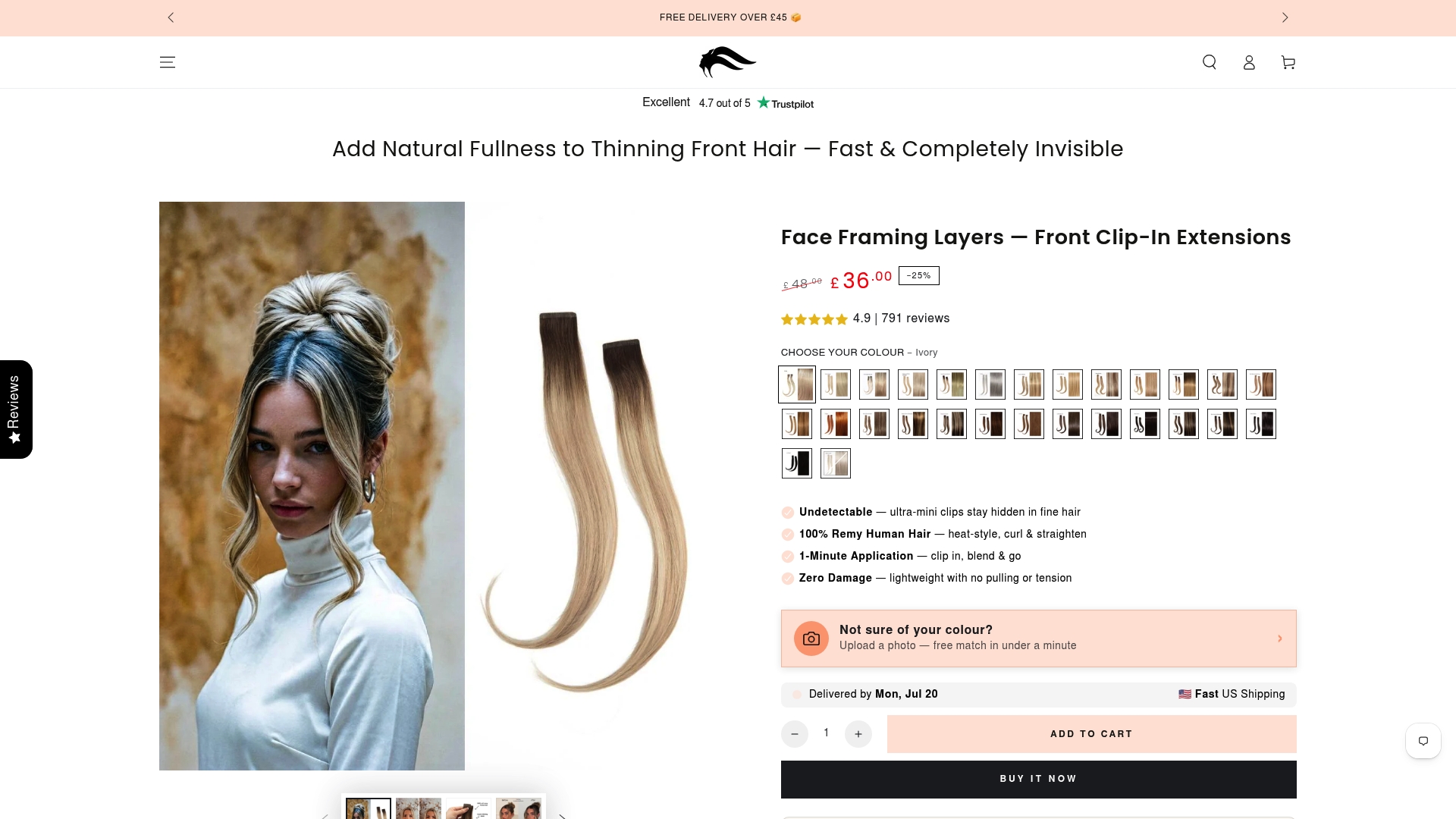
If you want extra flexibility for adjusting fit over time, our additional length wires let you fine-tune without buying a whole new set. Free UK delivery and free exchanges mean getting the weight wrong isn’t a costly mistake, just a quick swap. Browse the full range of Remy human hair invisible wire extensions and use our free colour match service to find your shade before you order.
Sources
FAQ
What are the downsides of invisible wire extensions?
The main downsides are visible wire if fitted incorrectly, pressure points or scalp discomfort if the weft is too heavy, and limited styling options like high ponytails that expose the attachment point.
What are the worst types of extensions for your hair?
Bonded methods (fusion, keratin, micro-ring) and tape-ins carry the highest long-term damage risk because they attach directly to hair shafts for weeks at a time, creating sustained tension without daily rest periods.
Is an invisible wire extension good for thin hair?
Yes, provided you choose a lighter weft matched to your density. Thin hair has less tolerance for added weight, so sizing down and giving your scalp regular rest periods is essential.
What is the healthiest type of hair extension?
Non-bonded, temporary methods like invisible wire extensions and clip-ins are generally considered the lowest-risk options because they don’t attach to individual hair shafts, though correct fit and sensible wear cycles still matter.
Do invisible wire extensions cause breakage?
Not inherently. Breakage typically results from excessive weight, poor detangling before wear, or wearing the extensions continuously without rest, rather than from the wire method itself.