TL;DR:
- Heat styling extensions safely requires keeping temperatures between 160°C and 180°C to avoid damage. Proper preparation, such as drying extensions and applying heat protectant, extends their lifespan and maintains their appearance. Limiting heat use to 2-3 times weekly and following aftercare tips preserves their quality and durability.
Heat styling extensions is defined as the process of applying controlled thermal tools to human or synthetic hair extensions to achieve curls, waves, or straightened looks without damaging the hair fibres or attachment bonds. Done correctly, it produces results that are indistinguishable from naturally styled hair. Done carelessly, it shortens the life of your extensions significantly. This guide to heat styling extensions covers the temperature limits, preparation steps, and technique rules you need to style confidently and safely, whether you use invisible wire extensions, clip-ins, or tape-ins.
What temperature is safe for heat styling extensions?
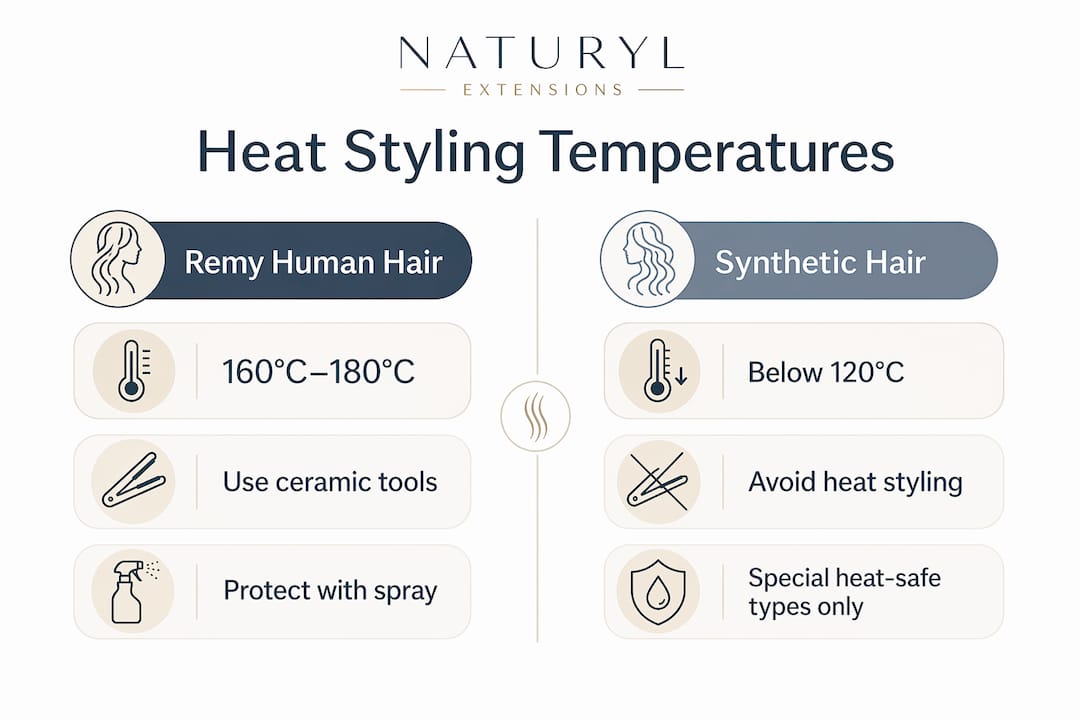
The safe heat range for Remy human hair extensions is 160°C to 180°C. Staying within this window protects the cuticle layer and prevents the fibre drying that causes brittleness and breakage. Exceeding 180°C shortens extension lifespan by drying fibres rapidly, so always check your tool’s temperature display before you begin.
Synthetic extensions present a different challenge entirely. Standard synthetic hair melts at temperatures as low as 120°C, and only extensions labelled “heat-friendly” can tolerate higher settings safely. If your synthetic extensions carry no heat-friendly label, skip the hot tools entirely and rely on heatless styling methods instead.
The reason extensions need lower temperatures than natural hair comes down to biology. Extensions lack natural scalp oils (sebum), which normally coat and protect each strand during heat exposure. Without that natural buffer, even Remy human hair is more vulnerable than your own hair at the same temperature.
| Extension type | Safe temperature range | Notes |
|---|---|---|
| Remy human hair | 160°C–180°C | Use ceramic or tourmaline tools |
| Heat-friendly synthetic | Up to 120°C–130°C | Check label before styling |
| Standard synthetic | Not recommended | Risk of melting or deforming |
| Tape-in extensions | 160°C–180°C | Avoid heat directly on tape bonds |
| Micro-ring extensions | 160°C–180°C | Keep tools away from ring attachments |
How to prepare your hair extensions for heat styling
Preparation is the single most important factor in safe heat styling. Skipping even one step increases the risk of damage significantly.
Essential preparation checklist:
- Confirm extensions are completely dry before applying any heat tool. Damp heat application weakens both human and synthetic hair structures, causing internal fibre damage that is irreversible.
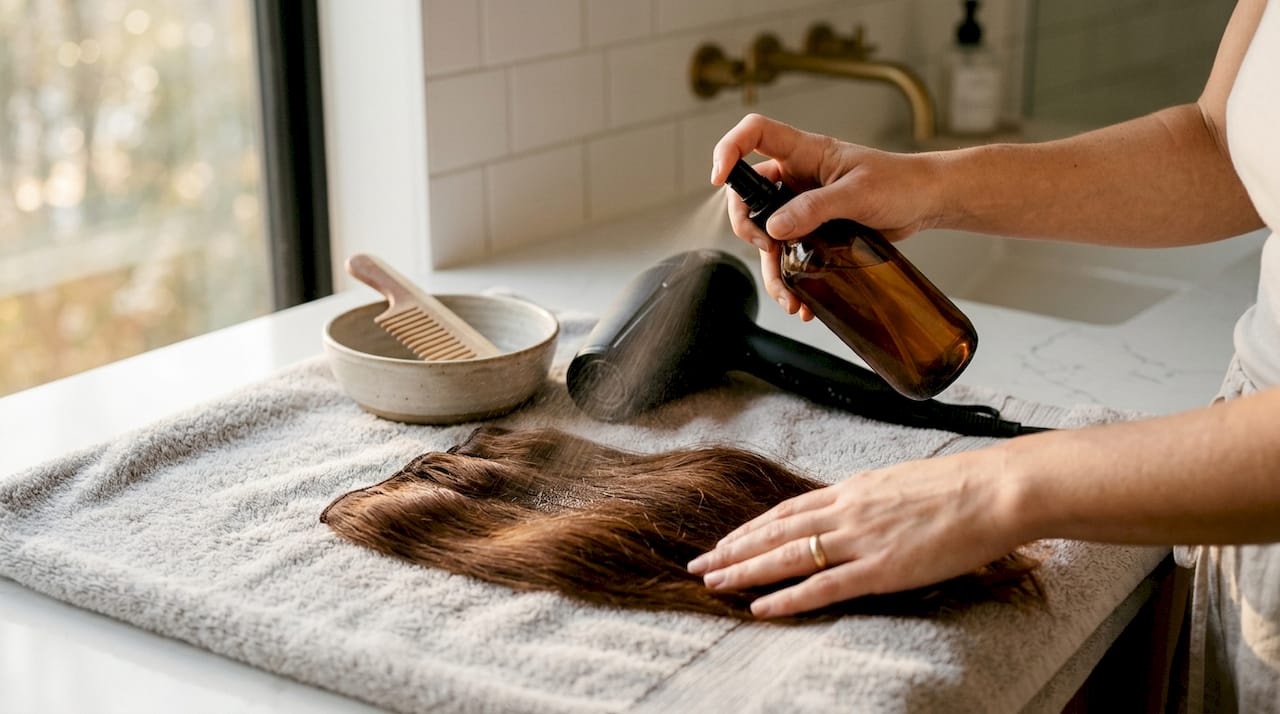
- Apply a heat protectant spray evenly from mid-length to ends. Work through each section so no strand is left uncoated.
- Detangle gently with a wide-tooth comb or a soft-bristle brush, starting from the ends and working upward.
- Section your hair into manageable layers using clips. Even heat exposure depends on working with small, controlled sections.
- Identify your attachment points (bonds, tapes, rings, or wire) and plan your styling to avoid direct tool contact with them.
| Tool or product | Purpose |
|---|---|
| Heat protectant spray | Shields fibres from thermal damage |
| Wide-tooth comb | Detangles without stressing bonds |
| Sectioning clips | Organises hair for even heat exposure |
| Ceramic or tourmaline straightener | Distributes heat evenly, reduces hotspots |
| Diffuser nozzle attachment | Controls airflow during blow-drying |
Proper sectioning and airflow direction significantly improve both styling quality and extension longevity. Rushing this stage is one of the most common reasons extensions look uneven or deteriorate faster than expected.
Pro Tip: Apply your heat protectant to slightly damp extensions, then blow-dry on a low setting before using any other tool. This locks in moisture and creates a protective layer before the real heat begins.
Step-by-step guide to curling, straightening, and blow-drying
Curling your extensions
- Set your curling wand or tongs to no higher than 180°C.
- Take a section no wider than 2.5cm for defined curls, or up to 5cm for loose waves.
- Wrap the section around the barrel, holding for no more than 8–10 seconds.
- Slide the curl off the barrel and hold it in your palm until it cools completely.
- Allow curls to cool fully before brushing to set the shape and protect the fibre. Touching curls too soon loosens the style and strains the hair.
- Once all sections are cool, separate curls gently with your fingers or a wide-tooth comb.
For detailed guidance on curling human hair extensions safely, Naturylextensions has a dedicated step-by-step resource worth bookmarking.
Pro Tip: Always curl away from your face for the most flattering, natural-looking result. Alternate the direction of each section slightly to avoid a uniform, artificial appearance.
Straightening your extensions
- Set your straightener to 160°C–180°C. Ceramic or tourmaline-plated straighteners distribute heat evenly, reducing hotspot damage and the need for multiple passes.
- Take a thin section, no thicker than 2cm, and clamp the straightener at the root area of the extension (not on the bond itself).
- Glide the tool down in one smooth, steady motion. Never clamp and hold in one spot.
- Repeat on each section, keeping the tool moving at all times.
- Allow each straightened section to cool before touching or brushing.
Blow-drying your extensions
- Attach a concentrator nozzle to your dryer to control airflow direction.
- Set the dryer to medium heat, never maximum.
- Hold the dryer at least 15cm from the hair and direct airflow downward along the cuticle.
- Keep the dryer moving constantly. Holding it in one spot concentrates heat and risks damage.
- Avoid directing airflow directly onto bonds, tapes, or rings. Work around attachment points carefully.
- Finish each section on a cool shot to close the cuticle and add shine.
What mistakes damage hair extensions during heat styling?
The most damaging errors in heat styling are predictable and entirely avoidable. Knowing them in advance protects both your extensions and your investment.
- Styling damp extensions. Applying heat to wet or damp hair causes internal steam damage that weakens the fibre from the inside out.
- Exceeding temperature limits. Going above 180°C on human hair or above 120°C on standard synthetic extensions causes rapid deterioration.
- Applying heat directly to bonds. Keratin bonds, tape adhesives, and micro-rings all weaken under direct heat. Keep your tools at least 1cm clear of any attachment point.
- Styling too frequently. Limiting heat styling to 2–3 times per week prevents rapid cuticle degradation. Daily heat causes dullness and rough texture within weeks.
- Skipping heat protectant. Repeated high-heat styling without protection causes bubble hair and mid-shaft breaks. Extensions have no natural oils to compensate, so a quality heat protectant spray is non-negotiable.
- Overloading with heavy products. Thick serums and oils applied before heat styling can cook into the fibre, causing build-up and dulling the hair over time.
The pattern behind most of these mistakes is the same: rushing. Extensions reward patience. Slowing down at each stage produces better results and extends the life of your hair considerably.
How do you extend the lifespan of heat-styled extensions?
Aftercare determines how long your extensions stay in good condition. Styling is only half the equation.
- Alternate heat with heatless styles. Braids, buns, and twists give your extensions recovery time between heat sessions. A guide to heatless styling extensions is worth keeping alongside your heat tools kit.
- Use sulphate-free, extension-safe shampoo and conditioner. Harsh sulphates strip the cuticle and accelerate dryness in hair that already lacks natural oils.
- Brush with a soft-bristle or loop brush. Start from the ends and work upward. Aggressive brushing from the root stresses bonds and causes shedding.
- Store removable extensions correctly. Lay them flat or hang them on a dedicated extension hanger. Never bundle them loosely, as this causes tangling and fibre stress.
- Protect hair overnight. A silk or satin pillowcase reduces friction significantly during sleep, which matters especially after heat styling when the cuticle is more open.
For a full long-lasting extension care routine, Naturylextensions covers washing, conditioning, and storage in detail.
Supporting your hair health from the inside also makes a difference. Collagen supports healthier hair growth and can complement the external care you give your extensions.
Pro Tip: After every heat styling session, apply a small amount of argan oil or a lightweight extension-safe serum to the mid-lengths and ends. This replaces some of the moisture lost during styling and keeps the hair looking glossy between washes.
Key takeaways
Safe heat styling for extensions requires consistent temperature control, thorough preparation, and regular aftercare to protect fibre integrity and bond strength.
| Point | Details |
|---|---|
| Respect temperature limits | Keep tools at 160°C–180°C for human hair; avoid heat on unlabelled synthetic extensions. |
| Always use heat protectant | Extensions lack natural oils, making a quality heat protectant spray non-negotiable every time. |
| Dry before you style | Applying heat to damp extensions causes irreversible internal fibre damage. |
| Limit heat frequency | Style with heat no more than 2–3 times per week to preserve cuticle condition and shine. |
| Prioritise aftercare | Sulphate-free products, correct brushing, and silk pillowcases extend extension lifespan significantly. |
What I have learned from years of heat styling extensions
The advice I give most often is the one people resist most: slow down. When I first started working with extensions, I treated them like natural hair and paid for it with dull, brittle ends within a month. The turning point was understanding that extensions are a finished product. They will not repair themselves the way your own hair can, even partially, through natural oil production.
The temperature rules are not conservative suggestions. They are the actual threshold between a style that lasts and one that deteriorates. I have seen clients arrive with extensions that looked years older than they were, simply because they had been using a straightener set to 220°C out of habit from styling their natural hair.
Professional styling lessons with an extensionist are genuinely worth the time, particularly when you are new to extensions. Learning how to handle sectioning, tool angle, and airflow direction in person is faster and more effective than reading about it. The skills transfer immediately.
The other thing I have come to appreciate is the value of heatless alternatives. Braids set overnight, foam rollers, and Bantu knots all produce beautiful results without any thermal risk. Building these into your weekly routine protects your extensions and keeps them looking their best for longer. Heat styling is a tool, not a daily requirement.
— Sam
Naturylextensions: premium extensions built for heat styling
If you are ready to style with confidence, the foundation is having extensions that can handle the process. Naturylextensions specialises in Remy human hair extensions that are fully compatible with heat styling within the recommended temperature range.
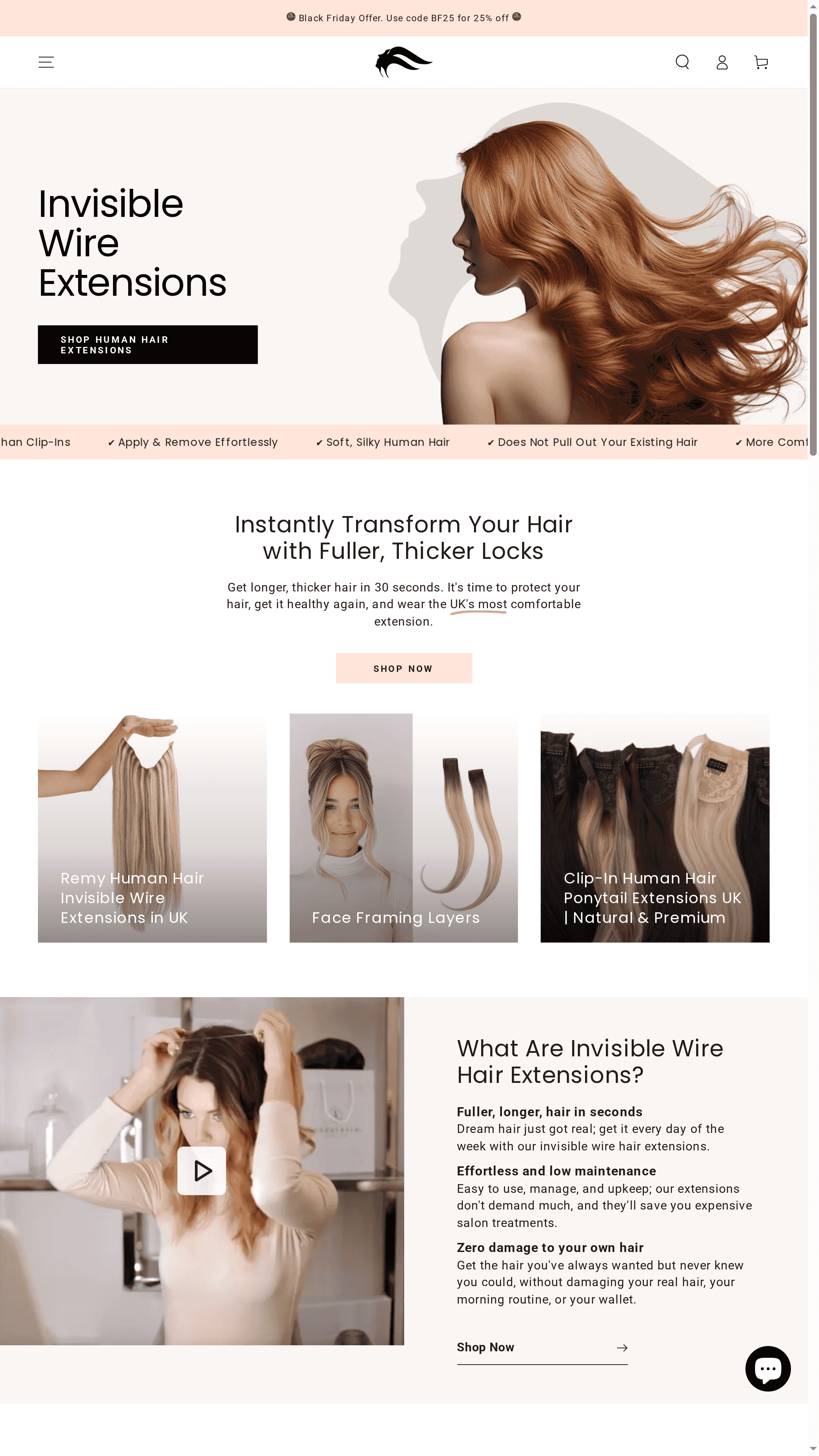
Naturylextensions’ invisible wire extensions, ponytail extensions, and face-framing extensions are made from ethically sourced Remy human hair, meaning the cuticles run in the same direction for a natural finish and reduced tangling. Fast UK delivery and a free exchange policy mean you can find your perfect match without the stress. Browse the full range and find extensions that work with your styling routine, not against it.
FAQ
What is the safest temperature for heat styling human hair extensions?
The safe range is 160°C–180°C. Exceeding 180°C dries the fibres and shortens the lifespan of your extensions.
Can you use heat tools on synthetic hair extensions?
Standard synthetic extensions cannot tolerate heat styling and risk melting at temperatures as low as 120°C. Only extensions labelled “heat-friendly” are safe to style with thermal tools.
How often should you heat style hair extensions?
Heat styling should be limited to 2–3 times per week. Daily heat causes dullness and rough texture within weeks due to cuticle degradation.
Do you need heat protectant on hair extensions?
Yes, every single time. Extensions lack natural scalp oils, making them more vulnerable to heat damage than natural hair. A quality heat protectant spray is essential before any thermal tool is applied.
How do you curl hair extensions without damaging them?
Set your curling tool to no higher than 180°C, hold each section for no more than 8–10 seconds, and allow curls to cool fully before touching or brushing them to set the shape and protect the fibre.