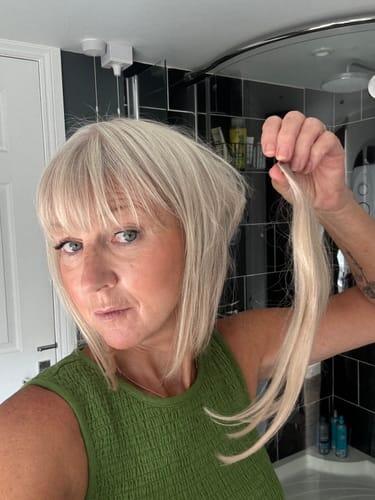
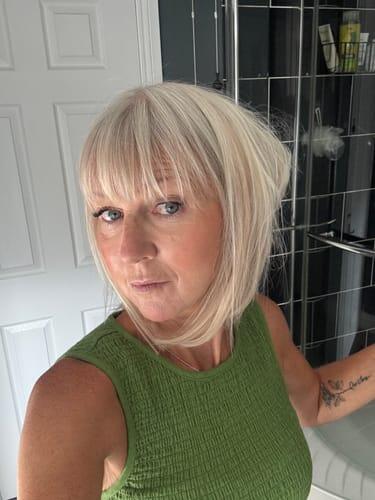
Many women worry that hair extensions will damage their natural locks, leaving them reluctant to try the very solution that could transform fine, limp hair into a fuller, more voluminous style. The truth is that when chosen correctly and applied properly, hair extensions can add volume safely without compromising hair health. This guide explores the extension types that enhance volume with minimal risk, how to select and match them for natural-looking results, the practices that protect your hair, and the styling techniques that maintain both volume and vitality.
Table of Contents
- Key takeaways
- Types of hair extensions that add volume safely
- How to select and match extensions for natural volume
- Balancing volume and hair health: risks and safer practices
- Styling and maintenance tips for lasting volume and natural look
- Discover quality extensions for fuller hair at Naturyl
- FAQ
Key Takeaways
| Point | Details |
|---|---|
| Choose lightest extensions | Choose the lightest possible extensions professionally applied to minimise strain on your hair and scalp. |
| Precise thickness matching | Extension thickness determines natural blending, with 0.08 to 0.12 mm for fine hair and 0.12 to 0.15 mm for medium hair to avoid visible demarcation. |
| Layering for fullness | Strategic layering across the head creates dimension and authentic volume rather than all at one level. |
| Clip in extensions lower damage | Clip in extensions offer the most flexibility and lowest damage potential by avoiding sustained tension. |
Types of hair extensions that add volume safely
Understanding which extension types deliver volume without compromising hair health is crucial for making an informed choice. The market offers several options, each with distinct characteristics regarding damage risk and suitability for fine hair.
Tape-in extensions involve thin wefts bonded to natural hair using medical-grade adhesive tape. They distribute weight evenly across sections, making them particularly gentle on fine hair. Tape-ins and micro/nano rings provide semi-permanent volume with minimal damage when lightweight and professionally applied, suitable for fine hair. These extensions typically last six to eight weeks before requiring repositioning.
Micro ring and nano ring extensions use small metal beads to secure individual strands without heat or glue. The rings clamp onto natural hair, creating a secure hold that adds volume strand by strand. Nano rings are smaller than micro rings, making them even less detectable and lighter on delicate hair. Both methods work brilliantly for best hair extensions for fine hair naturally, offering customisable volume placement.
Sew-in wefts require braiding natural hair into cornrows, then stitching extension wefts onto the braids. Whilst this method provides substantial volume, the constant tension from tight braiding can stress hair follicles and potentially lead to traction alopecia. Similarly, bonded extensions use keratin or resin to fuse individual strands to natural hair with heat. The bonds can feel heavy and pull on fine hair, increasing damage risk over time.
Clip-in extensions offer the most flexibility and lowest damage potential. You attach them to natural hair using small clips, wear them for desired occasions, then remove them before sleeping. This temporary approach eliminates sustained tension on hair follicles, making clip-ins ideal for women wanting volume without commitment or risk. They work perfectly for special events, nights out, or days when you simply want extra body.
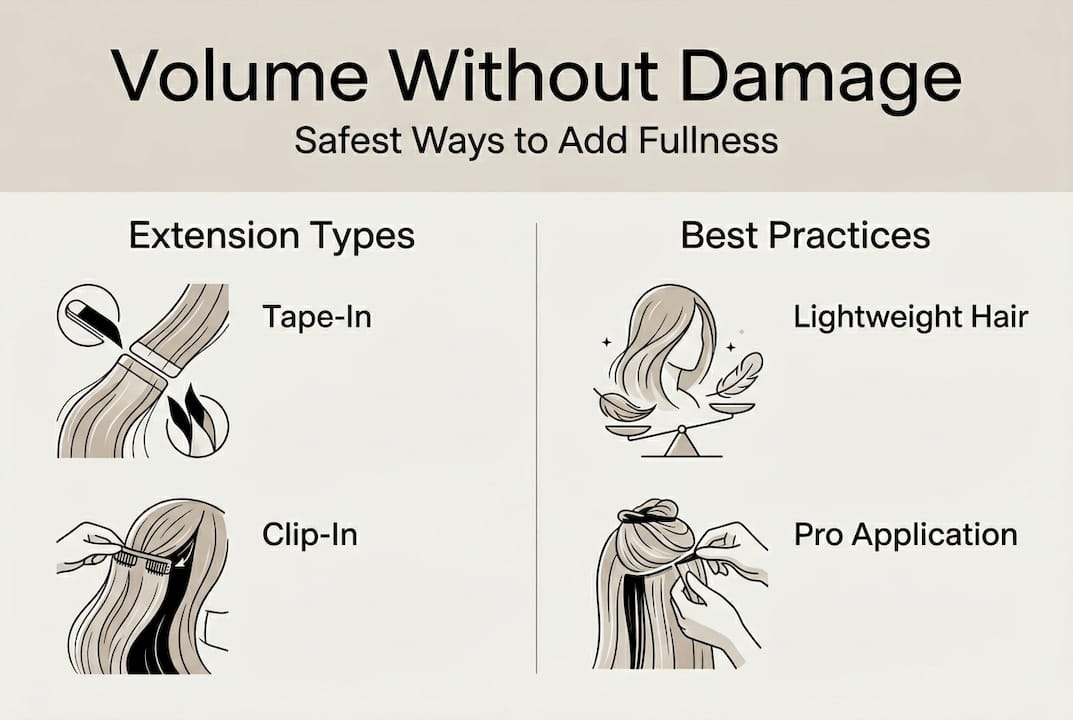
Pro Tip: Choose the lightest possible extensions professionally applied to minimise strain on your natural hair and scalp, preventing unnecessary stress that could lead to breakage or thinning.
How to select and match extensions for natural volume
Selecting the right extensions involves more than choosing a colour. Thickness, layering technique, and precise matching determine whether your extensions blend seamlessly or look obviously artificial.
Extension thickness significantly impacts how natural your volume appears. Fine extensions measuring 0.08 to 0.12mm work best for thin hair, whilst medium hair can accommodate 0.12 to 0.15mm thickness. Using extensions too thick for your natural hair creates an unnatural demarcation line where the extension meets your scalp. Strategic layering and matching thickness (fine 0.08-0.12mm for thin hair) ensures natural blend and up to 50% perceived volume increase. This precise matching prevents the telltale bulk that screams “extensions” rather than naturally fuller hair.
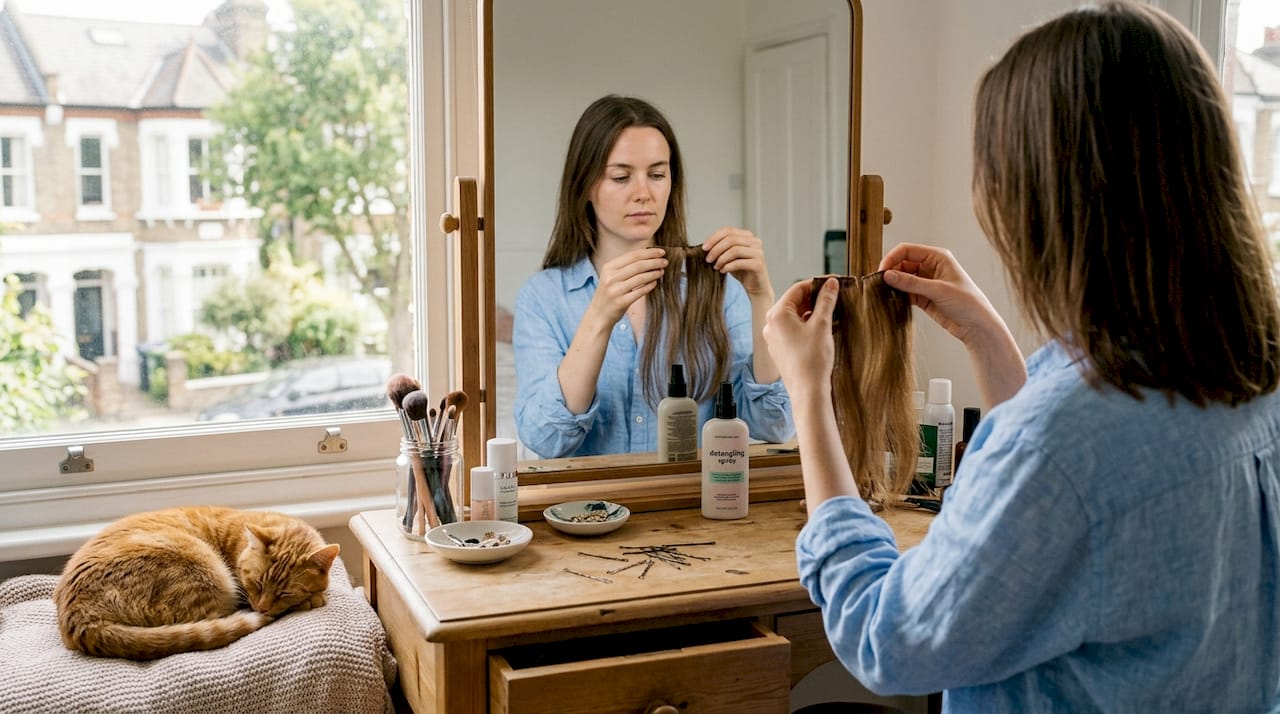
Layering extensions strategically throughout your head creates dimension and authentic volume. Rather than placing all extensions at one level, distribute them across multiple sections from crown to nape. Start with shorter pieces near the crown for lift, then gradually increase length towards the bottom. This graduated approach mimics how natural hair grows in varied lengths, producing a fuller effect without obvious lines or steps.
Colour matching requires careful attention to your natural hair’s undertones and highlights. Even slight colour mismatches become glaringly obvious in natural light, undermining the volume enhancement you seek. Professional colourists can help you how to match hair colour extensions naturally by identifying your base colour, highlights, and lowlights. Many women need two or three slightly different shades blended together to achieve seamless integration.
| Thickness level | Hair type | Volume outcome |
|---|---|---|
| 0.08-0.12mm | Fine, thin hair | Natural 30-50% volume increase |
| 0.12-0.15mm | Medium density | Noticeable 50-70% volume boost |
| 0.15-0.18mm | Thick, coarse hair | Dramatic 70-100% volume enhancement |
The placement pattern also affects perceived volume. Applying extensions too close to your hairline creates an unnatural appearance, whilst placing them too far back fails to deliver the fullness you want. The optimal zone sits approximately two to three centimetres from your hairline, allowing your natural hair to blend over the attachment points whilst maximising visible volume.
Consider your lifestyle when selecting extension length and volume. Extremely long or voluminous extensions require more maintenance and styling time. Extensions for thin hair guide fuller natural look by balancing your desired outcome with practical daily management. Starting with moderate volume lets you assess how extensions integrate into your routine before committing to more dramatic changes.
Pro Tip: Apply extensions starting from back to front to maintain natural layering and avoid bulk spots that can make your hair look heavy rather than naturally full.
Balancing volume and hair health: risks and safer practices
Achieving volume shouldn’t come at the cost of your natural hair’s health. Understanding potential risks and implementing protective practices ensures your extensions enhance rather than harm your locks.
Traction alopecia represents the primary risk associated with hair extensions. This condition occurs when sustained tension on hair follicles causes them to weaken and eventually stop producing hair. Traction alopecia risk from sustained tension in sew-ins, bonds, or heavy extensions; early reversible, chronic leads to scarring; clip-ins lowest risk. The condition typically begins with tenderness, bumps, or redness around attachment points, progressing to visible thinning if the tension continues.
Heavy extensions exacerbate this risk by placing excessive weight on individual hair strands. Each natural hair strand can only support a limited amount of weight before the follicle becomes stressed. When extensions weigh more than your natural hair can comfortably bear, follicles weaken over time. This process happens gradually, making it easy to miss early warning signs until significant damage occurs.
“Chronic tension from improperly fitted or excessively heavy extensions can lead to permanent follicular damage and scarring, making prevention through proper application and regular monitoring essential for maintaining scalp health.”
Safer practices significantly reduce these risks whilst still delivering the volume you desire:
- Choose lightweight extensions specifically designed for fine hair, avoiding heavy wefts that strain follicles unnecessarily.
- Ensure professional application by trained technicians who understand proper placement and tension management.
- Schedule regular maintenance appointments every six to eight weeks to reposition extensions and check scalp health.
- Take breaks between extension installations, allowing your natural hair to rest and recover from any accumulated stress.
- Monitor your scalp daily for signs of irritation, redness, or tenderness that indicate excessive tension.
- Remove extensions immediately if you notice increased hair shedding, thinning, or discomfort around attachment points.
Clip-in extensions offer the safest option for women concerned about damage. Because you remove them nightly, they create no sustained tension on follicles. This intermittent wear pattern lets you enjoy volume for special occasions without the cumulative stress that leads to traction alopecia. Many women use clip-ins during the week and reserve semi-permanent options for holidays or extended periods when daily removal becomes impractical.
Proper installation technique matters as much as extension type. Even lightweight tape-ins can damage hair if applied too tightly or too close to the scalp. Professional stylists trained in extension application understand how to balance secure attachment with follicle health. They assess your natural hair’s strength and density, then customise the number and placement of extensions accordingly. This individualised approach prevents the one-size-fits-all damage that occurs when extensions are applied without considering your specific hair characteristics.
Pro Tip: Regularly monitor scalp health and remove extensions if irritation or thinning appears, prioritising long-term hair health over temporary volume.
Styling and maintenance tips for lasting volume and natural look
Proper care extends your extensions’ lifespan whilst maintaining the voluminous, natural appearance you invested in achieving. Daily routines and styling techniques significantly impact how long your extensions look fresh and blend seamlessly.
Washing frequency affects both extension longevity and volume retention. Overwashing strips natural oils that keep extensions supple and shiny, whilst underwashing allows product buildup that weighs down volume. Most extension types benefit from washing two to three times weekly using sulphate-free shampoo. Focus cleansing on your scalp and roots where natural oils accumulate, then gently work product through the lengths. Rinse thoroughly, as residue dulls shine and reduces volume.
Conditioning requires a different approach than with natural hair alone. Apply conditioner from mid-length to ends, avoiding the attachment points where product can loosen bonds or tape. Leave-in conditioners work beautifully for maintaining moisture without compromising extension security. Strategic layering and proper extension care preserve volume and blend seamlessly with natural hair, ensuring your investment delivers lasting results.
Brushing technique prevents tangling and breakage that diminish volume over time. Start at the ends, gently working through any knots before moving upwards. Hold hair above the section you’re brushing to avoid pulling on attachment points. Use a loop brush or soft bristle brush designed for extensions rather than standard brushes that can snag and tear. Brush morning and night, plus before washing, to prevent matting that creates bulk rather than natural volume.
Heat styling demands extra caution with extensions. Whilst human hair extensions can withstand heat, excessive temperatures damage the hair structure and shorten lifespan. Keep styling tools below 180°C and always use heat protectant spray. The expert guide to natural-looking hair extensions UK recommends air-drying when possible, reserving heat styling for special occasions. When blow-drying, use medium heat and keep the dryer moving to prevent concentrated heat on attachment points.
Sleeping with extensions requires protective measures. Plait or loosely tie hair before bed to prevent tangling during sleep. Silk or satin pillowcases reduce friction that causes matting and frizz. Never sleep with wet extensions, as the weight of water combined with friction creates tangles that are difficult to remove without losing volume and causing damage.
- Do use extension-safe products free from sulphates, parabens, and alcohol
- Do schedule professional maintenance every six to eight weeks
- Do store clip-in extensions in their original packaging when not wearing them
- Don’t apply oils or serums directly to attachment points
- Don’t swim in chlorinated water without protecting extensions with a swimming cap
- Don’t use excessive force when styling or brushing
Product selection impacts extension appearance and longevity. Volumising mousses and root-lifting sprays enhance the fullness extensions provide without weighing them down. Apply these products to natural hair at the roots, avoiding extension attachment points. Dry shampoo between washes maintains volume by absorbing oils that flatten hair, though excessive use can create buildup that dulls shine.
Regular professional check-ups catch potential problems before they become serious. Your stylist can identify loosening bonds, assess scalp health, and reposition extensions that have grown out. These appointments also provide opportunities to refresh your colour match as your natural hair changes with seasonal variations or new growth. The hair extensions for thin hair tutorial demonstrates proper at-home care between professional visits.
Pro Tip: Schedule regular professional check-ups to adjust and re-install extensions safely, ensuring optimal placement and preventing damage from grown-out or loosened attachments.
Discover quality extensions for fuller hair at Naturyl
After learning how to select, apply, and maintain extensions for maximum volume with minimal damage, finding premium products that embody these principles becomes essential. Naturyl Extensions specialises in Remy human hair invisible wire extensions UK designed specifically for women seeking natural-looking volume enhancement.
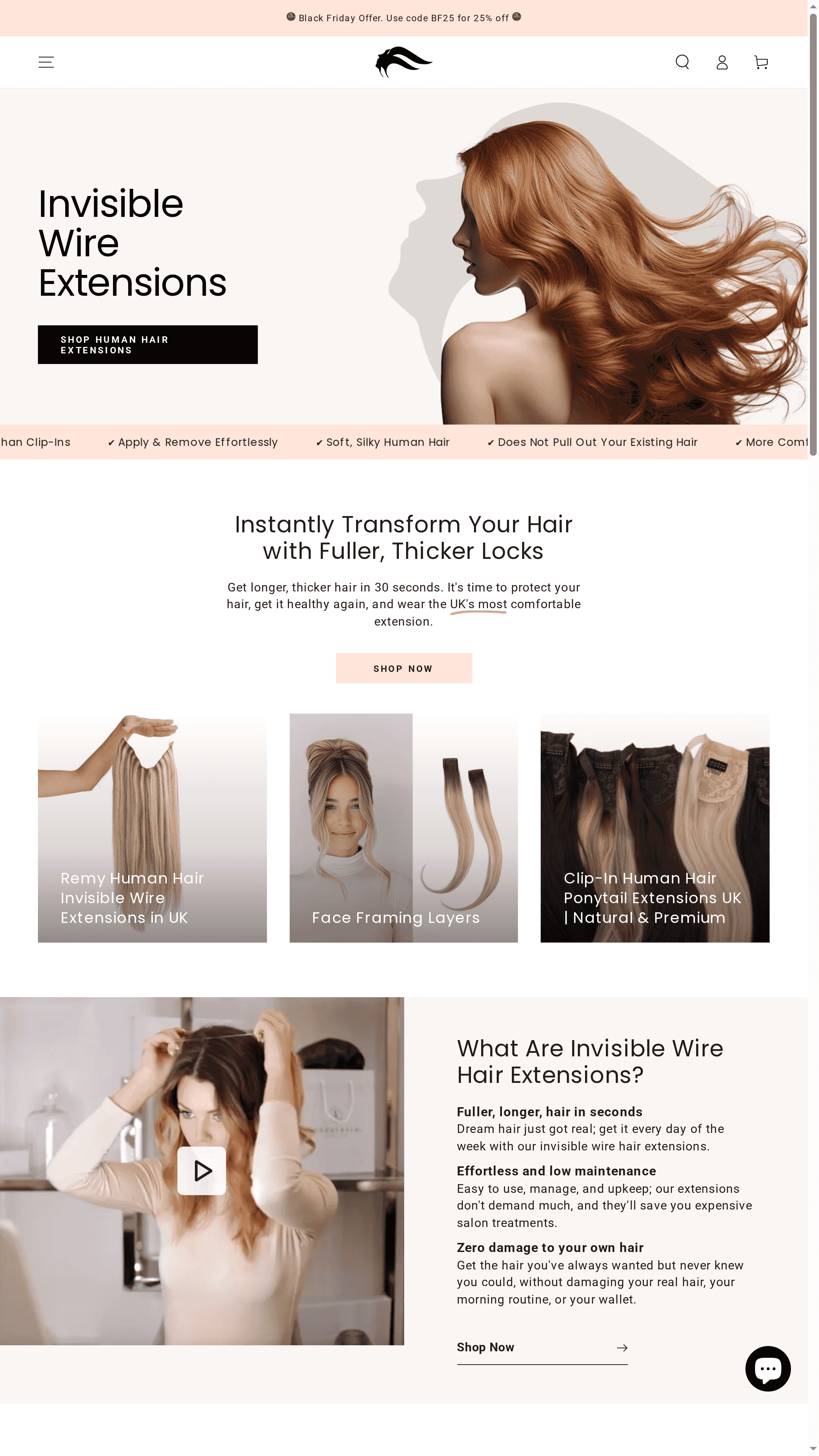
The invisible extension wires offer a unique solution that combines the security of semi-permanent extensions with the flexibility of temporary options. These innovative extensions sit virtually undetectable against your scalp whilst delivering substantial volume. For occasions requiring instant transformation, clip-in human hair ponytail extensions provide dramatic volume and length without any commitment or damage risk. Each product uses ethically sourced Remy human hair that blends seamlessly with natural hair textures, ensuring the authentic appearance you deserve. With fast UK delivery and a free exchange policy, exploring options that match your specific needs and hair type becomes effortless.
FAQ
What are the safest hair extension types for fine hair?
Tape-in extensions and micro or nano ring extensions provide the safest semi-permanent volume for fine hair when properly applied by professionals. Clip-in extensions offer the absolute lowest damage risk for occasional wear, as they create no sustained tension on follicles and can be removed nightly.
How can I avoid damage whilst using hair extensions for volume?
Choose lightweight extensions matched precisely to your natural hair thickness, typically 0.08 to 0.12mm for fine hair. Have extensions applied and removed exclusively by trained professionals who understand proper tension management. Take regular breaks between installations, allowing your hair to rest and recover from any accumulated stress.
What maintenance routines keep extensions looking natural and voluminous?
Wash extensions two to three times weekly using sulphate-free shampoo, focusing on roots whilst avoiding attachment points with conditioner. Brush gently twice daily with a loop brush designed for extensions, starting from ends and working upwards. Store clip-ins properly when not wearing them and schedule professional maintenance every six to eight weeks.
Can clip-in extensions be used daily for volume?
Clip-in extensions can be worn daily provided you remove them every night before sleeping, eliminating sustained tension that causes damage. Monitor your scalp for any signs of irritation or sensitivity, adjusting wear frequency if discomfort develops. This approach delivers consistent volume whilst maintaining the lowest possible damage risk.