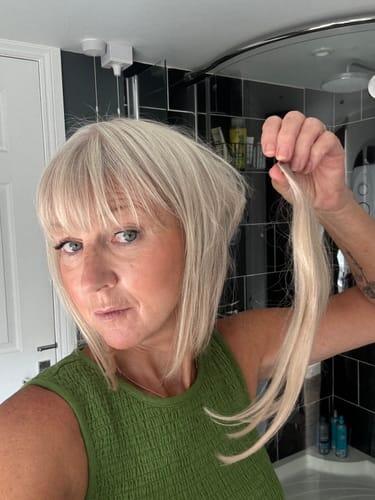
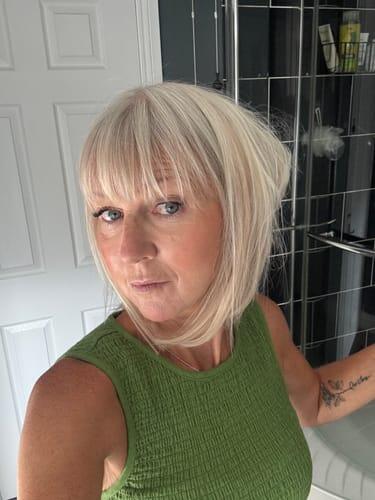
Updated September 2026. Based on 301 verified Naturyl customer reviews. Twenty-nine of those reviews describe what the piece did to the thickness of the wearer's hair rather than its length, which is the whole subject of this guide.
The short answer
Hair extensions add volume by putting extra hair underneath your own, so your top layer sits over more bulk and reads as thicker. The best pieces for volume alone are small clip-in sections at the sides and a short one-piece wire — not a long, heavy set. Length and volume pull in opposite directions: the longer the hair, the more its own weight drags it flat.
The one thing extensions cannot do is add volume at your parting or crown. That needs a topper, and no amount of clever placement changes it.
Volume and length are different purchases
"Hair extensions for volume not length" is one of the most common ways people search for this, and the distinction is real: a piece that adds fullness in one specific place is a different purchase from hair that adds inches. Here is what each one actually does.
Small front clip-in pieces — fullness at the sides and around your face, where thinness shows first. One inch-wide clip each, almost nothing to hide, and the least you can spend to find out whether extensions work for you.
A one-piece wire — all-round fullness through the back and lengths. It rests on your head rather than hanging from your hair, but needs enough of your own hair falling over it to stay hidden.
A ponytail piece — volume only when your hair is up. Useless the rest of the time, excellent for the occasions it is made for.
What none of them fix — thinness at the parting or the crown. Nothing that clips underneath adds hair on top — that is a topper, and no amount of placement changes it.
The physics behind that is simple. Hair has weight, and weight pulls hair down and flat. A long, heavy piece adds hair but also adds drag, so it often reads as longer and flatter rather than fuller. A short piece adds the same bulk with far less pull, and it sits higher up the hair shaft where fullness is actually visible.
Where you want volume decides what works
Almost every disappointed "it didn't add volume" story comes down to buying for the wrong area. Find your row.
The bottom two rows are the honest ones, and they are the two things people search for most often after volume itself. An extension hangs under your hair. It cannot lift the hair above it, which is where crown and parting volume live.

How much hair you actually need
More is not better. The right amount is the amount your own hair can sit over convincingly, and past that point the piece stops looking like volume and starts looking like a wig.
Very fine hair. Start with two small front pieces, or a 45g lightweight wire. This is the most common mistake we see corrected in reviews: a full-weight piece bought first, then a lighter one bought second and worn far more often.
Fine but plenty of it. A 90g wire at 12 inch adds noticeable bulk without dragging. Add front pieces later if the sides still look sparse.
Medium or thick hair wanting more. Go by length rather than weight — a 14 or 16 inch piece blends into hair that already has body, where a short one can end abruptly.
"I just wanted a bit of volume for my hair… had to take a wee bit off the length 12inch, as it was a bit too long."Elizabeth M., verified buyer
Elizabeth bought our shortest length and still trimmed it. That is what buying for volume looks like in practice, and it is worth knowing before you order the 18 inch.

Volume where it goes missing first
Face-Framing Layers
Two small pieces on inch-wide clips, one each side. Adds fullness around the face without adding length or weight.
Front clip-in extensions · 100% Remy · £36 · 4.87 from 895 reviews · Free UK delivery · Free colour exchanges
Shop Face-Framing Layers → Free colour match from a photoFitting for maximum volume, step by step
- 1Fit on dry, textured hair. Volume is partly grip. Clips and wires slide on freshly washed hair and settle lower through the day, taking the fullness down with them.
- 2Tease a small anchor at each clip point. A light backcomb at the root gives the clip something to hold and lifts the piece a few millimetres — which is exactly where visible fullness comes from.
- 3Place higher for volume than you would for length. For fullness through the mid-lengths, a wire sits just above ear level; dropping it lower turns the same piece into length instead.
- 4Split the difference at the sides. Two small pieces, one per side, do more for perceived thickness than one larger piece at the back, because the sides are what people see in profile.
- 5Trim the piece to your own length, or shorter. Hair that ends together looks thick. Hair that ends in two steps looks like extensions, and the lower step adds nothing to fullness.
- 6Curl the ends away from your face. A bend at the last few inches is the cheapest volume there is: it stops the ends hanging in a flat sheet and doubles the apparent width of the hair.
- 7Match to your mid-lengths, not your roots. A shade that matches your ends blends into the bulk. One that matches your roots reads as a darker band through the middle and visually thins the hair.
What customers say the volume looks like
We sell these pieces, so weigh the following accordingly. All are verbatim from verified reviews.
"I have always wanted thicker looking hair. My hair has always been wispy and the two side extensions make such a difference."Tracy G., verified buyer
"No-one could tell I had hair extensions added just at the front. It just made my hair look thicker and I received loads of compliments."Sharon M., verified buyer
"They have made such a difference to the body of my hair!"Mandy P., verified buyer
"Excellent great service and so easy to use. Very happy with the fullness that I had lost."Carole C., verified buyer
Two words recur across the volume reviews and they are worth noticing: sides and front. Almost nobody describes volume as an all-over effect. They describe it as fullness returning to one area they had been watching in the mirror.
What extensions cannot add volume to
Three limits, stated plainly, because the alternative is a return.
The parting and crown. Every extension hangs below them. If the area you look at in the mirror is a widening parting, a topper with its own parting is the product that solves it, and a wire piece will not.
Hair too sparse to cover the piece. Volume works by hiding extra hair under your own. If your scalp shows through your top layer when it falls loose, there is nothing to hide it under, and the fullness will come with a visible edge.
Active or sudden shedding. If your hair has thinned noticeably over recent months, see a GP first — the NHS hair loss guidance covers when loss is worth investigating. A piece restores the look of volume; it does not treat the cause, and heavy fitted methods can make the underlying loss worse.

Bulk through the lengths
Invisible Wire Extensions
One piece on a clear wire, worn under your top layer. The 12 inch adds thickness without dragging the hair flat.
100% Remy human hair · 28 shades · from £89 · 45g Lightweight for very fine hair · Free UK delivery · Free colour exchanges
Shop invisible wire extensions → Free colour match from a photoHair extensions for volume: your questions
Do hair extensions add volume?
Yes, by adding hair underneath your own so the top layer sits over more bulk. They add it through the sides, mid-lengths and ends. They cannot add volume at the parting or crown, because every extension hangs below both.
What hair extensions are best for volume and not length?
Small clip-in pieces at the sides, and a short one-piece wire at 12 or 14 inch. Both add bulk without the weight that pulls hair flat. Long, heavy sets tend to read as longer rather than fuller.
Can hair extensions add volume at the crown or on top of the head?
No. Extensions sit under your own hair, so they cannot lift the hair above them. Crown flatness is a styling problem — root mousse, a diffuser, or a root-lift clip — and a widening parting needs a topper with its own parting.
How much volume do hair extensions add?
Enough to be obvious to you and not obvious to anyone else, if the weight is matched to your hair. Two small front pieces noticeably thicken the sides; a 90g wire adds visible bulk through the lengths. Beyond that, extra weight adds drag rather than fullness.
Do extensions add volume to short hair?
Yes, but keep them short. A piece more than two inches longer than your own hair changes the shape of your cut rather than thickening it, and the join becomes visible. Choose the shortest length available and have the ends point-cut.
Will extensions for volume damage fine hair?
Clip-in and wire pieces attach to nothing and come out at night, so they avoid the traction that damages hair with bonded, taped and ringed methods. The risks are wearing them overnight and clipping the same fine strands every day — move the clip position slightly each time.