Published October 2026. Written from our verified customer reviews that talk about how natural (or not) their extensions looked, our product specifications and our returns policy. We sell clip-in and invisible wire extensions, so read it with that in mind.
You have seen extensions that look like extensions: a thick, blunt curtain of hair hanging below someone's own layers, a shine that does not match, ends a shade lighter than everything above them. You want more hair, and you want nobody to be able to tell.
The good news is that what gives extensions away is predictable, and most of it is decided before you ever clip anything in.
The short answer
Natural-looking extensions come down to proportion more than price: real Remy human hair, matched to your ends in daylight, cut to the length of your own hair, and no more hair than your own can hide. The giveaway our customers mention most is not colour. It is length: a piece that hangs below your own hair always shows, and a five-minute trim fixes it.
If you are adding fullness at the front, where people look first, the most forgiving place to start is a pair of small Face-Framing Layers trimmed to your own length.
The six things that make extensions look fake
Every top-ranking guide tells you to buy good hair and match the colour. Both matter, but they are only two of six. Here is the full list, roughly in the order people notice them:
1. The shelf. Your own hair stops, and a second layer carries on below it. This is the single biggest tell, and it happens whenever the extension is longer than your hair can cover. It is also the easiest to fix.
2. Too much hair. Fullness that your scalp could not grow. If your hair is fine and suddenly looks thick at the ends but thin at the parting, the eye reads it as added.
3. A colour step at the ends. Most people match to the top of their head. But an extension sits among your mid-lengths and ends, which are often lighter, warmer or more faded than your roots.
4. The wrong shine. Synthetic and silicone-coated hair has a plastic gloss that real hair does not. Remy human hair, with its cuticle intact and running one way, moves and catches light like your own.
5. A visible attachment. A clip, a weft line or a wire that peeks through where your hair is thinnest. This is about where the piece sits and how wide it is, not the brand.
6. A texture mismatch. Poker-straight hair under natural waves, or a wave that drops out of your own hair by lunchtime.
Only the fourth is really about quality. The other five are about choosing the right piece for your hair, which you can check in a mirror before you spend anything.
The five-minute mirror test to run before you buy
Stand near a window in daylight, with a hand mirror so you can see the back. Each step tells you something specific about what will look natural on you.
- 1Find where the piece would sit. For a wire piece, that is just above your ears, all the way round. For front pieces, about an inch back from your hairline at the sides of your parting.
- 2Measure from there to your own ends. That number is the longest extension that can look natural on you today. You can always go shorter. Anything longer will form a shelf unless it is cut. Our guide to extension lengths goes through this inch by inch.
- 3Lift your top layer and look underneath. Can your own hair hang over the spot and hide it with room to spare? If you can see scalp through the top layer there, a wide weft will show, and smaller, lighter pieces are the natural choice.
- 4Hold your ends next to your face. Compare their colour with your roots. If they differ, match the extension to the ends, or to a mix of both. Never to the roots alone.
- 5Gather your hair into a ponytail at the nape. Its thickness is your honest density. A thin ponytail means a light piece will look like your hair on a good day, and a heavy one will look like someone else's.
What looks natural on your hair
Put your answers together and the right starting point usually becomes obvious. This is what we would suggest, and what to steer clear of:
Notice what the left-hand column has in common: none of it is about adding as much hair as possible. The most natural results add a little, in the right place, at the right length.
What a realistic before and after looks like
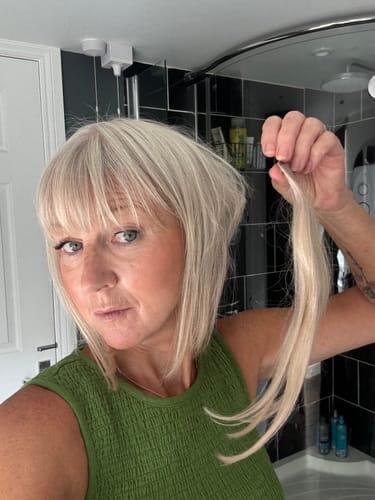
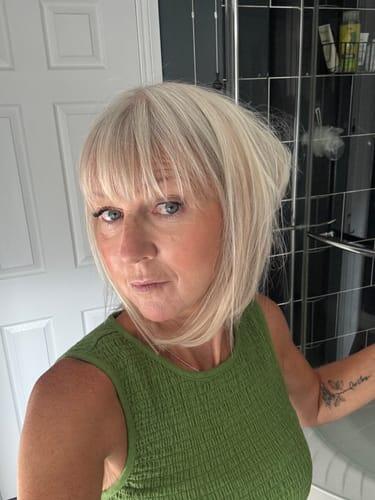
Search for extension before-and-afters and you will mostly find dramatic shoulder-to-waist transformations. They are impressive, and they are also why so many people end up with a result that looks added. Here is what natural looks like on real customers wearing small front pieces:

The length is the same before and after; what changes is how full and even the hair looks around the face. That is the result that gets compliments without questions.
The step almost everyone skips: cutting it to your hair
Extensions come long so they can suit as many people as possible. Your hair is not "as many people". Read enough of our reviews and the same story comes up again and again: the colour was right, the piece arrived longer than their hair, they or their hairdresser trimmed it, and then nobody could tell.
"I had to trim them down a little as they were about 2 inches too long but it works really well and I've been wearing them every day. Even my husband commented on how nice my hair looked and he doesn't even know I have them in."Melanie P., verified buyer
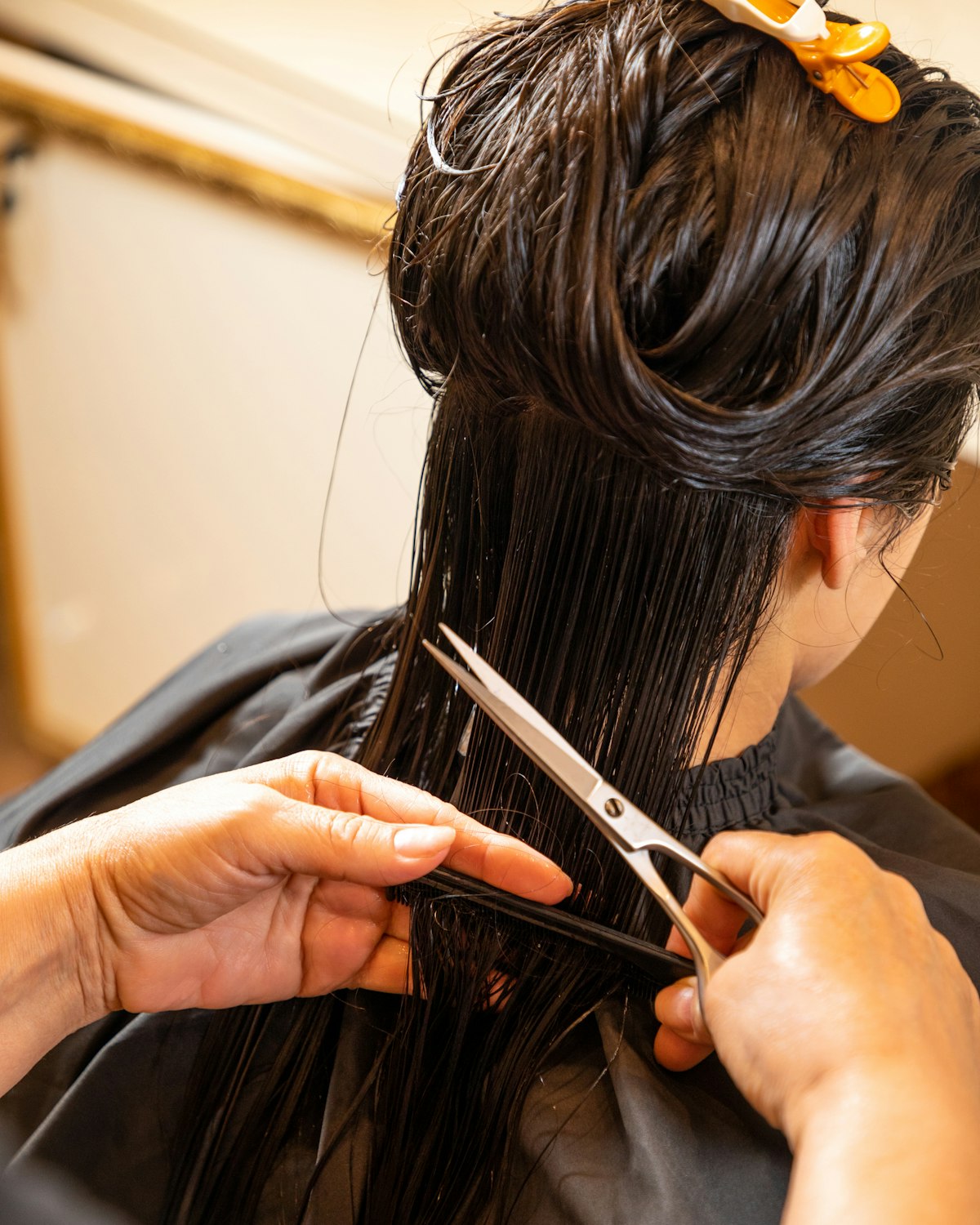
Cut it while it is in. Place the piece exactly where you will wear it and cut it with your own hair, so the two finish together. Cut on the table, it almost always ends up too long or too short.
Point-cut, do not chop. Snipping up into the ends rather than straight across softens the line where the extension stops.
Or ask your hairdresser for a dry trim. It takes a few minutes at your next appointment, and several of our customers say their hairdresser was the one asking where the pieces came from.
Remember the asymmetry: you can always cut an extension shorter, but you can never make it longer. When torn between two lengths, take the longer one and have it cut in. One more thing, though: returns have to come back undamaged, so a piece that has been cut cannot go back. Check the colour against your hair before the scissors come out.

The most natural place to start
Face-Framing Layers
Two small 14 inch pieces on ultra-mini clips that sit an inch back from your hairline. Light enough for fine hair, and easy to trim to your own length.
100% Remy human hair · 29 shades · £36 · Free colour exchanges within 14 days
Shop Face-Framing Layers →"The hair is lovely quality and weight which frames the face beautifully without any heaviness or looking fake, just a lovely natural blend."Sarah T., verified buyer, five stars
Getting the colour right, the first time
Colour is the second most common giveaway, and almost always for one of two reasons: the shade was chosen under indoor light, or it was matched to the roots. Even a good match can read wrong at the ends:
"Beautifully made and very comfortable The ends were too light against my hair."Hilary B., verified buyer, four stars
Three rules prevent most of this. Judge colour in daylight by a window, never under bathroom lights. Hold the shade against your mid-lengths and ends, where the extension will actually sit. And if you are between two shades, take the lighter one: human hair can be toned or coloured darker by a colourist, but not reliably lighter. (Colouring a piece does mean it can no longer be returned, so try it as it is first.) Our step-by-step guide on how to colour match extensions covers highlights, greys and two-tone hair in detail.
Where extensions stop looking natural
Some situations are hard for any extension, ours included. It is better to know before you buy than to find out in the mirror.
Very fine, very thin sides. If you can see a lot of scalp where a piece would sit, even a small weft can show through, and a fuller piece can feel heavy. One customer put it plainly:
"I really liked them and the colour was good unfortunately my hair is so fine and thin at the sides they sat a little heavy and were noticeable. If they were a lighter density they may have been less obvious."Valerie B., verified buyer, four stars
If that describes your hair, start with the two small front pieces rather than side pieces, place them where your hair is thickest, and let your own hair fall over them.
A wire piece on thin hair at the crown. The wire rests on your head like a headband under your top layer. Where your hair is thin, you may feel or see a slight ridge. One customer noticed exactly that:
"I need to disguise the slight " bump" where it fits on the back of my head, as my hair is quite thin."Moira G., verified buyer, four stars
Sitting the wire a little lower and lightly backcombing the hair just above it usually covers it. If your top layer is very sparse, front pieces will look more natural.
A big jump in length. Chin length to mid-back never looks natural with one removable piece, and rarely with any method. Add 2 to 4 inches at a time. And a beach wave is a soft S-wave, not a curl pattern, so tight curls need a curl specialist.
If you want fullness at the back too
Once the front looks right, many people want more body through the back and sides. An invisible wire piece sits under your top layer with nothing attached to your own hair. On fine hair, the same rules apply: start short, and have it trimmed in.

For the back and sides
Invisible Wire Extensions
One piece of Remy human hair on a clear wire, hidden under your top layer. Nothing clipped or glued to your hair, on in a minute.
12 to 18 inch, 90g to 120g · from £109, or £89 for the 45g Lightweight · Free colour and length exchanges within 14 days
Shop invisible wire extensions →"I have shoulder length hair but my hair is very fine. wire hair extensions look very natural and gave me more volume."Linda H., verified buyer, five stars
Your next step: check the shade against your own hair
The length can be fixed with scissors. The colour cannot, so that is where to be careful. Send us two daylight photos through our free colour match, one of your top layer and one lifted to show underneath, and we will suggest your shade. If you would rather see it against your own hair first, a single 10 inch clip-in tester costs £3.
When your piece arrives, hold it against your hair in daylight before you cut or style it. You have 14 days to return it, unworn and in its packaging: exchanging for another colour or length is free, and a cash refund costs a £10 admin fee. Orders ship tracked from our UK warehouse, with free standard delivery over £45 and next-day delivery if you order express before 1pm.

Try the shade first
Colour Match Me Tester
A 10 inch clip-in strand in any of our shades, to hold against your mid-lengths and ends in daylight before you choose a full piece.
Real Remy human hair · £3 · Testers are non-returnable · Free colour exchanges on full pieces
Order a £3 tester →Common questions
Which hair extensions look the most natural?
Remy human hair, in a piece sized to your own hair. In practice that means a shade matched to your ends in daylight, a length no longer than your own hair can cover (or trimmed to it), and a weight your hair can hide. Small front pieces are the most forgiving because they add a little hair exactly where people look.
How do I make clip-in extensions look natural?
Clip them where your hair is thick enough to fall over them, about an inch back from the hairline at the front. Then have them trimmed while they are in, so they finish where your own hair does, and point-cut the ends to soften the line. Style them with your own hair rather than separately.
Can people tell if you are wearing extensions?
Usually only when something is out of proportion: the extension is longer than your hair, much thicker than your hair, or a different shade at the ends. Get those three right and most people will just think your hair looks good.
Should I cut my hair extensions?
Yes, if they are longer than your own hair. It is the quickest way to make them look natural. Cut them in place, with your own hair, or ask your hairdresser for a dry trim. Check the colour first, because a piece that has been cut cannot be sent back.
Should extensions match my roots or my ends?
Your ends, or a blend of your mid-lengths and ends, because that is where the extension sits. Roots are often darker than the rest of your hair, and matching to them is a common reason for a visible colour step. If you are between two shades, pick the lighter one.
Do extensions look natural on thin hair?
They can, if they are small and light. On thin or fine hair, a full piece or a wide weft is more likely to show through or feel heavy. Start with small front pieces or a short, light piece, and let your own hair cover the attachment.