TL;DR:
- Working out with hair extensions is safe when following proper protective styles and aftercare routines. Sweat alone does not damage bonds, but salt, oils, and tension can cause slippage and damage if not managed properly.
Working out with hair extensions is entirely safe when you follow the right protective styling and aftercare techniques. The key distinction in extension care is this: sweat alone does not destroy your bonds, but accumulated salt, oils, and physical tension will. Whether you wear tape-in, clip-in, bonded, or invisible wire extensions, a consistent routine before and after exercise preserves both the bonds and the hair itself. Naturylextensions recommends pairing secure hairstyles with targeted post-workout care to keep your extensions looking their best through every session. This guide gives you the practical steps to make your active lifestyle and your hair work together.
What does working out with extensions actually require?
Working out with extensions requires three things: the right accessories, a protective hairstyle, and a post-workout care routine. Miss any one of these and you risk bond slippage, tangling, or premature shedding. The good news is that none of these steps are complicated once you know what to do.
The type of extension you wear shapes your approach. Tape-in extensions are most sensitive to heat and oils, so sweat management is critical for them. Clip-in extensions offer the most flexibility because you can remove them before a workout entirely. Bonded extensions, which use a keratin-based adhesive, hold well under normal exercise conditions but need protection from prolonged moisture. Micro-ring and nano-tip extensions are widely regarded as well-suited to active lifestyles because they use no adhesive at all, relying instead on a small metal ring clamped to your natural hair.
Understanding your extension type is the first step. From there, the guidance below applies across all types, with specific notes where one type needs extra attention.
What tools and products do you need before the gym?
The right products make the difference between extensions that last months and ones that need replacing within weeks. Stock these before your next session.
| Product | Purpose | Best use |
|---|---|---|
| Moisture-wicking sweatband | Keeps sweat away from scalp and bonds | Wear during all cardio and high-intensity sessions |
| Fabric-covered hair ties | Reduces friction and breakage at the tie point | Use for ponytails and buns |
| Dry shampoo | Absorbs sweat and oils at the roots pre and post-workout | Apply before exercise to create a barrier |
| Wide-tooth comb or extension brush | Detangles without pulling bonds | Use gently after workouts |
| Cool setting blow dryer | Dries roots and bonds without heat damage | Use immediately after washing or heavy sweating |
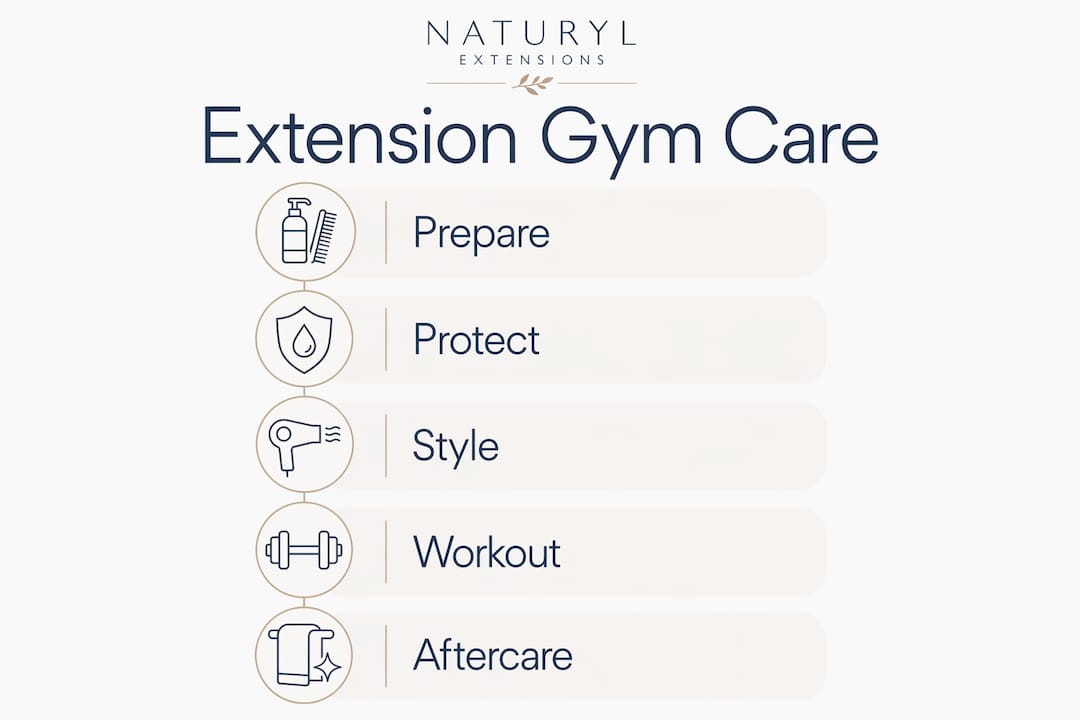
Wearing a sweatband keeps sweat from pooling at the scalp and weakening adhesive bonds. This is especially relevant for tape-in wearers during high-intensity cardio.
Fabric-covered hair ties, often labelled as snag-free or spiral ties, cause significantly less friction than standard elastic bands. Standard elastics grip the hair shaft unevenly and can pull extension bonds out of alignment over time.
Dry shampoo applied at the roots before a workout acts as a barrier. It absorbs sweat as it forms, reducing the salt and oil build-up that loosens tape bonds if left uncleaned.
Pro Tip: Choose a dry shampoo specifically formulated for extensions or colour-treated hair. Standard aerosol dry shampoos can leave residue that builds up around bonds over time.
How should you style extensions before and during a workout?
Protective hairstyles are the single most effective tool for reducing extension damage during exercise. Securing hair in braids or ponytails prevents catching on gym equipment and reduces friction against clothing and headrests.
The best styles for exercising with extensions are:
- Low braids or plaits: Distribute weight evenly and keep hair contained without pulling on bonds near the scalp.
- Low ponytails: Place the tie mid-length rather than at the nape to avoid direct pressure on bonds.
- Loose buns: Secure with a fabric tie and a few pins. Avoid wrapping the tie too tightly.
- Dutch or French braids: Excellent for longer sessions. They hold hair flat against the head and reduce movement-related friction.
Styles to avoid during exercise:
- Tight high ponytails: These place direct upward tension on bonds, which is the primary mechanical cause of bond slippage.
- Topknots pulled very tight: The same tension issue applies, particularly for tape-in and bonded extensions.
- Loose, unsecured hair: Hair that moves freely during exercise tangles more, and detangling puts stress on bonds.
Different extension types need slightly different approaches. For clip-in extensions, the simplest option is to remove them before a workout and reapply afterwards. For tape-in extensions, a low braid is the safest choice because it keeps the tape panels flat. For bonded extensions, a loose low bun works well, provided the tie sits below the bond line.
Pro Tip: For yoga or Pilates sessions involving inversions, a French braid keeps hair secure without creating pressure points at the scalp. It also looks polished enough for studio environments.
Common mistakes to avoid:
- Sleeping in a tight workout style after exercise, which compounds tension on bonds overnight.
- Using metal clips or pins directly on extension bonds.
- Pulling hair back while it is wet, which stretches the hair shaft and weakens the bond attachment point.
For more damage-free styling ideas, Naturylextensions has a dedicated guide covering techniques suited to everyday wear and active use.
What is the best post-workout care routine for extensions?
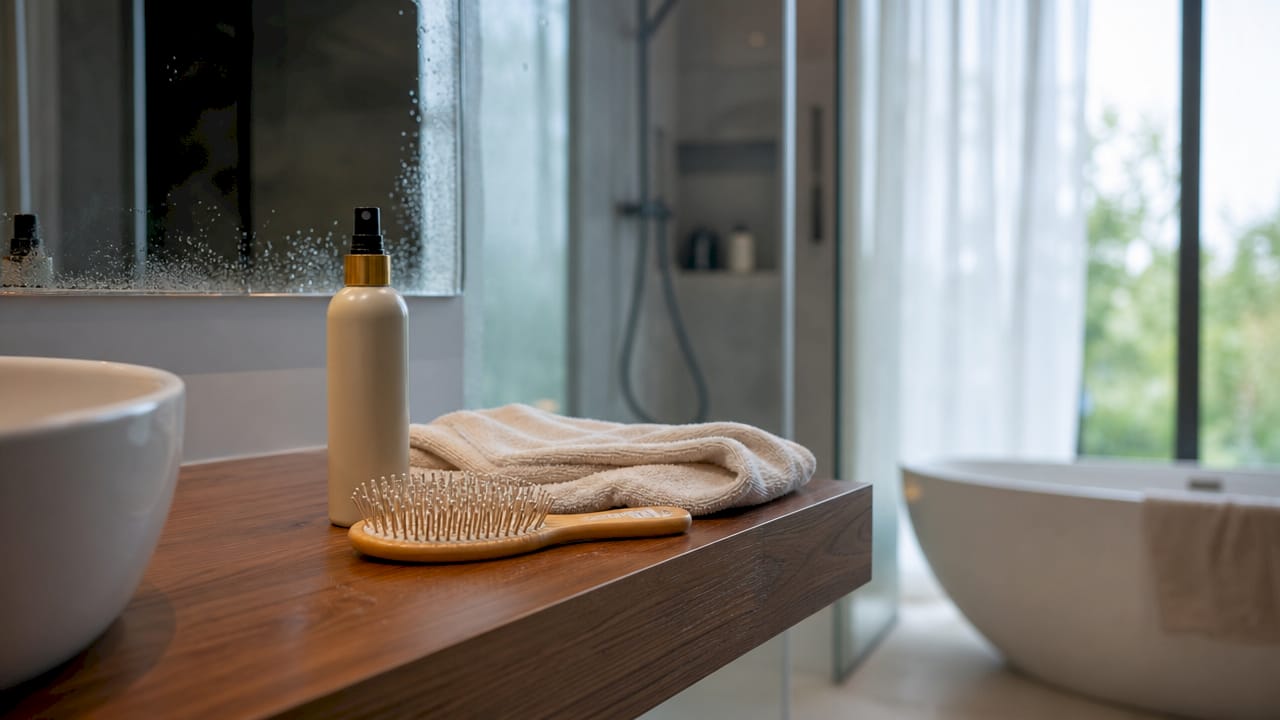
Post-workout care is where most people with extensions go wrong. The instinct is to wash hair immediately after every session. That approach actually does more harm than good.
Washing extensions daily is discouraged by extension specialists. Frequent washing strips the hair of natural moisture and, for tape-in extensions, gradually weakens the adhesive. The recommended frequency is 1–2 times per week, with dry shampoo managing sweat between washes.
Follow this routine after every workout:
- Remove your hair tie gently. Slide it off rather than pulling it down. Check that no extension hair is caught in the tie.
- Apply dry shampoo at the roots. Focus on the areas closest to your bonds. Allow it to absorb for two minutes, then brush through lightly.
- Blow-dry the roots on a cool or warm setting. Leaving hair damp overnight after a sweaty session compromises adhesive bonds. Even five minutes with a cool dryer makes a significant difference.
- Detangle from the ends upward. Use a wide-tooth comb or an extension-specific brush. Start at the tips and work toward the roots in short sections.
- On wash days, cleanse gently. Use a sulphate-free shampoo applied in a downward motion. Avoid scrubbing at the scalp in circular motions, which tangles extension hair.
- Condition mid-lengths and ends only. Keep conditioner away from bonds. Rinse thoroughly with cool water.
If you swim, the aftercare routine needs one additional step. Saturate your hair with fresh water before entering the pool. Hair that is already wet absorbs less chlorine. After swimming, rinse immediately with clean water and follow the steps above. Salt water from the sea carries the same risk as chlorine, so the same pre and post-swim routine applies.
Pro Tip: Washing extensions 1–2 times weekly rather than after every session is the single most effective habit for extending their lifespan. Manage sweat between washes with dry shampoo and a cool blow-dry.
For a full extension care checklist, Naturylextensions covers every maintenance step in detail.
Which exercises are safest for hair extensions?
Tension, not sweat, is the primary threat to extension bonds during exercise. Salt and oils from sweat cause slippage only when left uncleaned for extended periods. A prompt post-workout routine neutralises that risk entirely.
The exercises that work well with extensions are those that involve minimal overhead arm movement and low friction against the scalp:
- Running and treadmill sessions
- Cycling and spin classes
- Weight training (lower body focus)
- Yoga (non-heated)
- Pilates
- Rowing (with hair secured in a braid)
Overhead exercises like pull-ups and shoulder presses place repeated tension on bonds with every repetition. Over time, this mechanical stress reduces bond lifespan. If these exercises are part of your programme, wear your hair in a low braid and keep the tie below the bond line to reduce upward pull.
Hot yoga presents a specific challenge. Temperatures between 29°C and 41°C in heated studios create conditions where tape adhesive softens and sweat accumulates rapidly. If you practise hot yoga regularly, clip-in extensions are the most practical option because you can remove them before class. For permanent extensions, apply dry shampoo before class, wear a low braid, and blow-dry the roots immediately afterwards.
Minimising direct tension on hair extension bonds during workouts extends their lifespan significantly. The most effective strategy is combining a low, secure hairstyle with a consistent post-workout drying routine, rather than relying on any single product or technique alone.
Workout do’s and don’ts with extensions:
- Do secure hair before every session, regardless of workout length.
- Do blow-dry roots after sweating, even on non-wash days.
- Do remove clip-in extensions before high-intensity or heated sessions.
- Don’t wear a tight high ponytail for overhead lifting.
- Don’t leave hair damp after exercise.
- Don’t skip post-workout care because the session felt light.
Key takeaways
Consistent aftercare and protective styling are the two non-negotiable habits for anyone working out with hair extensions long-term.
| Point | Details |
|---|---|
| Tension causes damage, not sweat | Salt and oils from sweat only harm bonds when left uncleaned; tension is the primary mechanical risk. |
| Secure styles protect bonds | Low braids, low ponytails, and loose buns reduce friction and upward pull during exercise. |
| Dry shampoo is your best tool | Apply before workouts to absorb sweat and limit washing to 1–2 times weekly. |
| Blow-dry roots after every session | Damp bonds left overnight weaken adhesive and increase slippage risk. |
| Match your extension type to your routine | Clip-ins suit high-intensity or heated sessions; micro-ring and nano-tip suit active daily wear. |
What I have learned from years of exercising with extensions
The advice that gets repeated most often is “just put your hair up.” That is true, but it misses the detail that actually matters. The position of your hair tie relative to your bonds is what determines whether a ponytail protects or damages your extensions. I have seen people follow every other rule correctly and still lose bonds early because their tie sat directly on the tape panel for every session.
The other thing most guides skip is the blow-dryer step. People assume that if their hair feels mostly dry, it is fine. Bonds hold moisture longer than the outer hair shaft, and that residual dampness is what causes slippage overnight. Two minutes with a cool dryer at the roots after every session is not glamorous advice, but it is the most practical habit I can recommend.
Hot yoga is the one activity I would genuinely caution against if you wear tape-in or bonded extensions regularly. The combination of sustained heat and heavy sweating is hard on adhesive bonds even with perfect aftercare. Clip-in extensions solve this completely. They take two minutes to remove and two minutes to reapply, and your bonds are never at risk.
The broader point is that an active lifestyle and great hair are not in conflict. They just require a bit more consistency than most people expect at the start. Once the routine becomes habit, it takes almost no extra time at all.
— Sam
Naturylextensions for active lifestyles
If you want extensions that hold up through regular gym sessions, the quality of the hair and the fit of the extension type matter as much as your aftercare routine.

Naturylextensions offers Remy human hair extensions designed for everyday wear, including active use. Remy hair retains its cuticle alignment, which means it tangles less and withstands the friction of exercise better than synthetic alternatives. The invisible wire extensions from Naturylextensions are particularly well-suited to fitness-conscious wearers. They sit securely without clips or adhesive, making them easy to remove before a heated class and reapply in minutes. For those who want added length on active days, additional length wires are available to complement your existing set. Fast UK delivery and a free exchange policy mean you can find the right fit without risk.
FAQ
Can you work out every day with hair extensions?
Yes, you can exercise daily with extensions provided you manage sweat with dry shampoo and blow-dry your roots after each session. Limit full washing to 1–2 times per week to protect bond integrity.
Do tape-in extensions fall out during exercise?
Tape-in extensions do not fall out from sweat alone. Salt and oils from sweat loosen the adhesive only when left uncleaned, so prompt post-workout care prevents slippage.
What is the best hairstyle for the gym with extensions?
A low braid or low ponytail with the tie placed below the bond line is the safest option. Tight high ponytails place upward tension on bonds and should be avoided during overhead exercises.
Is hot yoga safe with hair extensions?
Hot yoga poses a risk to tape-in and bonded extensions because studio temperatures of 29°C–41°C soften adhesive. Clip-in extensions are the most practical solution for regular hot yoga practice.
How often should you wash extensions if you exercise regularly?
Washing 1–2 times per week is the recommended frequency for active extension wearers. Use dry shampoo between sessions to absorb sweat and keep bonds clean without overwashing.