TL;DR:
- Choosing the right hair extension method depends on your hair type, lifestyle, and maintenance preferences. High-quality, ethically sourced Remy hair and professional application are essential for durability and natural appearance. Proper care, including timely maintenance and gentle removal, prevents damage and promotes healthy natural hair.
Hair extensions have become one of the most popular ways to add length, volume, and dimension to your look, yet the sheer number of application methods can make the decision feel genuinely confusing. Understanding extension application methods is the foundation of making a choice that serves both your style goals and your hair health. The wrong method for your hair type or lifestyle can lead to unnecessary damage, slippage, or an unnatural result. This guide breaks down each technique clearly, explains how to match the right method to your hair, and covers the maintenance your extensions will need to stay looking their best.
Table of Contents
- Key takeaways
- Understanding extension application methods
- Choosing the right method for your hair
- Maintenance and safe removal
- Quality factors and 2026 industry trends
- My perspective on choosing extensions wisely
- Explore Naturylextensions for quality that matches your method
- FAQ
Key takeaways
| Point | Details |
|---|---|
| Method variety is real | Six main application methods exist, each suited to different hair types, budgets, and maintenance commitments. |
| Hair type matters most | Fine or thinning hair requires lighter methods such as halo or micro-link extensions to avoid breakage. |
| Maintenance is non-negotiable | Tape-ins need reinstallation every 6 to 8 weeks; skipping this leads to tangling, matting, and potential damage. |
| Professional removal is critical | Improper removal is one of the leading causes of extension-related hair breakage and loss. |
| Quality defines performance | Cuticle-aligned, double-drawn Remy hair outperforms lower-grade extensions in longevity and natural appearance. |
Understanding extension application methods
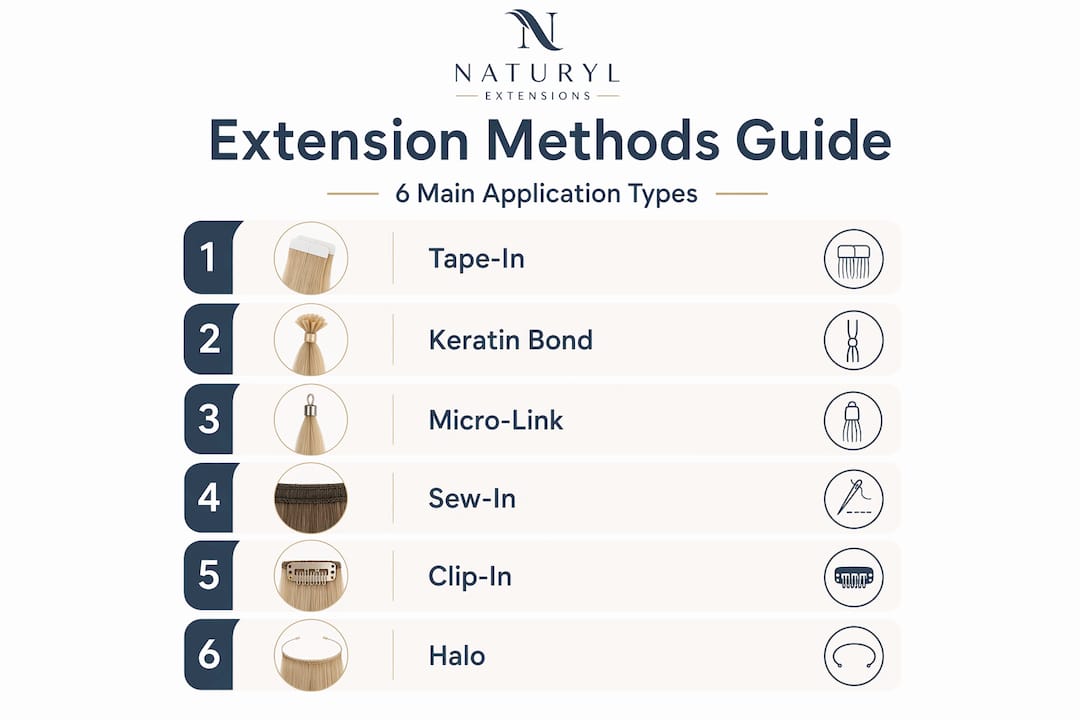
Hair extension techniques fall into six main categories, and each one works differently in terms of attachment, wear time, and how it interacts with your natural hair. Getting familiar with all of them gives you the context to make a genuinely informed choice.
Tape-in extensions
Tape-in extensions use thin wefts of hair sandwiched around small sections of your natural hair using a keratin-based adhesive tape. Installation is relatively fast, typically completed in under two hours. The flat, low-profile result sits close to the scalp and blends well with fine to medium hair. Tape-ins suit fine-medium hair and typically last 6 to 8 weeks before requiring repositioning as your natural hair grows. With good care, the hair itself can be reused for 6 to 12 months, which makes them one of the more cost-effective semi-permanent options.
Keratin bond (fusion) extensions
Keratin bond extensions, sometimes called fusion extensions, attach individual strands to small sections of natural hair using a heat-activated keratin adhesive. The result is an extremely natural, freely moving finish because each strand moves independently. They last 3 to 5 months with proper care, but the application process is time-intensive and requires a skilled stylist. Removal also demands professional handling, as forcing bonds off can cause significant breakage to your natural hair.
Micro-link (bead) extensions
Micro-link extensions use tiny metal or silicone-lined rings to clamp small sections of your natural hair together with individual extension strands. No heat and no adhesive are required. This makes them a popular choice for those who want to avoid chemical or heat-based attachment. They require tightening appointments every 6 to 8 weeks as your hair grows, but the extensions themselves can be repositioned and reused.
Sew-in (weave) extensions
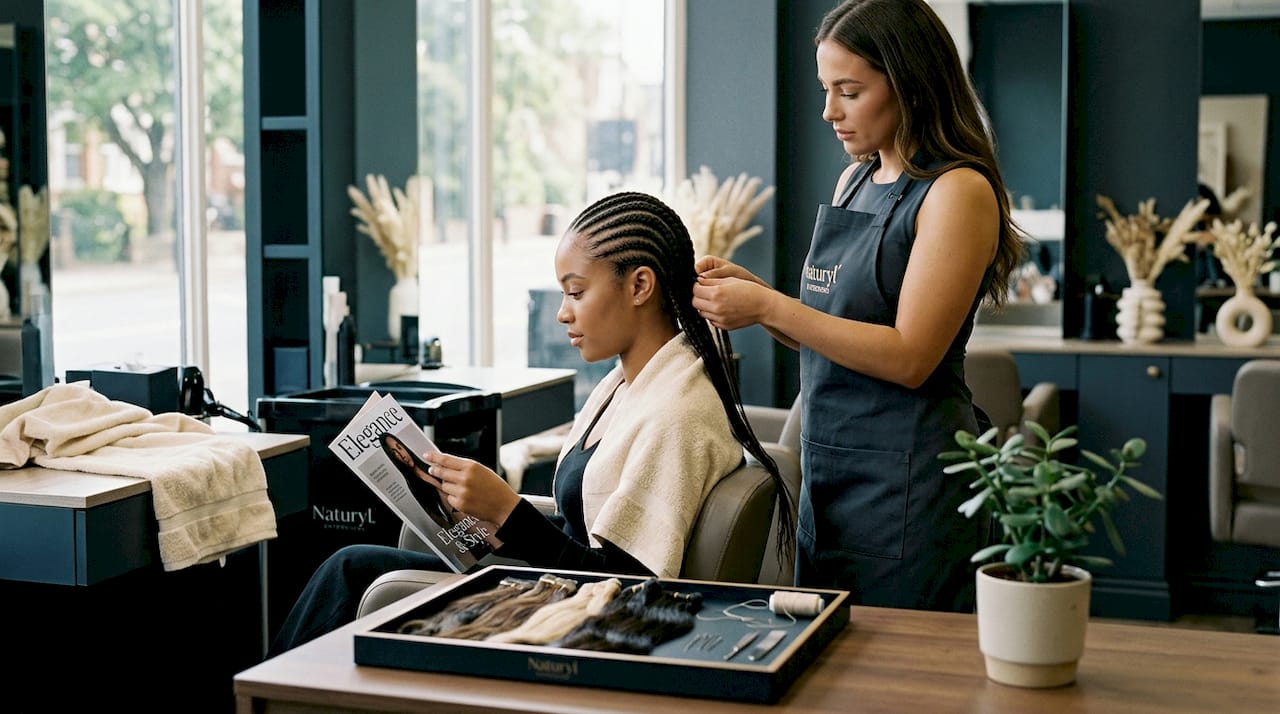
Sew-in extensions involve braiding your natural hair flat against the scalp in cornrow tracks, then sewing wefts of hair onto those braids with a needle and thread. They offer excellent longevity and can last 6 to 8 weeks, sometimes longer. However, heavy sew-in wefts place significant tension on the scalp, which makes them less suitable for fine or thinning hair. They work best on thicker, coarser hair types that can support the weight.
Clip-in extensions
Clip-in extensions attach and detach using small pressure clips woven along a weft. There is no chemical or heat involvement. You apply them yourself in minutes and remove them before washing or sleeping. This makes them the lowest-commitment method available. They are ideal for occasional use or for those wanting to experiment with length and volume before committing to a semi-permanent method.
Halo extensions
Halo extensions use a near-invisible wire that sits on top of your head, with the hair hanging down and blending with your natural hair. No clips, no bonds, no heat. They are the quickest method to apply and remove, and because there is no attachment point on your natural hair, they carry virtually no risk of tension or damage. This makes them an excellent option for those with finer or more fragile hair.
| Method | Application | Wear duration | Suitable for | Key risk |
|---|---|---|---|---|
| Tape-in | Adhesive tape sandwiching | 6 to 8 weeks | Fine to medium hair | Adhesive weakening with oils |
| Keratin bond | Heat-activated keratin | 3 to 5 months | Medium to thick hair | Heat damage if removed incorrectly |
| Micro-link | Metal or silicone rings | 6 to 8 weeks | Most hair types | Ring slippage or snagging |
| Sew-in | Needle and thread on braids | 6 to 8 weeks | Thick or coarse hair | Tension and traction damage |
| Clip-in | Pressure clips on weft | Temporary use | All hair types | Pressure marks with daily use |
| Halo | Invisible wire | Temporary use | Fine or fragile hair | Slippage if not fitted correctly |
Choosing the right method for your hair
No single method suits everyone. The right choice depends on a combination of your hair’s physical characteristics and the realities of your daily routine. Working through these factors honestly will save you time, money, and potential damage.
Hair type and density
- Fine or thinning hair: Opt for halo or spaced micro-link extensions. These are the lightest options. Avoid heavy sew-in wefts, which can place too much stress on delicate strands.
- Medium density hair: Tape-ins and micro-links both work well. You have more flexibility in your choice.
- Thick or coarse hair: Sew-in weaves and keratin bonds handle the weight of thicker hair most effectively and provide the secure attachment that coarser textures require.
It is worth noting that extensions add fullness strategically, working best when placed around the sides and mid-lengths rather than directly on a thinning crown. If your thinning is concentrated at the top, discuss a tailored placement strategy with your stylist.
Lifestyle considerations
Think about how often you heat-style your hair, how active your lifestyle is, and how much time you can commit to upkeep. If you swim regularly, adhesive-based methods like tape-ins may degrade more quickly with repeated chlorine or salt water exposure. If you exercise daily and wash your hair frequently, halo or clip-in extensions may suit your routine better than semi-permanent options.
Pro Tip: Professional consultation before installation is the most reliable way to match a method to your unique hair health, scalp sensitivity, and lifestyle. A stylist assessment takes the guesswork out of the decision entirely.
Maintenance and safe removal
Understanding the upkeep that comes with each method is just as important as understanding how they are applied. Neglecting maintenance or attempting removal without the right knowledge are the two most common causes of extension-related damage.
Here is a step-by-step overview of what good extension maintenance looks like across the main methods:
- Book reinstallation appointments on time. Tape-ins need repositioning every 6 to 8 weeks. Waiting longer allows the growing hair to create matting near the adhesive, which makes removal significantly harder and riskier.
- Use sulphate-free, extension-safe products. Sulphates and oil-heavy products weaken adhesive bonds and can cause premature slippage. A Remy hair care guide will give you specific product recommendations tailored to the extension type you are wearing.
- Brush gently and consistently. Use a soft-bristle or loop brush and start from the ends, working upward. Never brush from root to tip, especially near bonds or rings.
- Protect extensions during sleep. Tie hair in a loose plait or use a satin pillowcase to reduce friction and prevent tangling overnight.
- Watch for early warning signs. Scalp tenderness, unusual shedding, or visible tension at attachment points are signals to contact your stylist before your next scheduled appointment.
When it comes to removal, correct technique is everything. Bonds must be softened first using the appropriate solution or tool before any manipulation. Working in small sections, avoiding pulling, and using professional-grade tools are non-negotiable steps. Attempting to pull or cut out bonds at home is one of the fastest routes to unnecessary breakage.
Pro Tip: Learn how to wash extensions without damage between appointments. Correct washing technique is one of the single biggest factors in how long both the extensions and your natural hair stay healthy.
Quality factors and 2026 industry trends
The extension market has shifted noticeably toward performance and engineering quality, not just aesthetics. Quality engineering now defines extension durability and long-term performance more than colour or texture alone.
The two most significant quality indicators in 2026 are cuticle alignment and double-drawn processing. Cuticle-aligned double-drawn hair means all strands face the same direction (preventing tangling) and the weft contains a consistent density from root to tip (preventing that thin, wispy end result that cheaper extensions often produce).
Other quality factors worth understanding before you purchase:
- Adhesive and bond grade: Higher-grade keratin adhesive sits flatter, causes less scalp irritation, and holds more reliably across the wear period.
- Ring material for micro-links: Silicone-lined rings are gentler on natural hair than plain metal rings, reducing the risk of friction-related breakage.
- Weft construction for clip-ins: Machine-sewn wefts with reinforced edges resist shedding during repeated clipping and unclipping far better than loosely constructed alternatives.
- Hair origin and sourcing: Ethically sourced, single-donor Remy hair behaves most predictably because the hair has a consistent texture and cuticle structure throughout.
| Quality factor | What to look for | Why it matters |
|---|---|---|
| Cuticle alignment | All strands facing same direction | Prevents tangling and matting |
| Double-drawn processing | Consistent density root to tip | Eliminates thin, wispy ends |
| Adhesive/bond grade | Medical or cosmetic-grade keratin | Reduces irritation; increases hold |
| Hair sourcing | Single-donor Remy human hair | Uniform texture and longer lifespan |
My perspective on choosing extensions wisely
Over the years, I have seen the same patterns repeat. Someone chooses an application method based on what a friend had, or what they saw online, without factoring in their own hair density, scalp sensitivity, or how much they genuinely want to commit to maintenance. The result is avoidable disappointment.
What I have learned is this: the application method is only half of the equation. The quality of the hair and the skill of the person applying and removing it matter just as much. I have seen beautifully appropriate methods cause damage because the removal was rushed or done at home with the wrong tools. Professional application and removal are not upsells. They are genuinely protective steps.
I also think the beauty industry underserves people who want extensions for fine or thinning hair. There is a tendency to steer everyone toward the same heavy, dramatic looks. But halo extensions and carefully spaced micro-links can create a beautiful, natural result for finer hair without compromising its health. You do not need to accept a method that puts your hair at risk just to achieve the look you want.
My honest advice: care for your natural hair throughout your time in extensions, not just between sets. The condition of your natural hair when extensions come out tells you everything about whether the method and maintenance routine were right for you.
— Sam
Explore Naturylextensions for quality that matches your method
If you are now clearer on which application method suits your hair and lifestyle, the next step is finding extensions that perform at the standard that method demands.
Naturylextensions specialises in premium Remy human hair extensions, with a focus on invisible wire, ponytail, and face-framing styles designed for a natural finish and everyday comfort. All extensions use ethically sourced, cuticle-aligned Remy hair, so you get the consistency and longevity that lower-grade options cannot match. If you are exploring temporary or lower-commitment methods, the range of invisible extension wires offers a flexible, damage-free solution for adding length and volume. Fast UK delivery, free exchanges, and detailed care guides make it straightforward to get started with confidence.
FAQ
What are the main hair extension application methods?
The six main methods are tape-in, keratin bond (fusion), micro-link (bead), sew-in (weave), clip-in, and halo extensions. Each differs in attachment technique, wear duration, and suitability for different hair types.
Which extension method is safest for fine hair?
Halo extensions and spaced micro-links are the safest choices for fine or thinning hair. Experts advise avoiding heavy sew-in wefts, which place too much tension on delicate strands.
How often do tape-in extensions need maintenance?
Tape-in extensions require professional reinstallation every 6 to 8 weeks. With proper care, the hair can be reused for up to 12 months before replacement is needed.
Can I remove hair extensions at home?
Removing semi-permanent extensions at home carries a significant risk of breakage. Bonds and adhesive must be properly softened before removal, and professional tools and technique are strongly recommended to protect your natural hair.
What is Remy hair and why does it matter for extensions?
Remy hair refers to human hair where the cuticles are kept intact and aligned in the same direction. This prevents tangling, extends the lifespan of the extension, and produces the most natural look and feel of any extension type.