TL;DR:
- Comfort in hair extensions indicates the absence of scalp tension, irritation, and physical strain during wear.
- Proper fitting, weight distribution, and chemical safety are critical factors in ensuring extension comfort and protecting natural hair health.
Comfort in hair extensions is defined as the absence of scalp tension, irritation, and physical strain during wear. It is not a luxury feature. It is the primary indicator of whether your extensions are protecting or damaging your natural hair. Understanding why comfort matters in extensions means understanding the direct link between how extensions sit on your scalp and the long-term health of your follicles. Traction alopecia, scalp inflammation, and chemical sensitivity are all comfort failures before they become clinical problems. This guide explains the mechanics, the risks, and the choices that keep your hair healthy and your extensions genuinely wearable.
Why does comfort matter in extensions?
Comfort in extensions is a direct measure of follicular health, not just personal preference. When extensions pull, pinch, or feel heavy, your scalp is signalling early-stage inflammation. Traction alopecia results from chronic tensile forces caused by hairstyles including extensions, with treatment focusing on reducing tension. That means the discomfort you feel on day one is the same biological process that leads to patchy hair loss if left unaddressed.
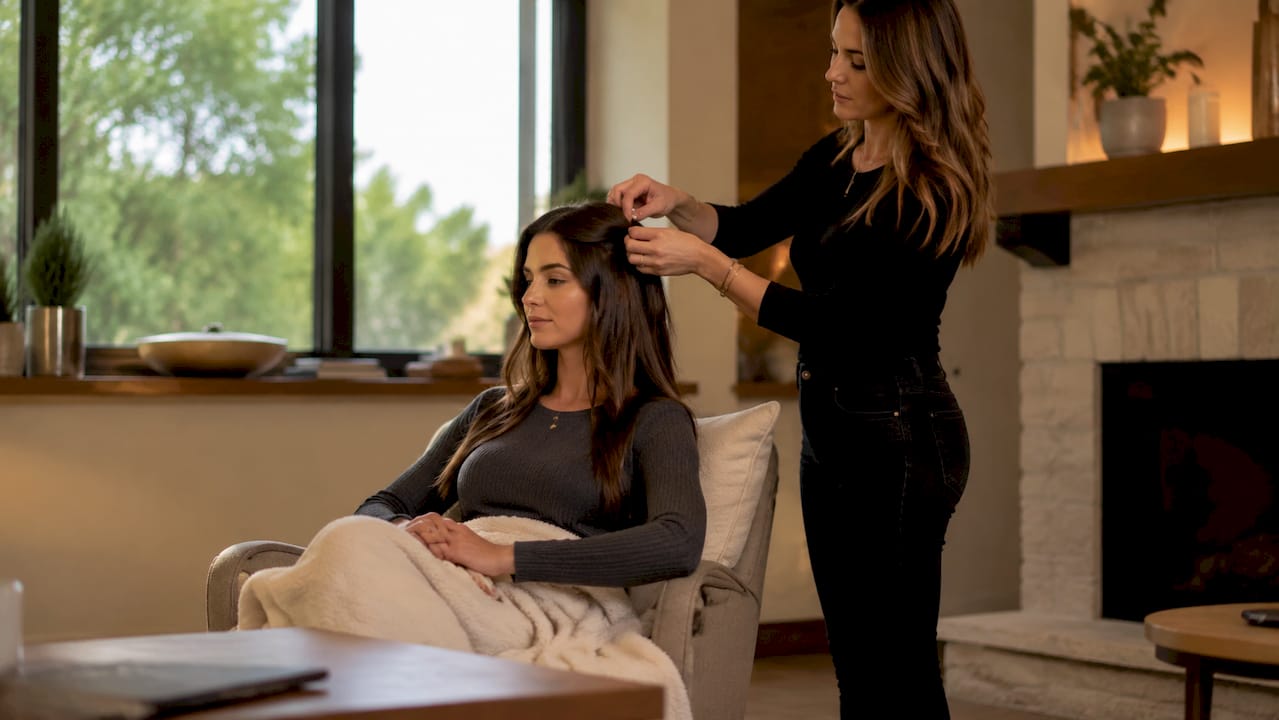
The importance of comfort in extensions goes beyond how you feel at the end of a long day. Extensions that fit correctly distribute weight evenly, move with your natural hair, and place no concentrated force on individual follicles. Extensions that do not fit correctly do the opposite, regardless of how neat they look. Comfort is the clearest signal you have that your extensions are working with your hair, not against it.
How does mechanical tension affect your scalp?
Mechanical tension is the pulling force that extensions place on your hair follicles through weight and attachment. Extensions amplify mechanical load on hair follicles due to added weight, increasing the risk of traction alopecia. The heavier the extension set and the more concentrated the attachment points, the greater the strain on each follicle.
Weight distribution is the critical variable. A set of extensions that spreads weight across many small attachment points creates far less focal pressure than a set that concentrates weight in a few areas. Incorrect sectioning is a common cause of this problem. When sections are too large or placed against the natural direction of hair growth, the pulling force multiplies with every head movement.
| Factor | Comfortable extension | Uncomfortable extension |
|---|---|---|
| Weight distribution | Spread evenly across multiple points | Concentrated on few attachment points |
| Attachment direction | Follows natural hair growth pattern | Applied against natural growth direction |
| Scalp response | No soreness or redness after wear | Tenderness, redness, or itching present |
| Movement | Extensions move freely with natural hair | Extensions feel tight or restrictive |
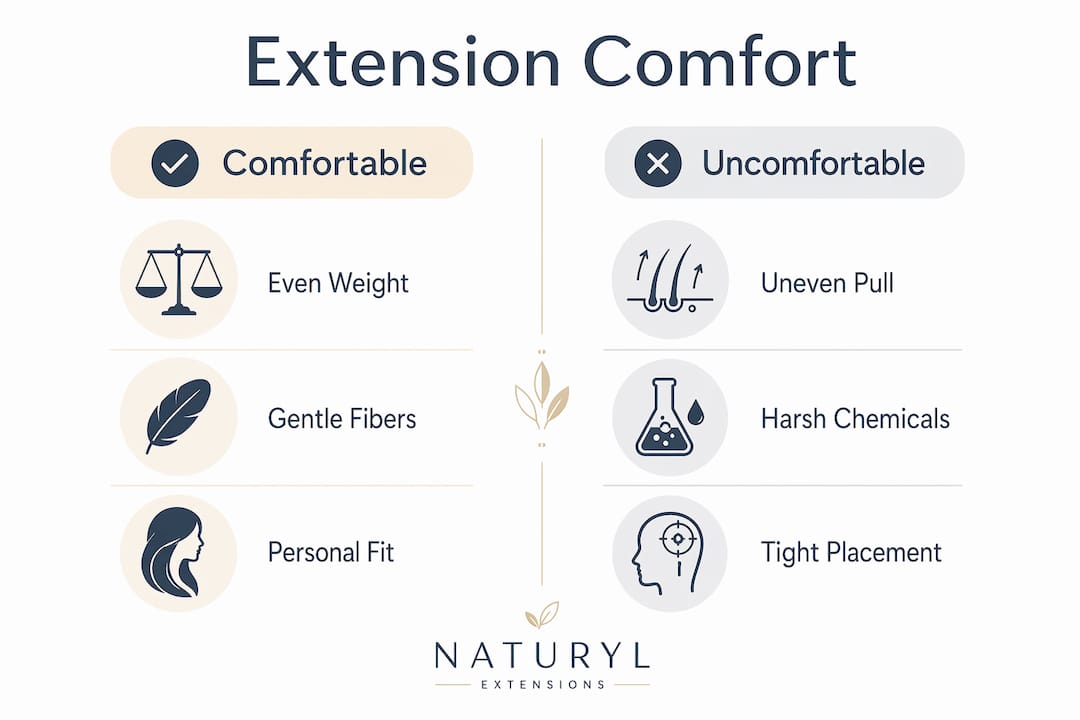
Early discomfort signals inflammation pathways that, if ignored, progress to follicle damage and hair loss. Soreness and redness after wearing extensions are not normal side effects to push through. They are your scalp asking for a reassessment.
Pro Tip: If your extensions feel tight on day one, do not wait for the sensation to ease on its own. Contact your stylist within 48 hours. Adjusting tension early prevents the chronic pulling that causes lasting follicle damage.
Do chemicals in extensions affect comfort?
Chemical exposure is a significant and often overlooked extension comfort factor. Lab testing has revealed that some extensions contain toxic compounds including organotin and benzyl chloride, which leach during simulated showering conditions. These chemicals cause scalp irritation and sensitivity that feels like general discomfort, making it difficult to separate chemical reactions from mechanical tension.
The scalp is highly absorbent. Repeated exposure to chemical irritants through extension fibres or adhesives creates a cycle of low-grade inflammation that compounds any tension-related discomfort. Women with sensitive scalps are particularly vulnerable because their skin barrier responds more readily to chemical triggers.
Choosing extensions with clear ingredient disclosure and verified low-chemical formulations directly reduces this risk. Chemical-free or verified low-chemical products reduce the risk of scalp irritation and improve wearer comfort. This is not a minor consideration in a market where product testing standards vary widely.
Key factors to check when assessing chemical safety in extensions:
- Look for extensions labelled as Remy human hair, which undergo less chemical processing than synthetic alternatives.
- Ask for ingredient or safety data from the supplier before purchasing.
- Avoid extensions with strong chemical odours, which can indicate residual solvents or adhesives.
- Choose products from brands that disclose their sourcing and processing methods.
- If you experience persistent scalp itching or burning, remove the extensions and consult a trichologist.
Pro Tip: Remy human hair extensions, like those offered by Naturylextensions, are processed with fewer harsh chemicals than many synthetic or non-Remy alternatives. This makes them a safer starting point for women with sensitive scalps.
Why does personalised fitting determine extension comfort?
A neat-looking extension set does not guarantee comfort. Extension sets may look correct but still feel uncomfortable if weight and tension do not align with the wearer’s growth and movement patterns. This is one of the most important and least discussed aspects of extension comfort.
Every woman’s scalp has a unique shape, hair growth direction, and density pattern. An attachment method that works perfectly for one person can create concentrated pressure points for another. Personalised fitting accounts for these differences. It is the reason why two women can wear the same extension product and have completely different experiences.
The following steps describe what a properly personalised fitting process addresses:
- Scalp mapping. A good stylist assesses your natural hair growth direction before placing any attachment. Extensions applied against your growth pattern create immediate tension.
- Density matching. The number and size of extension sections must match your natural hair density. Too many extensions on fine hair overloads the follicles.
- Lifestyle assessment. How you move, exercise, and style your hair determines where tension concentrates. A stylist who understands your daily routine will place attachments accordingly.
- Attachment method selection. Methods like invisible wire extensions, tape-in extensions, and micro-ring extensions each distribute weight differently. The right choice depends on your hair type and how long you plan to wear them.
- Follow-up reassessment. Comfort can change as extensions settle. A check-in at two weeks allows for tension adjustments before any damage occurs.
Comfort depends on personalised fitting mechanics, not just visual neatness. If your extensions feel restrictive, that is a fitting problem, not an inevitable feature of wearing extensions. Discomfort should prompt reassessment, not acceptance. You can find practical guidance on avoiding common fitting errors that affect both comfort and results.
What are the benefits of choosing comfortable extensions?
The benefits of comfortable extensions extend well beyond avoiding pain. Comfort-conscious choices actively protect your hair health over the long term and make daily wear genuinely easy.
Lightweight extension methods feel more comfortable and are easier to maintain, helping extend wear time without scalp strain. Stylists in 2026 are prioritising realistic wearability and client lifestyle over maximum volume. That shift reflects a growing understanding that extensions worn comfortably for six months do far less damage than heavy sets removed after six weeks due to soreness.
The specific benefits of prioritising comfort in hair extensions include:
- Reduced traction alopecia risk. Correctly fitted, lightweight extensions place minimal chronic tension on follicles, protecting your natural hair density over time.
- Less daily soreness and fatigue. Comfortable extensions do not create the end-of-day headaches and scalp tenderness that poorly fitted sets cause.
- More natural appearance. Extensions that move with your hair rather than pulling against it look and behave like your own hair. The result is a more convincing, natural finish.
- Easier maintenance. Comfortable extensions sit correctly and do not tangle or shift, making washing and styling straightforward.
- Longer wear life. Extensions worn without excessive tension last longer because neither the extension bonds nor your natural hair are under constant stress.
Women with fine or sensitive scalps benefit most from this approach. Selecting extension methods that minimise continuous pulling and monitoring early tension symptoms prevents chronic damage. The dos and don’ts of hair extensions are worth reviewing before committing to any method, particularly if you are new to wearing them.
Key takeaways
Comfortable extensions protect follicular health, prevent traction alopecia, and make daily wear sustainable without sacrificing appearance.
| Point | Details |
|---|---|
| Comfort signals scalp health | Soreness or redness after wearing extensions indicates early inflammation, not normal adjustment. |
| Weight distribution is critical | Even spread across multiple attachment points prevents the focal pressure that damages follicles. |
| Chemical safety matters | Choose Remy human hair or verified low-chemical products to avoid scalp irritation from toxic compounds. |
| Personalised fitting is non-negotiable | Neat appearance does not guarantee comfort; fitting must align with your growth pattern and lifestyle. |
| Comfort and style are not opposites | Lightweight, well-fitted extensions look more natural and last longer than heavy, poorly placed sets. |
Comfort first: what I have learnt from watching extensions evolve
The conversation around extensions has shifted noticeably in 2026. When I first started paying close attention to this space, the dominant question was always about volume and length. Now the question I hear most often is: “Will these damage my hair?” That is a meaningful change.
What strikes me most is how many women have worn uncomfortable extensions for years and assumed that was simply the price of the look. It is not. Discomfort is information. It tells you that something in the fitting, the weight, or the product chemistry is working against your scalp rather than with it. The women who treat that signal seriously, who go back to their stylist and ask for adjustments rather than enduring the tension, are the ones who still have healthy, full hair after years of wearing extensions.
The other thing I have noticed is that comfort and a natural appearance are almost always linked. Extensions that sit correctly, that follow your hair’s natural movement and weight, look indistinguishable from your own hair. Extensions that pull and pinch also tend to sit stiffly and look artificial. The biomechanics of comfort and the aesthetics of a natural look point in exactly the same direction. You do not have to choose between the two. If you want practical starting points, the tips for comfortable extensions from Naturylextensions are worth reading before your next fitting.
— Sam
Extensions designed with comfort at their core
If this article has made you think differently about what to look for in extensions, Naturylextensions is a good place to start putting that thinking into practice.
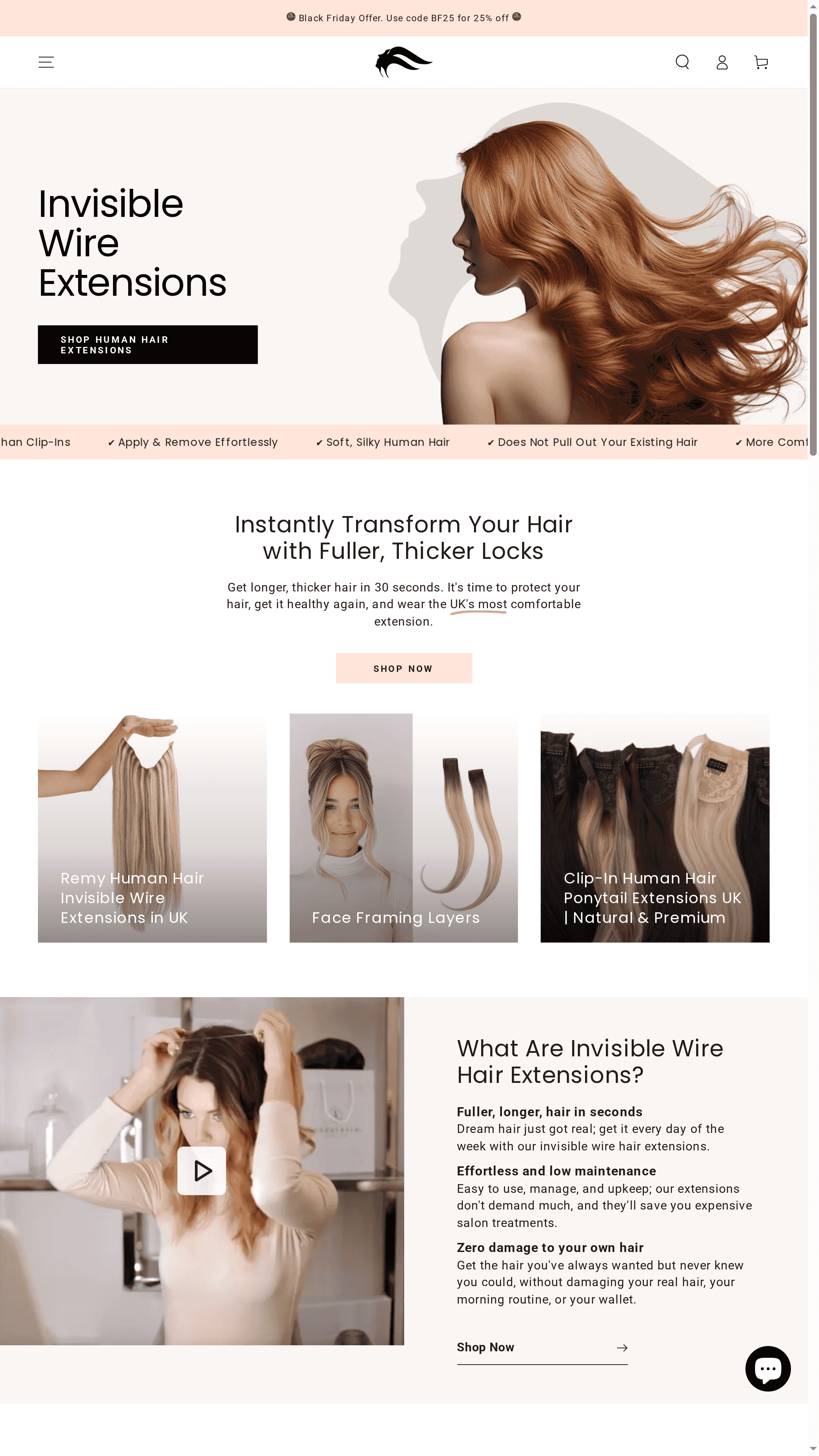
Naturylextensions specialises in Remy human hair invisible wire extensions designed for natural appearance and ease of wear. The invisible wire method distributes weight without attachment bonds, removing the focal pressure points that cause traction alopecia risk. The Remy human hair used is ethically sourced and processed to minimise chemical residues, making it a practical choice for women with sensitive scalps. Naturylextensions offers fast UK delivery and a free exchange policy, so finding the right fit does not require a commitment you cannot adjust. If you need additional length or volume, the extension wire range offers lightweight options that add fullness without added strain.
FAQ
Should hair extensions feel uncomfortable at first?
Extensions should not feel painful or cause soreness. Mild awareness of the extensions during the first day is normal, but tension, headaches, or scalp tenderness are signs of incorrect fitting that need prompt attention.
What causes hair extensions to feel tight or painful?
Tight or painful extensions result from excessive mechanical tension, incorrect sectioning, or extensions applied against your natural hair growth direction. Improper sectioning concentrates force unevenly, causing discomfort even when the set looks visually correct.
Can hair extensions cause permanent hair loss?
Yes. Chronic tensile forces from extensions cause traction alopecia, which can become permanent if the tension is not reduced early. Catching and addressing discomfort at the first signs of soreness or redness prevents progression to lasting follicle damage.
Are some extension types more comfortable than others?
Invisible wire extensions and lightweight tape-in methods generally place less continuous tension on follicles than heavier bonded or sewn-in methods. The best choice depends on your hair density, scalp sensitivity, and how you wear your hair day to day.
How do I know if my extensions are chemically safe?
Choose extensions made from Remy human hair with clear sourcing and processing information. Avoid products with strong chemical odours or no ingredient disclosure, as lab testing has identified toxic compounds including organotin and benzyl chloride in some extension products.