TL;DR:
- Extension volume increases hair or lash density through strategic placement, not by adding more material.
- Fewer, well-placed rows create a natural, fuller look, especially for fine or thinning hair.
Extension volume is defined as the use of hair or lash extensions specifically designed to increase density and fullness, rather than simply adding length. Most people assume extensions are only for growing out short hair, but the industry separates two distinct goals: volume and length. Understanding extension volume means recognising that fullness comes from strategic placement and weight-to-fullness ratios, not from piling on more hair. Naturylextensions specialises in exactly this kind of thoughtful, targeted approach, offering Remy human hair extensions built to create a naturally fuller result without compromising comfort or hair health.
What is extension volume, and how does it differ from length?
Extension volume refers to increasing the density and thickness of your natural hair, not its length. Volume-focused installs often require only 1–2 rows to achieve a significant transformation, whereas length-focused installs may require more rows to maintain density throughout. That difference matters enormously for fine or thinning hair, where adding length without first building fullness can actually make the hair look thinner.
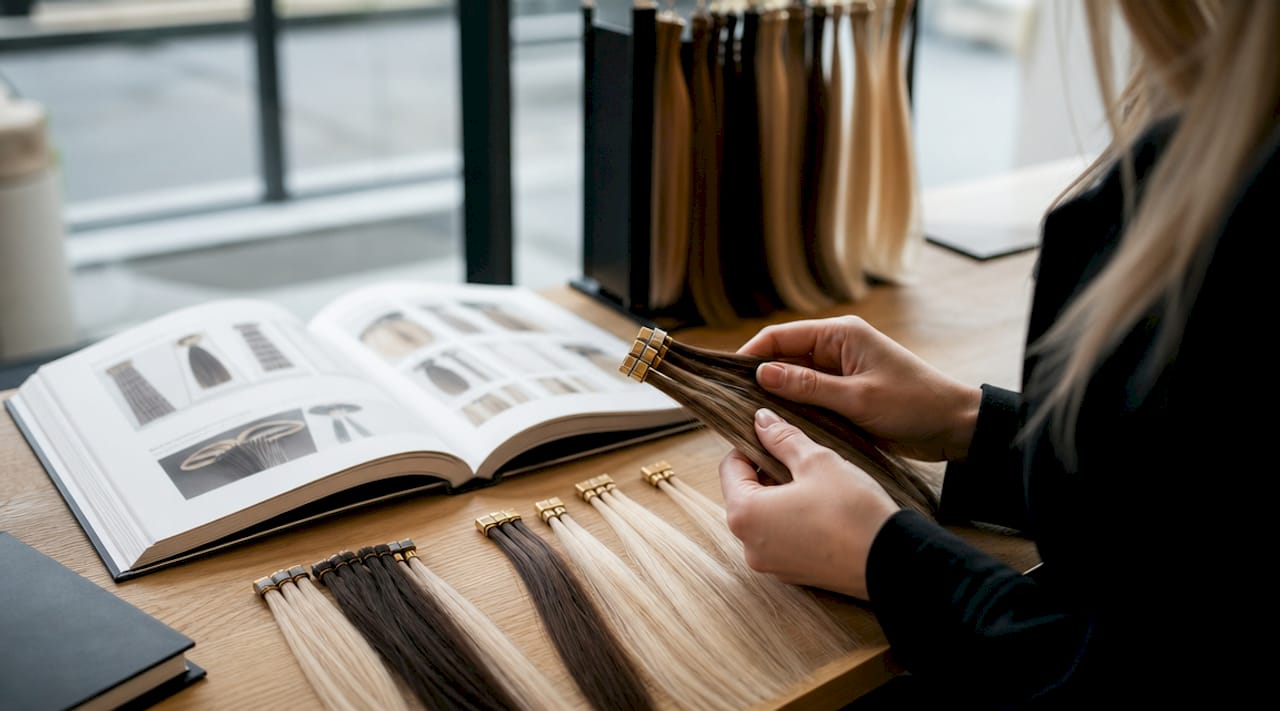
Length extensions prioritise adding inches. They work by extending the shaft of each strand downward, and they typically require a greater quantity of material to keep the hair looking dense from root to tip. Volume extensions, by contrast, focus on the mid-lengths and roots, filling in sparse areas to create a fuller silhouette.
The products used for each goal also differ. Volume wefts have thicker tracks and more hair per weft compared to standard wefts, aiming for maximum fullness with fewer wefts overall. Standard length wefts are thinner and designed to blend downward rather than outward. Volume wefts are also often cuttable, which allows for a customised install tailored to your specific head shape and density pattern.
For clients with fine or thinning hair, volume extensions are a strategic starting point to build density before adding length. Attempting length first on fine hair emphasises thinness rather than correcting it.
Pro Tip: If your hair is fine or flat at the roots, ask your stylist about volume wefts placed at the crown and temples before committing to any length extension. Fullness first creates a far more natural result.
What are the key techniques for achieving volume safely?
Achieving genuine volume with extensions requires understanding one counterintuitive principle: more hair does not equal more volume. Improper stacking can cause visible tracks and damage the hair follicle. Volume is achieved through smart placement and matching density, not simply increasing the quantity of hair applied.
The following steps reflect how professionals approach a volume-focused install safely.
-
Assess your natural density first. Your stylist should map where your hair looks sparse before placing a single extension. Volume extensions are installed mainly where hair looks sparse to create a fuller silhouette, not applied uniformly across the head.
-
Respect the weight-to-fullness ratio. Volume is a calculated ratio of gram weight to placement. Stacking too many wefts causes extensions to appear heavy, uncomfortable, and detectable. Fewer, strategically placed rows consistently outperform heavy-handed installs.
-
Match the extension density to your natural hair. Extensions that are significantly denser than your own hair will look unnatural at the blend line. Your stylist should select a weft weight that mirrors your own hair’s texture and thickness.
-
Choose the right attachment method. Invisible wire extensions, tape-ins, and micro-ring methods each carry different weight distributions. For volume specifically, invisible wire extensions sit flat against the head and distribute weight evenly, reducing strain on individual strands.
-
Schedule regular maintenance. Volume extensions need repositioning as your natural hair grows. Leaving them too long between appointments increases the risk of tangling and unnecessary tension on the roots.
Pro Tip: Request a strand test before your full install. Comparing the weight of a single extension weft against your natural hair gives both you and your stylist a clear benchmark for the right density.
How does extension volume work differently for lash extensions?
The concept of extension volume applies to lash extensions just as it does to hair, but the technique is far more precise. Volume lash extensions use a fan of 2 to 16 ultra-fine fibres bonded to one natural lash, creating more density without excessive weight. That range of fibres per fan is categorised using a “D” notation system: Light (2D–3D), medium (4D), full (5D–6D), and mega (7D and above).
The weight-to-fullness ratio is the key innovation in volume lash application. A 5D volume fan at 0.05mm weighs roughly the same as a single 0.15mm classic extension. That balance is what allows a dramatically fuller look without placing damaging load on the natural lash.
The table below compares classic and volume lash application at a glance.
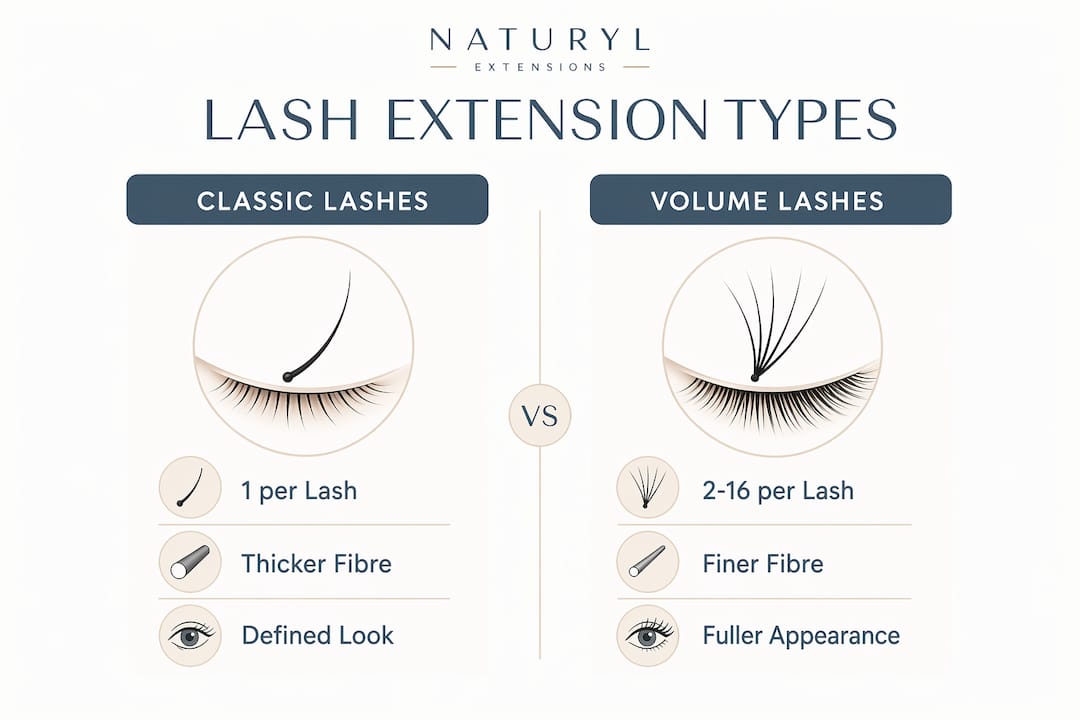
| Feature | Classic lashes | Volume lashes |
|---|---|---|
| Extensions per natural lash | 1 | 2–16 |
| Fibre diameter | 0.10mm–0.15mm | 0.03mm–0.07mm |
| Result | Natural, defined | Full, fluffy, dramatic |
| Maintenance cycle | Every 2–3 weeks | Every 2–3 weeks |
| Skill level required | Intermediate | Advanced |
Mega volume sets, which use fans of 7 or more fibres, require the finest diameters (0.03mm to 0.05mm) due to the large number of extensions per fan. This demands advanced technique and precise weight distribution to preserve natural lash health. Both classic and volume lash sets require fills every 2–3 weeks to maintain their appearance as natural lashes shed.
The parallel to hair extensions is clear. In both cases, volume is achieved by distributing weight intelligently across multiple fine fibres rather than applying one heavy unit. The science is the same; only the scale differs.
How to choose and measure extension volume for your hair
Selecting the right level of extension volume starts with an honest assessment of your natural hair. Four factors shape every good decision.
- Hair texture. Fine, straight hair shows extension tracks more easily than thick, wavy hair. Fine hair benefits from lighter-weight volume wefts placed in fewer rows, while thicker hair can support denser wefts with more coverage.
- Natural density. Count how many strands you can see at the parting. Sparse partings indicate a need for volume at the crown; thin ends suggest volume is needed mid-length.
- Desired effect. A subtle fullness boost requires far less extension weight than a dramatically thick result. Be specific with your stylist about the outcome you want.
- Lifestyle. Active lifestyles involving frequent washing, swimming, or heat styling place more stress on extensions. Lighter, fewer rows are easier to maintain and less likely to cause friction-related damage.
Measuring volume needs is not an exact science at home, but a professional consultation removes most of the guesswork. A stylist will assess your natural density, recommend a weft weight in grams, and map the placement rows before ordering any product. For invisible wire extensions specifically, the wire sits on a single row and the volume comes entirely from the weft density, making it one of the most straightforward methods to calibrate.
Strategic placement and customisation are non-negotiable for a natural result. Volume extensions should blend with your natural movement, not sit as a separate layer. A well-placed set should be invisible when your hair moves, which is the clearest sign that the weight-to-fullness ratio has been correctly matched to your own hair.
Pro Tip: Bring reference photos to your consultation showing both the density and the style you want. Stylists can match volume levels far more accurately when they can see a visual target rather than working from a verbal description alone.
Key takeaways
Extension volume is the result of strategic weight distribution and precise placement, not simply the quantity of hair or lashes applied.
| Point | Details |
|---|---|
| Volume versus length | Volume extensions increase density; length extensions add inches. They serve different goals and require different products. |
| Weight-to-fullness ratio | More hair does not create more volume. Fewer, well-placed rows consistently produce a fuller, more natural result. |
| Fine hair priority | Clients with fine or thinning hair should build volume before adding length to avoid emphasising thinness. |
| Lash volume parallels hair | Volume lash fans use multiple ultra-fine fibres to match the weight of a single classic lash, applying the same ratio principle. |
| Professional assessment | A stylist consultation is the most reliable way to measure volume needs and select the correct weft weight and placement. |
Why I think most people approach extension volume the wrong way
People come to extensions wanting more hair, and that instinct makes sense. But the most common mistake I see is treating volume as a quantity problem. More wefts, more rows, more product. The result is almost always the opposite of what was intended: heavy, uncomfortable extensions that look artificial and put unnecessary strain on the scalp.
The stylists who consistently produce the best volume results work with restraint. They place one or two rows in exactly the right position and choose a weft weight that mirrors the client’s own hair. The extensions disappear into the natural hair because they were never fighting against it.
There is also a sequencing issue that rarely gets discussed. Clients with fine hair often ask for length and volume simultaneously, and a good stylist will push back on that. Building fullness first creates the foundation that makes length look credible. Skipping that step produces long, thin hair that looks stretched rather than full.
My honest advice: treat extension volume as a long-term investment in your hair’s health and appearance. Prioritise the right weight-to-fullness ratio over the dramatic before-and-after. The results last longer, look better, and cause far less damage to your natural hair over time.
— Sam
Fuller hair, done right with Naturylextensions
Naturylextensions offers a range of Remy human hair extensions designed specifically for clients who want genuine fullness without salon-level complexity. The invisible wire extensions sit flat against the head, distribute weight evenly, and blend naturally with your own hair for a result that looks effortless. Each set uses ethically sourced Remy hair, which means the cuticles run in the same direction and the extensions move like your own hair rather than against it. If you are dealing with thinning areas or flat roots, the thinning hair fill-ins collection is built precisely for that need. Fast UK delivery and a free exchange policy mean you can find the right match without risk.
FAQ
What is extension volume in simple terms?
Extension volume is the use of hair or lash extensions to increase density and fullness rather than length. It focuses on making hair look thicker, not longer.
How many rows do volume extensions typically need?
Volume-focused installs often require only 1–2 rows to achieve a significant transformation. Fewer, well-placed rows produce a more natural and comfortable result than stacking multiple rows.
Can volume extensions damage your natural hair?
Improper stacking or overloading extensions can damage the hair follicle and cause visible tracks. Matching the extension weight to your natural density and scheduling regular maintenance prevents damage.
What is the difference between volume and classic lash extensions?
Classic lash extensions apply one fibre per natural lash for a defined look. Volume lash extensions apply a fan of 2 to 16 ultra-fine fibres per natural lash, creating a fuller, fluffier result at a similar total weight.
Are volume extensions suitable for fine hair?
Volume extensions are particularly well suited to fine or thinning hair. Experts recommend building density with volume extensions before adding length, as length alone can emphasise thinness rather than correct it.