TL;DR:
- Proper aftercare is essential for extending the lifespan of hair extensions and preventing damage to natural hair. Regular professional resets, gentle daily routines, and protective lifestyle habits significantly improve extension durability and overall health. Investing in high-quality Remy hair and consistent maintenance minimizes costly repairs and ensures long-lasting, beautiful results.
Getting hair extensions is exciting, but what happens in the weeks and months afterwards determines whether your investment lasts or deteriorates quickly. The role of aftercare in extensions is far more significant than most people realise when they first sit in the salon chair. Neglecting a proper aftercare routine does not just dull the appearance of your extensions. It actively damages your natural hair, shortens the lifespan of the extensions themselves, and can lead to expensive corrective work. This guide covers everything you need to know to maintain beautiful, healthy extensions from day one.
Table of Contents
- Key takeaways
- The role of aftercare in hair extensions
- Your daily and weekly aftercare routine
- Professional maintenance appointments
- Lifestyle habits that protect your extensions
- My honest take on aftercare
- Discover Naturylextensions’ Remy hair range
- FAQ
Key takeaways
| Point | Details |
|---|---|
| Aftercare is not optional | Skipping a proper aftercare routine shortens extension lifespan and risks damage to your natural hair. |
| Method matters for maintenance | Each extension type has different reset intervals and care requirements you need to follow consistently. |
| Wash less, condition more | Washing extensions only once or twice weekly with sulphate-free products preserves their condition significantly longer. |
| Professional resets are non-negotiable | Regular salon appointments every six to eight weeks prevent root tension, matting, and costly damage. |
| Lifestyle habits count | Small daily habits such as silk pillowcases and protective nighttime styles make a measurable difference to longevity. |
The role of aftercare in hair extensions
Not all extensions are the same, and that distinction matters the moment you start thinking about aftercare. Tape-in extensions, sewn-in wefts, and keratin bond extensions each place different demands on your hair and your maintenance schedule. Understanding those differences is the foundation of a good hair extension aftercare routine.
Tape-ins require a professional reset every four to eight weeks, with a total lifespan of up to eight months when cared for properly. Wefts, by contrast, can go eight to ten weeks between resets and last up to ten months. Keratin bonds typically fall somewhere in between, requiring more precise handling during removal to avoid breaking the adhesive seal.
The table below gives you a clear overview of what each method demands:
| Extension type | Reset interval | Typical lifespan | Key aftercare focus |
|---|---|---|---|
| Tape-in | 4–8 weeks | Up to 8 months | Avoid oil-based products near bonds |
| Sewn-in weft | 8–10 weeks | 6–10 months | Regular scalp cleansing between rows |
| Keratin bond | 6–8 weeks | 3–6 months | Low heat, avoid bond contact with product |
| Invisible wire | N/A (removable) | 12+ months with care | Daily removal and gentle storage |
Invisible wire extensions, like those offered by Naturylextensions, are removable and require no adhesive bonds at all. They carry their own aftercare priorities, particularly around daily removal and gentle storage, which significantly reduces the risk of mechanical damage over time.
Your daily and weekly aftercare routine
This is where the importance of hair extension care becomes most practical. What you do each morning, each wash day, and each styling session either builds up or breaks down the condition of your extensions.
Washing: less is more
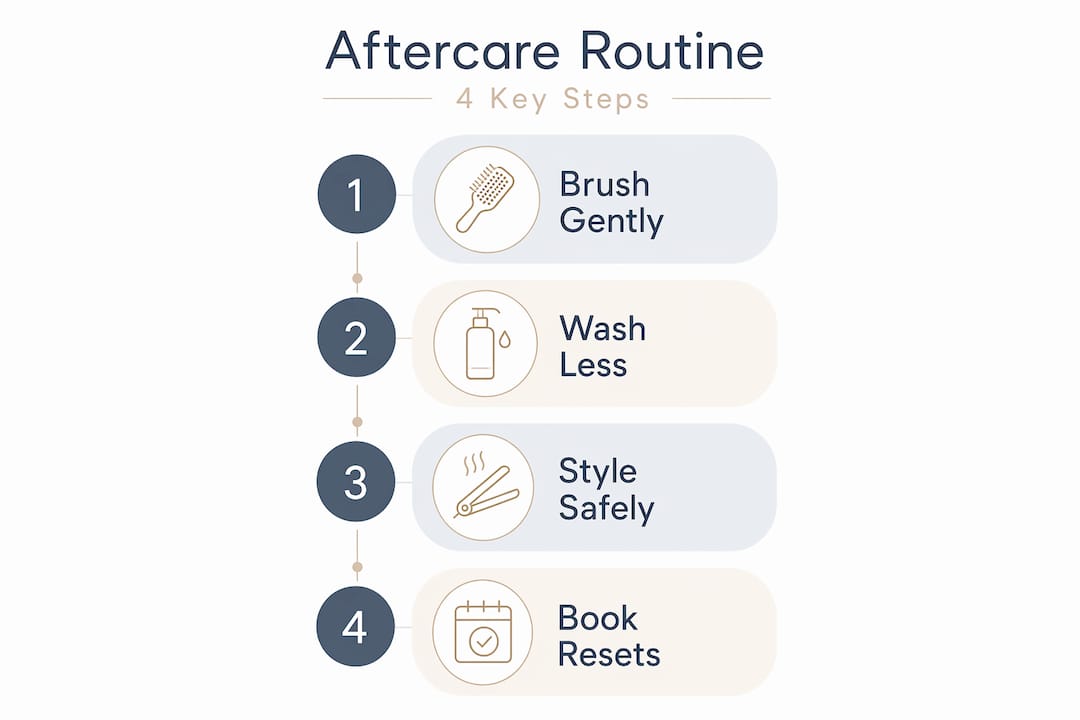
Washing extensions one to two times weekly using sulphate-free shampoo is the standard recommended by hair professionals. Sulphate-free formulas preserve the natural oils in Remy human hair, which cannot regenerate the way your own hair can because the extensions are no longer attached to a scalp. Washing too frequently, or using harsh shampoos, increases dryness and friction and will noticeably shorten how long your extensions stay in good condition.
When you wash, apply shampoo in a downward motion from root to tip. Never scrub or pile the hair on top of your head. Rinse thoroughly and follow with a moisturising conditioner applied from mid-length to the ends, keeping it away from any bonds or attachment points.
Pro Tip: After installation, the first 48 hours are critical. Keep your hair completely dry and avoid disturbing the bonds during this window to allow adhesives to cure properly and reduce the risk of early slippage.
Brushing and detangling
- Use an extension-safe looped bristle brush rather than a standard paddle brush. Standard brushes pull at bonds and cause mechanical stress.
- Always start detangling from the ends and work upward in sections, never from the root down.
- Hold the hair above the section you are detangling to protect the attachment points from unnecessary tension.
- Brush gently before washing, as wet hair is at its most fragile and prone to breakage.
Styling safely
Heat styling is perfectly compatible with Remy human hair extensions, but you need to respect the limits. Keep heat tools between 300 and 350°F (approximately 150 to 175°C) to prevent cuticle damage. Going above this temperature does not just dull the shine. It can cause the hair shaft to weaken and split, and for keratin bond extensions, it risks softening the adhesive. Always apply a heat protectant spray before using any hot tools, and avoid running the tool directly over bond or attachment points.

For your extension styling approach, keeping product buildup in check is equally important. Use lightweight, water-based products where possible and include a gentle clarifying wash once a month to remove residue that can cause matting near the bonds.
Professional maintenance appointments
Your natural hair grows roughly half an inch per month. That might not sound like much, but over six weeks it means your attachment points have shifted noticeably from your scalp, creating uneven tension and a less natural appearance. Regular appointments every six to eight weeks are not simply about aesthetics. They protect the structural integrity of both your extensions and your natural hair underneath.
Here is what happens when professional maintenance is delayed or skipped entirely:
- Extensions begin to mat near the root as new growth tangles with the attachment points.
- Tension on the scalp increases, which can lead to traction alopecia if left unaddressed over time.
- Bonds or tape become misaligned and difficult to remove safely without pulling on natural hair.
- The cost of repairing damaged extensions and treating scalp irritation far exceeds the cost of routine salon maintenance visits.
A professional reset involves safely removing the extensions, cleansing your natural hair, and reapplying or repositioning the extensions at the correct distance from your scalp. This process also gives your stylist the opportunity to assess the condition of both your natural hair and the extensions and advise on any changes to your aftercare routine.
Pro Tip: Keep your maintenance checklist up to date and book your next appointment before you leave the salon. Gaps in your schedule are the single most common cause of preventable extension damage.
Lifestyle habits that protect your extensions
The aftercare guide for extensions does not end with products and salon visits. Your daily habits away from the mirror play a surprisingly significant role in how long your extensions stay in excellent condition.
Sleeping on a silk or satin pillowcase reduces the friction that cotton causes against your hair throughout the night. Cotton fibres grip the hair, creating tangles and wearing down the cuticle layer of Remy hair over weeks and months. A silk or satin surface allows the hair to glide freely, preserving its smoothness and reducing morning detangling time significantly.
Beyond your pillowcase, consider these habits:
- Loosely braid or plait your hair before bed to prevent tangling. Avoid tight styles that pull on the attachment points.
- After swimming, rinse your hair immediately to remove chlorine or salt water, both of which dry out and degrade extensions quickly.
- Apply a nourishing hair mask or deep conditioning treatment once a week, focusing on the mid-lengths and ends where extensions tend to dry out fastest.
- Speak to your stylist early if you notice any pulling, soreness at the roots, or visible slipping of the extensions. Catching problems early prevents minor issues from becoming costly ones.
Pro Tip: A monthly clarifying wash routine removes product and mineral buildup that accumulates near bonds, keeping extensions fresh and reducing the risk of matting between appointments.
Hydration matters too. Extensions do not receive moisture from your scalp, so the ends are particularly vulnerable to dryness. A lightweight leave-in conditioner applied to the mid-lengths and ends after washing helps compensate for this, keeping the hair looking and feeling healthy between treatments.
My honest take on aftercare
I have seen the full spectrum of extension experiences, from clients who follow every maintenance step diligently and get well over a year of wear from a single set, to clients who skip appointments or wash daily with whatever shampoo is in the shower and wonder why their extensions look tired after two months.
The truth is that why aftercare matters for extensions is not a complex concept. It comes down to one simple reality: extensions are not living hair. They cannot repair themselves the way your own hair does. Every bit of friction, every wash with a harsh shampoo, every night spent on a rough cotton pillow is damage that cannot be undone. Consistent aftercare is the only thing that slows that process down.
What I have also observed is that people who invest in a proper aftercare guide for extensions from the start actually spend less money over time. Skipping salon visits feels like saving money until you are sitting in the chair with matted roots and your stylist needs to spend three hours on a corrective appointment. That is not a saving. It is a false economy.
My strongest advice is to treat your aftercare routine as part of the investment, not an afterthought. If you are going to spend money on high-quality Remy human hair extensions, protect that investment with the same level of care you put into choosing them.
— Sam
Discover Naturylextensions’ Remy hair range
If you want extensions that reward good aftercare with genuine longevity, starting with high-quality hair makes all the difference. Naturylextensions specialises in premium, ethically sourced Remy human hair, crafted to blend naturally and last beautifully when maintained correctly. The cuticles run in the same direction throughout each strand, which is what gives Remy hair its signature smoothness and resistance to tangling compared to lower-grade alternatives.
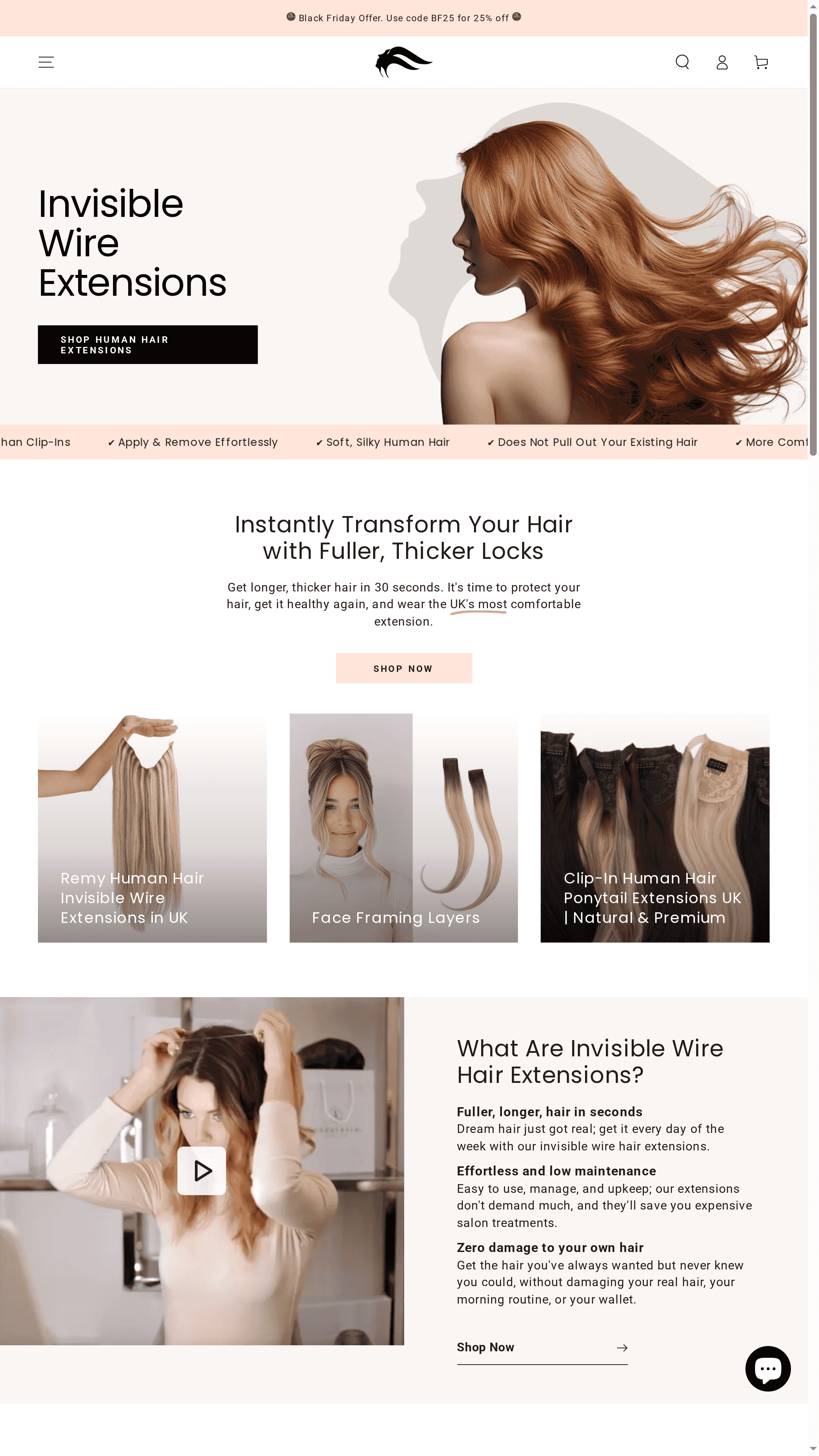
From invisible wire extensions to ponytail and face-framing styles, Naturylextensions offers options designed for everyday wear without the commitment of adhesive bonds. Explore the full collection at Naturylextensions and find the right style for your hair type and lifestyle. With fast UK delivery, a free exchange policy, and expert guidance available, you have everything you need to start your extension journey with confidence.
For tailored care tips and advice, visit the Naturylextensions blog where you will find in-depth guides covering everything from your first wash to long-term maintenance strategies.
FAQ
How often should I wash hair extensions?
Wash hair extensions one to two times per week using a sulphate-free shampoo. Washing more frequently strips natural oils from the hair and increases dryness, significantly reducing the lifespan of your extensions.
Why do hair extensions need professional maintenance?
As your natural hair grows, extension attachment points shift away from the scalp, creating tension and increasing the risk of matting and damage. Professional resets every six to eight weeks reposition the extensions safely and protect both your extensions and your natural hair.
Can I use any brush on hair extensions?
No. Standard brushes can pull on bonds and cause mechanical damage. Use an extension-safe looped or soft-bristle brush and always detangle from the ends upward, holding the hair above the section you are working on to minimise tension.
What happens if I skip maintenance appointments?
Skipping appointments leads to matting at the root, increased scalp tension, misaligned bonds, and potentially costly corrective work. Regular maintenance is significantly less expensive than repairing damage caused by neglect.
Do lifestyle habits really affect extension longevity?
Yes. Sleeping on a silk or satin pillowcase, loosely braiding hair at night, rinsing after swimming, and using weekly conditioning treatments all reduce friction and dryness, helping extensions maintain their condition between salon visits.