TL;DR:
- Proper trimming of human hair extensions involves using professional scissors and working on dry, sectioned hair to prevent damage and uneven results. Regular maintenance every 6–8 weeks with small, upward snips helps keep extensions blending naturally and extends their lifespan. Techniques like point cutting and layered styling enhance a seamless, natural appearance while avoiding common mistakes.
Trimming human hair extensions is the process of removing split, frayed, or blunt ends to restore their natural appearance and extend their usable life. Done correctly, it keeps your extensions blending smoothly with your own hair and saves you the cost of frequent salon visits. You will need professional hair scissors, a rat-tail comb, and sectioning clips as a minimum. Experts recommend trimming every 6–8 weeks to prevent tangling and fraying. With the right technique, learning how to trim human hair extensions at home is well within reach for most people.
What tools do you need before trimming hair extensions?
Preparation determines the quality of your result. Arriving at the task with the wrong tools is the single most common reason home trims go wrong.
The non-negotiables:
- Professional hair cutting scissors. Dull or household scissors damage hair fibres and create uneven, frayed ends. A dedicated pair of hairdressing shears, available from most beauty supply retailers, is the only acceptable option.
- Rat-tail comb. The pointed end sections hair cleanly and precisely, which matters when you are working layer by layer.
- Sectioning clips. These hold separated sections out of the way so you cut only what you intend to.
- A well-lit workspace. Natural light is ideal. Poor lighting causes you to misjudge length and miss uneven sections.
- A mannequin head or flat surface. If you are trimming clip-in or invisible wire extensions off your head, securing them to a mannequin head gives you a stable, controlled surface to work on.
Optional but useful:
- A light mist of water to add control to very dry or flyaway extensions.
- A hand mirror to check the back sections.
Pro Tip: Never trim extensions while they are soaking wet. Cutting dry extensions prevents the hair from stretching under the weight of water, which would cause you to cut too much length off.
Once your tools are ready, lay your extensions flat or clip them to your mannequin head. Work in a calm, uncluttered space. Rushing the preparation stage leads to uneven results that are difficult to correct.
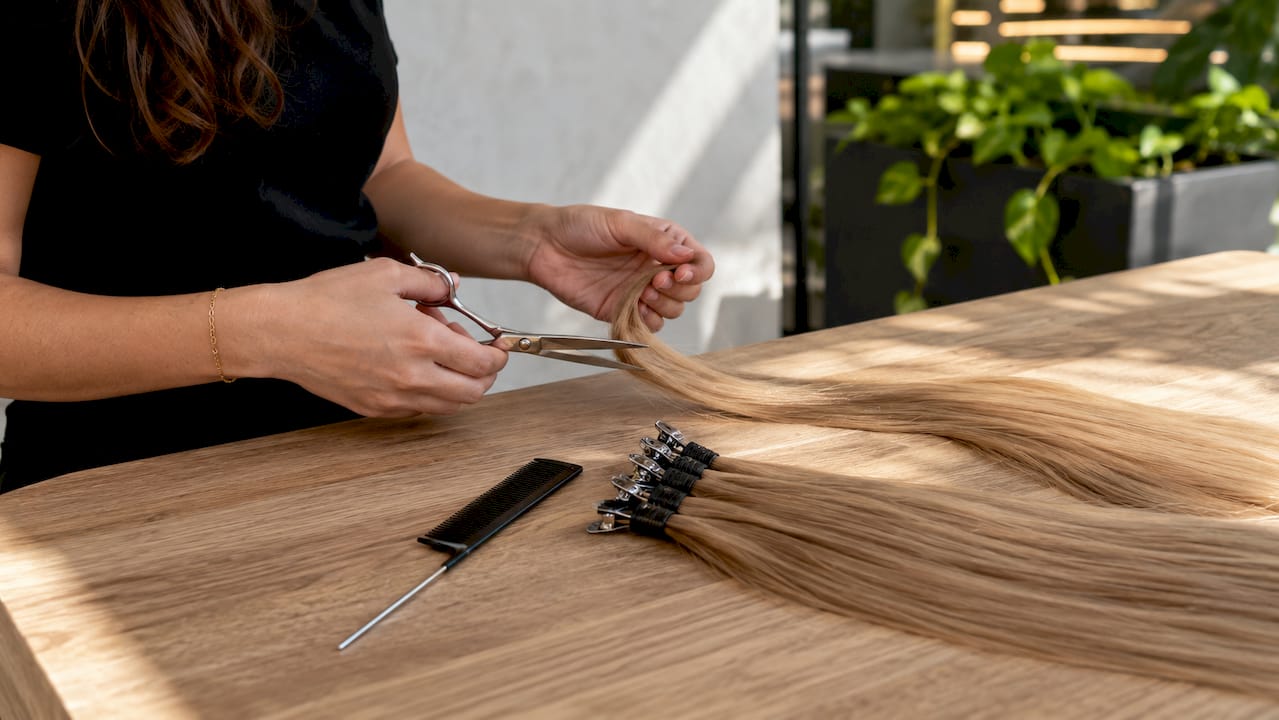
How to trim human hair extensions: a step-by-step guide
This process applies to clip-in extensions, invisible wire extensions, and ponytail extensions. The same principles hold for all Remy human hair types.
-
Detangle thoroughly first. Use a loop brush or wide-tooth comb and work from the ends upwards. Gentle detangling from ends prevents stress on the bonds and gives you a clean, smooth surface to cut.
-
Section the extensions into layers. Clip the upper sections away and start with the bottom layer. Working layer by layer prevents you from cutting unevenly across the full thickness of the hair.
-
Decide on your trim amount. For split end removal, trimming approximately 1/4 inch is the standard. If the ends feel blunt or unnatural against your own hair, removing 1–2 inches will restore movement and softness.
-
Hold the section taut but not stretched. Grip the hair between your fingers at the point you want to cut. Keep tension consistent across the section.
-
Use upward snips, not horizontal cuts. Point the scissors upward at a slight angle and snip into the ends rather than cutting straight across. This technique, known as point cutting, creates a softer finish and avoids the harsh blunt line that makes extensions look artificial.
-
Release each layer and check the result. Let the section fall naturally before moving to the next. This tells you whether the length is consistent and whether the ends look natural.
-
Work through every layer. Repeat steps 2–6 for each section. Take your time. Cutting small amounts at a time is always safer than removing too much in one pass.
-
Do a final check in natural light. Hold the extensions up or wear them and check the ends in daylight. Artificial light can hide unevenness that natural light reveals immediately.
Pro Tip: If you are trimming extensions while wearing them, have a friend check the back sections. It is nearly impossible to assess the back of your own head accurately.
Trimming reference guide
| Trim Goal | Amount to Remove | Technique |
|---|---|---|
| Remove split ends | 1/4 inch | Point cutting, upward snips |
| Restore natural movement | 1–2 inches | Point cutting with feathering |
| Reshape blunt ends | 1/2–1 inch | Feathering and layering |
| Full blend with natural hair | Varies by layer | Layered sectioning, point cutting |
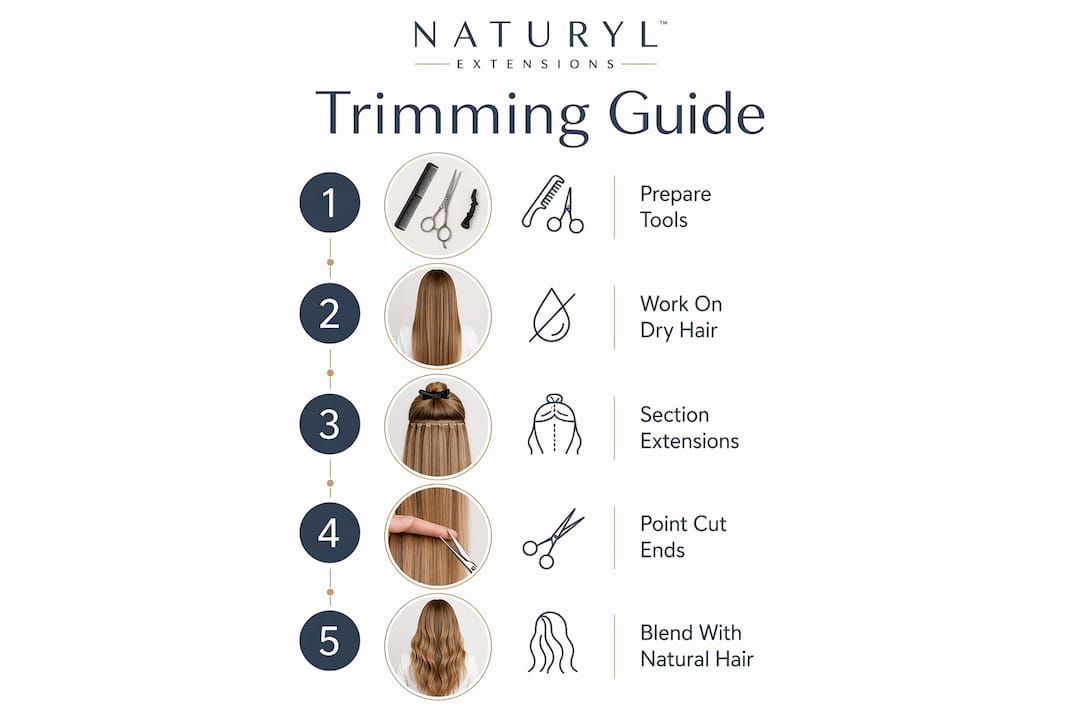
The table above covers the most common trimming scenarios. When in doubt, always remove less than you think you need. You can always trim more; you cannot add length back.
How do you blend trimmed extensions with your natural hair?
Blending is where trimming becomes styling. A technically clean cut still needs the right finishing techniques to sit naturally against your own hair.
Feathering and point cutting are the two most effective methods for softening extension ends after a trim. Feathering involves holding small sections at an angle and making short, rapid snips along the length, not just at the tip. This removes weight and creates movement that mirrors the texture of natural hair.
Blending techniques that work:
- Layer matching. Position your extensions so the ends sit just below your own hair’s ends. If your natural hair has layers, trim the extension sections to follow the same layered pattern. Mismatched layers are the most visible sign that someone is wearing extensions.
- Colour-aware placement. Even a perfectly trimmed extension will look obvious if the colour does not match at the ends. Check out Naturylextensions’ advice on matching extension colour for a seamless finish.
- Styling after trimming. Light waves or curls help blend extension ends with natural hair far more effectively than straight styles. Straight hair shows every millimetre of length difference; waves disguise minor variations.
- When to call a professional. If you have removed more than 2 inches and the result still looks uneven, or if your extensions have a complex layered cut, a professional stylist can correct the shape without sacrificing more length. For more guidance on achieving a natural result, Naturylextensions’ expert blending guide covers the full process in detail.
The goal is for the eye to move smoothly from your natural hair into the extensions without stopping at an obvious line. Feathering and thoughtful layering are what make that possible.
What mistakes should you avoid when cutting hair extensions?
Most trimming errors are preventable. Knowing what goes wrong helps you avoid the most common problems before they happen.
- Cutting too much at once. This is the most frequent mistake. Remove small amounts and reassess. Extensions cannot be lengthened once cut.
- Using household scissors. Kitchen or craft scissors crush the hair shaft rather than cutting cleanly. The result is frayed, split ends that look worse than before you started.
- Trimming wet extensions. Wet Remy hair stretches. A length that looks correct when wet will be noticeably shorter once dry.
- Skipping the sectioning step. Cutting through the full thickness of extensions in one pass produces uneven results. Always work in layers.
- Ignoring blunt lines. A straight horizontal cut across the ends creates a hard, unnatural edge. Point cutting removes this problem.
If a layer comes out shorter than intended, do not panic. Use feathering scissors or repeat the point-cutting technique along the shorter section to soften the edge and blend it into the surrounding hair. This rarely requires removing more length.
Signs that your extensions need professional attention rather than a home trim include: significant matting at the bonds, uneven wefts that have shifted, or colour damage that affects the texture of the hair.
Key takeaways
Trimming human hair extensions at home produces the best results when you use professional scissors, work on dry hair in sections, and rely on point cutting rather than blunt horizontal cuts.
| Point | Details |
|---|---|
| Trim every 6–8 weeks | Regular maintenance prevents split ends and tangling, extending extension lifespan. |
| Always use professional scissors | Household scissors damage hair fibres and create uneven, frayed ends. |
| Cut dry, not wet | Dry extensions hold their true length; wet hair stretches and causes over-cutting. |
| Use point cutting, not blunt cuts | Upward snips create a natural, soft finish that blends with your own hair. |
| Remove small amounts at a time | Start with 1/4 inch for split ends; go to 1–2 inches only for blunt or unnatural ends. |
What i have learned from trimming extensions at home
The first time I trimmed a set of clip-in extensions, I made every mistake in the book. I used kitchen scissors, I cut them wet, and I took off far more length than I intended in one nervous pass. The result was a blunt, uneven edge that no amount of styling could disguise.
What changed everything was slowing down. Trimming extensions is not a task you rush. The sectioning step feels tedious the first few times, but it is the difference between a result that looks professional and one that looks homemade. I now treat each layer as a separate job, checking the fall of the hair before I move on.
My personal preference is point cutting for almost every trim. Even when I am only removing 1/4 inch of split ends, I finish with a few upward snips to soften the edge. It takes an extra two minutes and makes a visible difference to how the ends move.
The other thing I would tell anyone starting out: invest in a decent pair of hairdressing scissors. You do not need the most expensive pair on the market, but you do need a pair that is sharp and dedicated to hair only. Using them for anything else dulls the blade and defeats the purpose.
Regular maintenance trims, done confidently at home, genuinely extend the life of quality extensions. That is not a small thing when you consider the cost of a good set of Remy human hair extensions.
— Sam
Find premium extensions worth trimming and styling
The techniques in this article work best with high-quality Remy human hair, because the hair responds to cutting and styling the way natural hair does. Naturylextensions specialises in ethically sourced Remy human hair extensions designed for a natural appearance and easy at-home maintenance. The invisible wire extensions, ponytail extensions, and face-framing styles are all made to blend with your own hair straight out of the box. With fast UK delivery and a free exchange policy, finding your perfect match is straightforward. Visit Naturylextensions to explore the full range and find extensions that are built to last with the right care.
FAQ
Can you trim hair extensions at home safely?
Yes. Trimming hair extensions at home is safe when you use professional hairdressing scissors, work on dry hair, and cut in small sections. Avoid household scissors, which damage the hair shaft and create uneven ends.
How often should you trim human hair extensions?
Trim every 6–8 weeks to remove split ends and prevent tangling. Regular maintenance trims of around 1/4 inch keep extensions looking fresh and extend their overall lifespan.
What is the best way to trim extensions without a blunt line?
Point cutting is the best method. Hold small sections taut and snip upward into the ends at a slight angle rather than cutting straight across. This creates a soft, natural finish that blends with your own hair.
Should you trim extensions wet or dry?
Always trim extensions dry. Wet hair stretches, which causes you to misjudge the true length and risk cutting too much off once the hair dries and contracts.
How much should you trim off hair extensions?
Remove approximately 1/4 inch to address split ends. If the ends feel blunt or unnatural, removing 1–2 inches restores movement and improves blending with your natural hair.