TL;DR:
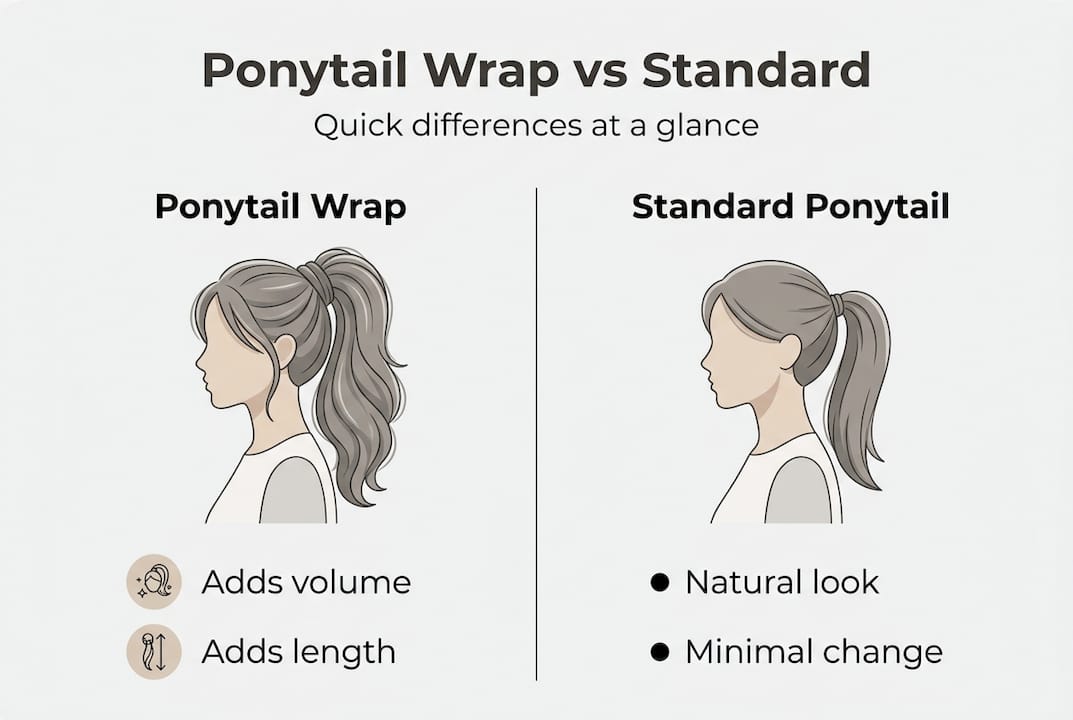
- Ponytail wraps are extensions that add length and volume, unlike natural hair-wrapped ponytails.
- They are quick to apply, versatile, and suitable for various hair types and occasions.
- Choosing quality, material, and color matching are essential for natural-looking, long-lasting results.
Many women assume that a hair-wrapped ponytail and a ponytail wrap are the same thing. They are not. A natural hair-wrapped ponytail simply uses a strand of your own hair to conceal an elastic band, while a ponytail wrap is an extension that adds real volume and length. Understanding this difference matters because it changes what results you can realistically expect. This guide covers exactly what a ponytail wrap is, how it compares to the natural approach, how to apply one, and how to choose the right option for your hair type and lifestyle.
Table of Contents
- What is a ponytail wrap?
- Ponytail wraps vs natural hair-wrapped ponytails
- How to use a ponytail wrap for effortless style
- Choosing the right ponytail wrap for your needs
- Why ponytail wraps are a British styling game-changer
- Ready to transform your hair with effortless ponytail wraps?
- Frequently asked questions
Key Takeaways
| Point | Details |
|---|---|
| Quick transformation | Ponytail wraps offer fast, damage-free ways to boost hair volume and length. |
| Easy to apply | Even first-time users can secure a ponytail wrap in minutes, making it ideal for busy routines. |
| Natural look | Quality wraps blend seamlessly for a professional, natural-looking finish. |
| Customisable options | Ponytail wraps come in a range of materials, lengths, and colours to suit any preference. |
What is a ponytail wrap?
A ponytail wrap is a hair extension designed to attach around or over your natural ponytail, instantly adding length, volume, or both. Unlike clip-in extensions that integrate throughout your hair, a ponytail wrap sits specifically at the base of your ponytail and wraps around it to create a fuller, longer style in minutes.
As ponytail wrap extensions add instant length and volume using either synthetic or real human hair, they are quite different from simply wrapping your own hair around an elastic. The extension itself does the heavy lifting, giving you a result that your natural hair alone may not be able to achieve.
For a deeper look at how these products work, the ponytail hair extensions explained guide from Naturyl Extensions covers the mechanics in practical detail.
Core benefits of ponytail wraps:
- Instant length and volume without salon appointments
- No heat or chemicals required for application
- Safe for your natural hair when used correctly
- Suitable for fine, short, or thinning hair
- Versatile across everyday looks and special occasions
| Feature | Ponytail wrap | Standard ponytail |
|---|---|---|
| Length added | Yes | No |
| Volume added | Yes | Minimal |
| Application time | Under 5 minutes | 1-2 minutes |
| Suitable for fine hair | Yes | Limited |
| Reusable | Yes | N/A |
Women typically reach for ponytail wraps when they want a polished, full-looking style without spending time in a salon. They are equally popular for a quick Monday morning look and for weddings or formal events. The material matters too. Synthetic wraps are budget-friendly and widely available, while human Remy hair wraps blend more naturally with your own hair and last considerably longer with proper care.
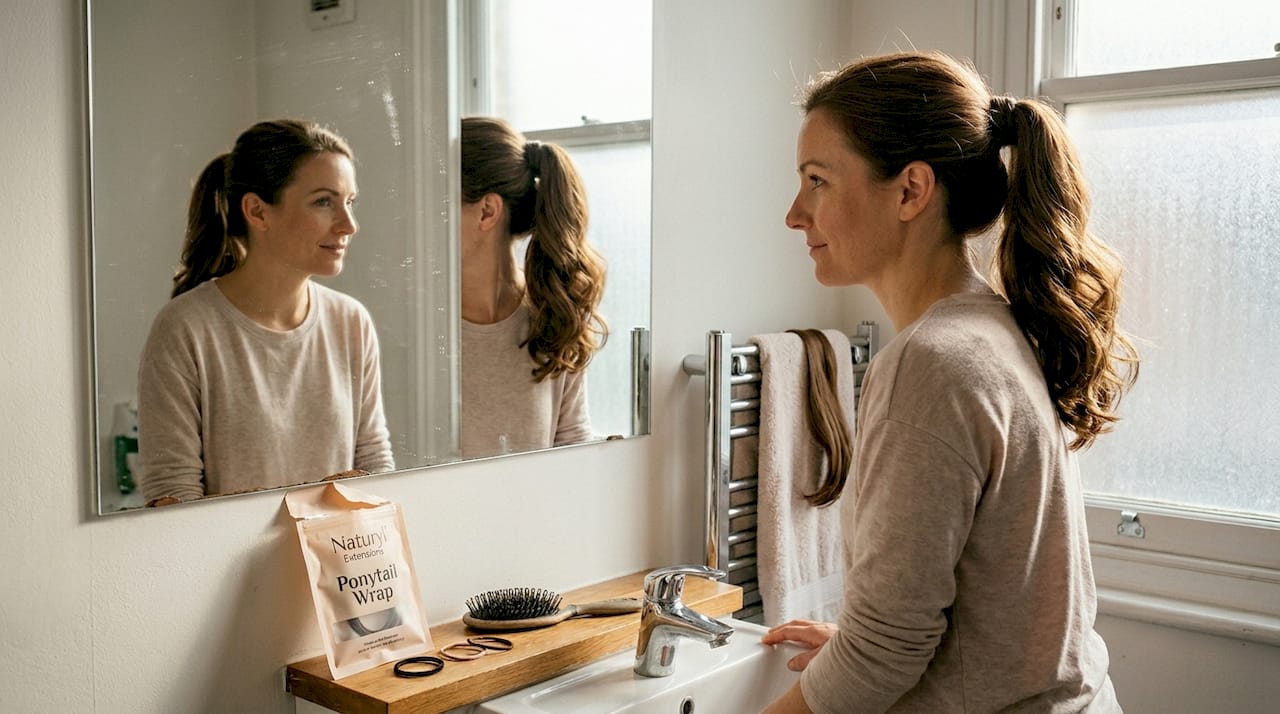
It is worth noting that the results you get depend heavily on the quality of the wrap you choose. A well-made human hair wrap will move, shine, and behave just like your natural hair, making it far harder to detect than a lower-quality synthetic alternative.
Ponytail wraps vs natural hair-wrapped ponytails
Once you understand what a ponytail wrap is, the comparison with a natural hair-wrapped ponytail becomes straightforward. The key distinction is this: a synthetic or real hair wrap is an add-on extension, while a natural wrap uses only your own hair to conceal an elastic band.
| Feature | Ponytail wrap extension | Natural hair-wrapped ponytail |
|---|---|---|
| Adds length | Yes | No |
| Adds volume | Yes | No |
| Requires extension hair | Yes | No |
| Suitable for short hair | Yes | Limited |
| Conceals elastic | Yes | Yes |
| Best for fine or thin hair | Yes | No |
The natural hair-wrapped ponytail is a finishing technique. It looks polished and neat, but it does not change the actual thickness or length of your ponytail. If you already have long, thick hair, it is a lovely touch. If your hair is fine, short, or thinning, the natural wrap will not give you the result you are hoping for.
A ponytail wrap extension, on the other hand, transforms the ponytail itself. You can see real-world ponytail extension examples that show the dramatic difference in thickness and length these wraps can create. For those exploring different styles, a guide to types of ponytail extensions is also worth reviewing before you buy.
A ponytail wrap extension is not a shortcut. It is a practical styling tool that gives women with all hair types access to fuller, longer looks without compromise.
When to choose each option:
- Choose a natural hair wrap if you have thick, long hair and simply want a neater finish
- Choose a ponytail wrap extension if you want added length, volume, or a more dramatic result
- Choose a ponytail wrap extension if your hair is fine, short, or thinning
- Choose a natural hair wrap for a minimalist, no-product approach
In terms of hair health, both approaches are gentle when done correctly. Neither requires heat or adhesives at the ponytail base. The extension wrap uses a clip or wrap mechanism that sits over your existing ponytail without pulling on your roots.
How to use a ponytail wrap for effortless style
One of the biggest advantages of a ponytail wrap is how quickly it can be applied. Most ponytail wraps can be applied in under five minutes and do not damage natural hair when applied correctly. That makes them genuinely practical for busy mornings or last-minute occasion prep.
If you want a full walkthrough, the guide on how to install ponytail extensions at home is an excellent starting point. For styling ideas once it is in place, tips on styling ponytail extensions naturally will help you get the most from your wrap.
Step-by-step application guide:
- Pull your natural hair into a ponytail and secure it with a hair tie at your preferred height
- Smooth any flyaways with a light serum or edge control product
- Open the ponytail wrap and position it at the base of your ponytail
- Clip or secure the wrap around your natural ponytail according to the product’s mechanism
- Wrap the extension hair around the base to conceal any clips or bands
- Secure the end with a small bobby pin or the wrap’s built-in fastening
- Blend your natural hair with the extension by gently combing through the ends
Pro Tip: For the most seamless blend, curl or straighten your natural ponytail to match the texture of your wrap before attaching it. Even a quick pass with straightening tongs takes less than two minutes and makes a noticeable difference.
Things to avoid:
- Pulling the wrap too tight at the base, which can cause tension on your roots
- Using a wrap that is significantly heavier than your natural hair
- Skipping the blending step at the ends
- Sleeping in your wrap, which can cause tangling and reduce its lifespan
With the right technique, a ponytail wrap sits comfortably all day without slipping. Many women wear them for 8 to 10 hours without any need to readjust.
Choosing the right ponytail wrap for your needs
With so many options available, picking the right ponytail wrap comes down to a few key factors: your hair type, your budget, and how often you plan to wear it.
Synthetic hair options are more affordable, while real hair wraps offer a more natural blend and higher durability. This is one of the most important decisions you will make when buying a wrap, so it is worth understanding the trade-offs before you commit.
For a broader view of what is available, the guide to best ponytail extensions and the ponytail extensions guide UK both offer helpful comparisons tailored to UK buyers.
Key factors to consider:
- Length: Choose a wrap that matches or slightly exceeds your natural ponytail length for the most believable result
- Thickness: Match the density of the wrap to your own hair. A very thick wrap on fine hair can look disproportionate
- Colour: Always match to your natural shade or your current colour-treated hair. Many brands offer colour-matching services
- Material: Human Remy hair wraps last longer, style better, and blend more naturally. Synthetic wraps suit occasional use and tighter budgets
- Climate: In the UK’s damp climate, human hair wraps handle humidity better than synthetic alternatives, which can frizz or lose their shape
- Care routine: Human hair wraps require gentle washing and conditioning, similar to your own hair. Synthetic wraps have more limited care options
Pro Tip: When colour matching, take a strand of your own hair to the light and compare it directly with the wrap shade. Photographs can be misleading due to lighting differences. If in doubt, go one shade lighter rather than darker, as lighter shades blend more forgivingly.
Longevity also plays a role in value for money. A quality human hair wrap, cared for properly, can last 6 to 12 months with regular use. A synthetic wrap used frequently may need replacing within a few months.
Why ponytail wraps are a British styling game-changer
There is a tendency to treat hair extensions as something reserved for special occasions or for women with significant hair loss. That view is outdated. Ponytail wraps are changing how everyday British women approach their hair, and the shift is worth acknowledging.
The appeal is not just convenience, though that matters enormously in a culture where mornings are rushed and salon appointments are expensive. The real value is in the low commitment. You can wear a sleek, voluminous ponytail on Tuesday, take it off on Wednesday, and try something completely different by the weekend. No damage. No regret.
What most people overlook is that ponytail wraps are a form of self-expression, not a cover-up. Women who use them are not hiding their hair. They are choosing how they want to present themselves on any given day. The role of ponytail extensions in UK hair trends reflects a broader cultural shift towards normalising extensions as an everyday beauty tool, not a last resort.
That is a healthy and empowering development, and it is one we fully support.
Ready to transform your hair with effortless ponytail wraps?
Now that you know exactly what a ponytail wrap is and how to use one, the next step is finding a wrap that genuinely suits your hair. The right product makes all the difference between a look that feels effortless and one that needs constant adjusting.
At Naturyl Extensions, we specialise in premium, ethically sourced Remy human hair extensions designed for UK women who want real results without salon visits. Whether you are new to wraps or looking to upgrade your current setup, our range includes options for every hair type and occasion. We also offer invisible extension wires for those who want even more versatility. Fast UK delivery and a free exchange policy mean you can shop with confidence.
Frequently asked questions
What’s the difference between a ponytail wrap and wrapping your own hair?
A ponytail wrap adds extra volume or length using extension hair, while a natural hair wrap simply conceals the elastic band using a strand of your own hair. The results are quite different in terms of fullness and impact.
Do ponytail wraps look natural?
When matched correctly to your colour and texture, high-quality ponytail wraps blend seamlessly with your own hair for a highly natural effect. Human Remy hair wraps are particularly convincing.
Are ponytail wraps damaging to your natural hair?
No. Ponytail wraps do not damage natural hair when applied and removed correctly, as they use clip or wrap mechanisms rather than adhesives or heat at the root.
Can I use a ponytail wrap for special occasions and daily wear?
Yes. Ponytail wraps are versatile enough for both quick everyday styling and for adding a polished, glamorous finish to weddings, parties, or formal events.