TL;DR:
- Modern hair extensions in the UK offer quick, damage-free solutions for instant volume and length.
- Remy human hair ensures natural appearance, high shine, and durability for long-lasting results.
- Choosing the right type depends on lifestyle, hair health, and personal style preferences.
If you’ve ever looked in the mirror and wished your hair had more volume, length, or versatility, you’re not alone. Millions of women in the UK feel frustrated by flat, fine, or unmanageable hair, especially when they want a quick style change for a night out, a big meeting, or simply a confidence boost. The good news is that today’s hair extensions have come a long way. Whether you want a subtle lift or a dramatic transformation, the right extensions can deliver it without a salon appointment, without damage, and without hours of effort. This guide walks you through everything you need to know to choose wisely.
Table of Contents
- Understanding popular hair extension types in the UK
- Materials and quality: Why Remy hair matters for natural, lasting results
- Choosing the right extension for your hair type and lifestyle
- Maintenance and aftercare for flawless, long-lasting extensions
- Our perspective: Why effortless extensions are the real secret to hair confidence
- Find your perfect match with Naturyl Extensions
- Frequently asked questions
Key Takeaways
| Point | Details |
|---|---|
| Clip-ins: Fastest solution | Clip-in extensions deliver instant, damage-free volume and length for versatile styling. |
| Remy hair is best | Choose Remy human hair for natural shine, realistic movement, and minimal tangling. |
| Match to your hair type | Select extensions based on your unique texture, volume needs, and styling goals. |
| Proper care extends life | Regular gentle maintenance keeps extensions looking flawless and maximises their lifespan. |
Understanding popular hair extension types in the UK
Having set the stage for effortless transformation, let’s compare your main options. The UK market offers several extension methods, each with its own strengths, price points, and suitability for different lifestyles. Understanding the differences before you buy saves you time, money, and potential disappointment.
Here is a quick overview of the four most popular types:
| Extension type | Installation time | Damage risk | Lifespan | Approx. yearly cost |
|---|---|---|---|---|
| Clip-in | 5–10 minutes (at home) | None | Up to 1 year | From £120 |
| Wire/halo | Under 5 minutes (at home) | None | 1 year+ | From £150 |
| Tape-in | 1–2 hours (salon) | Low | 6–10 weeks | £400–£600 |
| Micro-ring | 2–4 hours (salon) | Low to moderate | 3–4 months | Up to £900 |
Clip-in extensions are the most popular choice for women who want flexibility. They are applied in 5–10 minutes at home with zero damage risk, making them ideal for occasional or everyday wear. You simply clip them in before you go out and remove them before bed.
Wire or halo extensions sit on a near-invisible wire that rests on top of your head. They are arguably the fastest option on the market and are particularly well suited to women with finer hair. You can read more about wire extensions for thin hair if this sounds like your situation.
Tape-in extensions are a semi-permanent option bonded with a thin adhesive strip. They last 6–10 weeks and are applied professionally in one to two hours. They are lightweight and blend naturally, making them a favourite for those who want a consistent, polished look every day without daily application.
Micro-ring extensions use small metal rings to attach individual hair strands. They offer a very natural finish but require more maintenance and professional upkeep, which pushes the yearly cost higher. Check out a detailed hair extensions price comparison to see which method fits your budget.
- Clip-in and wire: best for quick changes, no commitment, zero damage
- Tape-in: best for a semi-permanent, low-maintenance look
- Micro-ring: best for a seamless, long-term result with professional support
Materials and quality: Why Remy hair matters for natural, lasting results
Now that you’ve seen what each method offers, it’s vital to pick the right hair material for the most natural, stress-free experience. Not all extension hair is created equal, and the difference between a quality set and a disappointing one often comes down to one word: Remy.

What is Remy hair? Remy hair is human hair collected so that all the cuticles face the same direction, from root to tip. This alignment is what gives it its signature shine, smoothness, and resistance to tangling. Non-Remy hair, by contrast, often has cuticles running in multiple directions, which leads to matting and a dull appearance over time. Synthetic hair looks convincing at first glance but cannot be heat-styled safely and tends to degrade quickly.
Here is how the main materials compare:
| Hair type | Appearance | Heat styling | Lifespan | Tangle resistance |
|---|---|---|---|---|
| Remy human hair | Very natural | Yes | 1 year+ | High |
| Non-Remy human hair | Natural initially | Yes | 3–6 months | Low |
| Synthetic hair | Artificial sheen | No (usually) | 1–3 months | Very low |
The UK market for wigs and extensions is valued at approximately £550–600 million, and consumer preference is firmly shifting towards Remy human hair for its natural shine and tangle-free wear. Ethical sourcing is also becoming a key factor for UK buyers, with many women choosing brands that are transparent about where their hair comes from.
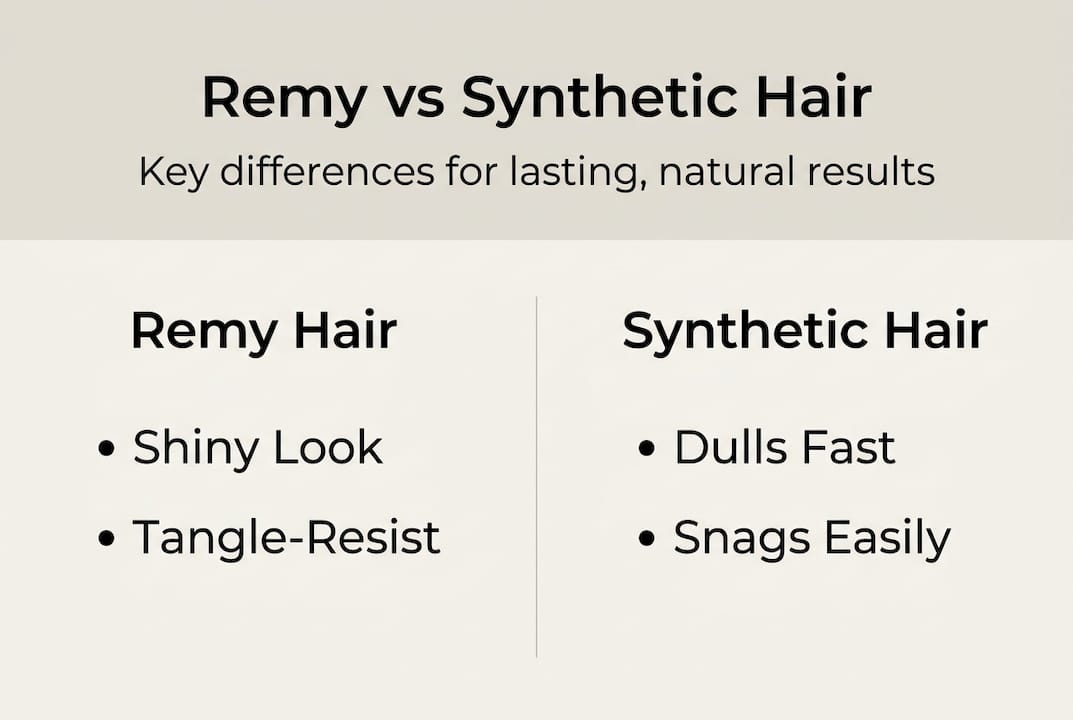
Understanding Remy hair quality in detail helps you spot the difference between a genuine product and a cheap imitation. You can also explore the full definition of Remy hair and learn what ethical hair sourcing really means before you commit to a purchase.
Pro Tip: When shopping, run a small section of the extension hair between your fingers. Remy hair should feel smooth in one direction and slightly rougher in the other. If it feels rough in both directions, the cuticles are misaligned.
Choosing the right extension for your hair type and lifestyle
Before buying, match your personal style and hair characteristics to the ideal extension system. This step is where many women go wrong, choosing an extension type based on price or trend rather than what genuinely suits their hair and routine.
Here is a straightforward process to help you decide:
- Assess your natural hair thickness. Fine or thin hair needs lightweight, low-tension methods. Wire and halo extensions or lightweight clip-ins are the safest choices. Heavier methods like weaves or thick micro-rings can cause stress on fragile strands.
- Define your goal. Do you want instant volume for a special occasion, or are you looking for everyday length? Clip-ins are best for quick, versatile transformations and suit busy women who want flexibility. Semi-permanent options like tape-ins suit those who prefer a consistent look without daily effort.
- Consider your lifestyle. If you exercise frequently, swim, or lead an active life, removable options give you more control. Semi-permanent methods can work too, but require more care around water and sweat.
- Think about colour matching. Your extensions should blend seamlessly with your natural hair. Many brands offer shade-matching guides or swatches. If you’re between shades, go slightly lighter as extensions tend to absorb less light than your roots.
- Seek professional advice when needed. If you have very fine or damaged hair, a consultation with a stylist is worthwhile. Thin hair nuances are real: some specialists favour halo extensions for zero damage, while others recommend nano-rings or tape for a more seamless blend.
For women with fine hair specifically, invisible wire extensions for fine hair offer a particularly gentle and effective solution that requires no clips, bonds, or heat.
Pro Tip: Hold a weft of the extension hair against your natural hair in natural daylight before purchasing. Artificial lighting in shops can make shades look very different from how they appear outside.
Maintenance and aftercare for flawless, long-lasting extensions
After you’ve chosen, it’s important to know how to care for your new extensions for the best value and look. Good aftercare is not complicated, but skipping it shortens the life of your extensions significantly.
Daily and weekly habits to build:
- Brush extensions gently from the ends upward using a soft-bristle or loop brush before washing
- Wash clip-ins every 15–20 wears with a sulphate-free shampoo and conditioner
- Allow extensions to air dry where possible; if using heat, always apply a heat protectant first
- Store clip-ins flat or on a hanger in a breathable bag to prevent tangling
- For tape-in extensions, avoid applying conditioner or oil near the bonds as this loosens the adhesive
Key do’s and don’ts:
- Do sleep with hair in a loose plait if wearing semi-permanent extensions
- Do use extension-safe products free from alcohol and heavy silicones
- Don’t use heavy oils near tape bonds or micro-ring attachments
- Don’t go to bed with wet extensions, as this causes matting and weakens the hair
On the topic of swimming, it’s worth knowing that tape, micro-ring, and weave systems are generally suitable for swimming, but you should always remove clip-ins before entering the water. Chlorine and salt water can dry out extension hair, so rinse thoroughly afterwards and apply a light leave-in conditioner.
“Tape-in extensions last 6–10 weeks and are reusable with low damage when properly installed, making them one of the most cost-effective semi-permanent options available.”
For a full routine broken down by extension type, visit our extension aftercare essentials guide.
Our perspective: Why effortless extensions are the real secret to hair confidence
With your aftercare sorted, here is why we think prioritising ease and flexibility is the modern approach to extensions.
Conventional wisdom in the hair industry has long pushed women towards salon-installed, semi-permanent methods as the gold standard. The assumption is that more commitment equals better results. We disagree. For most women, the ability to change your look quickly and without damage is far more empowering than a fixed style you’re locked into for weeks.
Clip-in and wire extensions let you be a different version of yourself on a Tuesday night and back to your natural look by Wednesday morning. That freedom is genuinely valuable. It also means you’re never stuck with a style that no longer suits you, your outfit, or your mood.
The key, though, is quality. Choosing Remy hair importance cannot be overstated. A low-quality set will tangle, dull, and draw attention to itself. A high-quality Remy set disappears into your natural hair and lets you focus on how good you feel, not on whether anyone has noticed your extensions. Ease and quality together are what make this approach work.
Find your perfect match with Naturyl Extensions
Ready to take the next step towards effortless, flawless hair? At Naturyl Extensions, we’ve built our entire range around exactly what this guide recommends: premium, ethically sourced Remy human hair in methods designed for real life. Whether you’re drawn to the simplicity of our extension wires range or want to understand more about what makes our hair special, we’re here to help.
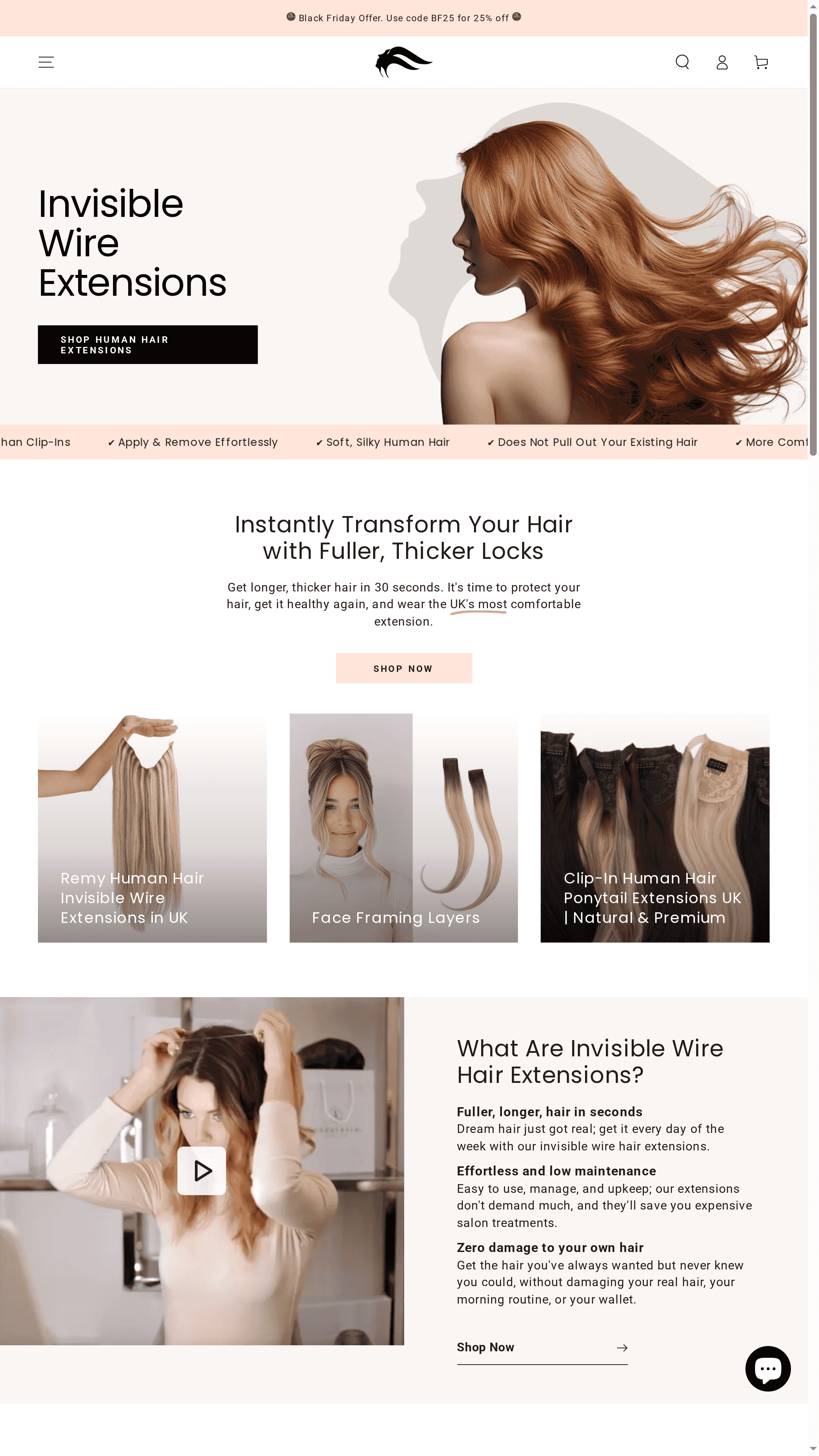
Every product we offer is matched to the needs of UK women who want fast, damage-free results without compromising on quality. If you’re unsure which shade or length is right for you, our team is on hand for personalised recommendations. Explore what Remy hair explained means for your next purchase and find the set that truly fits your life.
Frequently asked questions
Which hair extension type is safest for fine or thin hair?
Wire and halo extensions or lightweight clip-ins are safest for fine hair as they add volume without placing strain or tension on delicate strands. For a deeper look at your options, the best extensions for thin hair guide covers the nuances well.
How long do clip-in extensions last if cared for properly?
High-quality clip-in extensions last up to one year with regular, gentle care including proper washing, drying, and storage between uses.
What is Remy hair and why is it better?
Remy hair means all cuticles align naturally from root to tip, making the extension shinier, tangle-resistant, and longer-lasting than standard or synthetic alternatives. The UK market preference has firmly shifted towards Remy for exactly these reasons.
Are any extension types swim- or gym-proof?
Tape, micro-ring, and weave systems are generally suitable to swim with, but you should always remove clip-ins first before entering the water to avoid tangling and damage.