TL;DR:
- Single donor hair consists of strands from a single individual, offering uniform color, texture, and cuticle alignment. This results in extensions that last longer, tangle less, and blend more naturally than mixed-source hair. Trustworthy sourcing, preservation of cuticle orientation, and higher costs indicate genuine, high-quality single donor hair products.
Single donor hair is defined as hair where every strand in a bundle originates from one individual, sharing the same natural colour, texture, and cuticle direction throughout. For anyone researching hair extensions, this distinction matters more than most product labels suggest. Understanding what is single donor hair helps you cut through marketing language and make a genuinely informed choice. The quality difference between single donor and mixed-source hair shows up in how your extensions look, feel, and last over time.
What is single donor hair and how is it collected?
Single donor hair means every strand in a bundle comes from one person’s ponytail or scalp, collected in a single session. Because all the hair shares the same origin, it naturally carries uniform colour, texture, and thickness from root to tip. This is the foundation of its quality advantage.
The most common and authentic source is Indian temple tonsuring, a religious ritual where trained barbers shave a devotee’s head in one session. The intact ponytail is collected whole, meaning all strands remain aligned in the same root-to-tip direction. This process preserves what the industry calls cuticle alignment, the structural quality that determines how hair behaves once it is made into extensions.
Here is what makes the collection process distinct from mixed-source methods:
- One session, one donor. The entire bundle comes from a single tonsuring or cutting appointment, not from multiple people’s hair combined at a factory.
- Root ends stay together. Manufacturers keep all root ends facing the same direction throughout sorting, washing, and bundling.
- No strand substitution. Unlike mixed-source batches, single donor bundles cannot have damaged strands replaced with hair from another person.
- Traceability. Reputable suppliers maintain a clear chain of custody from donor to finished bundle, which supports consistent quality control.
Pro Tip: When buying single donor extensions, ask your supplier whether the hair was collected from a single tonsuring session or simply sorted to appear uniform. The collection method is where quality is either preserved or lost.
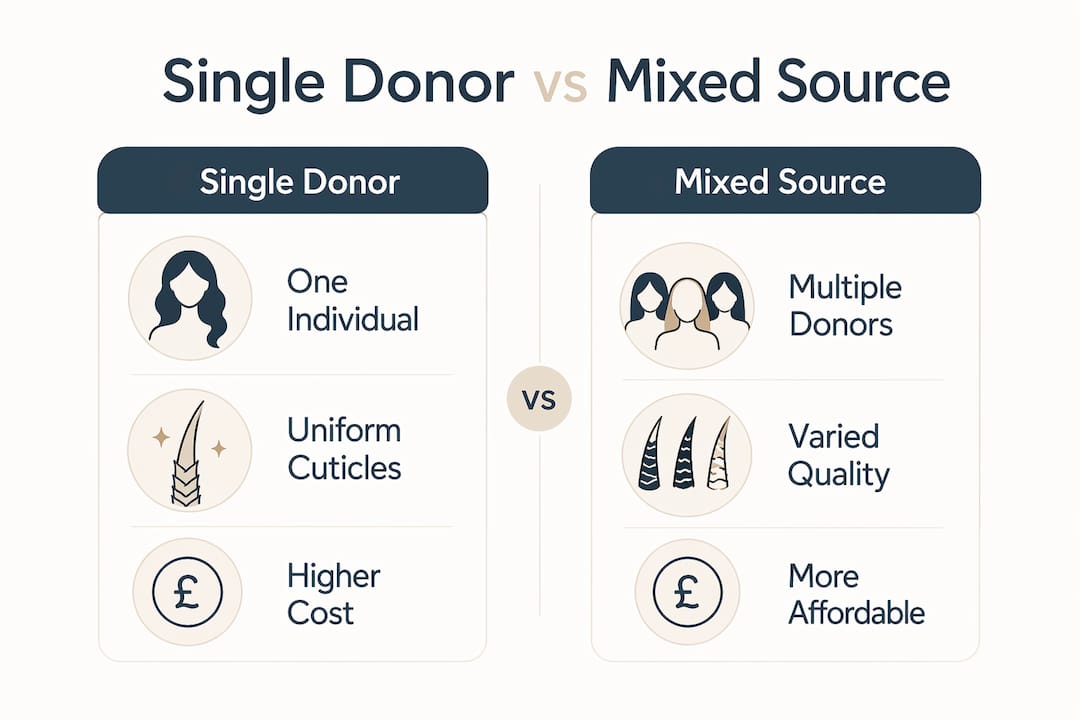
The contrast with mixed-source collection is significant. Mixed-source Remy hair is gathered from multiple donors, sorted by colour and length, and blended into bundles. The result can look consistent, but the underlying cuticle directions often vary, which leads to tangling over time.
What are the key benefits of single donor hair extensions?
Single donor hair delivers advantages that go beyond appearance. The benefits are structural, and they affect how your extensions perform week after week.
-
Reduced tangling and matting. Cuticle alignment prevents individual strands from interlocking with each other. When all cuticles face the same direction, the hair moves smoothly rather than catching and knotting.
-
Uniform colour and texture. Because all strands come from one person, the natural colour is consistent throughout the bundle. You do not get subtle variations in tone or thickness that can make extensions look artificial against your own hair.
-
Longer wear life. Chemical history directly impacts cuticle integrity. Single donor hair that is also virgin and unprocessed retains its cuticle structure fully, which translates to extensions that last significantly longer than chemically treated alternatives.
-
More natural appearance. The uniform texture of single donor hair blends more convincingly with your natural hair. This is particularly relevant for styles like invisible wire extensions or ponytail extensions, where the blend line needs to look seamless.
-
Predictable styling results. Because the hair behaves consistently throughout the bundle, it responds to heat styling, washing, and conditioning in a uniform way. You are not managing two or three different hair textures within one set of extensions.
“Cuticle alignment is the underlying structural reason why single donor hair appears to last longer and perform better, beyond marketing terms.” — Hair Extensions By Nature
The natural appearance of your extensions depends heavily on this consistency. Single donor hair gives you a reliable foundation that mixed-source blends simply cannot match at the same level.
Single donor vs multiple donor hair: what is the difference?
Understanding the distinctions between single donor hair, virgin hair, and mixed-source Remy hair prevents costly purchasing mistakes. These terms are often used interchangeably in marketing, but they describe different things.
| Hair Type | Origin | Chemical Processing | Cuticle Consistency |
|---|---|---|---|
| Single donor | One individual | Possible | High |
| Virgin hair | One or multiple donors | None | Variable |
| Mixed-source Remy | Multiple donors | Possible | Moderate |
| Non-Remy | Multiple donors | Common | Low |
The key distinction is this: virgin hair means no chemical processing, while single donor hair means the hair comes from one person. A bundle can be both single donor and virgin, which represents the premium tier. It can also be single donor but chemically processed, which affects its long-term durability.
Mixed-source Remy hair is sorted so that cuticles face the same direction, but the strands still come from multiple people. The colour and texture can vary subtly across the bundle. Over time, this inconsistency tends to show up as uneven fading or differential tangling.
Single donor hair costs roughly two to three times more than mixed-source Remy hair. That price difference reflects slower, more controlled processing and stricter quality requirements at every stage of production. The higher cost is a genuine quality signal, not just a marketing premium.
Pro Tip: Look for products labelled both “single donor” and “virgin” if you want maximum longevity. Either label alone tells only part of the story. Understanding Remy hair quality alongside single donor status gives you the full picture.
How to assess and select high-quality single donor hair
Knowing what single donor hair is and knowing how to verify it in practice are two different skills. These are the factors that separate a reliable purchase from a disappointing one.
Check the chain of custody. Reputable suppliers can tell you where the hair was collected, from which region, and through which process. Chain-of-custody traceability is a defining feature of genuine single donor products. If a supplier cannot answer these questions, treat that as a warning sign.
Verify cuticle direction physically. Run a small section of the hair between your fingers from root to tip, then from tip to root. Single donor hair with proper cuticle alignment feels smooth in one direction and slightly resistant in the other. If it feels rough in both directions, the cuticle structure has been compromised.
Ask about processing history. Single donor status does not guarantee the hair is chemically unaltered. Ask directly whether the hair has been coloured, permed, or treated with silicone coating. Silicone coating can make low-quality hair feel smooth initially, but it washes off within weeks, leaving the hair rough and prone to tangling.
Use price as a starting point, not a conclusion. Single donor hair typically costs significantly more than mixed-source alternatives. If a product is priced similarly to standard Remy blends but claims single donor status, question that claim. Price alone does not confirm quality, but a suspiciously low price is a reliable indicator of mixed-source hair.
Review the brand’s sourcing transparency. Brands that publish information about their sourcing regions, ethical practices, and quality standards are more likely to deliver consistent results. Your extension buying checklist should include sourcing questions as a standard step.
The manufacturing process matters as much as the raw material. Maintaining cuticle alignment through sorting, washing, and bundling requires careful handling at every stage. Even genuinely single donor hair can lose its quality advantage if the manufacturer does not preserve root-to-tip orientation throughout production.
Key takeaways
Single donor hair delivers superior extension results because uniform cuticle alignment, consistent texture, and traceable sourcing combine to produce extensions that look natural and last longer than mixed-source alternatives.
| Point | Details |
|---|---|
| Definition of single donor | Every strand originates from one individual, sharing the same colour, texture, and cuticle direction. |
| Core quality advantage | Uniform cuticle alignment reduces tangling and produces a more natural appearance in extensions. |
| Single donor vs virgin hair | These are separate qualities; the best extensions are labelled both single donor and virgin. |
| Price reflects quality | Single donor hair costs two to three times more than mixed-source Remy, reflecting stricter production standards. |
| Verification matters | Ask suppliers about sourcing, cuticle direction, and processing history before purchasing. |
Why cuticle alignment is the real story behind single donor hair
I have spent years looking at hair extension products, and the single most misunderstood concept in this space is cuticle alignment. Consumers focus on labels like “Remy” or “100% human hair,” but those terms describe a broad category. Single donor hair is where the real quality conversation starts.
The reason single donor hair performs better is not mystical. It is structural. When every strand shares the same root-to-tip orientation, the hair behaves like one cohesive unit rather than a collection of individual strands fighting each other. That is why single donor extensions feel different in your hands before you even put them in.
What I find frustrating is how many brands use the term loosely. I have seen products labelled “single donor” that were clearly blended from multiple sources, identifiable by the variation in strand thickness within a single bundle. The label has become a marketing shorthand rather than a guarantee.
My honest advice: do not rely on the label alone. Ask questions. Handle the hair. Check whether the brand can tell you where and how it was collected. The brands that can answer those questions with specifics are the ones worth trusting. The ones that deflect or give vague answers about “premium sourcing” are telling you something important about their product.
Consumer education is the only real protection here. The more you understand about what makes single donor hair genuinely different, the harder it becomes for low-quality products to pass as premium.
— Sam
Explore premium single donor extensions at Naturylextensions
If you are ready to experience the difference that genuine single donor hair makes, Naturylextensions offers a curated range of premium Remy human hair extensions designed for natural-looking, damage-free results.
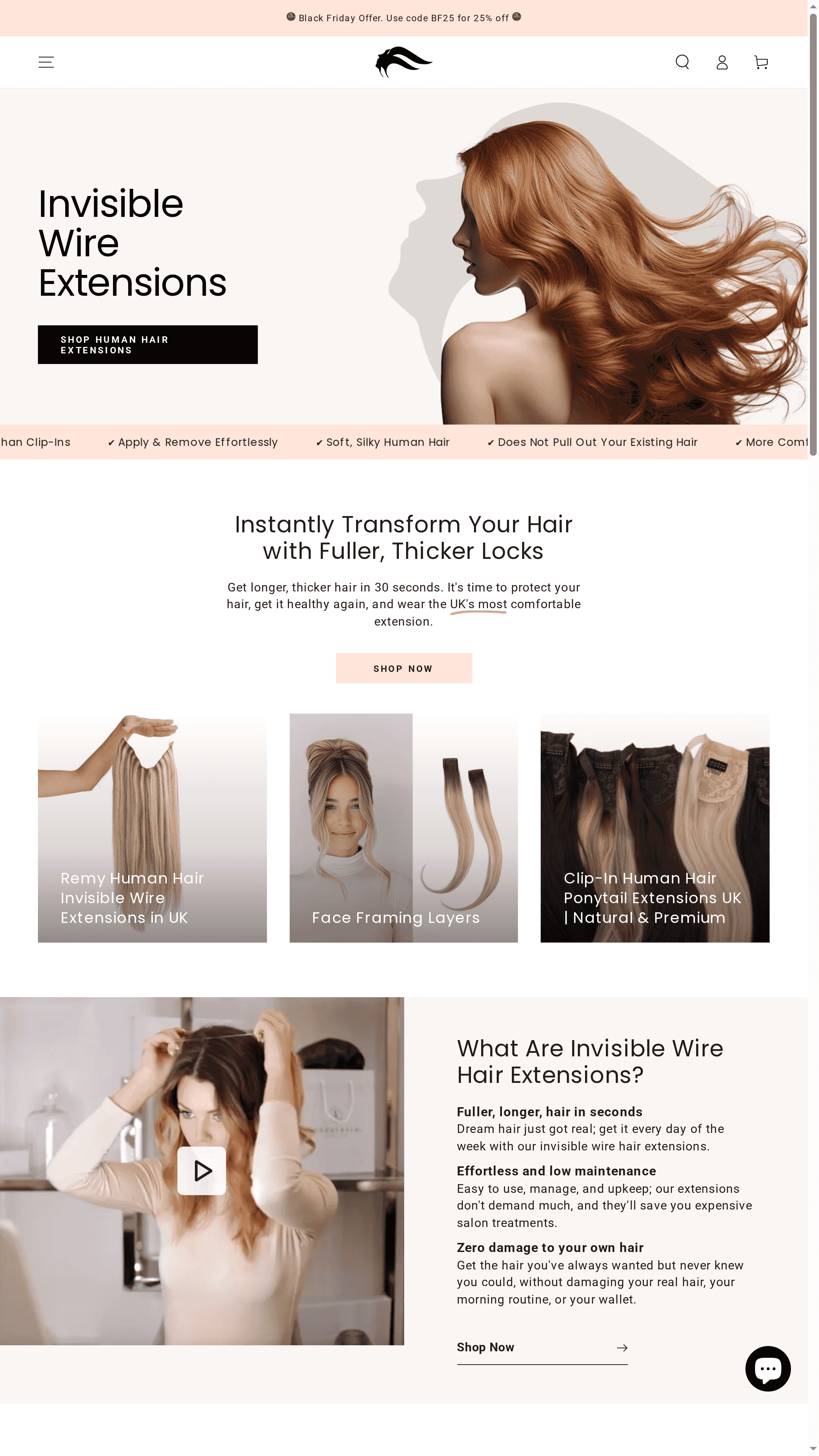
Naturylextensions sources ethically collected Remy hair with consistent cuticle alignment, giving you the quality foundation that single donor hair promises. From invisible wire extensions to ponytail and face-framing styles, every product is designed for effortless wear and a convincing natural finish. Fast UK delivery and a free exchange policy mean you can shop with confidence. Explore the full premium hair extension range and find the right match for your hair type and lifestyle.
FAQ
What is single donor hair in simple terms?
Single donor hair is hair where every strand in a bundle comes from one person, collected in a single session. This gives the bundle uniform colour, texture, and cuticle direction throughout.
Is single donor hair the same as virgin hair?
No. Single donor refers to the origin of the hair (one person), while virgin means the hair has never been chemically processed. The best quality extensions are both single donor and virgin.
Why does single donor hair cost more than regular remy hair?
Single donor hair costs two to three times more than mixed-source Remy because it requires slower, more controlled collection and stricter quality checks at every production stage.
How can i tell if hair extensions are genuinely single donor?
Run the hair between your fingers from root to tip and then in reverse. Properly aligned single donor hair feels smooth in one direction and slightly resistant in the other. Ask your supplier about sourcing and processing history to confirm authenticity.
Does single donor hair last longer than mixed-source extensions?
Yes, when the cuticle alignment is preserved through manufacturing. Cuticle integrity directly affects how long extensions resist tangling and maintain their appearance, and single donor hair retains this structure more reliably than blended alternatives.