TL;DR:
- Invisible hair extensions conceal all attachment points using ultra-thin wefts and hidden bead tracks for a natural look. They are gentle on fine hair because they distribute weight evenly and avoid heat, glue, or tight braids, reducing damage risk. This method suits people who want versatile styles and minimal hair stress, especially those with delicate or thin hair types.
Invisible application is defined as a hair extension method that conceals all attachment points, creating a finish so natural that no clips, bonds, or tracks are visible against your scalp. The technique uses ultra-thin, flexible wefts and hidden fastening systems to add length and volume without any telltale bulk. Naturylextensions specialises in this approach, offering Remy human hair extensions built around the principle that your hair should look entirely your own. If you have fine or delicate hair and want styling freedom without compromising hair health, understanding what invisible application means is the first step to making the right choice.
What is invisible application and how does it work?
Invisible application is a technique where wefts lie flat against the scalp using silicone-lined bead tracks, making attachment points virtually undetectable. The wefts themselves are ultra-thin, often described as paper-thin, with a flat base that sits flush with your natural hair. No braids, no heat, and no glue are involved in the process. That absence of harsh chemicals and high temperatures is what separates this method from older techniques.
The attachment process works by threading small sections of your natural hair through silicone-lined beads. The weft is then sewn onto those bead tracks rather than fused or bonded. Because the base is so flat, the weft blends with surrounding hair under any parting or style. The result is a finish that holds up whether your hair is down, half-up, or pulled into a high ponytail.
Quality invisible wefts are made from 100% Remy human hair, which means the cuticles run in the same direction, preventing tangling and giving the extensions the same natural movement as your own hair. Lower-quality alternatives often use synthetic fibres or non-Remy hair, which can feel stiff and look flat.
- Ultra-thin weft base: Lies flat against the scalp with no raised edges or visible ridges.
- Silicone-lined beads: Grip natural hair gently without crushing the shaft or causing breakage.
- Sewn attachment: No heat tools or adhesive required during installation.
- Remy human hair construction: Cuticles aligned for natural movement and heat-styling compatibility.
- Hidden tracks: Positioned beneath the top layer of your natural hair for full concealment.
Pro Tip: When assessing an invisible weft product, run your fingers along the base. A quality weft should feel almost imperceptibly thin. If you can feel a thick ridge, the base is too heavy to sit flat against your scalp.
What are the benefits of invisible application for hair health?
Invisible application reduces tension and damage to natural hair compared to traditional extension techniques. That matters because tension at the root is the primary cause of traction alopecia, a form of hair loss linked to tight, heavy extensions worn over time. By distributing weight evenly across a flat base rather than concentrating it on a single bond or clip, invisible wefts are far gentler on the follicle.
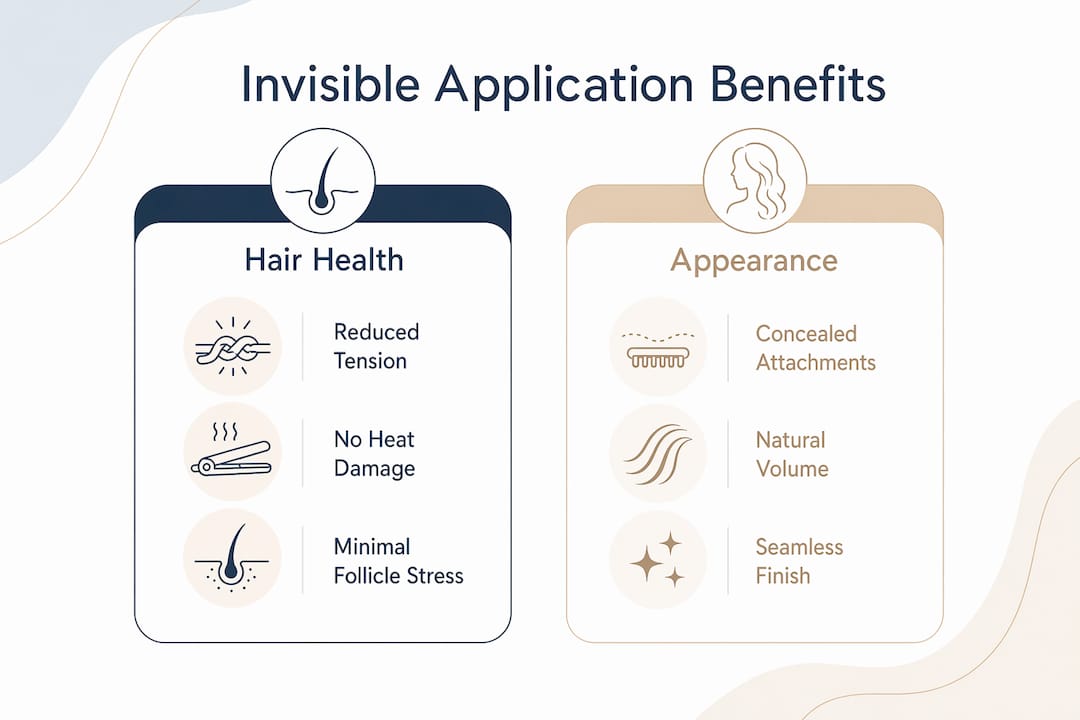
The beaded track system avoids heat, glue, and tight braids entirely, which minimises follicle stress and reduces the risk of breakage. This makes invisible application one of the most suitable methods for people with fine, fragile, or colour-treated hair. The lightweight construction also means you can wear extensions comfortably for longer periods without scalp fatigue.
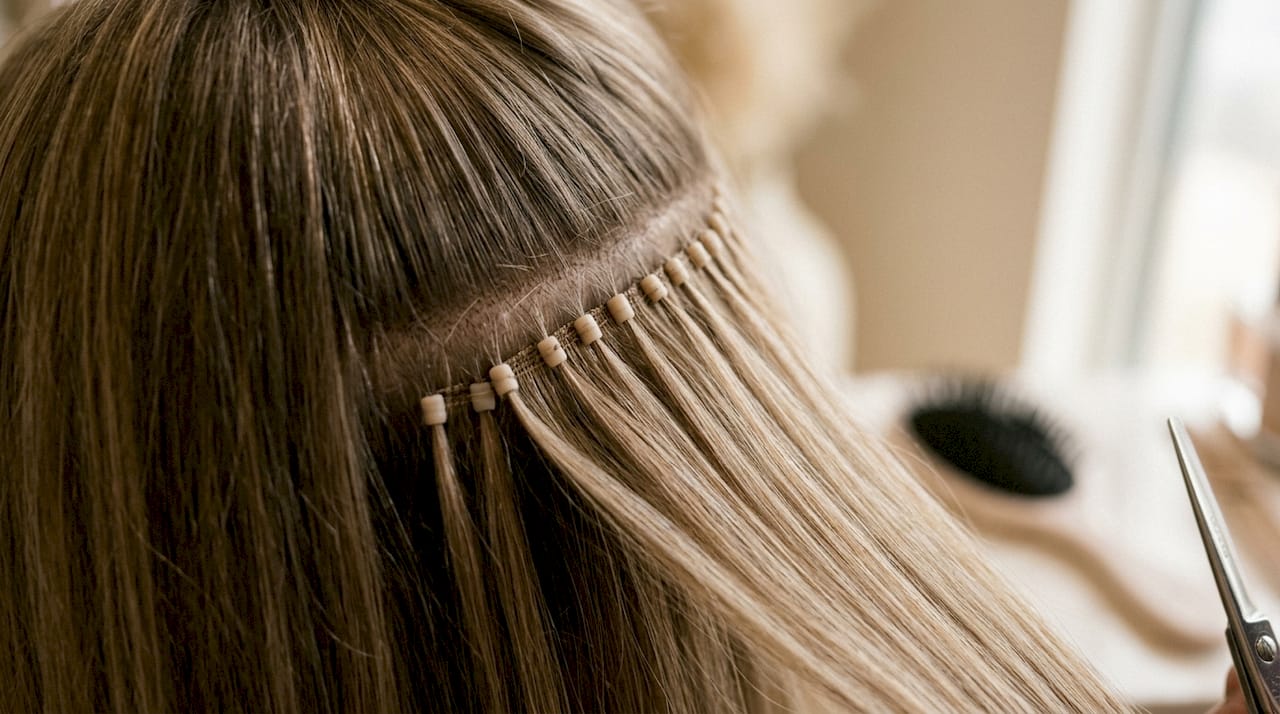
Styling versatility is another clear advantage. Because the attachment points are hidden, you can wear high ponytails and varied partings without any visible tracks showing through. Traditional clip-in extensions, for example, often reveal their clips when hair is pulled back, limiting your styling options significantly.
Key benefits at a glance:
- No heat or glue: Protects the hair shaft and scalp during installation.
- Even weight distribution: Reduces root tension across the full weft rather than at single points.
- Fine hair friendly: Lightweight flat bases suit delicate hair that cannot support heavy bonds.
- Styling freedom: High ponytails, braids, and varied partings remain accessible without revealing tracks.
- Longer wear comfort: Flat construction means no pressure points or discomfort during extended wear.
Entry-level clip-in extensions remain a popular non-permanent option, but they lack the discreet attachment and reduced-damage benefits that invisible application delivers. That trade-off is worth understanding before you choose a method.
How does invisible application differ from tape-ins and micro-rings?
The term “invisible” refers specifically to hiding attachment points, while “seamless” describes a flat weft construction. The best results combine both qualities, but not every method achieves this. Understanding where each technique sits helps you choose the right one for your hair type and lifestyle.
Invisible tape-in extensions use thin adhesive tabs with a hair-like top layer for better concealment than traditional tape-ins. They lie flatter and blend well with fine to medium hair. However, the adhesive requires heat for removal and reapplication, which introduces some chemical and thermal stress over time. Invisible wefts, by contrast, use no adhesive at all.
Keratin bond extensions fuse hair using keratin polymer tips applied with heat tools. The bonds are small and can be discreet, but the heat involved during installation and removal creates a different risk profile compared to the bead-and-sew method used in invisible wefts.
| Method | Attachment | Heat or glue | Concealment level | Best suited to |
|---|---|---|---|---|
| Invisible weft | Silicone beads, sewn | None | Very high | Fine to medium hair |
| Invisible tape-in | Adhesive tabs | Heat for removal | High | Fine to medium hair |
| Micro-ring | Metal rings, clamped | None | Moderate | Medium to thick hair |
| Keratin bond | Fused polymer tips | Heat for install and removal | High | Medium to thick hair |
| Standard clip-in | Pressure clips | None | Low | All hair types |
Micro-rings use no heat or glue either, but the metal rings sit slightly proud of the scalp, making them more visible under fine hair. The concealment focus of invisible wefts is more thorough because the flat base and sewn attachment leave nothing raised against the scalp.
Who should choose invisible application, and how do you maintain it?
Invisible application suits clients with fine density or those who need crown area volume without visible rows. If your hair is thin at the top or you struggle to hide extension tracks under a parting, invisible wefts address both problems directly. People who wear their hair up frequently also benefit, since the hidden tracks stay concealed even in high styles.
You should also consider invisible application if you want to avoid the commitment of heat or glue-based methods. The bead-and-sew installation is reversible without chemical processes, which protects your natural hair if you decide to remove or change your extensions.
Maintenance follows a clear schedule:
- Book a check-up every 6–12 weeks. Semi-permanent extensions require regular professional appointments to reposition beads as your natural hair grows. Leaving them longer risks matting and unnecessary tension at the root.
- Brush from the ends upward. Use a soft-bristle or loop brush daily to prevent tangling. Start at the tips and work toward the roots to avoid pulling on the bead tracks.
- Wash with sulphate-free products. Sulphates strip moisture from Remy hair faster than from natural hair, shortening the lifespan of your extensions.
- Sleep with hair loosely braided or in a low ponytail. This prevents friction and tangling overnight, which is one of the most common causes of premature extension wear.
- Avoid applying conditioner or oil directly to the bead area. Product build-up around the beads can cause slippage and weaken the weft’s grip on the track.
Pro Tip: If you notice any beads shifting or the weft feeling loose between appointments, contact your stylist promptly. Early adjustment prevents the kind of root tension that leads to breakage.
For readers with fine hair specifically, the best extensions for fine hair prioritise lightweight construction and flat bases, which aligns directly with what invisible wefts offer.
Key takeaways
Invisible application is the most effective extension method for fine or delicate hair because it hides attachment points, avoids heat and glue, and distributes weight evenly across a flat weft base.
| Point | Details |
|---|---|
| Core definition | Invisible application hides all attachment points using flat wefts and silicone-lined bead tracks. |
| Hair health advantage | No heat, glue, or tight braids means significantly less tension and breakage risk. |
| Styling freedom | Hidden tracks allow high ponytails and varied partings without visible extension rows. |
| Best candidates | Fine, delicate, or colour-treated hair types benefit most from the lightweight flat base. |
| Maintenance schedule | Professional check-ups every 6–12 weeks keep beads positioned correctly as natural hair grows. |
Why I think invisible application changes the conversation around extensions
The most common complaint I hear from people who have tried extensions before is that they felt self-conscious. Not because the hair looked bad, but because they were always aware of where the tracks were. They avoided certain styles. They felt nervous in the wind. That anxiety is not a small thing.
Invisible application addresses that specific problem more directly than any other method. When the attachment points genuinely cannot be seen, your behaviour changes. You stop calculating whether a hairstyle will reveal your secret. You just wear your hair. That shift in confidence is the real benefit, and it is one that rarely gets mentioned in technical comparisons between extension methods.
What I have also noticed is that people often conflate “invisible” with “seamless,” treating them as the same thing. They are not. Seamless refers to how the weft is constructed. Invisible refers to how the attachment is hidden. The difference between the two matters because you can have a seamless weft that is still visibly attached, or a well-hidden track that uses a thicker weft. The best products combine both qualities, and that is what you should be looking for.
My honest view is that invisible application is not the right choice for everyone. If you have thick, dense hair, the concealment benefits are less critical because your natural hair already covers most attachment methods. But for anyone with fine hair, a visible crown, or a lifestyle that involves frequent updos, invisible wefts are the most practical and least damaging option available. Prioritising hair health is not a compromise. It is the point.
— Sam
Naturylextensions invisible wire extensions: natural volume, no compromise
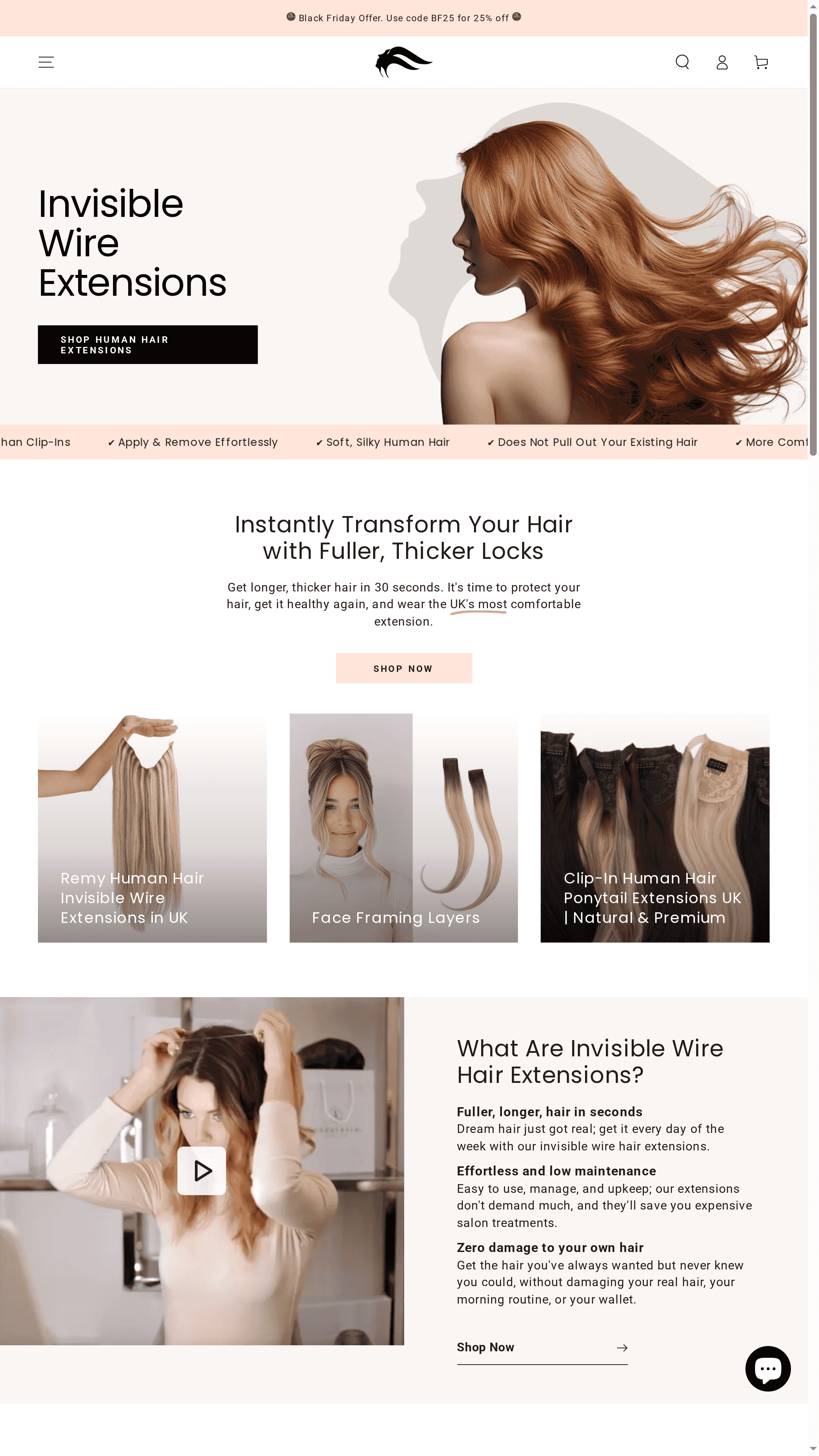
Naturylextensions offers invisible wire extensions made from premium, ethically sourced Remy human hair, designed specifically for people who want fuller, longer hair without salon appointments or damaging techniques. The invisible wire sits discreetly beneath your top layer of hair, adding volume and length in minutes with no clips, bonds, or heat required. Every product is built around the same principle that defines invisible application: your extensions should be completely undetectable. With fast UK delivery and a free exchange policy, Naturylextensions makes it straightforward to find the right shade and length for your natural hair. You can also browse the invisible extension wires range directly to see the full selection of styles available.
FAQ
What is invisible application in hair extensions?
Invisible application is a method that conceals all extension attachment points using ultra-thin wefts and silicone-lined bead tracks, creating a natural, undetectable finish. The technique uses no heat, glue, or tight braids, making it one of the gentlest options available.
Are invisible application extensions safe for fine hair?
Invisible wefts are particularly well suited to fine or delicate hair because their flat, lightweight base distributes weight evenly and avoids concentrated tension at the root. The bead-and-sew attachment method does not require heat or adhesive, which further reduces the risk of damage.
How often do invisible weft extensions need maintenance?
Semi-permanent extensions including invisible wefts typically require a professional check-up every 6–12 weeks. Regular appointments allow your stylist to reposition beads as your natural hair grows, preventing matting and root tension.
Can you style your hair normally with invisible application extensions?
Invisible application allows high ponytails, varied partings, and most everyday styles without revealing any tracks. The hidden attachment points remain concealed even when hair is pulled back, which is one of the key advantages over clip-in or standard tape-in methods.
What is the difference between invisible and seamless extensions?
Invisible refers to hiding the attachment points, while seamless describes the flat construction of the weft itself. The strongest results come from extensions that combine both qualities, giving you a flat base and a hidden track in a single product.