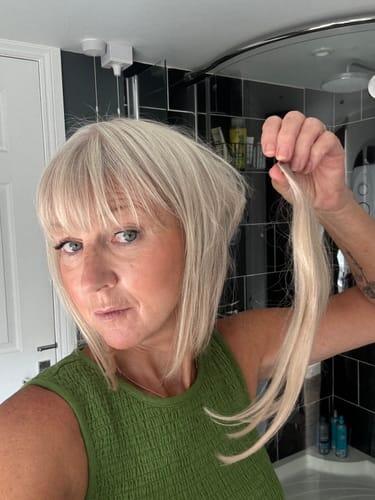
Finding the perfect hair extensions can feel overwhelming when you want a flawless, natural finish without compromising your hair health. Many popular options on the market contain potentially hazardous chemicals that are not always listed, putting your well-being and hair at risk. This guide breaks down the key health concerns, highlights the safest methods and materials, and empowers you with essential knowledge to choose high-quality extensions for stunning, damage-free transformations.
Table of Contents
- Hair Extensions And Hair Health Explained
- Different Extension Types And Their Impact
- Remy Hair Extensions For Damage-Free Styling
- Safe Application And Maintenance Routines
- Risks, Myths, And Mistakes To Avoid
Key Takeaways
| Point | Details |
|---|---|
| Health Risks of Extensions | Hair extensions may contain hazardous chemicals that can affect health, necessitating informed choices. |
| Extension Selection | Opt for human hair extensions from trusted sources to minimise potential harm. |
| Proper Application | Engage professional services for installation to protect natural hair integrity. |
| Myth Awareness | Educate yourself on common misconceptions regarding hair extensions to make safer decisions. |
Hair extensions and hair health explained
Hair extensions offer transformative possibilities for personal style, but understanding their potential impact on hair health is crucial. Recent scientific investigations have revealed complex considerations about extension safety and potential health implications that every wearer should understand.
Research indicates that hair extensions can pose unexpected health risks. Dangerous chemical exposures are increasingly documented, with many extensions containing potentially hazardous substances. These chemicals may include:
- Organotins
- Flame retardants
- Phthalates
- Carcinogenic compounds
- Reproductive toxicants
The health risks associated with hair extensions extend beyond mere aesthetic considerations. Chemical transfer through scalp contact represents a significant concern, particularly with prolonged wear. The scalp’s absorption potential means that these chemicals can potentially enter the bloodstream, raising important questions about long-term health implications.
For quick guidance, below is a summary of hazardous chemicals found in hair extensions and their potential health effects:
| Chemical Type | Main Health Risk | Exposure Concern |
|---|---|---|
| Organotins | Reproductive toxicity | Scalp absorption possible |
| Flame retardants | Carcinogenic risk | May enter bloodstream |
| Phthalates | Endocrine disruption | Long-term exposure danger |
| Heavy metals | Allergic reactions | Transfer via scalp contact |
| Carcinogenic compounds | Cancer risk | Persistent chemical residue |
Professional hair extension selection becomes paramount in mitigating potential risks. When choosing extensions, consumers should prioritise:
- Transparently sourced human hair
- Certifications confirming chemical safety
- Reputable manufacturers with rigorous testing protocols
- Hypoallergenic and dermatologically tested products
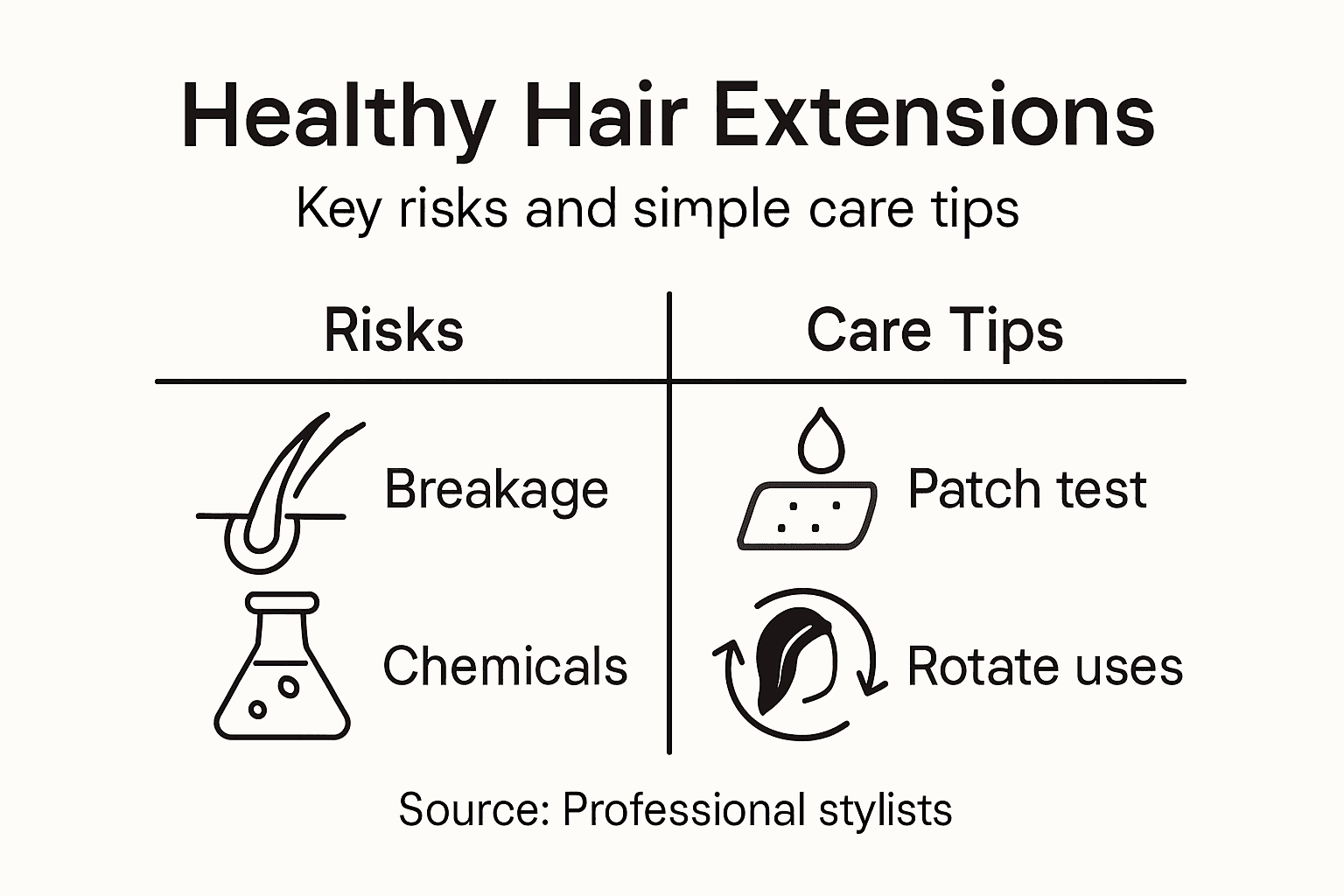
Pro tip: Always request detailed chemical composition information from your extension provider and conduct a patch test before full application.
Different extension types and their impact
Hair extensions have become a transformative solution for individuals seeking versatile styling options, but understanding the nuanced impact of different extension types is crucial for maintaining optimal hair health. Extension methods vary significantly in their application techniques, material composition, and potential consequences for natural hair.
The primary extension types include:
- Clip-in extensions: Temporary, low-stress option perfect for occasional styling
- Tape-in extensions: Semi-permanent method requiring professional application
- Micro-ring extensions: Minimally invasive technique using small metal rings
- Weave extensions: Traditional method involving braiding and sewing additional hair
- Fusion/bonded extensions: Keratin-based technique requiring precise professional application
Each extension type presents unique considerations for hair health. Careful selection and application techniques are essential to minimise potential damage and stress to natural hair. Synthetic extensions typically offer lower cost but reduced durability, while human hair extensions provide more natural movement and styling flexibility.
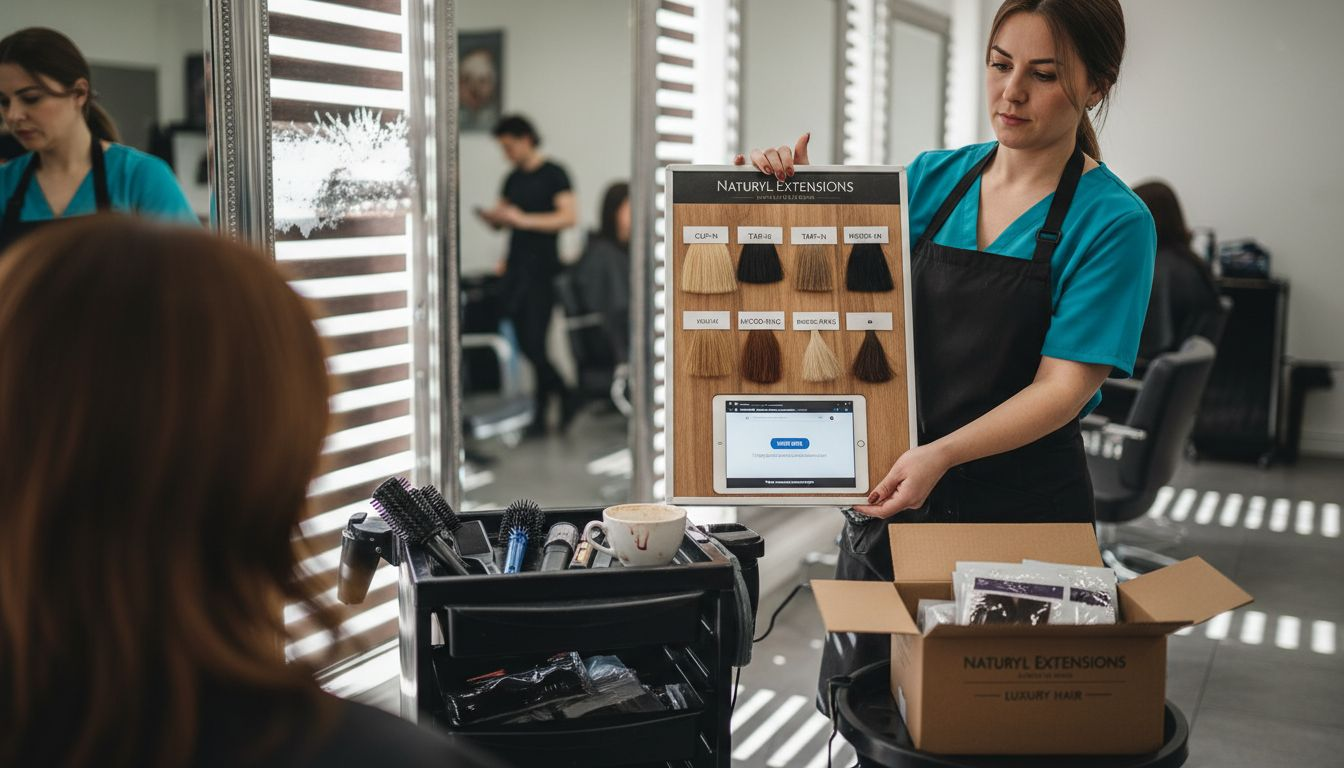
Consumers should consider several critical factors when selecting extensions:
Here’s a comparison of common hair extension methods and their suitability for different hair types:
| Extension Method | Best For | Durability | Potential Impact on Hair |
|---|---|---|---|
| Clip-in | Fine or fragile hair | Short-term | Minimal if used properly |
| Tape-in | Medium to thick hair | Medium-term | Moderate tension risk |
| Micro-ring | Strong, healthy hair | Long-term | May cause strain |
| Weave | Thick, textured hair | Long-term | Stress from braiding |
| Fusion/Bonded | All hair types (with care) | Long-term | Heat/chemical exposure |
- Individual hair texture and condition
- Desired styling versatility
- Budget constraints
- Maintenance capabilities
- Potential impact on existing hair health
Professional consultation can help determine the most suitable extension method for your specific hair type and lifestyle requirements.
Pro tip: Rotate extension placement and allow periodic breaks between applications to prevent unnecessary stress on your natural hair roots.
Remy hair extensions for damage-free styling
Remy hair extensions represent the gold standard in hair enhancement, offering a sophisticated solution for those seeking natural-looking, damage-minimising styling options. Professional styling techniques emphasise the unique advantages of Remy hair, which maintains the natural hair cuticle alignment for superior performance.
Key characteristics of Remy hair extensions include:
- Intact cuticle layer preserving natural hair structure
- Minimal tangling and reduced matting
- Exceptional longevity and durability
- Natural movement and seamless blending
- Enhanced styling versatility
The critical advantage of Remy hair lies in its meticulous preparation. Professional application techniques focus on gentle handling that prevents damage to both the natural hair and the extension. This approach ensures that each strand remains healthy, reducing the risk of breakage and maintaining the hair’s inherent strength and shine.
Understanding the nuanced benefits of Remy hair requires considering several important factors:
- Cuticle preservation prevents friction and damage
- Superior quality reduces need for excessive styling products
- Allows for multiple styling and heat treatments
- Maintains natural hair health during extension wear
- Provides a more ethical and sustainable hair enhancement option
Professional stylists recommend Remy hair as the most reliable method for achieving beautiful, damage-free hair transformations.
Pro tip: Select Remy extensions matched precisely to your natural hair texture and invest in specialised care products to maintain their exceptional quality.
Safe application and maintenance routines
Proper hair extension application and maintenance are critical for preserving both the aesthetic quality and health of your natural hair. Safe application techniques require a comprehensive approach that minimises potential damage and promotes long-term hair integrity.
Key considerations for safe extension application include:
- Professional installation by trained technicians
- Precise measurement and matching of extension weight
- Minimal tension during attachment
- Appropriate selection based on individual hair type
- Regular professional assessment of scalp health
Trichological recommendations emphasise the importance of gentle handling and strategic maintenance. Extensions should never compromise the natural hair’s structural integrity, which means avoiding excessive chemical treatments, minimising heat styling, and implementing a careful cleansing routine.
Maintenance best practices involve:
- Using sulfate-free, extension-specific shampoos
- Gentle detangling with wide-toothed combs
- Avoiding direct heat application near attachment points
- Protecting extensions during sleep with silk pillowcases
- Scheduling regular professional maintenance checks
Professional care and mindful maintenance can significantly extend the lifespan of both your extensions and natural hair.
Pro tip: Invest in specialised extension care products and always consult with a professional technician before attempting home maintenance procedures.
Risks, myths, and mistakes to avoid
Hair extensions can dramatically transform your look, but understanding potential risks is crucial for maintaining hair and scalp health. Hazardous chemical exposures represent a significant concern that many consumers overlook, with synthetic extensions potentially containing harmful substances that could compromise long-term wellbeing.
Common myths about hair extensions include:
- All extensions are equally safe
- ‘Natural’ labels guarantee product safety
- Extensions cause no long-term damage
- Chemical treatments don’t affect extension quality
- One-size-fits-all application methods
Consumer awareness about toxic chemicals is paramount. Many extensions contain unexpected toxins such as:
- Carcinogenic compounds
- Plastic stabilizers
- Allergenic substances
- Endocrine-disrupting chemicals
- Heavy metal residues
Mistakes that consumers frequently make involve:
- Ignoring ingredient transparency
- Purchasing unregulated products
- Skipping professional consultations
- Neglecting scalp health assessments
- Applying extensions without proper technique
Understanding the potential risks is the first step towards making informed, safe hair extension choices.
Pro tip: Always request comprehensive chemical composition details and conduct thorough patch testing before committing to any hair extension treatment.
Discover Safe and Stunning Hair Transformations with Naturyl Extensions
The article highlights the concerns many face when choosing hair extensions, from hazardous chemicals to damaging application methods. If you want to enjoy fuller, longer hair without compromising your natural hair health, understanding the best options is essential. Key pain points such as chemical safety, gentle extension types, and professional-level quality are exactly what Naturyl Extensions specialises in. Our focus on premium, ethically sourced Remy human hair means you avoid harmful substances while indulging in damage-free styling that respects your scalp and natural hair.
Experience the benefits of our effortless, quick-to-apply styles like our invisible wire extensions which maintain your hair’s integrity while enhancing its natural beauty.
Ready to transform your look confidently and safely? Explore our full range of exceptional products at Extensions, browse Buy Remy Invisible Wire Extensions in UK | Naturyl for specialised solutions, or see everything we offer at All Products. With fast UK delivery and free exchanges, now is the perfect time to embrace hair enhancement that truly honours your hair health at https://naturylextensions.com.
Frequently Asked Questions
What are the health risks associated with hair extensions?
Hair extensions can contain hazardous chemicals such as organotins, flame retardants, and phthalates. These substances pose risks such as reproductive toxicity, carcinogenic potential, and allergic reactions, especially with prolonged wear.
How can I choose safe hair extensions for my health?
To select safe hair extensions, prioritise transparently sourced human hair, look for certifications confirming chemical safety, and choose reputable manufacturers with rigorous testing protocols. Always request detailed chemical composition information from your provider.
What types of hair extensions are available, and how do they affect hair health?
Common types include clip-in, tape-in, micro-ring, weave, and fusion extensions. Each type has different application techniques and impacts on hair health; for example, clip-in extensions are minimally invasive, while fusion extensions may involve heat and chemicals.
How can I maintain my natural hair health while using extensions?
To maintain natural hair health, follow safe application practices, avoid excessive heat and chemical treatments, and use extension-specific care products. Regular professional assessments and allowing breaks between extensions can also help reduce stress on natural hair.