Use an extension-specific loop or detangling brush for your daily routine, and keep a wide-tooth comb or sectioning comb on hand for targeted work near bonds, tapes and beads. Neither tool wins outright; the mistake is using regular dense-bristle brushes at all. Technique matters more than the label on the handle: always start at the ends and work upward, holding hair above the attachment points as you go.
TL;DR:
- Using extension-specific tools like loop brushes and wide-tooth combs reduces snagging and pulling, but regular dense-bristle brushes are too harsh and should be avoided.
- Detangle from the bottom up, support the attachment points with your hand, and switch tools when encountering stubborn knots to prevent damage and prolong extension life.
- Brushing twice daily, with care to avoid wet hair aggressive brushing, helps maintain smoothness without compromising extension bonds or causing excessive shedding.
- Proper technique varies by extension type, requiring gentle handling near bonds and avoiding direct brushing across tape strips or stressed weft areas.
- Regular professional adjustments are essential for micro-link and tape-in extensions, as home brushing cannot prevent matting or slippage caused by attachment issues.
Table of Contents
- Brush vs comb for extensions: the main tool categories
- How to brush and comb extensions step by step
- Adjusting technique for your extension type
- Common mistakes and how to fix a tangle fast
- Naturyl Extensions’ own aftercare guidance
- A note on style versus longevity
- Get the low-damage setup that makes this easier
- Sources
- FAQ
Brush vs comb for extensions: the main tool categories
Every extension wearer eventually builds a small toolkit, but not every tool in it deserves daily use. Understanding what each one does mechanically makes the choice far less confusing.
Loop brushes use soft, flexible bristle loops rather than solid pins. They flex around knots instead of snagging them, which is exactly why salons recommend them for daily detangling on both natural hair and extensions.
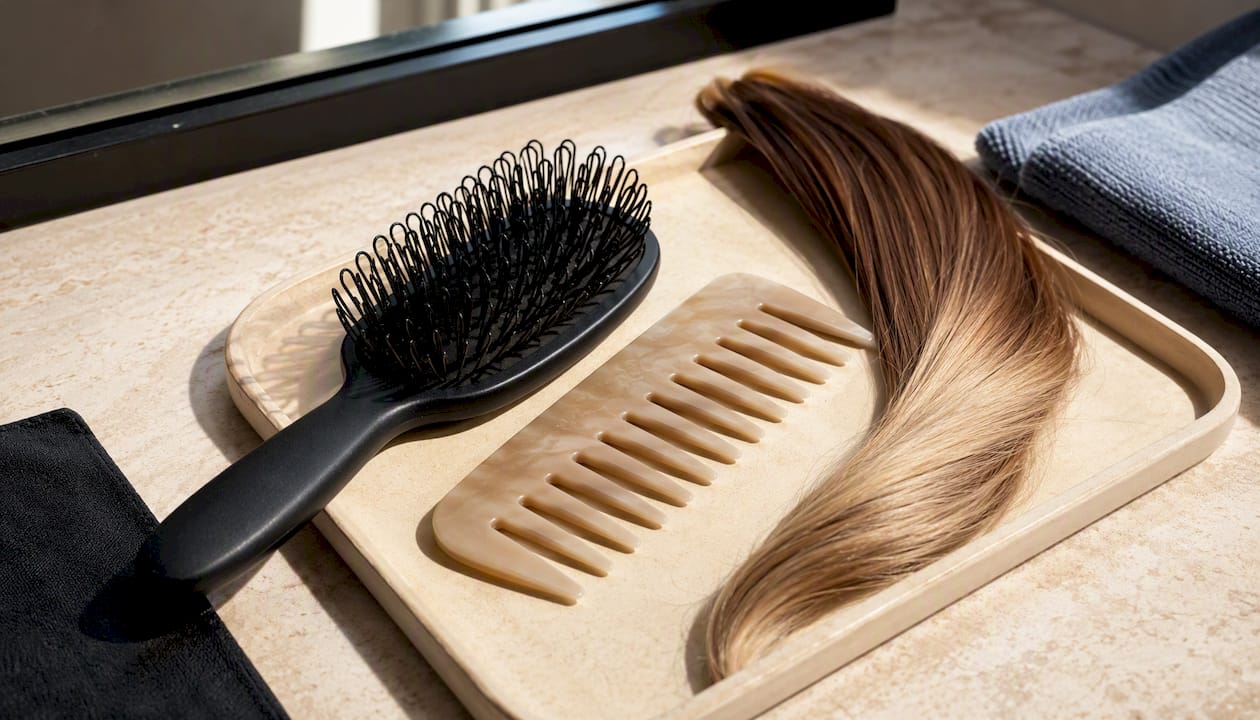
Detangling or paddle brushes built for extensions typically have widely spaced, cushioned bristles, sometimes arranged on a vented or curved head. A curved, vented head with mixed bristles speeds up blow-drying and detangling while staying gentle on the hair shaft. Standard paddle brushes sold for general use are usually too densely packed and will catch on wefts.
Wide-tooth combs are best reserved for wet hair and stubborn knots. Their wide gaps mean they glide through lengths without ripping through a tangle the way a fine-tooth comb would.
Sectioning or rat-tail combs exist for precision, not detangling. Their fine tooth end and pointed tail let you part hair cleanly around micro-links or tape wefts without disturbing the bond itself.
A few rules apply across all four:
- Never use a regular, densely packed hairbrush on extensions; dedicated extension brushes reduce snagging and pulling significantly compared with standard bristle designs.
- Save fine-tooth combs for sectioning and styling, never for detangling.
- On wet hair, always reach for a wide-tooth comb or loop brush first, never a stiff-bristled brush.
- Bristle stiffness should feel soft enough to flex under light pressure. If it doesn’t flex, it’s the wrong tool for extensions.
Salon professionals are consistent on one point: it’s the construction of the tool, not the brand name on it, that prevents damage. Bristle spacing and loop design do the practical work, not marketing claims.
How to brush and comb extensions step by step
Getting the order right matters as much as the tool you pick. Extensions tangle from the bottom up, so your routine should work the same way.
- Prep the hair. Mist lengths with a leave-in detangler or light conditioning spray. A leave-in detangler reduces resistance, which lowers the chance of pulling at the bonds during the first few strokes.
- Start at the very ends. Use short, gentle strokes on the bottom two or three inches until they move freely.
- Work into the mid-lengths. Once the ends are smooth, extend your strokes upward, still holding the hair loosely rather than pulling straight through from the root.
- Hold above the attachment point. As you approach tapes, wefts, bonds or beads, hold the hair firmly just above that point with your free hand. This takes the tension off the attachment while you finish the stroke.
- Switch tools for stubborn knots. If the loop brush catches, swap to a wide-tooth comb and work the knot out from the bottom, never from the top down.
- Finish with a sectioning comb if styling. Use it only to part or lift sections near beads or tapes, not to detangle.
Aim for two full detangling sessions a day, morning and night, rather than constant fiddling throughout the day. Regular gentle brushing keeps knots from building up, but brushing too aggressively or too often on wet hair does more harm than skipping a session entirely.
Pro Tip: Brush in the direction the extension lies naturally, not straight down. Following the fall of the hair reduces drag on the bond and makes knots easier to work loose.
For a fuller walkthrough with photos of hand placement, our guide on detangling hair extensions without damage covers the same routine in more depth.
Adjusting technique for your extension type
Attachment method changes what “gentle” actually means in practice. A technique that’s perfectly safe on clip-ins can loosen a bond elsewhere.
- Clip-ins: Remove before bed. Use a loop brush freely along the lengths, but comb through the clips themselves before refastening to avoid trapping shed hairs.
- Tape-ins: Never brush directly across the tape strip. Detangle the lengths as normal, then lift and separate near the tape using your fingers or the tip of a wide-tooth comb.
- Wefts and bonded extensions: Work in small sections and always support the bond with your free hand while brushing through it. Vigorous pulling here is the single most common cause of premature weft slippage.
- Micro-links and nano rings: Use a sectioning comb close to the beads for precision, switching to a soft loop brush once you’re clear of them for the lengths.
Whichever method you’re wearing, professional servicing on a regular schedule matters more than any brushing technique. Salon guides recommend scheduled tightening checks for micro-link and tape systems specifically, since these attachment points are the first place matting tends to start.
Common mistakes and how to fix a tangle fast
Most extension damage traces back to a handful of repeated habits rather than one dramatic accident.
- Brushing from the roots downward instead of starting at the ends.
- Reaching for a regular, dense-bristle brush because it’s what’s already in the bathroom.
- Aggressively brushing soaking wet hair without any detangler applied first.
- Ignoring small knots until they’ve grown into a mat near the bond.
If a mat does form, don’t reach for scissors. Apply a generous amount of conditioner or leave-in detangler and let it sit for a few minutes. Section the hair carefully, then work a wide-tooth comb through from the very bottom of the mat upward, never from the top. If it won’t release after several gentle attempts, stop and get professional help rather than forcing it.
Persistent tangling near the bonds themselves, or noticeably heavier shedding than usual, are both signs the extensions need a professional adjustment rather than another home fix. Our maintenance checklist has a fuller list of warning signs worth checking against.
Naturyl Extensions’ own aftercare guidance
Our in-house guides are built from the same salon-level principles covered above, adapted specifically for the invisible wire, clip-in and ponytail systems Naturylextensions sells.
- Detangle before every wash and again once the hair has dried, using a loop brush for lengths and a wide-tooth comb for any knots.
- Blow-dry on a cool or medium setting with a vented brush, holding sections away from the wire or clips as you dry.
- Store clip-ins flat or on a hanger overnight rather than brushing them once and leaving them tangled in a drawer.
For the complete routine, read caring for your hair extensions, which walks through washing, drying and storage alongside brushing.
A note on style versus longevity
More styling always shortens extension life, no matter how careful the tool. The realistic answer isn’t to style less. It’s to build a short, repeatable routine: soft tools, minimal heat, and a loose plait or wrap at night to stop overnight friction before it starts.
— Sam
Get the low-damage setup that makes this easier
Extension-specific tools only get you so far if the extensions themselves are prone to tangling in the first place. Naturylextensions’ invisible wire extensions are designed to sit against your own hair without clips, wefts or bonds digging in, which means fewer snag points for a brush or comb to catch on during your daily routine.
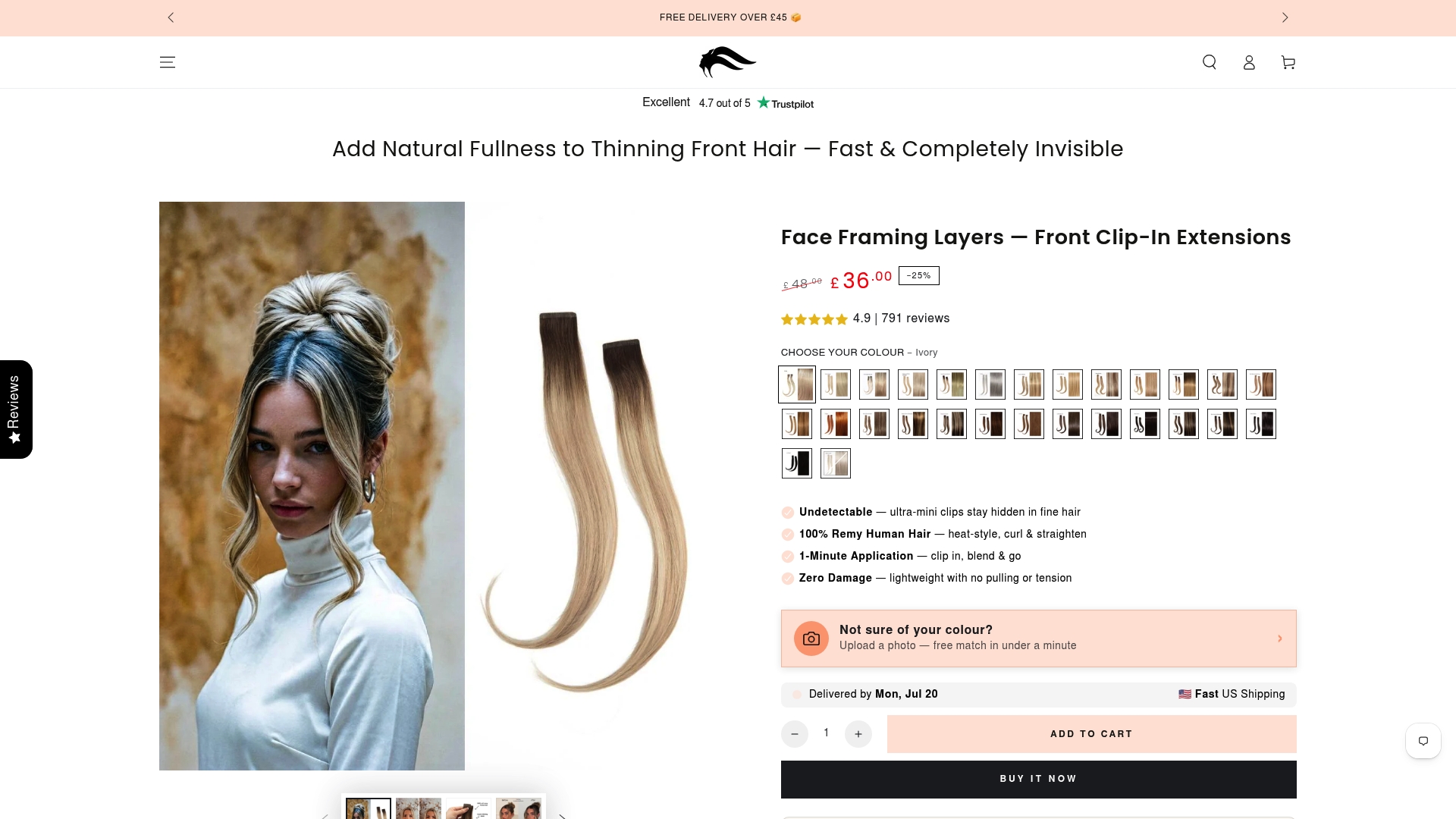
For readers who want to keep styling versatile without adding daily handling risk, the Face-Framing Layers clip-ins are simple to fit in and out, so you’re not forcing a brush through hair that’s been left in overnight. If you’re using invisible wire extensions already, our additional wires let you switch attachment points rather than repeatedly stressing the same section of hair. Browse the current range and pick the option that matches how often you actually plan to style, then check the aftercare guides linked above before your first wash.
Sources
- Hair Extension Aftercare: The Complete UK Guide 2026 | Powder Rooms
- The Importance of Using the Right Hairbrush for Your Hair Extensions - Stephanie Pollard Salon
- The Hairbrush of Dreams – Gentle Detangling Brush for Extensions – DREAMHAIR
FAQ
Should I use a comb instead of a brush for extensions?
Use both, but for different jobs: a wide-tooth comb for wet hair and stubborn knots, and a loop or detangling brush for your daily dry routine.
How do you brush your hair if you have extensions?
Start at the ends with short strokes, work upward gradually, and always hold the hair above the bond or weft before brushing through that section.
What type of brush is best for extensions?
A loop brush or a soft, widely spaced detangling brush works best, since dedicated extension brushes reduce snagging compared with standard dense-bristle brushes.
Are combs less damaging than brushes on extensions?
Neither is automatically safer. A wide-tooth comb is gentler on wet, heavily knotted hair, while a loop brush is better suited to quick daily detangling once the hair is dry.
How often should I brush hair extensions?
Twice a day, morning and evening, is enough for most wearers. Brushing far more than that, especially on wet hair, increases the risk of stress on the bonds rather than protecting them.