TL;DR:
- Choosing the right hair extension method depends on your hair type, lifestyle, and desired maintenance level.
- Clip-ins are the safest and least damaging option, especially for fine or thin hair.
- Proper application, maintenance, and avoiding overuse are essential to prevent damage and achieve natural-looking results.
Choosing the right hair extension method feels overwhelming when every option promises volume, length, and a flawless finish. The reality is that different methods carry different risks, costs, and upkeep demands, and what works brilliantly for one woman can cause real damage for another. Whether you are after a quick transformation for a special occasion or a longer-term style change, understanding the evidence behind each method is essential. This guide breaks down the true pros and cons of hair extensions, with honest UK-specific insights, so you can make a confident and informed decision.
Table of Contents
- Key criteria for choosing hair extensions
- Pros and cons of tape-in, clip-in, and sewn-in extensions
- Common risks: traction alopecia, matting, and breakage
- Maintenance: the crucial factor for healthy hair
- What experts know about damage-free transformation
- Find your ideal extension for quick, damage-free results
- Frequently asked questions
Key Takeaways
| Point | Details |
|---|---|
| Choose based on hair type | Clip-ins are best for fine hair, while tapes suit medium-thick hair for semi-permanent results. |
| Maintenance prevents damage | Proper care and professional instalment keep your natural hair healthy and extensions looking great. |
| Watch out for traction alopecia | Prolonged tension from extensions may cause hair loss but is often reversible if managed early. |
| Cost and quality matter | Invest in high-quality human hair and trusted installation to make extensions last and offset maintenance expenses. |
Key criteria for choosing hair extensions
Before you book a salon appointment or click add to basket, it pays to think carefully about what you actually need from your extensions. Not all methods are equal, and several factors should shape your choice.
Speed of application and removal matters enormously if your schedule is tight. Tape-in extensions take just 30 to 60 minutes to apply, look natural, and can be reused, making them one of the fastest semi-permanent options available. Clip-ins, on the other hand, can be fitted in minutes at home with no professional help required.
Risk of damage to your hair and scalp is arguably the most important factor. Some methods involve heat, adhesives, or tension that can weaken your natural hair over time. Understanding hair loss risks before committing to any method is genuinely worth your time.
Here is a summary of the key criteria to weigh up:
- Speed: How quickly can the extensions be applied, and can you remove them yourself?
- Damage risk: Does the method use adhesives, heat, or tension that could harm your natural hair?
- Maintenance: How much ongoing care is required to keep them looking their best?
- Hair type suitability: Fine or thin hair needs gentler methods. Thicker hair can typically handle more.
- Cost: Factor in both the installation price and ongoing upkeep, including repositioning appointments.
For fine or thin hair, clip-in extensions carry the lowest damage risk because they are temporary, involve no adhesives, and can be removed daily. They are widely considered the safest starting point if you are new to extensions.
Your lifestyle matters too. If you exercise frequently, swim regularly, or simply prefer a low-maintenance routine, that will narrow your options considerably. Consulting our damage-free extension tips before choosing a method can save you significant time, money, and stress.
Pro Tip: Always do a strand test before committing to any semi-permanent method. A stylist can assess your natural hair’s strength and thickness to recommend the safest and most flattering option for you.
Pros and cons of tape-in, clip-in, and sewn-in extensions
With your criteria clear, let’s weigh the top extension methods and what you can actually expect from each.
Tape-in extensions
Tape-ins apply in 30 to 60 minutes, look natural against your own hair, and the tape can be reused several times. They sit flat against the scalp, which makes them comfortable for daily wear. The risk level is moderate; they are gentler than fusion bonds but still require professional removal to avoid breakage.
Pros: Quick application, natural appearance, reusable, relatively flat and discreet. Cons: Need professional repositioning every 6 to 8 weeks, not ideal for very fine hair.
Clip-in extensions
Clip-ins carry the lowest damage risk of any method because they are completely temporary. No adhesives, no heat, and no tension left on the scalp overnight. You clip them in for the day and remove them at bedtime. They are also the most budget-friendly option.
Pros: No damage, instant transformation, no professional help needed, affordable. Cons: Must be removed and stored daily, may look less seamless on very thin hair.
Sewn-in extensions
Sewn-in (also called weft) extensions are braided or sewn into your natural hair and can last several months. They are durable and suited to thicker hair types. However, 37% of long-term extension users show early signs of traction alopecia (hair loss caused by sustained pulling on the follicles) after one year of use with sewn-in, fusion, or micro-ring methods.
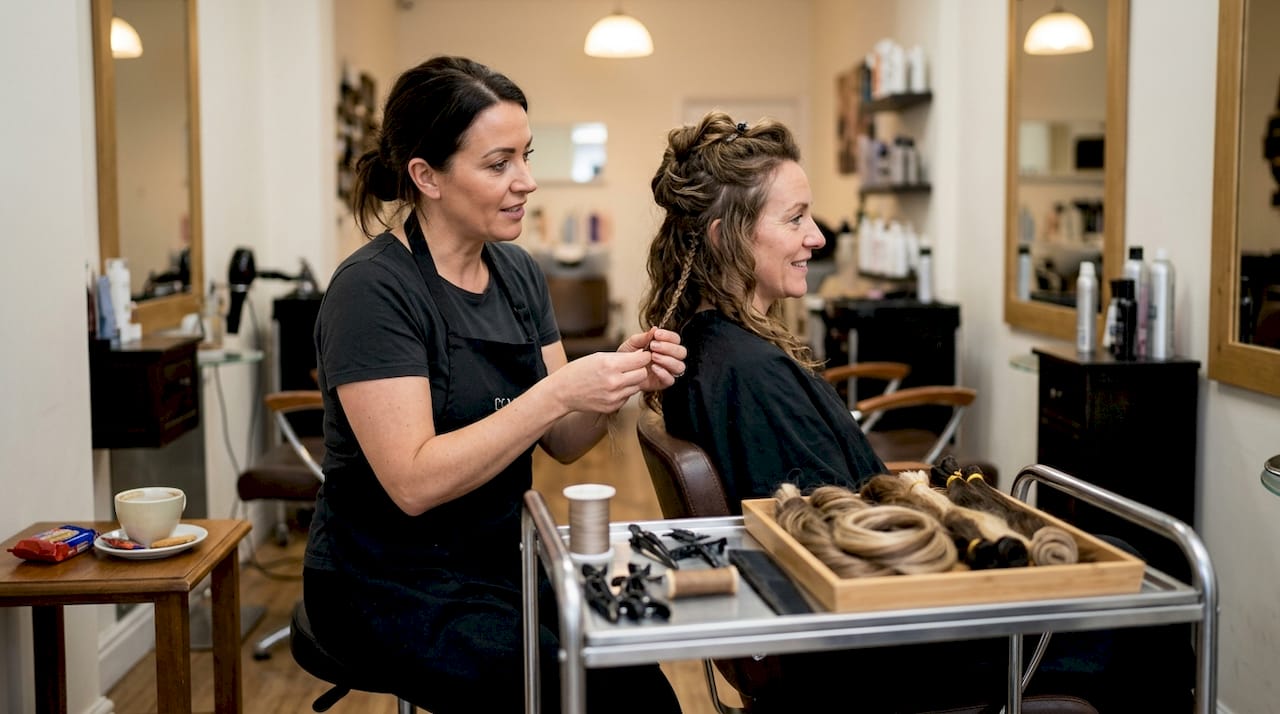
Pros: Long-lasting, full coverage, suits thick or Afro-textured hair when fitted correctly. Cons: Highest damage risk, requires a skilled professional, not suitable for fine hair.
| Method | Average UK install cost | Maintenance frequency | Damage risk |
|---|---|---|---|
| Tape-in | £150 to £400 | Every 6 to 8 weeks | Moderate |
| Clip-in | £50 to £200 (DIY) | Daily removal | Very low |
| Sewn-in | £200 to £600 | Every 6 to 10 weeks | High |
The best extension is the one that suits your hair type and fits your lifestyle, not the one with the longest wear time.
Pro Tip: Review our care tips for extensions and maintenance checklist before your first appointment to understand what daily upkeep each method genuinely requires.
Common risks: traction alopecia, matting, and breakage
Having seen the methods, let’s look at the risks and how to protect your hair from the most common pitfalls.
Traction alopecia is the primary concern for long-term extension wearers. It is a form of gradual hair loss caused by sustained tension on the hair follicles. Sew-ins, fusion bonds, and micro-rings all carry the highest risk because they anchor weight directly to your natural strands for weeks or months at a time. Micro-rings are small metal rings clamped around sections of your hair to hold the extension in place. Fusion bonds use a keratin-based adhesive applied with heat.
The encouraging news is that traction alopecia is reversible if caught early. Removing the extensions and giving your scalp a proper rest period can allow the follicles to recover. Women with fine or Afro-textured hair face a higher risk and should prioritise lighter methods.
Beyond hair loss, two other common issues arise:
- Matting: When extension hair and natural hair become tangled and fused together, usually due to inadequate brushing or sleeping without tying hair up. It is difficult to undo without causing breakage.
- Breakage: Often occurs during improper removal, particularly with tape-ins or fusion bonds that are pulled away rather than dissolved with the correct remover.
Steps you can take to reduce your risk:
- Always choose a qualified stylist with verifiable experience in the specific method you want.
- Avoid methods that feel tight or painful immediately after installation.
- Follow our damage-free extension tips and review the extension do’s and don’ts before your appointment.
- Protect your natural hair underneath with a consistent care routine throughout the wear period.
Pro Tip: Lightweight methods such as invisible wire or clip-in extensions place far less tension on your scalp and are ideal if you want to wear extensions regularly without accumulating long-term damage.
Maintenance: the crucial factor for healthy hair
Risks aside, your everyday routine matters most. Here is how to keep extensions looking great and your natural hair healthy.
Poor aftercare leads to slippage, matting, and breakage far more often than the method itself. Using the right products and building consistent habits will protect both your extensions and your natural hair throughout the wear period.
Here is a straightforward maintenance routine to follow:
- Wash no more than 3 times per week. Overwashing loosens bonds and accelerates slippage on tape-ins.
- Use sulphate-free shampoo. Sulphates strip moisture from both the extension hair and your scalp, making the hair brittle over time.
- Condition mid-lengths to ends only. Applying conditioner near bonds or tape can weaken the adhesive and cause slippage.
- Brush daily with a soft-bristle or extension-specific brush. Start from the ends and work upward to prevent matting.
- Reinstall semi-permanent extensions every 6 to 10 weeks. Leaving them beyond this window increases tension on the roots as your natural hair grows.
| Habit | Recommended frequency | Why it matters |
|---|---|---|
| Washing | Max 3 times per week | Preserves bonds and moisture |
| Brushing | Daily | Prevents matting and tangling |
| Deep conditioning | Once per week | Keeps extension hair soft and blended |
| Reinstallation | Every 6 to 10 weeks | Reduces root tension and slippage |
For more detail, explore our UK maintenance tips, step-by-step extension washing guide, and styling tips to keep your look polished every day.
Pro Tip: Sleep with your hair in a loose plait or use a silk pillowcase to significantly reduce overnight friction and matting, especially for tape-in and clip-in wearers.
What experts know about damage-free transformation
The most common misconception we encounter is that hair extensions are inherently damaging. The evidence simply does not support that view. Damage stems from poor application and maintenance, not from extensions as a category. A well-applied tape-in set, maintained correctly, causes far less harm than repeated heat styling.
Leading UK stylists are consistent on one point: match the method to the hair, not the other way around. Fine hair should never be fitted with heavy sewn-in wefts regardless of how much volume the client wants. Pushing a method beyond its safe limits always ends the same way.
What we see repeatedly is that clip-ins and tape-ins deliver the fastest, safest transformations for the majority of UK women. Invisible wire extensions (also called halo extensions) are particularly effective for those who want daily wear without any commitment to bonds or adhesives. They sit on a transparent wire above the ears and blend seamlessly with your natural hair. Our care tips cover these methods in full detail.
The real investment is not just in the extensions themselves. It is in learning the correct routine for whichever method you choose.
Find your ideal extension for quick, damage-free results
Ready to try extensions? Explore high-quality options hand-picked for instant, damage-free transformation.
At Naturyl Extensions, we specialise in premium Remy wire extensions crafted from ethically sourced human hair for a natural finish that lasts. Our invisible extension wires are ideal for anyone seeking effortless volume and length without bonds, heat, or salon appointments, and they arrive with fast UK delivery. Not sure which shade or style suits you? Visit our page to learn about Remy hair and find out why it is the gold standard for natural-looking, damage-free results. We also offer a free exchange policy so you can shop with complete confidence.
Frequently asked questions
Do hair extensions cause permanent hair loss?
Extensions can cause temporary hair loss if misapplied or overused, but traction alopecia is reversible if addressed early by removing the extensions and resting the scalp.
Which hair extension method suits fine or thin hair best?
Clip-ins are safest for fine hair, offering the lowest damage risk and instant results without adhesives, heat, or sustained tension on the follicles.
How often should I wash hair extensions?
Limit washing to 2 to 3 times a week using sulphate-free products to prevent bond slippage, matting, and unnecessary breakage.
Is it possible to use extensions if I swim or exercise often?
Frequent moisture and sweat can cause slippage and matting with semi-permanent methods; clip-in or invisible wire extensions are the better choice for active lifestyles as they can be removed before exercise.