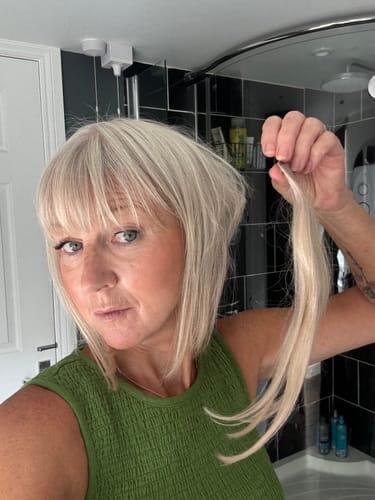
You might first notice it when you pull your hair into a ponytail: the areas beside your forehead look more exposed, or there are short, wispy hairs that never seem to catch up with the rest. Are they new hairs growing through, strands that have snapped, or a sign that your hairline is changing? It can be difficult to know whether to feel reassured or concerned.
At Naturyl Extensions, we want to help you make sense of thinning at the temples, understand which clues are useful and know when to get advice, so you can make informed decisions about caring for and styling your hair.
Why Might Your Hair Look Thinner at the Temples?
Thinning at the temples can happen because hairs are snapping, shedding or gradually growing finer. Although these changes can look similar in the mirror, they affect your hair differently.
Breakage reduces the length of existing hairs. Repeated heat styling, bleaching or rough brushing can weaken strands until they snap, leaving shorter pieces and less coverage around your face, even though those hairs are still growing from their follicles.
Repeated pulling can affect the follicles themselves. Tight ponytails, slicked-back buns and extensions that pull on your hair can cause traction alopecia. The front and sides are common areas for this type of hair loss, so your styling habits may provide useful clues.
Nutrition and hormonal changes can play a part, too. Under-fuelling, consistently eating too little to meet your body’s needs, can contribute to shedding, particularly alongside significant weight loss or insufficient protein or iron. After childbirth, hormonal changes can trigger temporary increased shedding, often becoming noticeable a few months later. Around menopause, hormonal shifts may also contribute to thinning, and female pattern hair loss becomes more common. These changes can affect fullness across the scalp, even if the temples are where you first notice a difference.
Shedding or another hair-loss condition may also be involved. Shedding after illness or significant stress usually affects the whole scalp, even if the temples are where you first notice it. Female pattern hair loss can also affect the temples, while some inflammatory conditions cause the hairline to recede. Location alone cannot establish the cause, which is why a changing hairline shouldn’t automatically be put down to styling damage.
Are Those Short Hairs Breakage or New Growth?
Short hairs around your temples can be encouraging, but their length alone doesn’t tell you what’s happening. The ends can offer clues: new, uncut hairs usually narrow to a fine point at the tip, while damaged hairs may have split, frayed or abruptly broken ends. These details can be difficult to see without magnification, so they aren’t a reliable home diagnosis.
Think about what those hairs have been through, too. Short pieces in an area you repeatedly straighten, bleach or brush firmly make breakage a possibility. A recent trim can also leave blunt ends, so a blunt tip doesn’t automatically mean damage.
There’s another reason to avoid assuming every wispy hair is regrowth: some hair-loss conditions cause follicles to produce progressively finer, shorter strands. These can resemble the “baby hairs” you’re hoping will restore fullness. If short hairs are appearing while your temples continue to look sparser, a dermatologist can examine the scalp and strands under magnification to help distinguish regrowth, breakage and changes associated with hair loss.
What Can Your Everyday Hair Routine Tell You?
Think about what happens to the hair around your temples throughout the day. Do you pull it tightly back for work, re-tie it for the gym, then sleep with it secured? Changing your hairstyle doesn’t necessarily give those hairs a break if each style pulls on the same area.
Start by reducing tension. Loosen ponytails and buns, leave the front sections relaxed and avoid attachments that tug on sparse areas. Pain or stinging means you should change the style immediately, but a style doesn’t have to hurt to cause damage through repeated pulling.
Notice how often you “tidy up” the short hairs. Repeatedly straightening them or brushing them firmly into place may contribute to the breakage you’re trying to disguise. Use heat less frequently and at a low setting, condition after washing and gently detangle instead of dragging a brush through resistance.
These changes can reduce avoidable damage, but they won’t explain every case of temple thinning. If the area keeps becoming sparser, don’t assume your routine is the only cause.
How Can You Tell Whether Your Temple Hair Is Recovering?
Recovery usually becomes clearer over months, rather than days. Short hairs gradually gaining length and improved coverage are encouraging signs, but a few new strands don’t confirm that thinning has stopped. Compare photographs taken about a month apart, keeping your lighting, angle and hairstyle consistent, to judge the overall change.
The cause affects what recovery looks like. After postpartum shedding, hair often regains its fullness by your baby’s first birthday. With traction-related loss, regrowth may begin around three months after stopping tight styling, provided the follicles haven’t been permanently damaged.
If under-fuelling or a nutritional deficiency contributed, addressing that matters before expecting lasting improvement; visible fullness can still take months to return. Menopause-associated thinning may involve female pattern hair loss, which doesn’t necessarily resolve on its own and may need ongoing treatment.
If your temples continue becoming sparser, seek a review rather than relying on the appearance of new “baby hairs”.
Can Naturyl Extensions Help Disguise Thinning at the Temples?
When it’s the gaps at the sides that bother you, adding length at the back won’t give you the result you want. Our Thinning Hair Fill-Ins are designed specifically for sparse sides and temples, putting extra fullness where you’ll actually see the difference.
With a 2.5-inch-wide base and a lightweight 20g design, our Thinning Hair Fill-Ins sit flat beneath your own hair, providing coverage without fitting lots of separate pieces. They take around 30 seconds to apply once you’ve got the hang of them, making fuller-looking sides an easy addition to your morning routine.
If your front sections also look wispy, our Face-Framing Layers add fullness around your face with a discreet 15g design and mini clips. Both products use 100% Remy human hair, so you can curl or straighten them to match your hairstyle. There’s no bonding glue, no permanent fitting and no salon appointment needed to put them in or take them out.
Our free colour-matching service and free colour exchanges help you find a natural-looking match, too. You’ll need enough healthy hair to support and conceal the clips; avoid attaching them to sore or actively damaged areas.
Shop our extensions, or get in touch with Naturyl Extensions for help choosing your perfect piece and shade.
Frequently Asked Questions About Thinning at the Temples
Can I have thinning at the temples without losing hair elsewhere?
Yes. Hair loss caused by repeated pulling can affect particular areas, including the temples and hairline. Other conditions can also cause localised loss, so having full hair elsewhere doesn’t rule out a problem that needs assessment.
Can I use scalp oils to regrow hair at my temples?
An oil may help condition your hair, although it won’t address every cause of thinning. While you’re caring for your natural hair, our removable extensions can provide immediate cosmetic fullness, provided you have enough healthy hair to support and conceal them. Remove your pieces before applying scalp oils and keep the attachment area free from oily residue when fitting them.
Can I have my fill-ins trimmed to blend with my hairstyle?
Yes. Our Remy human hair pieces can be trimmed by a hairdresser to follow your existing cut. This lets you add fullness around the sides while keeping a length and shape that feel familiar.
How do I match extensions to highlighted hair?
Look at the overall colour through your mid-lengths and ends rather than matching your darkest roots or lightest highlight. A blended shade can help create a natural finish. Send us a photograph taken in daylight through our free colour-matching service if you’d like help choosing.